
Why Choose a Water Control Gate for Global Projects?
FLUID HANDLING EXPERTS

Blog, all our news

Why Choose a Water Control Gate for Global Projects?

Water infrastructure is facing a sharper test. Climate volatility, urban growth, and aging assets are changing how projects manage water. The United Nations World Water Development Report 2024 links water insecurity with rising social and economic pressure. It also shows that agriculture still accounts for roughly 70% of global freshwater withdrawals. These figures make controlled movement essential, not optional. A reliable water control gate can regulate canals, reservoirs, flood channels, and treatment facilities with measurable precision. It can also isolate damaged sections during maintenance, protecting workers and reducing service disruption.

Global projects need equipment that performs beyond ideal drawings. Gates may operate beside muddy embankments, in freezing air, or under sudden storm flows. The World Meteorological Organization’s State of the Global Water Resources reports highlight increasing hydrological variability in many regions. This supports stronger attention to operating range, corrosion resistance, sealing performance, and remote monitoring. A correctly specified water control gate gives engineers practical control at critical interfaces. Stainless steel components, replaceable seals, and accessible lifting systems can simplify long-term maintenance. Small details matter.

However, selection cannot rely on product brochures alone. Site surveys, hydraulic modelling, sediment analysis, and local maintenance skills must guide the decision. No gate suits every project. That is the uncomfortable truth. The World Bank and international dam-safety guidance repeatedly emphasize lifecycle planning, risk assessment, and accountable operation. Project owners should compare total cost, not only purchase price. They should also test emergency procedures before commissioning. A strong gate is valuable, but disciplined management makes it dependable. This balanced approach helps global developers build safer, more adaptable water systems.
Why Choose a Water Control Gate for Global Projects?

Water Control Gates Defined: Flow Regulation in Dams, Canals, and Floodways

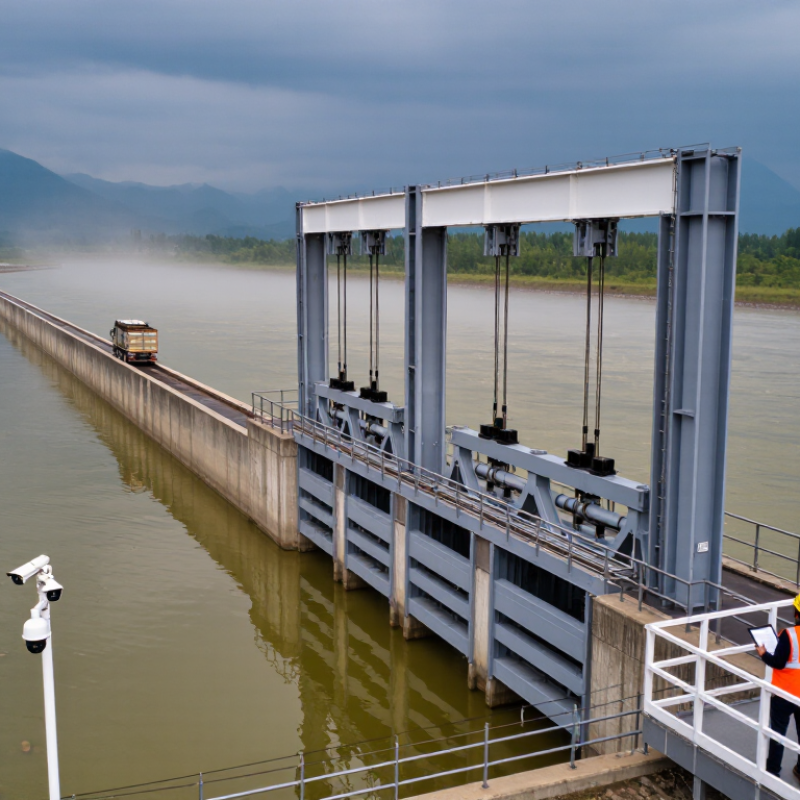
A water control gate is a movable barrier that regulates water elevation, discharge, and direction. It operates across dams, irrigation canals, and floodways. Common designs include slide gates, radial gates, and flap gates. Each responds differently to pressure, debris, and changing flow conditions.

In dams, gates release stored water through controlled openings. Operators adjust them gradually to protect downstream channels and nearby communities. In canals, gates distribute water between branches and maintain dependable levels for irrigation. In floodways, they redirect peak flows away from dense areas.

The need is substantial. The UN World Water Development Report 2023 states that agriculture accounts for about 70% of global freshwater withdrawals. Accurate flow control therefore supports both food production and water conservation.

Professional design goes beyond selecting a strong steel panel. Engineers assess hydraulic loading, sediment, corrosion, ice, and emergency access. Field teams inspect seals, hoists, guides, and embedded concrete before commissioning. A few millimeters of leakage can become a serious maintenance issue.

Small errors matter. The World Meteorological Organization’s State of Global Water Resources 2023 reported widespread abnormal river flows, reinforcing the value of adaptable control systems. Sensors can track upstream levels, gate position, and downstream discharge, but automation is not infallible. Manual inspection still matters, especially after storms. A reliable gate combines calculated capacity with practical maintenance, clear operating procedures, and room for unexpected conditions.

Global Demand: Agriculture Uses About 70% of Freshwater Withdrawals (FAO)

Agriculture uses about 70% of global freshwater withdrawals, according to FAO’s AQUASTAT database. This demand makes water control gates important for irrigation canals, reservoirs, and drainage channels. A well-positioned gate can regulate flow, protect downstream fields, and reduce unnecessary releases during dry periods.

The detail matters. A gate operator may adjust water by centimeters after checking canal levels, soil moisture, and rainfall forecasts. Small changes can affect hundreds of hectares. The 2024 UN World Water Development Report also identifies agriculture as the largest freshwater-consuming sector worldwide. However, the 70% figure is a global average, not a fixed rule for every region. Local crops, climate, and irrigation systems change the result.

For global projects, engineers should match gate capacity with peak discharge, sediment conditions, and maintenance skills. Manual systems may work in remote areas, while automated controls can improve response time where reliable power exists. That assumption needs testing. Digital equipment is not automatically better if operators cannot repair it locally. Practical designs should include visible level markings, safe access platforms, corrosion-resistant materials, and emergency shutoff options. These details support measurable water management rather than promising perfect efficiency.

Why Choose a Water Control Gate for Global Projects? – Global Demand: Agriculture Uses About 70% of Freshwater Withdrawals (FAO)

Sources: FAO AQUASTAT; UNESCO World Water Development Report; FAO Land and Water Division.
Data Dimension Verified Global Figure Project Relevance Source
Agriculture’s share of global freshwater withdrawals About 70% Agricultural infrastructure requires dependable flow regulation, allocation, and water-level management. FAO AQUASTAT
Agriculture’s share of global water consumption Approximately 90% Efficient control of canals, reservoirs, and drainage structures can support better water distribution and reduce avoidable losses. FAO Land and Water
Share of cultivated land using irrigation About 20% Although irrigated land is a minority of cultivated land, it depends on precise conveyance and control systems. FAO Irrigation
Contribution of irrigated agriculture to global food production About 40% Water-control gates help maintain stable operating levels in irrigation channels serving high-output agricultural areas. FAO Irrigation
Global freshwater withdrawals Approximately 4,000 km³ per year Large withdrawal volumes increase the need for durable, maintainable, and accurately controlled hydraulic structures. FAO AQUASTAT
Primary functions of a water-control gate Flow regulation, level control, isolation, and drainage management These functions support irrigation canals, flood-control channels, reservoirs, drainage systems, and water-transfer infrastructure. FAO Water-Resources Development
Why the solution suits global projects Adaptable across agricultural, municipal, drainage, and flood-management applications A properly specified gate can be integrated into different channel sizes, operating conditions, and water-management objectives without relying on a single end-use sector. UNESCO World Water Development Report

Climate Resilience: 3.6 Billion People Face Seasonal Water Scarcity (UN-Water)

Why Choose a Water Control Gate for Global Projects?

Climate resilience is now a basic infrastructure requirement. UN-Water reports that 3.6 billion people face water scarcity for at least one month each year. This figure could exceed 5 billion by 2050. Seasonal shortages can affect farms, cities, and emergency services. A water control gate helps regulate storage, drainage, and distribution during changing conditions. It can hold water after intense rainfall, then release it gradually during dry periods. The 2024 UNESCO World Water Development Report also states that 2.2 billion people lacked safely managed drinking water in 2022. Reliable flow control matters where every available source is valuable.

A well-designed gate should match local hydrology, sediment loads, maintenance skills, and flood risks. Engineers should assess corrosion, power availability, manual operation, and safe access before selecting equipment. The World Meteorological Organization’s State of Global Water Resources reports show increasing pressure from variable rainfall and extreme hydrological events. However, a gate is not a complete climate solution. Poor monitoring, blocked channels, or weak maintenance can reduce performance quickly. That uncomfortable point deserves attention. Global projects need practical designs, not impressive specifications alone.

Tips:

Use seasonal flow data, not average rainfall only. Include backup operation when power fails. Inspect seals, hinges, and channels before the wet season. Train local operators with clear procedures. Independent testing and documented maintenance improve reliability, especially where replacement parts are difficult to obtain.

Gate Selection: Compare Sluice, Radial, and Flap Gates by Hydraulic Loads

Selecting a water control gate starts with hydraulic loading, not catalog dimensions. At 10 metres of water depth, static pressure reaches about 98.1 kPa at the gate base. USACE Hydraulic Design of Spillways, EM 1110-2-1603, also requires designers to consider uplift, vibration, debris, ice, sediment, and seismic effects. These loads can change the safest gate type.

Sluice gates suit channels needing firm shutoff and frequent level adjustment. Their vertical plates transfer substantial water pressure into side guides and hoists. Radial gates use curved arms and trunnions, reducing lifting effort under deep water. This matters at spillways, where a large opening may face rapidly changing discharge.

PIANC guidance on hydraulic structures highlights vibration and flow instability as critical review points. A radial gate can still suffer if its seals, arms, or bearings receive uneven loading.

Flap gates work differently. Buoyancy and downstream water levels can operate them with limited mechanical equipment. They fit tidal outlets and drainage channels, but hinges must resist impact, corrosion, and trapped debris. The World Register of Dams records more than 58,000 large dams worldwide, showing how varied operating environments can be. However, global statistics cannot replace site measurements. Field inspections often reveal sediment buildup where drawings predicted clean flow. That uncomfortable mismatch deserves attention. Engineers should verify load cases with current surveys, transient analysis, and physical inspection before choosing a gate.

Global Engineering: Verify IEC, ISO, and Local Flood-Design Requirements

Why Choose a Water Control Gate for Global Projects?

A water control gate must fit the project’s standards, risks, and operating conditions. IEC requirements may apply to electrical systems, control panels, sensors, and emergency power. ISO standards can support quality management, manufacturing controls, inspection, and documentation. They do not replace local engineering rules. Confirm the exact scope before procurement.

Local flood-design requirements often determine the gate’s real performance. Engineers should check design flood levels, return periods, flow velocity, debris impact, sediment buildup, and seismic conditions. A gate exposed to muddy water may need stronger seals and easier cleaning access. In coastal areas, corrosion protection requires careful material selection. Hydraulic calculations should cover both normal operation and emergency closure.

Small details matter.

Project teams should request certified material records, factory test reports, welding qualifications, and clear commissioning procedures. Electrical components may need local approvals, enclosure protection, or specific voltage requirements. Site acceptance testing should simulate power loss, manual operation, alarms, and partial obstruction. A checklist helps, but it can still miss unusual rainfall patterns or maintenance limits. This is where independent review adds value. Requirements may also change during design, and early assumptions can become expensive mistakes. Verify revisions with local authorities, qualified engineers, and the responsible flood-control agency before installation.

Why Choose a Water Control Gate for Global Projects?

Flood-control equipment should be verified against the applicable IEC and ISO requirements, together with the local authority’s hydraulic and flood-design criteria. The chart shows the mathematical relationship between common flood return periods and annual exceedance probability (AEP).

A 100-year event has a 1% annual exceedance probability; it does not occur only once every 100 years. The governing return period, loading conditions, materials, inspection requirements, and electrical protection level must be confirmed for each project jurisdiction.

Copyright 2025 Fluidra S.A. | Created by BCM Marketing Agencia Privacy Policy Legal note | Cookie policy |

Technical cookies are strictly necessary for our website to work and you can navigate through it. These types of cookies are those that, for example, allow us to identify you, give you access to certain restricted parts of the page if necessary, or remember different options or services already selected by you, such as your privacy preferences. Therefore, they are activated by default, your authorization not being necessary in this regard. Through the configuration of your browser, you can block or alert the presence of this type of cookies, although such blocking will affect the proper functioning of the different functionalities of our website.


The analysis cookies allow us to study the navigation of the users of our website in general (for example, which sections of the page are the most visited, which services are used most and if they work correctly, etc.). From the statistical information on navigation on our website, we can improve both the operation of the page itself and the different services it offers. Therefore, these cookies do not have an advertising purpose, but only serve to make our website work better, adapting to our users in general. By activating them you will contribute to this continuous improvement. You can enable or disable these cookies by checking the corresponding box, being disabled by default.


Functionality cookies allow us to remember your preferences, to personalize certain characteristics and general options of our website, every time you access it (for example, the language in which the information is presented to you, the sections marked as favorites, your browser type, etc.) Therefore, this type of cookies does not have an advertising purpose, but by activating them you will improve the functionality of the website (for example, adapting to your type of browser) and the customization of it based on your preferences (for example, by presenting the information in the language that you have chosen in previous occasions), which will contribute to the ease, usability and comfort of our page during your navigation. You can enable or disable these cookies by checking the corresponding box, being disabled by default.


Advertising cookies allow us to manage the advertising spaces included in our website based on criteria such as the content shown or the frequency in which the ads are displayed. For example, if you have been shown the same ad several times on our website, and you have not shown a personal interest by clicking on it, it will not appear again. In summary, by activating this type of cookies, the advertising shown on our website will be more useful and diverse, and less repetitive. You can enable or disable these cookies by checking the corresponding box, being disabled by default.


Behavioral advertising cookies allow us to obtain information based on the observation of your browsing habits and behaviors on the web, in order to show you advertising content that best suits your personal tastes and interests. To understand it in a very simple way, we will give you a fictitious example: if your last searches on the web were related to suspense literature, we would show you advertising about suspense books. Therefore, activating this type of cookies, the advertising that we show you on our website will not be generic, but will be oriented to your searches, tastes and interests, therefore adjusting exclusively to you. You can enable or disable these cookies by checking the corresponding box, being disabled by default.
To understand it in a very simple way, we will give you a fictitious example: if your last searches on the web were related to suspense literature, we would show you advertising about suspense books. Therefore, activating this type of cookies, the advertising that we show you on our website will not be generic, but will be oriented to your searches, tastes and interests, therefore adjusting exclusively to you. You can enable or disable these cookies by checking the corresponding box, being disabled by default.

SAVE

We use our own and third-party cookies to ensure the proper functioning of the website and to analyse our services, improve your experience on our website and show you advertisements related to your interests according to profiling based on your browsing habits (e.g. websites visited). You can accept all cookies by clicking "ACCEPT" or set or reject them by clicking here. If you would like to know more about the use of cookies, please see our COOKIE POLICY.


ACCEPT ALL
Reject no essentials


