
Why Choose an S250 Air Compressor Rock Drill?
FLUID HANDLING EXPERTS

Blog, all our news

Why Choose an S250 Air Compressor Rock Drill?

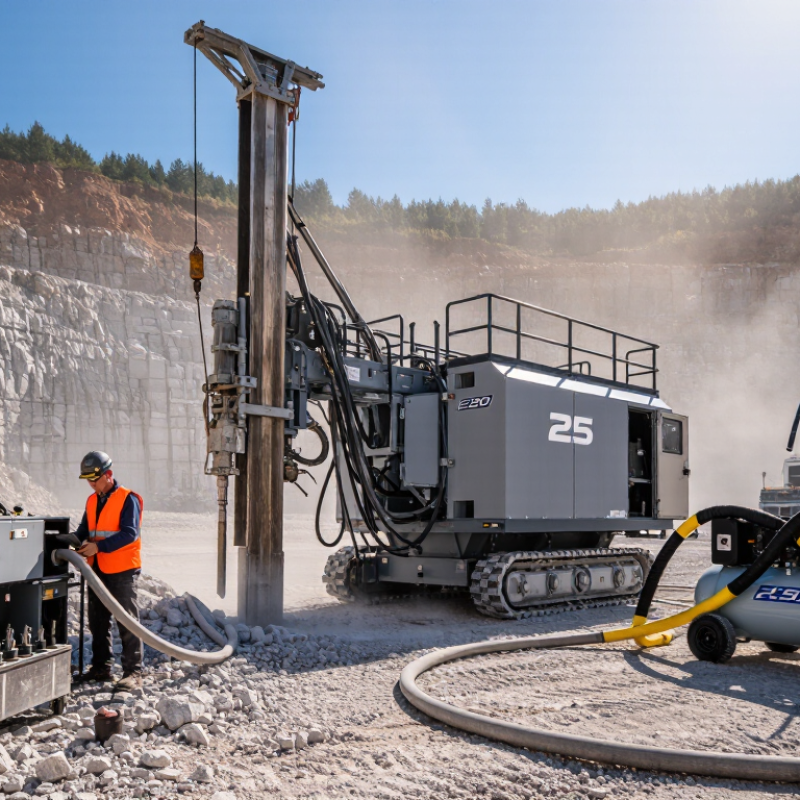
Choosing an S250 Air Compressor Rock Drill is a practical decision for demanding quarry, construction, and foundation work. The right equipment must match rock hardness, hole diameter, drilling depth, and daily operating hours. A powerful name alone does not prove suitability.

Field experience shows that drilling performance depends on the complete air system. Compressor output, working pressure, hose length, couplings, and filter condition all influence impact energy. A small pressure drop can leave visible signs: slower penetration, overheated fittings, and irregular dust discharge. The U.S. Department of Energy’s Improving Compressed Air System Performance report notes that compressed air may consume about 10% of industrial electricity. It also warns that leaks can waste 20% to 30% of compressor output. These figures make efficiency and maintenance important purchasing factors.

The S250 Air Compressor Rock Drill should therefore be assessed beyond its catalogue description. Operators should compare its required air volume with the compressor’s real output, not its advertised maximum. They should also inspect vibration control, lubrication access, spare-part availability, and service support. The Atlas Copco Compressed Air Manual emphasizes that pressure stability and air quality strongly affect pneumatic tool performance. That guidance applies directly to rock drilling conditions.

No machine is perfect. Mud, fractured rock, and poor hose layout can reduce productivity. A careful trial on the intended site remains valuable. Buyers who record penetration speed, fuel use, downtime, and operator feedback can make a more reliable choice. This evidence-based approach helps determine whether the S250 Air Compressor Rock Drill offers genuine value for a specific project, rather than simply appearing powerful on paper.
Why Choose an S250 Air Compressor Rock Drill?

What Is an S250 Air Compressor Rock Drill?

An S250 air compressor rock drill is a pneumatic drilling system designed for breaking and boring hard ground. The name does not always describe one universal specification. In many equipment catalogs, “S250” identifies a particular drill model, capacity class, or matched compressor configuration. Buyers should verify the technical sheet before comparing machines.

The compressor produces pressurized air and sends it through a reinforced hose to the rock drill. Inside the drill, compressed air drives the piston against the bit. The impact energy cracks rock, while air flow helps clear dust and loose fragments from the hole. This setup suits quarry work, foundation preparation, road construction, and controlled ground investigation.

A practical unit needs more than strong impact. Air pressure, air volume, bit diameter, hose length, and rock hardness must match. A small mismatch can cause slow drilling or excessive wear. The frame should remain stable on uneven ground. Operators also need hearing protection, eye protection, dust control, and regular hose inspections.

The label can be confusing. That matters.

Before operation, technicians should check oil levels, couplings, filters, and drain valves. Moisture in the air line may reduce performance and damage internal parts. Hard rock can also demand more compressor capacity than expected. Performance figures are useful, but field conditions often expose their limits. A careful assessment of geology and daily drilling depth gives a more reliable equipment choice.

How Does the S250 Rock Drilling System Work?

Why Choose an S250 Air Compressor Rock Drill?

An S250 air compressor rock drill system combines compressed air generation with percussive drilling. The compressor draws ambient air, compresses it, and sends it through reinforced hoses. At the drill, a control valve directs air to the piston. The piston strikes the bit repeatedly, while rotation helps the cutting edge break fresh rock. Exhaust air carries loose chips from the hole. This is the core operating cycle. It is force in motion.

In field work, matching air volume and working pressure to the drill is essential. Insufficient airflow can weaken impacts and leave cuttings inside the hole. Excessive pressure may increase wear, vibration, and operating risk. A trained operator checks filters, hose connections, lubrication, and moisture before drilling. Water separators also help protect pneumatic components in damp conditions. These details sound minor. They are not.

The S250 system can suit quarrying, foundation preparation, and controlled site drilling where mobility matters. Its pneumatic design supports steady impact energy across hard and layered rock. However, performance depends on bit condition, ground structure, hose length, and maintenance discipline. A clean test hole may not represent a full work shift. That is worth remembering. In practice, operators sometimes adjust pressure too quickly when progress slows. A better response is to inspect the bit, airflow, and hole clearance before changing settings.

What Performance Benefits Does the S250 Offer?

Why Choose an S250 Air Compressor Rock Drill?

What Performance Benefits Does the S250 Offer?

The S250 is designed for demanding drilling where pressure stability matters. In field use, steady airflow helps the rock drill maintain impact energy through changing ground conditions. That means cleaner holes, fewer pauses, and more predictable bit penetration. The U.S. Department of Energy reports that compressed-air leaks can waste 20–30% of compressor output. A well-maintained S250 system can therefore protect useful airflow instead of feeding invisible losses. Small details matter.

Its performance also depends on correct sizing and daily inspection. The S250 can support productive drilling when hoses, fittings, filters, and pressure settings match the application. The Compressed Air Challenge identifies pressure management and leak reduction as major efficiency priorities in industrial systems. Lower pressure losses may reduce fuel use and improve available power at the drill face. Operators often notice this as smoother hammering and fewer recovery delays. However, I would not promise the same result on every site. Wet rock, long hoses, clogged filters, and poor maintenance can quickly weaken performance. The DOE also emphasizes system-wide testing, not compressor selection alone. A pressure gauge, leak check, and clean intake filter can reveal more than a brochure.

Which Projects Are Best Suited to the S250?

Why Choose an S250 Air Compressor Rock Drill?

An S250 air compressor rock drill suits controlled drilling in hard, fractured ground. Think of quarry benches, foundation pads, utility trenches, and short tunnel sections. These projects often need accurate holes, steady penetration, and manageable equipment movement. A crew can reposition between holes without reshaping the entire work area. It is practical on uneven ground.

Project suitability depends on rock strength, hole diameter, depth, and required air pressure. The USGS Mineral Commodity Summaries 2024 reported roughly 2.5 billion metric tons of iron ore production worldwide in 2023. That scale reflects continuing demand for drilling across extraction and infrastructure projects. The Global Infrastructure Hub estimates global infrastructure investment needs could reach 94 trillion dollars by 2040. Smaller drilling systems may support early-stage works, repairs, and distributed construction sites.

Field teams should measure actual air demand before selecting an S250. Hose length matters. So does dust control. A 30-metre hose can behave differently from a 10-metre hose, especially around bends and couplings. Operators should inspect bit wear, compressor temperature, and penetration time during each shift. A clean production forecast can still be wrong. Wet rock, loose joints, or unexpected clay may slow drilling sharply. I would avoid specifying the S250 from a brochure alone; a short site trial usually reveals more than a perfect spreadsheet.

Why Choose an S250 Air Compressor Rock Drill?

Which projects are best suited to the S250? The chart compares typical drilling diameter ranges used in common rock-drilling applications. Compact air-powered rock-drilling systems are generally best suited to foundation anchoring, road construction, quarrying, and controlled blast-hole work rather than very deep water-well drilling.

Typical industry drilling ranges are shown for comparison. Actual performance depends on rock hardness, drilling depth, compressor output, tooling, and site conditions.

How Should Buyers Evaluate an S250 Rock Drill?

Why Choose an S250 Air Compressor Rock Drill?

How Should Buyers Evaluate an S250 Rock Drill?

An S250 rock drill should be judged by field performance, not its model label. Ask for verified impact energy, drilling speed, air consumption, and operating pressure. These figures should come from controlled tests, preferably using ISO 1217 measurement principles. A drill that penetrates quickly but consumes excessive air may increase compressor and fuel costs.

The U.S. Department of Energy reports that compressed-air leaks can waste 20–30% of compressor output. Inspect hoses, couplings, and valves before comparing machines.

Match the drill to the rock, hole diameter, and daily workload. Check its service weight, shank compatibility, vibration control, and lubrication method. In a dusty quarry, sealing quality matters. So does access to replacement seals and routine maintenance instructions.

OSHA estimates that about 2.3 million U.S. workers encounter respirable crystalline silica at work, so buyers should also evaluate wet drilling or effective dust-control options. Safety is part of productivity.

Ask for trial records from similar ground conditions. A polished brochure is not enough. Request measured results from hard rock, fractured rock, and inclined holes. I would also calculate output per operating hour, not only penetration speed.

That judgment can still be imperfect. Weather, operator skill, and worn tooling can change results. A practical trial often reveals more than a laboratory number.

Copyright 2025 Fluidra S.A. | Created by BCM Marketing Agencia Privacy Policy Legal note | Cookie policy |

Technical cookies are strictly necessary for our website to work and you can navigate through it. These types of cookies are those that, for example, allow us to identify you, give you access to certain restricted parts of the page if necessary, or remember different options or services already selected by you, such as your privacy preferences. Therefore, they are activated by default, your authorization not being necessary in this regard. Through the configuration of your browser, you can block or alert the presence of this type of cookies, although such blocking will affect the proper functioning of the different functionalities of our website.


The analysis cookies allow us to study the navigation of the users of our website in general (for example, which sections of the page are the most visited, which services are used most and if they work correctly, etc.). From the statistical information on navigation on our website, we can improve both the operation of the page itself and the different services it offers. Therefore, these cookies do not have an advertising purpose, but only serve to make our website work better, adapting to our users in general. By activating them you will contribute to this continuous improvement. You can enable or disable these cookies by checking the corresponding box, being disabled by default.


Functionality cookies allow us to remember your preferences, to personalize certain characteristics and general options of our website, every time you access it (for example, the language in which the information is presented to you, the sections marked as favorites, your browser type, etc.) Therefore, this type of cookies does not have an advertising purpose, but by activating them you will improve the functionality of the website (for example, adapting to your type of browser) and the customization of it based on your preferences (for example, by presenting the information in the language that you have chosen in previous occasions), which will contribute to the ease, usability and comfort of our page during your navigation. You can enable or disable these cookies by checking the corresponding box, being disabled by default.


Advertising cookies allow us to manage the advertising spaces included in our website based on criteria such as the content shown or the frequency in which the ads are displayed. For example, if you have been shown the same ad several times on our website, and you have not shown a personal interest by clicking on it, it will not appear again. In summary, by activating this type of cookies, the advertising shown on our website will be more useful and diverse, and less repetitive. You can enable or disable these cookies by checking the corresponding box, being disabled by default.


Behavioral advertising cookies allow us to obtain information based on the observation of your browsing habits and behaviors on the web, in order to show you advertising content that best suits your personal tastes and interests. To understand it in a very simple way, we will give you a fictitious example: if your last searches on the web were related to suspense literature, we would show you advertising about suspense books. Therefore, activating this type of cookies, the advertising that we show you on our website will not be generic, but will be oriented to your searches, tastes and interests, therefore adjusting exclusively to you. You can enable or disable these cookies by checking the corresponding box, being disabled by default.
To understand it in a very simple way, we will give you a fictitious example: if your last searches on the web were related to suspense literature, we would show you advertising about suspense books. Therefore, activating this type of cookies, the advertising that we show you on our website will not be generic, but will be oriented to your searches, tastes and interests, therefore adjusting exclusively to you. You can enable or disable these cookies by checking the corresponding box, being disabled by default.

SAVE

We use our own and third-party cookies to ensure the proper functioning of the website and to analyse our services, improve your experience on our website and show you advertisements related to your interests according to profiling based on your browsing habits (e.g. websites visited). You can accept all cookies by clicking "ACCEPT" or set or reject them by clicking here. If you would like to know more about the use of cookies, please see our COOKIE POLICY.


ACCEPT ALL
Reject no essentials


