Why Choose a Mixing Machine for Your Business?
FLUID HANDLING EXPERTS

Blog, all our news

Why Choose a Mixing Machine for Your Business?

Why choose a Mixing Machine for your business? The answer begins with consistency, not appearance. In a bakery, a mixer must distribute flour, water, and yeast evenly across every batch. In a chemical plant, it must control viscosity, temperature, and shear without damaging sensitive ingredients. These details affect product quality, labor time, and customer trust.

Industry evidence supports careful investment. MarketsandMarkets identifies food, beverage, pharmaceutical, and chemical processing as major applications for industrial mixing equipment. Its research also highlights automation, energy efficiency, and process control as important market drivers. PMMI’s recent packaging industry reports describe labor shortages, production uptime, and operational efficiency as continuing concerns for manufacturers. A suitable Mixing Machine can address these pressures by reducing repetitive manual work and improving batch repeatability. Small gains matter.

The benefits extend beyond faster production. Modern machines can support programmable speeds, hygienic designs, enclosed processing, and easier cleaning. These features help operators maintain documented procedures and reduce avoidable contamination risks. In regulated environments, equipment selection should also align with applicable quality systems and sanitary requirements. Still, the most expensive model is not automatically the best choice. A spreadsheet can miss operator comfort, maintenance access, and the noise of a real production floor. Businesses should compare capacity, material compatibility, cleaning time, energy use, service support, and total ownership cost. A thoughtful decision may begin with a trial batch, not a sales promise. The right machine should fit today’s workload while leaving sensible room for tomorrow’s growth.
Why Choose a Mixing Machine for Your Business?

What Is a Mixing Machine and How Does It Work?

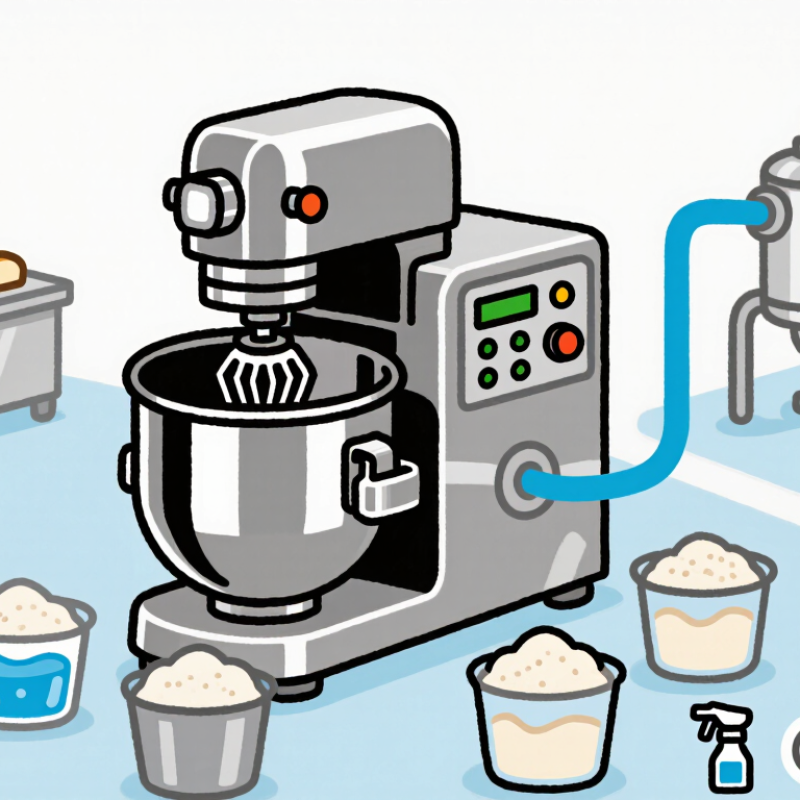
A mixing machine is industrial equipment designed to combine materials evenly and efficiently. It may blend powders, liquids, pastes, or small solid particles. A typical machine includes a mixing vessel, motor, drive system, and rotating blades or paddles. The motor transfers power through the drive system. This movement creates circulation inside the vessel.

The mixing action depends on the material and the product target. Paddles move thicker materials slowly, while high-speed blades create stronger shear for liquids or fine powders. Some machines use a horizontal drum, and others use a vertical tank. Operators may add ingredients through a top inlet while monitoring temperature, mixing time, and motor load. Small details matter. Uneven loading can create dry pockets or heavy lumps. A practical trial batch often reveals problems that specifications miss.

For a business, controlled mixing can improve product consistency and reduce manual handling. A measured cycle can also make production easier to repeat across different shifts. However, no machine mixes every material perfectly. Blade speed, filling level, moisture, and cleaning methods all affect performance. In daily operation, workers should inspect seals, check unusual vibration, and record each batch condition. Cleaning deserves attention too. Residue in corners may affect the next batch. The best choice is not always the largest machine; it is the one that matches the material, output, workspace, and maintenance skills. Mistakes still happen, so practical testing remains valuable.

Why Choose a Mixing Machine for Your Business?

A mixing machine combines materials with controlled speed, time, and shear. The chart shows typical industrial mixing-time ranges for common product categories.

Mixing time varies according to viscosity, batch size, formulation, and equipment design. Automated control can improve batch-to-batch consistency while reducing manual labor and process variation.

Which Industries Benefit Most from Mixing Machines?

Why Choose a Mixing Machine for Your Business?

Which Industries Benefit Most from Mixing Machines?

Mixing machines support industries that require consistent texture, composition, or moisture. Food processors use them for dough, sauces, fillings, and powdered ingredients. A stable mixing cycle can reduce uneven batches and manual rework. However, ingredients behave differently, so one machine cannot suit every recipe.

Pharmaceutical production also benefits from controlled blending of powders, granules, and liquid compounds. Accurate mixing helps maintain uniformity between production batches. Cosmetic manufacturers use mixers for creams, lotions, gels, and pigment-based products. Chemical companies often need strong agitation for adhesives, coatings, detergents, and specialty materials. Construction suppliers may mix mortar, plaster, concrete additives, or dry compounds. Agriculture can benefit too, especially when preparing animal feed, soil treatments, or fertilizer blends.

Tips: Check viscosity, batch size, mixing speed, and cleaning requirements before choosing equipment. Ask for material testing when possible. Watch the discharge point. Some machines mix well but empty slowly. A common mistake is focusing only on motor power. Energy use, maintenance access, and operator safety matter just as much. There is no perfect mixer. The right choice depends on the material, workflow, and expected production changes. Even experienced teams sometimes underestimate future capacity needs. Planning for modest growth can prevent an expensive replacement later.

How Mixing Machines Improve Production Efficiency

A mixing machine can make production faster, steadier, and easier to measure. It controls speed, mixing time, and batch conditions more consistently than manual labor. In a busy plant, this means fewer pauses between loading, blending, and discharge. Operators can also monitor temperature, torque, and batch weight from one control point.

The U.S. Department of Energy reports that motor-driven systems consume more than half of industrial electricity. Efficient motors and better process control can therefore reduce avoidable energy use. Deloitte’s 2023 Smart Manufacturing and Operations Survey found that 86% of manufacturers view smart manufacturing as an important competitiveness driver. A mixing machine supports this shift by recording batch data and exposing process variation. That data helps technicians adjust blade speed, ingredient order, and cleaning intervals. It also improves traceability when a batch behaves differently. Yet automation is not magic. Poor calibration, unsuitable blade design, or overfilled vessels can still create uneven textures and wasted material. This is where many purchasing decisions become too optimistic.

Tips: Test the machine with real materials, not water alone. Measure mixing time, energy use, discharge loss, and cleaning labor. Leave room for maintenance access. A faster machine is not always a better machine. Ask operators to review the design, because small access problems become daily delays. Recheck the figures after installation; early assumptions are often incomplete.

What Factors Should Businesses Consider Before Choosing One?

Why Choose a Mixing Machine for Your Business?

Choosing a mixing machine starts with your actual production needs. A larger machine is not always better. Estimate batch size, daily output, material viscosity, and mixing time before comparing equipment. Thick creams, dry powders, and liquid ingredients require different mixing actions. Check whether the machine offers adjustable speed and consistent results. Uniform texture matters when customers expect every batch to match.

Space and cleaning also influence the decision. Measure doorways, working areas, and storage space carefully. Leave room for safe operation and maintenance. Removable parts can reduce cleaning time, but they may create more components to inspect. Review the machine’s power demand, noise level, warranty terms, and access to replacement parts. Reliable technical support can prevent long production delays. Do not trust impressive specifications alone. Ask for test results using materials similar to yours.

Tips: Record your current batch problems first. Compare actual costs, not only purchase prices. Request a demonstration when possible. Let operators test loading, controls, and cleaning. Their feedback may reveal practical issues that a brochure misses.

A sensible choice should also support future growth. However, buying extra capacity too early can waste money and floor space. Consider flexibility instead. A machine with suitable attachments or programmable controls may serve changing products. Verify safety features and operating instructions before purchase. It is easy to overlook training needs. That mistake can reduce efficiency, even with capable equipment. Review the decision with production, maintenance, and finance staff. Their priorities may conflict, but that discussion often exposes weak assumptions.

How to Match Machine Features with Business Requirements

Why Choose a Mixing Machine for Your Business?

How to Match Machine Features with Business Requirements

A mixing machine should fit your process, not simply look powerful. Start with batch size, material thickness, mixing time, and daily output. A small workshop may need a compact unit with precise speed control. A busy production floor may require larger capacity and steady temperature management. Measure the vessel, doorway, power supply, and available floor space before comparing machines. These details often expose expensive assumptions.

Match the mixer’s contact materials with your product and cleaning routine. Stainless steel surfaces can support demanding hygiene practices, while smooth interiors reduce residue after draining. For thick creams, dough-like compounds, or dense liquids, torque matters more than advertised speed. Variable-speed control helps operators begin gently and increase movement safely. Ask for test data using a material with similar viscosity. Water is a poor test for heavy mixtures.

I have seen teams choose maximum capacity and then struggle with small batches. That choice wastes energy and leaves unmixed pockets near the vessel wall. A better review examines the smallest practical batch, mixing consistency, noise, maintenance access, and replacement-part availability. Record trial results, inspection dates, and operator feedback. Keep the process visible. Sometimes the most reliable machine is not the fastest one, and that is worth reconsidering.

Copyright 2025 Fluidra S.A. | Created by BCM Marketing Agencia Privacy Policy Legal note | Cookie policy |

Technical cookies are strictly necessary for our website to work and you can navigate through it. These types of cookies are those that, for example, allow us to identify you, give you access to certain restricted parts of the page if necessary, or remember different options or services already selected by you, such as your privacy preferences. Therefore, they are activated by default, your authorization not being necessary in this regard. Through the configuration of your browser, you can block or alert the presence of this type of cookies, although such blocking will affect the proper functioning of the different functionalities of our website.


The analysis cookies allow us to study the navigation of the users of our website in general (for example, which sections of the page are the most visited, which services are used most and if they work correctly, etc.). From the statistical information on navigation on our website, we can improve both the operation of the page itself and the different services it offers. Therefore, these cookies do not have an advertising purpose, but only serve to make our website work better, adapting to our users in general. By activating them you will contribute to this continuous improvement. You can enable or disable these cookies by checking the corresponding box, being disabled by default.


Functionality cookies allow us to remember your preferences, to personalize certain characteristics and general options of our website, every time you access it (for example, the language in which the information is presented to you, the sections marked as favorites, your browser type, etc.) Therefore, this type of cookies does not have an advertising purpose, but by activating them you will improve the functionality of the website (for example, adapting to your type of browser) and the customization of it based on your preferences (for example, by presenting the information in the language that you have chosen in previous occasions), which will contribute to the ease, usability and comfort of our page during your navigation. You can enable or disable these cookies by checking the corresponding box, being disabled by default.


Advertising cookies allow us to manage the advertising spaces included in our website based on criteria such as the content shown or the frequency in which the ads are displayed. For example, if you have been shown the same ad several times on our website, and you have not shown a personal interest by clicking on it, it will not appear again. In summary, by activating this type of cookies, the advertising shown on our website will be more useful and diverse, and less repetitive. You can enable or disable these cookies by checking the corresponding box, being disabled by default.


Behavioral advertising cookies allow us to obtain information based on the observation of your browsing habits and behaviors on the web, in order to show you advertising content that best suits your personal tastes and interests. To understand it in a very simple way, we will give you a fictitious example: if your last searches on the web were related to suspense literature, we would show you advertising about suspense books. Therefore, activating this type of cookies, the advertising that we show you on our website will not be generic, but will be oriented to your searches, tastes and interests, therefore adjusting exclusively to you. You can enable or disable these cookies by checking the corresponding box, being disabled by default.
To understand it in a very simple way, we will give you a fictitious example: if your last searches on the web were related to suspense literature, we would show you advertising about suspense books. Therefore, activating this type of cookies, the advertising that we show you on our website will not be generic, but will be oriented to your searches, tastes and interests, therefore adjusting exclusively to you. You can enable or disable these cookies by checking the corresponding box, being disabled by default.

SAVE

We use our own and third-party cookies to ensure the proper functioning of the website and to analyse our services, improve your experience on our website and show you advertisements related to your interests according to profiling based on your browsing habits (e.g. websites visited). You can accept all cookies by clicking "ACCEPT" or set or reject them by clicking here. If you would like to know more about the use of cookies, please see our COOKIE POLICY.


ACCEPT ALL
Reject no essentials