
Why Choose a Flat Laminating Machine?
FLUID HANDLING EXPERTS

Blog, all our news

Why Choose a Flat Laminating Machine?

Packaging quality now depends on consistency, material efficiency, and reliable production speed. A Flat Laminating Machine supports these demands by joining films, paper, foil, foam, or printed sheets with controlled pressure and heat. Its flat working surface helps maintain even contact across the entire panel. That matters when small air pockets become visible under showroom lighting.

Industry reports support this shift toward dependable converting equipment. Smithers’ The Future of Flexible Packaging to 2028 identifies flexible packaging growth, lightweight materials, and higher performance requirements as major market trends. MarketsandMarkets’ Flexible Packaging Market report also connects demand with improved barrier protection and efficient multilayer structures. These findings suggest a practical reason to consider flat laminating technology. It can help manufacturers produce stable, clean, and repeatable bonded surfaces.

The machine is not automatically efficient.

Operators still need suitable adhesives, accurate temperature settings, and careful alignment. Substrate moisture can affect bonding. Uneven pressure may create wrinkles near the edges. These details are easy to overlook during equipment selection. In my experience, the best results come from matching machine width, roller design, heating control, and production volume. A compact workshop may value simple adjustment and low maintenance. A larger plant may prioritize automation, cycle time, and process monitoring.

Choosing a Flat Laminating Machine is therefore a process decision, not merely a purchasing decision. When correctly specified, it can reduce rework, protect surface appearance, and support consistent output. However, supplier testing remains essential. Real samples reveal limitations that brochures often hide.
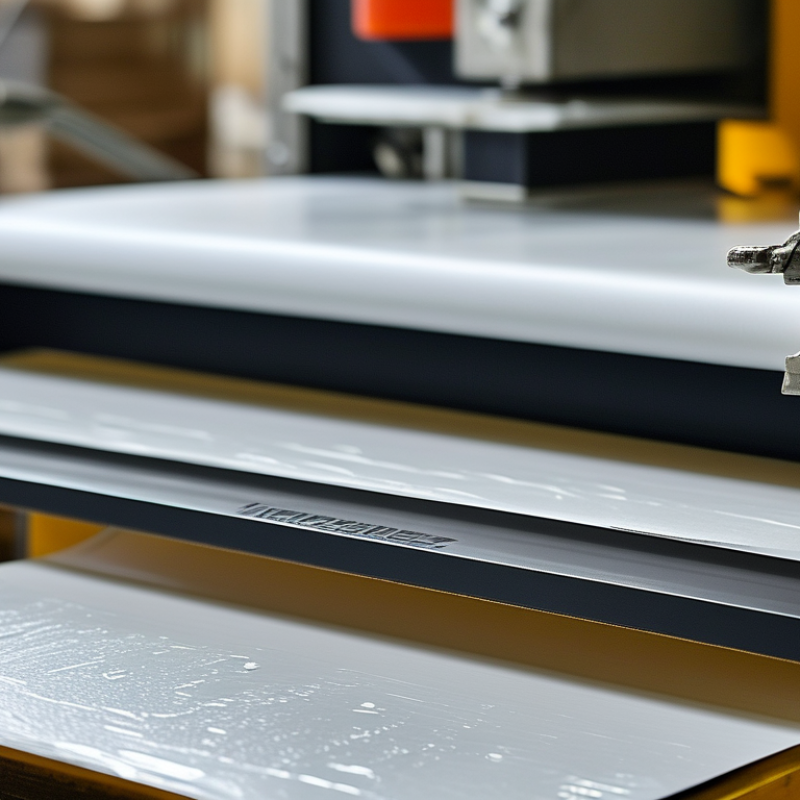
Why Choose a Flat Laminating Machine?

What Is a Flat Laminating Machine?

What Is a Flat Laminating Machine?

A flat laminating machine is equipment that bonds two or more flat materials into one stable structure. It commonly uses controlled heat, pressure, or adhesive to join sheets evenly. Unlike roll laminators, it processes materials on a flat working surface. The sheet usually stays still during pressing. Pressure creates the bond.

In daily production, an operator places the materials on a platform and aligns their edges carefully. A heated platen then presses the layers for a controlled period. Some machines also use vacuum pressure to remove air pockets between surfaces. This method suits panels, decorative sheets, printed boards, insulation layers, and composite materials. It offers consistent contact across wide areas.

Reliable results depend on clean surfaces, correct temperature, and suitable pressing time. Dust, trapped air, or uneven alignment can weaken the finished panel. Experienced technicians inspect the first pieces and adjust settings before longer production runs. A practical trial should include different thicknesses and surface textures. It is not perfect. Manual loading can take time, and excessive heat may damage sensitive materials. Still, the flat design gives operators clear control over placement, pressure, and bonding quality.

Why Choose a Flat Laminating Machine? - What Is a Flat Laminating Machine?

Data Dimension Flat Laminating Machine Practical Value
Basic definition A machine that applies uniform heat and pressure across a flat workpiece to bond a film, foil, paper, veneer, or protective layer to its surface. Creates a consistent laminated surface with controlled bonding conditions.
Operating format The material is placed horizontally on a flat platen, table, or vacuum bed before the laminating cycle begins. Suitable for rigid sheets, panels, boards, signs, doors, furniture parts, and other flat components.
Typical working area Common equipment sizes range from approximately 600 × 900 mm for small workpieces to more than 1,200 × 2,400 mm for large panels. The working area should be selected according to the largest regular panel, not only the average panel size.
Heating method Electric heating elements, heated platens, infrared systems, or heated rollers may be used, depending on the machine design. Controlled heating helps activate heat-sensitive adhesives and improve bond consistency.
Temperature range Many general-purpose systems operate within approximately 40–160°C, while the usable range depends on the adhesive and material. Accurate temperature control reduces the risk of incomplete bonding, film shrinkage, or surface damage.
Pressure system Depending on the design, pressure may be supplied by a pneumatic press, hydraulic system, mechanical platen, rollers, or a vacuum membrane. Uniform pressure helps limit wrinkles, air pockets, delamination, and uneven edges.
Vacuum capability Vacuum-assisted models remove air between the substrate and the laminating layer; typical vacuum levels are often around −0.06 to −0.095 MPa. Useful for large surfaces, delicate films, contoured panels, and applications where air entrapment must be minimized.
Common materials PVC and decorative films, paper, foil, veneer, textiles, protective films, printed graphics, and selected composite layers. The adhesive, substrate, and film must be compatible with the machine’s temperature and pressure settings.
Typical applications Furniture panels, kitchen and cabinet components, interior doors, wall panels, signage, printed boards, insulation panels, and decorative surfaces. Provides a practical solution for both decorative finishing and surface protection.
Surface quality A flat platen or vacuum membrane distributes force over the panel surface, supporting smooth and even lamination. Helps produce a cleaner appearance and reduces visible bonding defects when settings are correct.
Production suitability Well suited to batch production, customized orders, and medium-volume manufacturing. Continuous roller systems may be more efficient for very high-volume sheet processing. Offers a balance between flexibility, repeatability, and equipment investment.
Control requirements Operators normally set temperature, pressure or vacuum, heating time, cooling time, and cycle sequence. Repeatable settings make it easier to maintain consistent results across production batches.
Main advantages Even pressure distribution, adaptable workpiece sizes, reliable surface quality, and compatibility with many flat-panel materials. A strong choice when quality and flexibility are more important than maximum continuous throughput.
Key limitations Flat systems require loading and unloading space, and the cycle time can be longer than continuous laminating equipment for large-volume production. Production planning should account for loading time, heating time, pressing time, and cooling time.
Best selection criteria Compare the maximum panel size, material compatibility, temperature uniformity, pressure or vacuum capacity, cycle time, power supply, safety features, and maintenance access. Matching the machine to the actual substrate, adhesive, film, and production volume is more important than choosing the largest model.

Note: Operating ranges are typical industry values. The exact temperature, pressure, vacuum level, and cycle time should always be confirmed through the material and adhesive manufacturer’s processing recommendations.

How Does a Flat Laminating Machine Work?

A flat laminating machine bonds two flat materials into one stronger, more functional sheet. The process begins when an operator places a printed sheet on the feed table. Rollers guide it through an adhesive layer, heated surface, and pressure zone. Heat softens the film or activates the adhesive. Pressure removes small air pockets. The laminated sheet then exits smoothly for trimming or stacking.

Temperature, pressure, and speed must work together. A paperboard sheet may curl when the temperature is too high. Weak pressure can leave cloudy areas or silvering. In daily production, operators often check the first sheet under angled light. This simple inspection catches wrinkles, edge lift, and uneven bonding before a full batch continues.

The Flexible Packaging Association reported that U.S. flexible packaging sales reached approximately 39 billion dollars in 2022. Although flat laminating serves different applications, this figure reflects continued demand for protective, lightweight material structures. Industry testing also commonly evaluates bond strength, visual clarity, dimensional stability, and resistance to heat or moisture. These checks support reliable performance rather than attractive appearance alone.

A flat machine is especially practical for cartons, covers, signs, sample boards, and short production runs. It offers direct control over each sheet. That can reduce setup waste. However, the operator still matters greatly. Inconsistent alignment or rushed curing can undermine good equipment. I have found that slower settings sometimes produce better results, even when they appear less efficient. The process is precise, but not perfectly forgiving.

Which Materials Can It Laminate?

Why Choose a Flat Laminating Machine? Which Materials Can It Laminate?

A flat laminating machine can bond paper, cardboard, printed sheets, films, foil, and selected textiles. Its even pressure helps cover broad surfaces without obvious bubbles or wrinkles. In practical production, operators often laminate menus, folding cartons, posters, book covers, labels, and protective panels. It can also process PET, BOPP, and some PE films, but material compatibility depends on adhesive type, heat resistance, thickness, and surface energy. A glossy film may look suitable yet peel after cooling. That matters.

The packaging market is becoming more material-diverse. Smithers reported that the global packaging market could reach about 1.2 trillion US dollars by 2028. Grand View Research valued the global flexible packaging market at approximately 261.07 billion US dollars in 2022, with projected growth through 2030. These figures show why converters need flexible equipment. However, growth does not remove technical limits. Thick board, coated paper, fabric, and multilayer films may require different rollers, temperatures, or dwell times. A flat laminator is not a universal solution.

A sensible test uses the actual substrate, adhesive, and finished thickness. Check bond strength, edge lift, curl, and surface appearance after 24 hours. Small samples can reveal large problems. I would not trust a machine specification alone. Humidity, ink coverage, and uneven feeding can change results. Even experienced operators occasionally need to adjust pressure manually. That is not failure; it is useful production evidence.

What Are Its Main Advantages?

Why Choose a Flat Laminating Machine?

A flat laminating machine applies steady pressure across the entire sheet. This helps reduce bubbles, wrinkles, and uneven edges. The result is cleaner and more consistent. It works well with printed panels, signs, boards, and protective films. Operators can usually adjust temperature, pressure, and speed for different materials.

Its main advantage is control. A level work surface supports accurate positioning before lamination begins. This matters when aligning small labels or large graphics. Even pressure also reduces waste caused by shifting or trapped air. Less rework. In busy workshops, that can save material, labor, and production time. Some machines also support repeatable settings, helping different operators achieve similar results.

Practical use still requires care. A dusty sheet, incorrect temperature, or rushed setup can damage the finish. Test a small sample before processing a full batch. This simple step reveals adhesion problems early. The machine may improve consistency, but it cannot correct poor film quality or badly prepared surfaces. Maintenance matters too; worn rollers, dirty plates, or inaccurate sensors can affect results. That part is easy to overlook. A flat laminating machine is therefore most valuable when paired with trained handling, clear operating procedures, and regular inspection.

Why Choose a Flat Laminating Machine?

Flat laminating machines provide controlled heat and even pressure across the entire panel, making them suitable for a wide range of adhesive films and rigid substrates.

How to read the chart: The bars show representative midpoint temperatures for commonly used adhesive systems. Actual settings depend on the adhesive formulation, substrate, pressure, and dwell time. A flat laminating machine helps maintain stable, uniform conditions across the working surface.

How Should You Choose the Right Model?

Choosing a flat laminating machine starts with your actual materials, not the advertised speed. Measure the widest sheet, thickest board, and smallest item you will process. A narrow working width can create waste and awkward overlaps. Check whether the rollers accept your film, paper, card, or composite sheet. Cold and hot lamination behave differently. Heat-sensitive prints may curl, discolor, or trap bubbles under excessive heat. Ask for a test run using your own samples. That small step often reveals more than a specification sheet.

Match the model to your daily workload. For occasional signage, simple temperature controls and manual feeding may be enough. A production room needs stable pressure, adjustable speed, and even heating across the roller. Review warm-up time, maximum laminating width, supported thickness, and continuous operating limits. These figures should come from clear technical documentation. Inspect emergency stops, guards, ventilation needs, and cleaning access. Operators should reach controls without stretching across hot surfaces. Small details matter.

Maintenance is another selection test. Ask how often rollers need cleaning and how easily worn parts can be replaced. Confirm power requirements, floor space, noise levels, and training needs before purchase. Do not judge value by output speed alone. Faster feeding can increase alignment errors and film consumption. I have seen teams choose oversized equipment, then leave it idle because setup felt complicated. That choice looked efficient on paper. It was not. A smaller model may suit a stable workflow better, although future growth deserves honest discussion. Leave room for mistakes, adjustments, and the occasional difficult sheet.

Copyright 2025 Fluidra S.A. | Created by BCM Marketing Agencia Privacy Policy Legal note | Cookie policy |

Technical cookies are strictly necessary for our website to work and you can navigate through it. These types of cookies are those that, for example, allow us to identify you, give you access to certain restricted parts of the page if necessary, or remember different options or services already selected by you, such as your privacy preferences. Therefore, they are activated by default, your authorization not being necessary in this regard. Through the configuration of your browser, you can block or alert the presence of this type of cookies, although such blocking will affect the proper functioning of the different functionalities of our website.


The analysis cookies allow us to study the navigation of the users of our website in general (for example, which sections of the page are the most visited, which services are used most and if they work correctly, etc.). From the statistical information on navigation on our website, we can improve both the operation of the page itself and the different services it offers. Therefore, these cookies do not have an advertising purpose, but only serve to make our website work better, adapting to our users in general. By activating them you will contribute to this continuous improvement. You can enable or disable these cookies by checking the corresponding box, being disabled by default.


Functionality cookies allow us to remember your preferences, to personalize certain characteristics and general options of our website, every time you access it (for example, the language in which the information is presented to you, the sections marked as favorites, your browser type, etc.) Therefore, this type of cookies does not have an advertising purpose, but by activating them you will improve the functionality of the website (for example, adapting to your type of browser) and the customization of it based on your preferences (for example, by presenting the information in the language that you have chosen in previous occasions), which will contribute to the ease, usability and comfort of our page during your navigation. You can enable or disable these cookies by checking the corresponding box, being disabled by default.


Advertising cookies allow us to manage the advertising spaces included in our website based on criteria such as the content shown or the frequency in which the ads are displayed. For example, if you have been shown the same ad several times on our website, and you have not shown a personal interest by clicking on it, it will not appear again. In summary, by activating this type of cookies, the advertising shown on our website will be more useful and diverse, and less repetitive. You can enable or disable these cookies by checking the corresponding box, being disabled by default.


Behavioral advertising cookies allow us to obtain information based on the observation of your browsing habits and behaviors on the web, in order to show you advertising content that best suits your personal tastes and interests. To understand it in a very simple way, we will give you a fictitious example: if your last searches on the web were related to suspense literature, we would show you advertising about suspense books. Therefore, activating this type of cookies, the advertising that we show you on our website will not be generic, but will be oriented to your searches, tastes and interests, therefore adjusting exclusively to you. You can enable or disable these cookies by checking the corresponding box, being disabled by default.
To understand it in a very simple way, we will give you a fictitious example: if your last searches on the web were related to suspense literature, we would show you advertising about suspense books. Therefore, activating this type of cookies, the advertising that we show you on our website will not be generic, but will be oriented to your searches, tastes and interests, therefore adjusting exclusively to you. You can enable or disable these cookies by checking the corresponding box, being disabled by default.

SAVE

We use our own and third-party cookies to ensure the proper functioning of the website and to analyse our services, improve your experience on our website and show you advertisements related to your interests according to profiling based on your browsing habits (e.g. websites visited). You can accept all cookies by clicking "ACCEPT" or set or reject them by clicking here. If you would like to know more about the use of cookies, please see our COOKIE POLICY.


ACCEPT ALL
Reject no essentials


