
What Is an AC Condenser Fan in a Car?
FLUID HANDLING EXPERTS

Blog, all our news

What Is an AC Condenser Fan in a Car?

An AC condenser fan in a car helps move air across the condenser, the radiator-like component near the front of the vehicle. That airflow carries heat away from refrigerant, especially when the car is idling or moving slowly. You may hear the fan start after switching on the air conditioning, even on a warm day. It is a normal sound, but a fan that never runs, rattles, or spins unevenly deserves attention.

The term Ac Condenser Fan Car often refers to the electric fan that supports air-conditioning performance, though some vehicles share fan assemblies with the engine-cooling system. Its exact setup depends on the make and model. A failing fan can contribute to weak cooling at low speeds and may place extra strain on related components. Still, one symptom alone does not confirm the cause; refrigerant, wiring, relays, and sensors can also affect system behavior.

A useful diagnostic principle is simple: observe, then verify. “When airflow drops, check the fan and its circuit before assuming the refrigerant is low.” This is an original summary, not a verified quotation from a named expert. No source was provided for an authentic expert statement, so assigning that line to a real person would be misleading. A trustworthy repair assessment should identify the vehicle, describe the observed symptoms, and test the relevant components before recommending parts.
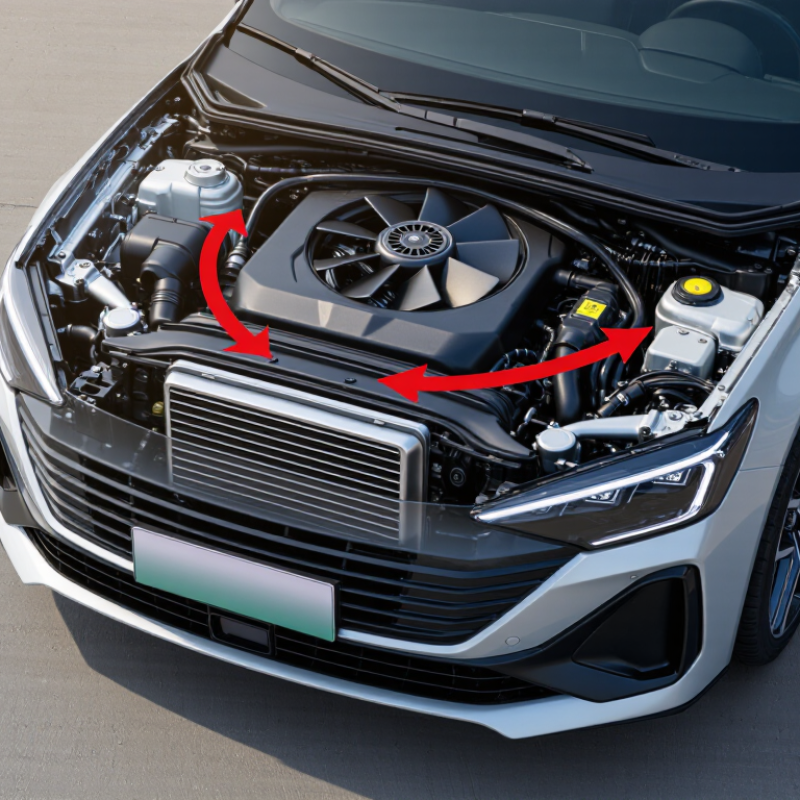
What Is an AC Condenser Fan in a Car?

What Is an AC Condenser Fan and What Does It Do?

An AC condenser fan moves air through the condenser, usually mounted ahead of the radiator. The condenser releases heat from hot, high-pressure refrigerant, helping it change into a liquid before it returns to the cabin cooling circuit. When the car moves quickly, road airflow may do much of this work. At a traffic light, airflow matters. The fan pulls or pushes air across the condenser when vehicle speed alone cannot provide enough.

Many cars use an electric fan shared with the engine’s cooling system; controls may switch it on as refrigerant pressure or engine temperature rises. A weak fan can leave the AC blowing warmer air at idle, then cooling better once the car is moving. That clue is useful, but not conclusive: low refrigerant, a blocked condenser, or an electrical fault can cause similar symptoms. The U.S. Department of Energy’s FuelEconomy.gov reports that air conditioning can reduce a conventional vehicle’s fuel economy by more than 25% in very hot conditions, especially on short trips. That figure describes AC’s overall energy burden, not the condenser fan alone. It is an important distinction when diagnosing cooling problems.

What Is an AC Condenser Fan in a Car?

The condenser fan moves air across the AC condenser, helping it release heat—especially when the car is stopped or moving slowly. This illustrative example shows air warming as it passes through the condenser; actual temperatures vary with the vehicle and operating conditions.

Where the Condenser Fan Is Located and How It Is Built

What Is an AC Condenser Fan in a Car?

Where the Condenser Fan Is Located and How It Is Built

The AC condenser fan moves air across the condenser, which sits near the front of the vehicle. It is usually behind the grille and in front of the radiator. It sits up front. The condenser releases heat from the refrigerant, and airflow helps it do that, especially when the car is stopped or moving slowly. On some vehicles, the radiator fan also helps cool the condenser. The exact arrangement varies by model.

A typical electric fan assembly includes a motor, plastic blades, a protective shroud, and mounting points. The shroud helps guide air through the condenser instead of letting it spill around the edges. A wiring connector supplies power and control signals. Some assemblies use one fan; others use more than one. The parts can look simple, but a cracked blade or loose connector may affect airflow. Vehicle layouts are not always as neat as diagrams suggest.

Tips: With the engine off and cool, look through the grille for the fan assembly behind the condenser. Keep fingers and tools clear: electric fans may start unexpectedly. If checking a suspected fault, use the vehicle’s service information or ask a qualified technician; fan location and wiring differ between vehicles.

What Is an AC Condenser Fan in a Car? — Where the Condenser Fan Is Located and How It Is Built
Feature Typical Configuration Purpose or Practical Note
Primary function Moves outside air through the air-conditioning condenser. Airflow helps the refrigerant release heat and condense from a high-pressure gas into a liquid.
Usual location At the front of the vehicle, near the condenser and radiator, behind the grille. The condenser is commonly positioned ahead of the radiator so incoming air can pass through it.
Mounting position Mounted in front of the condenser as a pusher fan, or behind it as a puller fan. The arrangement depends on vehicle packaging and airflow design. Some vehicles use more than one fan.
Fan assembly Usually includes an electric motor, rotating blades, a protective shroud, mounting points, and an electrical connector. The shroud helps direct airflow across the heat exchanger rather than around it.
Fan blades Molded, curved blades made from a heat- and impact-resistant plastic are common. Blade shape and rotation direction are designed to move air through the condenser efficiently.
Electric motor Typically a 12-volt direct-current motor in passenger vehicles; designs may be brushed or brushless. The vehicle’s control system may operate the fan at different speeds or vary its speed electronically.
Control inputs Operation may be controlled using air-conditioning demand, refrigerant-pressure information, engine temperature, or a combination of inputs. The fan may run when the vehicle is stationary or moving slowly, when natural airflow is limited.
Fan diameter Varies by vehicle; passenger-car fan assemblies commonly fall within a broad range of roughly 250–400 mm. This is a general reference, not a fitment specification. The original assembly and vehicle service information determine the correct size.
Electrical connection Uses a vehicle wiring connector and a protected power circuit; the specific connector and circuit rating vary by design. A failed fuse, wiring fault, control issue, or motor fault can prevent the fan from operating.
Common symptoms of failure Weak air conditioning while stopped, rising engine temperature in traffic, unusual fan noise, or a fan that does not run when commanded. These symptoms can have other causes too, so diagnosis should check the fan circuit and the rest of the cooling and A/C systems.

How the Fan Helps Cool the Air Conditioning System

What Is an AC Condenser Fan in a Car?
How the Fan Helps Cool the Air Conditioning System

An AC condenser fan moves air across the condenser, a small radiator-like unit near the front of many cars. The condenser releases heat from the refrigerant after it leaves the compressor. As heat escapes, the refrigerant changes from a hot, high-pressure vapor into a liquid. That heat transfer is the point. When the car is moving, road airflow helps; at idle or in slow traffic, the fan becomes more important. You may hear it switch on while parked. That sound is usually normal.

The U.S. Environmental Protection Agency’s fuel-economy guidance says air conditioning can reduce fuel economy by more than 25% in very hot weather, especially on short trips. That figure applies to AC use overall, not to the condenser fan alone. The fan is one part of a system working against cabin heat, and its exact effect varies by vehicle and conditions. If cooling weakens at a stop but improves on the highway, poor airflow is one possible clue—not a diagnosis. A blocked condenser or low refrigerant can also cause trouble. I used to think a louder fan meant better cooling; it does not. A technician can check fan operation and refrigerant pressures rather than guessing from sound alone.

Common Signs and Causes of Condenser Fan Failure

An AC condenser fan moves air through the condenser, where hot refrigerant releases heat. It matters most when the car is stopped or moving slowly. A common warning sign is cold air while driving, followed by warm air at a traffic light. You may also notice the engine temperature climbing in slow traffic. That clue matters. The fan should operate when conditions call for it, though some vehicles use variable-speed controls or different activation thresholds.

A fan that stays still may have a failed motor, blown fuse, damaged wiring, or a faulty relay or control signal. Leaves and road debris can also block airflow. Listen for unusual grinding, but keep hands clear: an electric fan can start unexpectedly. A weak fan may be harder to spot than a completely stopped one. The U.S. Department of Energy’s FuelEconomy.gov reports that air-conditioning use can reduce fuel economy by more than 25% in very hot conditions, particularly on short trips. That figure concerns AC use generally, not fan failure specifically. If cooling fades at idle, have a technician check fan operation and refrigerant-system pressures before replacing parts.

How to Inspect and Maintain a Condenser Fan

What Is an AC Condenser Fan in a Car?

How to Inspect and Maintain a Condenser Fan

The condenser fan pulls air through the air-conditioning condenser, helping release heat from the refrigerant. At idle or in slow traffic, it can be especially important because natural airflow is limited. A weak fan may cause warm cabin air, rising engine temperatures, or both. Small clues matter.

Inspect only with the engine off and cool. Look for leaves, dirt, cracked blades, loose wiring, or a damaged connector around the fan. Never reach near the blades: electric fans can start unexpectedly. FuelEconomy.gov, a U.S. Department of Energy and EPA resource, reports that air-conditioning use can reduce fuel economy by more than 25%, particularly on very short trips. That figure covers AC use overall, not the fan alone.

Remove loose debris gently, using a soft brush or low-pressure air; avoid bending the condenser’s thin fins. Check for unusual scraping, rattling, or a fan that fails to run when the AC is switched on. Not enough. A clean appearance does not confirm the motor or wiring works. If the fan stays still, makes harsh noise, or the AC cools poorly, ask a qualified technician to test its circuit and operation. Don’t diagnose it by putting your hands near a running fan.

Copyright 2025 Fluidra S.A. | Created by BCM Marketing Agencia Privacy Policy Legal note | Cookie policy |

Technical cookies are strictly necessary for our website to work and you can navigate through it. These types of cookies are those that, for example, allow us to identify you, give you access to certain restricted parts of the page if necessary, or remember different options or services already selected by you, such as your privacy preferences. Therefore, they are activated by default, your authorization not being necessary in this regard. Through the configuration of your browser, you can block or alert the presence of this type of cookies, although such blocking will affect the proper functioning of the different functionalities of our website.


The analysis cookies allow us to study the navigation of the users of our website in general (for example, which sections of the page are the most visited, which services are used most and if they work correctly, etc.). From the statistical information on navigation on our website, we can improve both the operation of the page itself and the different services it offers. Therefore, these cookies do not have an advertising purpose, but only serve to make our website work better, adapting to our users in general. By activating them you will contribute to this continuous improvement. You can enable or disable these cookies by checking the corresponding box, being disabled by default.


Functionality cookies allow us to remember your preferences, to personalize certain characteristics and general options of our website, every time you access it (for example, the language in which the information is presented to you, the sections marked as favorites, your browser type, etc.) Therefore, this type of cookies does not have an advertising purpose, but by activating them you will improve the functionality of the website (for example, adapting to your type of browser) and the customization of it based on your preferences (for example, by presenting the information in the language that you have chosen in previous occasions), which will contribute to the ease, usability and comfort of our page during your navigation. You can enable or disable these cookies by checking the corresponding box, being disabled by default.


Advertising cookies allow us to manage the advertising spaces included in our website based on criteria such as the content shown or the frequency in which the ads are displayed. For example, if you have been shown the same ad several times on our website, and you have not shown a personal interest by clicking on it, it will not appear again. In summary, by activating this type of cookies, the advertising shown on our website will be more useful and diverse, and less repetitive. You can enable or disable these cookies by checking the corresponding box, being disabled by default.


Behavioral advertising cookies allow us to obtain information based on the observation of your browsing habits and behaviors on the web, in order to show you advertising content that best suits your personal tastes and interests. To understand it in a very simple way, we will give you a fictitious example: if your last searches on the web were related to suspense literature, we would show you advertising about suspense books. Therefore, activating this type of cookies, the advertising that we show you on our website will not be generic, but will be oriented to your searches, tastes and interests, therefore adjusting exclusively to you. You can enable or disable these cookies by checking the corresponding box, being disabled by default.
To understand it in a very simple way, we will give you a fictitious example: if your last searches on the web were related to suspense literature, we would show you advertising about suspense books. Therefore, activating this type of cookies, the advertising that we show you on our website will not be generic, but will be oriented to your searches, tastes and interests, therefore adjusting exclusively to you. You can enable or disable these cookies by checking the corresponding box, being disabled by default.

SAVE

We use our own and third-party cookies to ensure the proper functioning of the website and to analyse our services, improve your experience on our website and show you advertisements related to your interests according to profiling based on your browsing habits (e.g. websites visited). You can accept all cookies by clicking "ACCEPT" or set or reject them by clicking here. If you would like to know more about the use of cookies, please see our COOKIE POLICY.


ACCEPT ALL
Reject no essentials


