
As advanced laboratories and manufacturing lines demand cleaner thermal control, the Quartz Reactor remains a trusted choice for high-temperature processing. Its chemical resistance, optical clarity, and low contamination risk support applications in semiconductor, solar, pharmaceutical, and research environments. Yet no single design fits every process.
This 2026 guide examines the leading Quartz Reactor types, including single-wall, double-wall, jacketed, annular, and custom-configured systems. Each structure manages heat, pressure, gas flow, and material exposure differently. A single-wall reactor may suit simple laboratory trials. Double-wall and jacketed designs offer more controlled temperature management. Annular systems can improve gas distribution in specialized workflows. Custom units address unusual chamber sizes, fittings, or process conditions.
Performance depends on more than quartz purity. Wall thickness, sealing method, heating uniformity, airflow, cleaning routines, and sensor placement also matter. Small design choices can affect reaction stability and maintenance costs. Very important.
The discussion uses practical engineering considerations, manufacturer documentation, and established process-control principles. It also recognizes a common weakness: product descriptions often emphasize peak temperature while overlooking thermal cycling and service life. That omission deserves closer attention. Readers should verify material grades, operating limits, traceability, and compatibility with their specific process before selecting equipment. Supplier testing and documented operating data remain essential.
The goal is not to name one universal winner. It is to clarify where each reactor type performs well, where it may struggle, and which questions deserve careful review in 2026.
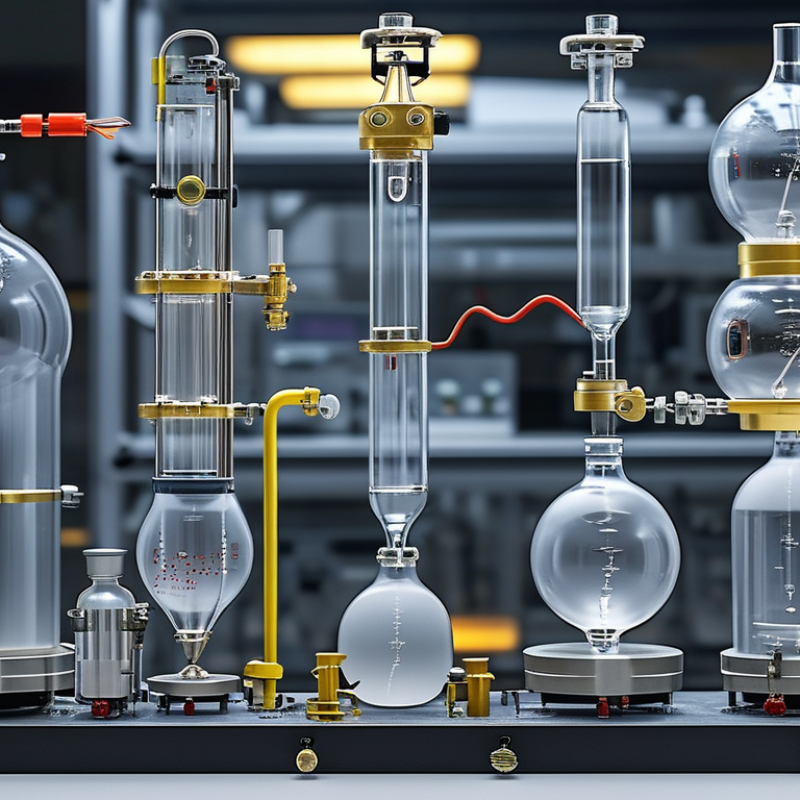
Quartz reactors are process vessels made from high-purity fused silica. They withstand thermal shock, resist many corrosive gases, and limit metallic contamination. These qualities matter during deposition, diffusion, oxidation, and cleaning steps. Inside a reactor, wafer spacing, gas flow, temperature uniformity, and wall condition directly affect film quality.
The 2026 leading designs will likely include vertical batch reactors, horizontal tube reactors, and single-wafer chamber systems. Vertical batch reactors process many wafers together, reducing handling time and energy per wafer. Horizontal tubes remain useful for stable thermal profiles and straightforward maintenance. Single-wafer systems offer tighter process control when advanced device structures demand narrow uniformity limits. SEMI’s World Fab Forecast reported global semiconductor manufacturing capacity would continue expanding through 2025, supporting demand for reliable thermal-processing equipment. The same report forecast equipment spending near 121 billion dollars in 2025, showing how strongly capacity investment influences reactor development.
Quartz selection is not only about purity. Wall thickness, surface roughness, thermal history, and cleaning frequency also influence particle performance. A reactor can look clean yet develop microscopic defects after repeated heating cycles. That is often underestimated. Industry guidance from SEMI and contamination-control studies consistently emphasizes process stability, traceability, and preventive maintenance. Still, no reactor type fits every fab. Batch systems may sacrifice flexibility, while single-wafer chambers can consume more utilities per wafer. Engineers should compare throughput, temperature uniformity, gas residence time, replacement intervals, and measured contamination data before choosing a 2026 configuration. Rules of thumb help, but real process evidence matters more.

Representative maximum process temperatures for commonly used quartz reactor configurations. Actual limits depend on quartz grade, wall thickness, atmosphere, heating method, thermal cycling, and reactor design.
What Are the 2026 Top Quartz Reactor Types?
Key Design Features of the Leading 2026 Quartz Reactor Types
In 2026, the leading quartz reactor types will likely include vertical batch, horizontal tube, and single-wafer systems. Each design serves a different production rhythm. Vertical batch reactors support high wafer loads and compact footprints. Horizontal tubes offer accessible maintenance and stable thermal zones. Single-wafer reactors provide tighter process control, especially for advanced deposition and oxidation. A ranking is never absolute. It depends on throughput, particle control, and recipe flexibility.
The strongest designs combine high-purity fused quartz with carefully shaped gas paths. Uniform wall thickness reduces thermal stress around hot zones. Multi-zone heating helps maintain temperature variation below practical process limits. Automated pressure control also supports repeatable film growth. SEMI reported that global semiconductor equipment sales reached 112.8 billion dollars in 2024. That investment increases demand for reactors with longer component life and faster cleaning cycles. However, quartz durability is often overestimated. Repeated thermal shocks can still create microcracks.
Tips: Check the reactor’s temperature uniformity, quartz purity, leak rate, and replacement history. Ask for measured data, not only catalogue values. Confirm whether the design supports your wafer size and gas chemistry. The IEA’s Renewables 2024 report also recorded nearly 600 gigawatts of new solar photovoltaic capacity in 2024. This growth favors larger quartz tube systems, but scale can reduce process uniformity. Bigger is not always better. Small design compromises may become expensive after continuous operation.
Quartz reactors are classified by chamber structure and operating method, not by appearance alone. Horizontal tube reactors use long quartz tubes and boats for batch processing. Vertical reactors use stacked wafers and controlled gas flow. Bell-jar designs provide wider access for cleaning and loading. Single-wafer chambers offer tighter process control, but lower throughput.
SEMI’s 2025 World Fab Forecast projects global semiconductor capacity to exceed 35 million wafers per month in 2026. That growth increases demand for stable, high-purity reactor components. Batch reactors remain practical for diffusion and oxidation because one cycle processes many wafers. Single-wafer systems suit advanced deposition, where temperature uniformity and film thickness matter more.
Operating pressure creates another useful classification. Atmospheric-pressure reactors simplify gas delivery and support mature thermal processes. Low-pressure reactors improve reaction control and reduce unwanted deposition on chamber walls. Some systems combine vertical structures with low-pressure operation, balancing footprint, uniformity, and output.
In field operation, quartz purity, wall thickness, thermal history, and cleaning frequency affect service life. Industry reports from Techcet repeatedly identify quartzware as a sensitive consumable category in wafer-fabrication maintenance. Yet reactor selection is not purely technical. A high-throughput batch design may waste energy during frequent recipe changes. A single-wafer design may deliver better uniformity but increase maintenance time. Engineers should compare measured particle counts, temperature maps, and replacement intervals rather than trust specifications alone.
Quartz reactor selection in 2026 depends on process control, not appearance. Horizontal batch reactors remain practical for diffusion and oxidation, especially when many wafers need identical thermal exposure. Vertical batch reactors save floor space and can improve loading consistency. Single-wafer reactors offer faster recipe changes and tighter process feedback, but their output is usually lower.
Performance should be compared through measurable conditions. Check temperature uniformity, gas residence time, wall thickness, cleaning frequency, and particle generation. SEMI’s World Fab Forecast 2025 indicates continued expansion of global semiconductor capacity through 2026. That growth increases demand for repeatable reactor operation, not simply larger chambers. For photovoltaic production, IEA PVPS reported more than 400 GW of new solar capacity installed worldwide in 2023. Large-volume quartz systems therefore remain relevant for high-throughput applications. The figures are impressive, but they do not guarantee better process results.
Safety needs equal attention. Fused quartz tolerates high temperatures, yet sudden cooling can cause cracks or failure. Inspect the tube after thermal cycling. Check pressure relief, exhaust capture, interlocks, and compatibility with cleaning chemicals. Transparent walls help operators identify deposits early. They also create false confidence. A clean-looking chamber may still contain stressed areas or hidden contamination. In my experience, maintenance records often reveal more than a product specification sheet.
The best reactor is rarely the fastest one.
What Are the 2026 Top Quartz Reactor Types?
Selecting the right quartz reactor starts with process conditions, not popularity. Batch quartz reactors suit small-volume trials, recipe development, and processes needing frequent sampling. Continuous-flow quartz tubes offer stable residence times and improved temperature control. They work well when production requires repeatable movement through a heated zone.
Jacketed reactors help manage rapid temperature changes and protect heat-sensitive materials. UV-transparent quartz reactors support photochemical processes because they transmit selected ultraviolet wavelengths. High-temperature tube reactors are useful for thermal treatment, gas reactions, and controlled-atmosphere experiments. The best choice depends on pressure, flow rate, chemical compatibility, heating method, and cleaning access. A reactor can perform well in testing but fail during scale-up.
Tips: Check the quartz grade, wall thickness, connection design, and usable volume. Confirm whether seals, fittings, and sensors tolerate the same temperature range. Keep a small safety margin for thermal expansion. Do not select capacity by volume alone.
In practical work, I compare the cold-zone layout with the actual reaction zone. Dead spaces may cause residue buildup and uneven conversion. A larger reactor is not always better; it can reduce heat transfer and response speed. I also review maintenance frequency before approving a design. This step is often overlooked. Process data should guide the final choice, although early data may be incomplete and require another test cycle.
| Quartz Reactor Type | Typical Operating Mode | Common Temperature Range | Pressure Range | Process Capacity | Best-Fit Applications | Main Strengths | Key Limitations | Process-Control Considerations | Overall Suitability |
|---|---|---|---|---|---|---|---|---|---|
| Horizontal Batch Tube Reactor | Batch processing with substrates, boats, or samples placed inside a horizontal quartz tube | Approximately 400–1,200 °C, depending on the process chemistry and furnace design | Atmospheric pressure to low pressure; commonly used from approximately 10-3 Torr to 1 atm | Small to medium batch loads; suitable for multiple wafers or samples in one cycle | Diffusion, oxidation, annealing, dopant drive-in, and laboratory-scale thermal processing | Simple loading, good temperature uniformity, mature design, and relatively easy maintenance | Batch-to-batch processing can reduce throughput; longer thermal exposure may increase contamination or diffusion | Requires accurate gas-flow control, temperature-zone calibration, exhaust management, and controlled loading conditions | ★★★★★ |
| Vertical Batch Quartz Reactor | Batch operation with substrates stacked vertically in a quartz boat | Approximately 400–1,200 °C | Low pressure or atmospheric pressure, depending on the deposition or thermal process | Medium to high batch capacity, often higher than a comparable laboratory horizontal system | High-volume wafer processing, oxidation, diffusion, annealing, and thin-film treatment | Efficient use of floor space, consistent gas distribution, and scalable batch capacity | More complex loading equipment; particle control and boat handling require disciplined procedures | Important variables include boat spacing, vertical temperature gradients, gas-inlet design, and exhaust uniformity | ★★★★★ |
| Single-Wafer Quartz Reactor | One substrate processed at a time with rapid heating and cooling | Approximately 300–1,100 °C | Vacuum to atmospheric pressure; the exact range depends on the chamber seals and gas system | Low batch capacity with high process flexibility | Rapid thermal processing, research and development, short-cycle annealing, and process optimization | Fast recipe changes, short thermal budget, excellent experimental flexibility, and reduced cross-wafer variation | Lower throughput per cycle; loading systems and temperature measurement can be more demanding | Requires precise pyrometry or thermocouple control, fast gas switching, and accurate ramp-rate management | ★★★★★ |
| Horizontal Tubular Flow Reactor | Continuous or semi-continuous gas flow through a quartz tube containing a sample, substrate, or catalyst bed | Approximately 200–1,100 °C | Vacuum to atmospheric pressure; many systems are optimized for near-atmospheric flow | Small to medium sample volume; capacity is determined by tube diameter and material bed length | Catalyst testing, gas–solid reactions, chemical vapor treatment, sintering, and materials research | Simple flow path, easy access to the reaction zone, flexible gas chemistry, and relatively low operating cost | Axial temperature gradients and residence-time variation may affect uniformity and conversion | Mass-flow control, residence time, pressure drop, gas mixing, and downstream scrubbing must be monitored | ★★★★★ |
| Quartz CVD Reactor | Gas-phase precursor reaction and thin-film deposition on heated substrates | Approximately 400–1,100 °C for thermal CVD; lower temperatures may be used with assisted chemistries | Typically low pressure to atmospheric pressure | Single-wafer or batch processing, depending on chamber geometry | Silicon-based films, dielectric layers, carbon materials, coatings, and laboratory thin-film development | High chemical resistance, optical transparency, clean internal surfaces, and compatibility with high-temperature processing | Precursor decomposition can create deposits on reactor walls; cleaning and particle control are essential | Film uniformity depends on substrate temperature, precursor concentration, flow regime, pressure, and depletion effects | ★★★★★ |
| Quartz PECVD Reactor | Plasma-assisted deposition using radio-frequency or microwave excitation | Approximately 100–600 °C for many plasma-assisted deposition processes | Usually low pressure, commonly from the millitorr range to several hundred millitorr | Single-wafer or small-batch capacity | Low-temperature coatings, passivation layers, polymer-compatible substrates, and plasma surface treatment | Lower substrate temperature, improved reaction activation, and access to chemistries not practical in purely thermal systems | Plasma non-uniformity, ion damage, wall deposition, and electromagnetic matching can complicate process control | Requires control of plasma power, impedance matching, pressure, gas residence time, and substrate bias where applicable | ★★★★☆ |
| Annular Quartz Reactor | Gas flows through the annular space between concentric quartz tubes or around an internal process element | Approximately 300–1,000 °C | Low pressure to atmospheric pressure | Small to medium capacity with a compact reaction volume | Coating processes, gas-phase reactions, surface treatment, and applications requiring controlled radial flow | Compact geometry, efficient heat transfer, and potentially improved gas distribution around the process zone | More difficult cleaning and inspection; narrow flow passages can increase pressure drop and deposition risk | Flow balancing, pressure drop, concentricity, and wall-temperature control are especially important | ★★★★☆ |
| Multi-Zone Quartz Reactor | Batch or continuous operation with independently controlled heating zones | Approximately 300–1,200 °C | Vacuum to atmospheric pressure | Small to high capacity, depending on tube diameter, length, and loading configuration | Uniform deposition, diffusion, oxidation, annealing, and processes requiring controlled heating and cooling profiles | Compensates for end effects, improves process uniformity, and supports customized thermal recipes | Higher equipment cost, greater control complexity, and more demanding calibration requirements | Zone-to-zone temperature mapping, recipe synchronization, gas distribution, and thermal expansion must be managed carefully | ★★★★★ |
| Rotary Quartz Reactor | Rotating tube or rotating sample holder used to improve mixing and exposure uniformity | Approximately 300–1,000 °C | Vacuum to atmospheric pressure, depending on the rotating seal design | Small to medium capacity for powders, granules, particles, or irregular samples | Powder treatment, surface modification, catalyst preparation, thermal processing, and uniform coating of particles | Improved solids mixing, reduced local hot spots, and better exposure of irregular particles to process gases | Rotating seals and drive components increase mechanical complexity; particle generation must be evaluated | Rotation speed, fill level, gas flow, sealing performance, and particle residence time affect repeatability | ★★★★☆ |
| Quartz Fluidized-Bed Reactor | Upward gas flow suspends and mixes particles within a quartz reaction chamber | Approximately 200–900 °C, depending on particle properties and reaction chemistry | Usually atmospheric pressure, with specialized systems operating under reduced pressure | Small to medium quantities of powders or granular materials | Particle coating, catalyst treatment, pyrolysis, gas–solid reactions, and powder heat treatment | Excellent gas–solid contact, strong mixing, and relatively uniform particle temperature | Particle entrainment, attrition, channeling, and difficult scale-up may limit performance | Distributor design, superficial gas velocity, particle-size distribution, pressure drop, and cyclone or filter design are critical | ★★★★☆ |
| Photochemical Quartz Reactor | Liquid or gas-phase reaction activated by ultraviolet or other high-energy light sources | Typically 20–200 °C, although external heating may extend the operating range | Atmospheric pressure or controlled pressure, depending on the reactor configuration | Small laboratory batches or continuous low-flow operation | Photocatalysis, ultraviolet curing, oxidation studies, water treatment research, and light-sensitive chemistry | High optical transmission in relevant ultraviolet wavelengths, chemical resistance, and good visual process access | Light intensity decreases with distance and fouling; shielding and operator-safety controls are required | Optical path length, lamp spectrum, irradiance, fluid mixing, temperature, and quartz surface cleanliness must be controlled | ★★★★☆ |

Cepex is the brand for the fluid handling market belonging to the Fluidra group. One of the leading european manufacturer of valves and fittings in thermoplastic materials.
Dedicated to the swimming pool, irrigation and industrial markets, we distribute our products worldwide with the Fluidra commercial network and presence in 46 countries with 136 sales branches.


