
China remains a major sourcing market for reliable single-layer printed circuit boards. Its manufacturers serve lighting, consumer electronics, industrial controls, automotive accessories, and communication devices. However, choosing the right supplier requires more than comparing online prices. A professional evaluation should examine engineering capability, material quality, production consistency, and after-sales support.
This guide explores what makes China’s top Sinle Layer Pcb manufacturers competitive. It considers copper thickness, board dimensions, solder-mask quality, surface finish, drilling accuracy, and electrical testing. Factory experience also matters. A supplier producing thousands of simple boards may not handle tight tolerances or unusual materials well. Certifications such as ISO 9001 and compliance with relevant IPC standards can provide useful evidence, but certificates alone do not prove daily performance.
A dependable manufacturer should explain its process clearly. Ask about incoming material inspection, automated optical inspection, impedance requirements, and batch traceability. Request recent samples, not only polished catalog photographs. Check whether the production team responds accurately to Gerber files and technical questions. Small communication gaps can become large manufacturing problems.
Cost is important, but the lowest quotation may hide weak testing or inconsistent copper coverage. That lesson is easy to overlook. Delivery promises should also be tested against actual production records, especially during urgent projects. Buyers should compare several factories, review independent customer feedback, and arrange a technical discussion before placing an order. This article provides a practical framework for identifying capable Chinese single-layer PCB manufacturers, while recognizing that no supplier is perfect for every application.
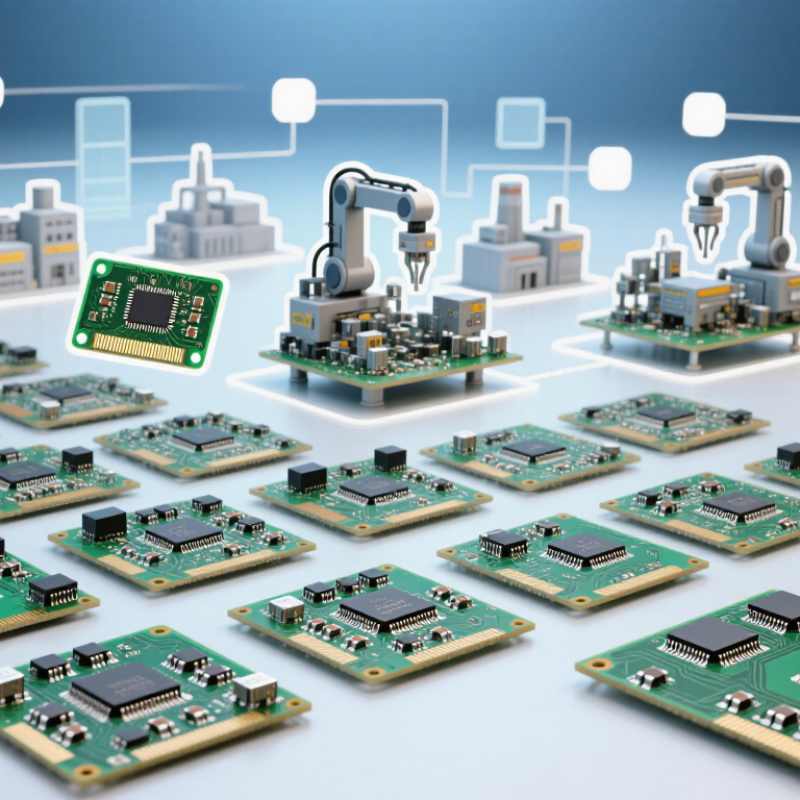
A single-layer PCB has one conductive copper layer bonded to an insulating substrate. Components sit on one side, while copper traces guide current along the board. This simple structure suits circuits with limited routing demands. It is common in LED lamps, calculators, toys, alarms, and basic power controls.
Manufacturers usually etch the copper, drill holes, apply solder protection, and print clear component markings. Many boards use FR-4, though paper-based laminates can reduce cost for low-stress products.
During inspection, technicians check trace width, hole accuracy, surface finish, and electrical continuity. A small scratch near a narrow trace can stop an entire circuit. Practical experience matters here.
Single-layer boards are easier to design, produce, and repair than multilayer boards. They also offer shorter production cycles and lower tooling costs. However, they need more physical space when a circuit contains many connections.
Designers may add wire links or jumpers, but these can make assembly less tidy. Not always ideal. Reliable manufacturers should provide controlled impedance information when needed, material data, and inspection records. They should also explain tolerances instead of promising perfect results.
A careful buyer compares thermal needs, copper thickness, operating voltage, and expected production volume. I would not choose a single-layer design only because it is cheaper. A crowded layout may become expensive after testing and rework.

China is a major source of single-layer PCBs because its manufacturing network is broad and highly coordinated. Local suppliers can access copper-clad laminate, drilling services, etching lines, and testing equipment within short supply routes. This structure helps control production time and material costs. Single-layer boards also suit many practical products, including control panels, lighting units, household devices, and simple industrial instruments.
That matters. Experienced manufacturers usually review Gerber files, board dimensions, copper thickness, hole quality, and surface finish before production. Automated optical inspection can identify open circuits, unwanted copper, and edge defects. Reliable facilities also use traceability records, sample approvals, and process checks based on recognized quality practices. These details reveal more than a low quotation. A factory should explain its testing method clearly.
China also offers flexible production volumes and several surface finish options. Engineering teams can adjust layouts for easier assembly or more stable yields. Large production capacity supports repeat orders, while smaller workshops may provide closer communication. However, China is not automatically the best fit for every project. Buyers should check material certificates, inspection reports, tolerance control, and realistic lead times. A low quote can hide weaker inspection or inconsistent materials. Even experienced buyers sometimes focus too heavily on price. That mistake deserves review.
| Evaluation Dimension | Industry Data or Technical Fact | Why It Matters When Sourcing from China | Reference Basis |
|---|---|---|---|
| Global production position | China has represented more than half of global PCB production value in recent industry estimates. | A large manufacturing base supports broader supplier capacity, mature material sourcing, competitive processing costs, and better access to export logistics. | Recent global PCB industry reports and regional production estimates |
| Circuit-layer structure | A single-layer PCB contains one conductive copper layer, normally formed on one side of the insulating substrate. | The simpler structure generally reduces fabrication complexity and makes single-layer boards suitable for low-density, cost-sensitive electronic products. | IPC-2221 and IPC-6011 design and performance principles |
| Common substrate materials | FR-4, CEM-1, and CEM-3 are widely used rigid PCB substrate categories. FR-4 is glass-reinforced epoxy; CEM materials are composite epoxy systems. | Material selection affects flame resistance, mechanical strength, cost, drilling performance, and suitability for consumer, industrial, and power-control applications. | IPC material classifications and standard PCB material terminology |
| Copper thickness | Common finished copper choices include approximately 35 μm for 1 oz/ft² and 70 μm for 2 oz/ft². | Thicker copper can improve current-carrying capability and thermal performance, but may increase etching, plating, and minimum-feature requirements. | Copper weight conversion used in PCB manufacturing |
| Typical finished thickness | Common rigid PCB thickness options include approximately 0.6 mm, 1.0 mm, and 1.6 mm, subject to the design and material stack-up. | Board thickness influences mechanical rigidity, enclosure fit, connector compatibility, drilling parameters, and shipping protection. | Common rigid PCB fabrication specifications |
| Surface finishes | Frequently specified finishes include HASL, lead-free HASL, and ENIG. Lead-free solder alloys commonly use a melting range near 217–220°C. | The finish affects solderability, surface flatness, shelf life, cost, and compatibility with fine-pitch components. | IPC-4552, IPC-4553, and common solder-finish specifications |
| Manufacturing tolerances | Actual tolerances depend on the drawing and process capability. Typical quotation parameters include controlled board outline, hole diameter, copper thickness, and registration tolerance. | Clearly defined tolerances help compare quotations fairly and reduce issues during assembly, installation, and functional testing. | IPC-6011, IPC-6012, and supplier-approved fabrication drawings |
| Quality acceptance | Visual and dimensional acceptance is commonly evaluated against IPC-A-600; electrical continuity and isolation testing are also standard quality-control requirements. | Using recognized acceptance criteria creates a consistent basis for incoming inspection without relying only on a supplier’s internal terminology. | IPC-A-600 and standard PCB electrical test practices |
| Environmental compliance | RoHS restricts 10 substances, including lead, mercury, cadmium, hexavalent chromium, PBB, PBDE, and four specified phthalates. | Compliance documentation is important when boards are intended for regulated markets or products requiring restricted-substance control. | EU RoHS Directive 2011/65/EU and amendment requirements |
| Best-fit applications | Single-layer PCBs are commonly used in simple LED boards, basic power-control circuits, low-density consumer devices, chargers, alarms, and straightforward industrial controls. | These applications usually have limited routing density and can benefit from the lower cost and shorter production cycle of a one-copper-layer design. | Standard single-layer PCB design and application practices |
Identifying Top Chinese Single Layer PCB Manufacturers
A capable manufacturer should show more than a polished website. Ask for current certifications, factory photographs, and process documents. Reliable suppliers explain copper thickness, board dimensions, tolerances, and surface finish in clear terms. Their answers should match your drawings.
Production control matters greatly. Check whether the factory uses incoming material inspection, automated optical inspection, and electrical testing. Request sample reports with traceable lot numbers. A strong supplier can explain how it controls drilling accuracy, solder mask coverage, and edge quality. Visit the facility when possible. Clean storage areas and labeled workstations provide useful evidence, although appearances can mislead.
Communication is another practical test. Send a small, realistic inquiry with Gerber files and delivery requirements. Observe how quickly engineers identify missing data or design risks. Good manufacturers ask precise questions instead of promising everything. Review sample quality under magnification, especially for pinholes, rough edges, and uneven plating. Pricing should include tooling, testing, packaging, and possible revision costs.
A low quote is not proof.
Consider production capacity, lead-time stability, export experience, and after-sales response. Request references from comparable projects, while protecting confidential information. Some factories may present excellent samples but struggle with repeat orders. That is easy to overlook. A staged order, clear acceptance criteria, and documented corrective actions can reveal real reliability before larger commitments. Personally, I would treat every claim as unverified until process evidence supports it. Manufacturers can improve, but buyers should record weaknesses rather than excuse them.
Key criteria for identifying a qualified Chinese single-layer PCB supplier include copper-foil capability, dimensional control, surface quality, compliance documentation, and production consistency. The chart shows standardized copper-foil thicknesses commonly used in PCB procurement rather than company or brand data.
When comparing suppliers, confirm whether the factory can reliably produce the required copper thickness, provide IPC-6011 and IPC-A-600 quality documentation, meet RoHS and REACH requirements, and maintain stable traceability across production batches. The copper-foil reference values are based on commonly specified PCB material options, including 0.5 oz, 1 oz, 2 oz, and 3 oz copper.
What Are China Top Single Layer PCB Manufacturers?
Leading single layer PCB manufacturers in China combine practical production experience with controlled, repeatable processes. Their workshops commonly support copper thicknesses from 18 to 70 microns. They also handle varied board sizes, solder mask colors, surface finishes, and hole diameters. Operators inspect drilling quality under bright lighting. Automated optical inspection checks exposed copper and damaged pads. Flying probe testing then verifies electrical continuity.
Quality systems matter as much as production speed. Reliable factories usually work under ISO 9001 procedures, with documented material checks and process records. Many align production with IPC-6011 and IPC-A-600 acceptance criteria. These standards address board construction, cleanliness, conductor definition, and surface quality. UL recognition may support safer end products. RoHS compliance helps control restricted substances. ISO 14001 certification can indicate structured environmental management.
Certifications need careful verification. A certificate should show the legal entity, scope, and valid dates. Ask for recent audit records, inspection reports, and sample test data. Traceability should connect each panel to its laminate batch, operator, and inspection result. In practice, even capable factories can miss a cosmetic defect. That is worth acknowledging. Clear specifications and incoming inspection reduce this risk. A small pilot order can reveal registration errors, uneven solder mask, or weak packaging before larger production begins.
Choosing the right Chinese single-layer PCB supplier requires more than comparing unit prices. Fortune Business Insights estimates that the global PCB market reached about USD 76 billion in 2024. Rising demand increases capacity, but not every factory offers stable process control.
Ask for recent samples, factory certifications, and a clear inspection plan. Confirm the board material, copper thickness, surface finish, hole tolerance, and minimum trace width. For simple control boards, FR-4 is often suitable, but harsh environments may require stronger thermal performance. IPC standards can help define acceptance criteria, especially for dimensions, solderability, and visual defects.
Request a traceable quotation. It should separate tooling, testing, packaging, and shipping costs. A suspiciously low price often reflects thinner copper or weaker inspection. Sometimes, buyers notice this too late. Check whether the supplier uses automated optical inspection and electrical testing for every batch. Ask for the latest capability report, not an old presentation.
The 2024 Prismark industry forecast points to continued PCB market growth through 2029, driven by automotive, industrial, and electronic equipment demand. This makes production capacity important, but capacity alone proves little. Evaluate response speed, engineering support, sample consistency, and corrective-action records. A small pilot order can reveal more than a long sales call. I would also verify certificates directly and avoid relying only on scanned documents. Mistakes happen, even with experienced suppliers. A reliable partner explains them clearly and prevents repetition.

Cepex is the brand for the fluid handling market belonging to the Fluidra group. One of the leading european manufacturer of valves and fittings in thermoplastic materials.
Dedicated to the swimming pool, irrigation and industrial markets, we distribute our products worldwide with the Fluidra commercial network and presence in 46 countries with 136 sales branches.


