What Is a Vaccine Bag and How Does It Work?
FLUID HANDLING EXPERTS

Blog, all our news

What Is a Vaccine Bag and How Does It Work?

A vaccine may look ready for use, yet its quality can change during transport. Temperature exposure is often invisible. That makes Vaccine Bags an important part of modern cold-chain protection.

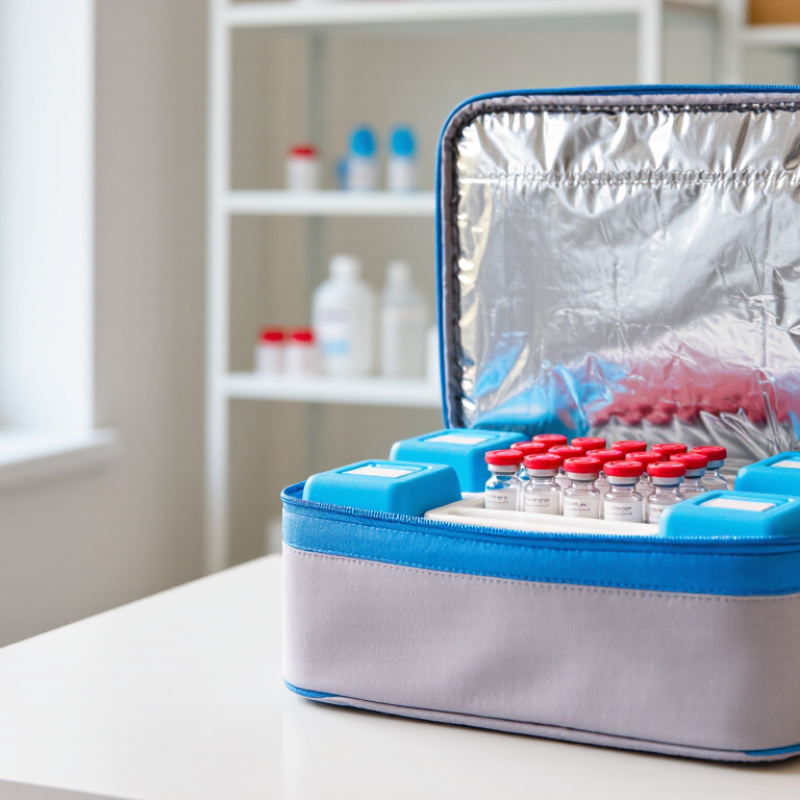
Vaccine Bags are insulated carriers designed to protect temperature-sensitive vaccines during short journeys, outreach sessions, and emergency delivery. They usually combine an outer shell, insulation, coolant packs, and an internal space for vaccine containers. Some models include temperature indicators or data loggers. These tools help health workers confirm whether the required range was maintained.

“Immunization is one of the most successful and cost-effective public health interventions,” says Dr. Kate O’Brien, Director of the World Health Organization’s Department of Immunization, Vaccines and Biologicals. Her statement explains why transport details matter. A vaccine must remain usable from storage to administration.

The process is simple, but not careless. Conditioned cold packs release controlled cooling around the payload. Insulation slows heat transfer from the surrounding air. Correct packing prevents direct contact between frozen packs and sensitive vaccine vials. That detail is easy to miss.

Field experience shows that equipment alone cannot guarantee safety. Open lids, poor conditioning, excessive loading, and delayed delivery can still create problems. In reality, Vaccine Bags are only one link in a larger system. Staff training, temperature monitoring, packing instructions, and documented checks matter too.

There is room for improvement. Some bags are heavy. Others provide limited visibility during handling. A reliable design should balance thermal performance, portability, durability, and clear instructions. This guide examines how Vaccine Bags work, where they perform well, and which practical weaknesses deserve closer attention.
What Is a Vaccine Bag and How Does It Work?

Defining Vaccine Bags Within the 2–8°C Vaccine Cold Chain

What Is a Vaccine Bag and How Does It Work?

Defining Vaccine Bags Within the 2–8°C Vaccine Cold Chain

A vaccine bag is an insulated carrier designed to protect vaccines during short-distance transport. It helps maintain the required 2–8°C range between approved storage points. The bag itself does not create cold. Instead, it slows temperature change around the vaccines.

Cold packs provide the cooling effect. They must be prepared according to the carrier’s instructions and vaccine requirements. Frozen packs can damage some vaccines through direct contact. A barrier, inner tray, or correctly arranged packaging can reduce this risk. Small details matter.

A reliable setup includes a temperature monitor, enough insulation, and a clear transport time limit. Staff should check the bag before loading it. They should also record the departure time, arrival time, and any temperature reading. A carrier may look secure while its internal temperature has already changed. That assumption is risky.

Vaccine bags need validation under realistic conditions, including hot weather, repeated opening, and delayed delivery. Procedures should follow current immunization guidance and local cold-chain rules. Training matters as much as equipment. An experienced worker can notice a loose lid, wet packaging, or an unusually warm carrier before the problem grows.

Not every bag is equivalent. Some designs hold temperature longer, while others suit brief outreach visits. Selection should match the vaccine load, journey length, ambient conditions, and monitoring method. A practical review after each trip can reveal weaknesses that written procedures miss.

Mapping Insulation, Liners, and Phase-Change Packs Inside the Bag

What Is a Vaccine Bag and How Does It Work?

A vaccine bag is a portable cold-chain system, not simply an insulated pouch. Its outer shell limits heat entry during transport. Insulation slows temperature change. The liner creates a clean, moisture-resistant inner surface. These layers work together, but none can create cold by itself.

Phase-change packs provide the cooling reserve. They absorb heat while changing state, often from solid to liquid. Their temperature range must match the vaccine’s storage requirement. The World Health Organization specifies 2–8°C for many refrigerated vaccines. Its Prequalification Programme also evaluates vaccine carriers against controlled performance conditions. The Centers for Disease Control and Prevention warns that freezing can damage sensitive products, even when the bag feels cold. A temperature logger gives stronger evidence than touch. That detail matters during long routes or repeated opening.

Tips: Condition frozen packs before loading. Separate them from vials with the liner or a protective barrier. Follow the product’s packing diagram and check the logger at dispatch and arrival. UNICEF cold-chain reports repeatedly identify monitoring and equipment maintenance as operational priorities. A cold bag can still hide a warm corner. The reverse can happen too. Some pack layouts overcool the center, which is easy to miss. Field practice should challenge assumptions, record readings, and review failures without blaming the carrier alone. Always follow the vaccine manufacturer’s storage instructions and approved transport procedures.

What Is a Vaccine Bag and How Does It Work? — Mapping Insulation, Liners, and Phase-Change Packs Inside the Bag
Bag Element Common Material or Format Primary Function Typical Position Inside the Bag Relevant Temperature or Performance Detail Important Handling Consideration
Outer Shell Woven polyester, coated fabric, nylon, or another abrasion-resistant textile Protects the payload and internal thermal system from handling damage, dirt, and light moisture Exterior surface of the container Usually selected for durability, cleanability, and resistance to tearing; it is not the main thermal barrier Inspect seams, zippers, handles, and closure points because damage can reduce protection and carrying strength
Insulation Layer Closed-cell foam, expanded polymer foam, vacuum-insulated panels, or multilayer insulation Slows heat transfer between the surrounding environment and the payload Between the outer shell and the inner liner or payload chamber Thicker or lower-conductivity insulation generally increases holdover time, but performance also depends on pack arrangement, ambient temperature, and opening frequency Compression, gaps, wetness, or crushed areas can reduce effective insulation performance
Reflective or Vapor-Barrier Layer Metallized film, laminated barrier film, or foil-faced composite Reduces radiant heat gain and limits moisture or vapor movement through the assembly Adjacent to the insulation or integrated into the liner system Works as part of a layered system; reflective surfaces are most useful when an air space is present and cannot replace bulk insulation Rips, punctures, or unsealed joins can reduce barrier performance
Inner Liner Water-resistant coated fabric, polymer film, or wipe-clean laminated textile Creates a cleanable compartment and helps contain condensation or leaks from coolant packs Forms the interior wall around the payload area Should resist moisture and tolerate routine cleaning products approved for the bag material Dry the liner after cleaning; trapped moisture can damage materials and complicate sanitation
Phase-Change Pack Sealed container filled with a phase-change material selected for a target transition temperature Absorbs or releases heat while changing phase, helping maintain a controlled thermal range Around the payload, commonly in dedicated sleeves or separated by spacers Common cold-chain designs use packs formulated near the intended operating range; a pack near 5°C is often used for refrigerated transport, but the correct formulation depends on the validated system Do not substitute packs solely by appearance or weight; the phase-transition temperature and conditioning procedure matter
Pack Separator or Spacer Foam sheet, corrugated insert, molded plastic divider, or fabric sleeve Prevents direct contact between very cold packs and temperature-sensitive products while maintaining planned airflow and spacing Between coolant packs and the payload, or between individual packs Can reduce localized freezing risk and help preserve the validated internal arrangement Removing or repositioning separators may create cold spots and invalidate the intended packing pattern
Payload Chamber Insulated central compartment sized for vaccine cartons, vials, or secondary containers Holds the vaccines in the most stable thermal zone of the bag Center of the thermal container For many routinely refrigerated vaccines, the target storage range is 2°C to 8°C; the product label and applicable guidance always control Keep products in their original packaging where practical, avoid overpacking, and leave the lid closed as much as possible
Thermometer or Data Logger Digital thermometer, minimum/maximum thermometer, or electronic temperature logger Measures and documents the internal temperature during storage or transport Near the payload, positioned according to the equipment validation or monitoring procedure Monitoring devices may record current, minimum, maximum, or time-stamped temperature data; measurement accuracy must be suitable for the required range A reading outside the approved range requires following the applicable excursion-assessment procedure before use
Closure System Zipper, roll-top closure, hook-and-loop flap, buckle, or gasketed lid Limits warm-air exchange and keeps the thermal arrangement secure during movement At the opening edge of the bag or container A continuous, well-sealed closure reduces unnecessary heat exchange and helps preserve holdover time Close the bag fully after every access; frequent opening can shorten the controlled-temperature duration
Conditioning Step Controlled freezing, partial thawing, or temperature equilibration of phase-change packs Prepares the packs so they provide the intended thermal profile without excessive cooling or premature warming Performed before packing, outside the payload chamber Conditioning requirements vary by pack chemistry and system design; a pack taken directly from a very cold freezer may create a freezing hazard for refrigerated products Follow the validated conditioning time, temperature, and visual or tactile criteria; never improvise based only on whether a pack feels cold
Thermal Holdover System Combined effect of insulation, liner, phase-change packs, separators, payload mass, and closure Maintains the internal temperature for a defined period during transport or temporary storage Across the complete bag assembly Holdover time is not a fixed property of the bag alone; it changes with ambient temperature, payload load, pack conditioning, and opening frequency Use only within the time, temperature, loading, and packing conditions demonstrated by the system’s validation or operating instructions

Note: Temperature requirements differ by vaccine product and formulation. Always follow the product label, applicable public-health guidance, and the validated instructions for the specific transport system.

Packing Vaccines Step by Step Without Allowing Freezing Below 0°C

What Is a Vaccine Bag and How Does It Work?

A vaccine bag is an insulated carrier designed to keep vaccines within a safe temperature range. Most routine vaccines should remain between 2°C and 8°C. The main danger during transport is not only heat. Freezing can permanently damage some vaccines, even when the container still looks cold.

Packing must be deliberate. Freeze the coolant packs completely, then let them sit until a thin layer of water appears on the surface. This conditioning step reduces the risk of temperatures falling below 0°C. Place a towel, foam sheet, or cardboard divider inside the bag. Vaccines should never touch frozen packs directly. Put the conditioned packs around the sides and top, leaving the center space for the vaccine box. Keep vials upright when practical. Close the lid firmly.

Check the temperature before loading. Use a calibrated thermometer or data logger, and record the reading. The bag should stay closed during travel. Repeated opening allows warm air inside. A small mistake matters. If a pack is still rock-hard and dry, it may be too cold for direct use. If the temperature falls outside the approved range, isolate the vaccines and contact the responsible health professional before using them. This method is reliable, but it is not foolproof. Pack condition, travel time, and weather still require careful review.

Monitoring Temperature Excursions with Data Loggers and WHO PQS Criteria

A vaccine bag is a portable, insulated carrier designed to protect vaccines during transport. It usually contains coolant packs, a vaccine compartment, and a temperature data logger. The logger records conditions at set intervals, such as every five minutes. This creates a time-stamped history instead of relying on a single thermometer reading.

Temperature excursions happen when the internal temperature moves outside the vaccine’s approved range. Many vaccines require 2°C to 8°C, but some products tolerate freezing or higher temperatures. Always follow the product information and local immunization guidance.

WHO PQS criteria help assess whether temperature-monitoring equipment is accurate, durable, readable, and suitable for vaccine supply chains. A compliant device should support reliable records, even during short transport delays. However, PQS compliance does not replace correct packing or staff training.

Tips: Place the logger near the vaccines, not against a frozen coolant pack. Check its battery, time, and alarm settings before departure. Record the start temperature and arrival temperature. Keep the bag closed as much as possible.

In practice, labels can become wet, and a logger may be placed too far from the product. These small errors matter. When an excursion occurs, do not guess. Quarantine the affected vaccines, document the event, and request a trained review based on exposure duration, temperature, and product guidance.

Evaluating Cold Life, Payload Capacity, and Transport Performance in Hours

What Is a Vaccine Bag and How Does It Work?

A vaccine bag is an insulated carrier designed to protect temperature-sensitive doses during short transport. Its performance depends on more than insulation. Cold packs, internal spacing, and opening frequency all influence usable cold life. In field testing, technicians record starting temperature, ambient conditions, and loading time. They also place temperature indicators near the payload, not only beside the coolant packs. Small details matter.

Cold life is usually reported in hours, but that number needs context. A bag lasting 18 hours in a cool room may perform differently under direct sunlight or repeated opening. Payload capacity also changes results. An overfilled bag can restrict airflow, while an underfilled bag may warm faster. Doses should remain separated from frozen packs when freezing could damage them. The correct arrangement follows validated instructions and monitored temperature limits. Not every hour is equal.

Transport performance includes temperature stability, handling, and recovery after opening. A sturdy handle helps, yet rough roads can shift vials and expose warm pockets. Before dispatch, staff should condition coolant packs, pre-cool the carrier, and verify the load plan. During transit, a data logger can reveal temperature excursions that a simple label misses. Results should include route length, weather, payload mass, and opening events. No test is perfect. Real routes are messier than controlled trials, so repeated checks and honest review remain necessary.

Copyright 2025 Fluidra S.A. | Created by BCM Marketing Agencia Privacy Policy Legal note | Cookie policy |

Technical cookies are strictly necessary for our website to work and you can navigate through it. These types of cookies are those that, for example, allow us to identify you, give you access to certain restricted parts of the page if necessary, or remember different options or services already selected by you, such as your privacy preferences. Therefore, they are activated by default, your authorization not being necessary in this regard. Through the configuration of your browser, you can block or alert the presence of this type of cookies, although such blocking will affect the proper functioning of the different functionalities of our website.


The analysis cookies allow us to study the navigation of the users of our website in general (for example, which sections of the page are the most visited, which services are used most and if they work correctly, etc.). From the statistical information on navigation on our website, we can improve both the operation of the page itself and the different services it offers. Therefore, these cookies do not have an advertising purpose, but only serve to make our website work better, adapting to our users in general. By activating them you will contribute to this continuous improvement. You can enable or disable these cookies by checking the corresponding box, being disabled by default.


Functionality cookies allow us to remember your preferences, to personalize certain characteristics and general options of our website, every time you access it (for example, the language in which the information is presented to you, the sections marked as favorites, your browser type, etc.) Therefore, this type of cookies does not have an advertising purpose, but by activating them you will improve the functionality of the website (for example, adapting to your type of browser) and the customization of it based on your preferences (for example, by presenting the information in the language that you have chosen in previous occasions), which will contribute to the ease, usability and comfort of our page during your navigation. You can enable or disable these cookies by checking the corresponding box, being disabled by default.


Advertising cookies allow us to manage the advertising spaces included in our website based on criteria such as the content shown or the frequency in which the ads are displayed. For example, if you have been shown the same ad several times on our website, and you have not shown a personal interest by clicking on it, it will not appear again. In summary, by activating this type of cookies, the advertising shown on our website will be more useful and diverse, and less repetitive. You can enable or disable these cookies by checking the corresponding box, being disabled by default.


Behavioral advertising cookies allow us to obtain information based on the observation of your browsing habits and behaviors on the web, in order to show you advertising content that best suits your personal tastes and interests. To understand it in a very simple way, we will give you a fictitious example: if your last searches on the web were related to suspense literature, we would show you advertising about suspense books. Therefore, activating this type of cookies, the advertising that we show you on our website will not be generic, but will be oriented to your searches, tastes and interests, therefore adjusting exclusively to you. You can enable or disable these cookies by checking the corresponding box, being disabled by default.
To understand it in a very simple way, we will give you a fictitious example: if your last searches on the web were related to suspense literature, we would show you advertising about suspense books. Therefore, activating this type of cookies, the advertising that we show you on our website will not be generic, but will be oriented to your searches, tastes and interests, therefore adjusting exclusively to you. You can enable or disable these cookies by checking the corresponding box, being disabled by default.

SAVE

We use our own and third-party cookies to ensure the proper functioning of the website and to analyse our services, improve your experience on our website and show you advertisements related to your interests according to profiling based on your browsing habits (e.g. websites visited). You can accept all cookies by clicking "ACCEPT" or set or reject them by clicking here. If you would like to know more about the use of cookies, please see our COOKIE POLICY.


ACCEPT ALL
Reject no essentials