
Understanding Different Pipe Hanger Types for Your Projects?
FLUID HANDLING EXPERTS

Blog, all our news

Understanding Different Pipe Hanger Types for Your Projects?

In the construction industry, the selection of appropriate pipe hanger types is crucial for project success. An expert in this field, John Smith, emphasizes, "The right hanger can prevent costly failures." According to a report by the Construction Industry Institute, improper pipe supports can lead to increases in maintenance costs by approximately 30%.

Different projects require various types of hangers, each with distinct advantages and limitations. For instance, using adjustable hangers allows for flexibility in installation, accommodating changes over time. However, while they provide convenience, their complexity can introduce challenges during installation.

Understanding the nuances of numerous pipe hanger types is vital. Engineers must consider factors like load capacity and material compatibility. Ensuring proper selection can enhance system longevity and operational efficiency. Yet, often, professionals overlook this critical aspect, which can jeopardize overall project outcomes. It's essential to examine the intricacies of pipe hanger systems to mitigate risks and optimize performance in modern construction.
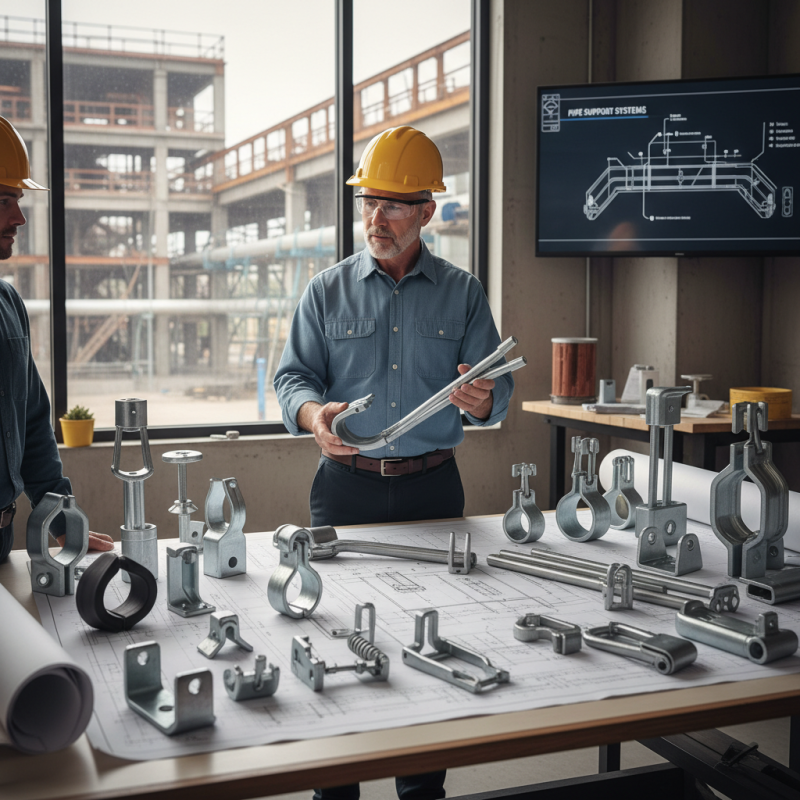
Understanding Different Pipe Hanger Types for Your Projects?

Types of Pipe Hangers: An Overview

When embarking on a plumbing project, understanding various pipe hanger types is crucial. Pipe hangers support and secure piping systems, influencing both functionality and safety. One common type is the clevis hanger, known for its adjustable design. It allows for vertical adjustment and is suitable for various pipe sizes.

Next, we find the pipe support bracket, which anchors pipes to walls or ceilings. This type offers a stable hold, ensuring that pipelines remain in place.

Another notable type is the wrap-around hanger. This option provides a snug fit for insulated pipes, preventing heat loss or condensation. The design of the hanger is crucial; incorrect selection can lead to system failures or leaks. It is also important to consider the environment. For example, corrosive settings may require different materials for longevity. Ensuring a proper fit and material selection is often overlooked but critical for lasting results.

Installation is another factor worth noting. Incorrect positioning can lead to undue stress on pipes, resulting in future failures. Regular inspection and maintenance of hangers are essential. This helps identify wear and tear early. Many times, this aspect is neglected, leading to costly repairs later on. Being proactive about these details can save time and resources.

Materials Used in Pipe Hanger Construction

Pipe hangers play a crucial role in supporting piping systems across various industries. The materials used in their construction directly affect their performance and durability. Steel is a popular choice due to its strength and resistance to impact. Another option is plastic, which is lightweight and resistant to corrosion. However, for high-temperature applications, metal hangers remain the best option.

Aluminum is emerging as a lightweight alternative, but it may not hold up under heavy loads. This raises questions about its reliability in demanding environments. It's essential to balance weight and strength when selecting materials. Additionally, some hangers incorporate rubber padding to minimize vibrations. This feature can enhance the lifespan of pipes while reducing noise.

Many professionals overlook the importance of selecting the right material. They often stick to traditional options without considering advancements. Understanding the specific requirements of your project is vital. Each project is unique, and the right choice can save costs in maintenance and repairs. Reflecting on past experiences with various materials can guide better decisions in the future.

Understanding Different Pipe Hanger Types for Your Projects

Applications of Different Pipe Hanger Styles

When selecting pipe hangers, understanding their applications is crucial. Each style serves a distinct purpose. For instance, threaded rod hangers offer flexibility in height adjustments. They're ideal for various setups. Strap hangers, on the other hand, provide solid support for vertical pipes. They work well in ceiling installations.

In commercial projects, strong support is essential. Adjustable hangers allow for easy modifications as designs evolve. This adaptability can save both time and costs. A simple tip: check the load rating before installation. Ensuring that the hanger can support the weight is vital to avoid future issues.

For residential projects, decorative hangers can enhance aesthetics. Look for designs that complement the space while still being functional. Remember, aesthetics shouldn’t compromise safety. Always assess the environment: heat exposure, moisture levels, and vibration can affect hanger longevity. Being mindful of these factors can prevent costly repairs.

Installation Techniques for Pipe Hangers

When installing pipe hangers, it's essential to choose the right techniques based on your project's size and requirements. According to a report from the American Society of Mechanical Engineers (ASME), improper installation can lead to potential failures or safety hazards. Accurate spacing is crucial, often recommended at intervals no greater than 10 feet, but this can vary based on pipe diameter and material.

In terms of installation techniques, always start with a thorough assessment of the building structure. Use appropriate tools to secure the hangers. For horizontal piping, ensure hangers support the weight and allow for thermal expansion. Space them correctly to avoid sagging, which can result in leaks. If you're dealing with heavier pipes, consider using multiple hangers for added support.

Tip: Always check for potential interference with electrical and HVAC systems when planning your hanger location. Misalignment can cause unexpected issues down the line. Additionally, pay attention to the environmental conditions. Outdoor installations may require more robust materials to withstand different weather scenarios. Reflecting on previous installations can also help identify any weaknesses in your method, leading to improvements for future projects.

Maintenance Considerations for Pipe Hangers

Pipe hangers play a vital role in maintaining the integrity of piping systems. However, they require regular inspection and maintenance. Over time, wear and tear can weaken these support systems. For instance, rust or corrosion can develop on metal hangers, reducing their load-bearing capacity. This is particularly critical in areas with high humidity or exposure to corrosive substances. Checking for signs of wear is essential to prevent potential failures.

Regular maintenance also includes ensuring hangers are securely fastened. Loose hangers can lead to vibrations and misalignment. This not only affects the pipes but can also lead to leaks and costly repairs. Visual inspections should include checking for loose bolts and signs of movement. It’s important to remember that even high-quality hangers can fail if not properly maintained.

Safety should always be a priority in maintenance. If hangers show significant damage, they might need replacement instead of repair. Regularly updating your inventory of spare parts can streamline this process. Taking preventive measures helps avoid future disruptions and unexpected costs. Ultimately, being proactive is key to maintaining the efficiency and safety of your piping systems.

Copyright 2025 Fluidra S.A. | Created by BCM Marketing Agencia Privacy Policy Legal note | Cookie policy |

Technical cookies are strictly necessary for our website to work and you can navigate through it. These types of cookies are those that, for example, allow us to identify you, give you access to certain restricted parts of the page if necessary, or remember different options or services already selected by you, such as your privacy preferences. Therefore, they are activated by default, your authorization not being necessary in this regard. Through the configuration of your browser, you can block or alert the presence of this type of cookies, although such blocking will affect the proper functioning of the different functionalities of our website.


The analysis cookies allow us to study the navigation of the users of our website in general (for example, which sections of the page are the most visited, which services are used most and if they work correctly, etc.). From the statistical information on navigation on our website, we can improve both the operation of the page itself and the different services it offers. Therefore, these cookies do not have an advertising purpose, but only serve to make our website work better, adapting to our users in general. By activating them you will contribute to this continuous improvement. You can enable or disable these cookies by checking the corresponding box, being disabled by default.


Functionality cookies allow us to remember your preferences, to personalize certain characteristics and general options of our website, every time you access it (for example, the language in which the information is presented to you, the sections marked as favorites, your browser type, etc.) Therefore, this type of cookies does not have an advertising purpose, but by activating them you will improve the functionality of the website (for example, adapting to your type of browser) and the customization of it based on your preferences (for example, by presenting the information in the language that you have chosen in previous occasions), which will contribute to the ease, usability and comfort of our page during your navigation. You can enable or disable these cookies by checking the corresponding box, being disabled by default.


Advertising cookies allow us to manage the advertising spaces included in our website based on criteria such as the content shown or the frequency in which the ads are displayed. For example, if you have been shown the same ad several times on our website, and you have not shown a personal interest by clicking on it, it will not appear again. In summary, by activating this type of cookies, the advertising shown on our website will be more useful and diverse, and less repetitive. You can enable or disable these cookies by checking the corresponding box, being disabled by default.


Behavioral advertising cookies allow us to obtain information based on the observation of your browsing habits and behaviors on the web, in order to show you advertising content that best suits your personal tastes and interests. To understand it in a very simple way, we will give you a fictitious example: if your last searches on the web were related to suspense literature, we would show you advertising about suspense books. Therefore, activating this type of cookies, the advertising that we show you on our website will not be generic, but will be oriented to your searches, tastes and interests, therefore adjusting exclusively to you. You can enable or disable these cookies by checking the corresponding box, being disabled by default.
To understand it in a very simple way, we will give you a fictitious example: if your last searches on the web were related to suspense literature, we would show you advertising about suspense books. Therefore, activating this type of cookies, the advertising that we show you on our website will not be generic, but will be oriented to your searches, tastes and interests, therefore adjusting exclusively to you. You can enable or disable these cookies by checking the corresponding box, being disabled by default.

SAVE

We use our own and third-party cookies to ensure the proper functioning of the website and to analyse our services, improve your experience on our website and show you advertisements related to your interests according to profiling based on your browsing habits (e.g. websites visited). You can accept all cookies by clicking "ACCEPT" or set or reject them by clicking here. If you would like to know more about the use of cookies, please see our COOKIE POLICY.


ACCEPT ALL
Reject no essentials


