
Top Gate Valve Types for Your Industrial Needs?
FLUID HANDLING EXPERTS

Blog, all our news

Top Gate Valve Types for Your Industrial Needs?

In the world of industrial applications, Gate Valves play a critical role. Known for their efficiency in regulating flow, these valves are essential in various sectors. Industrial valve expert, Dr. Emily Harper, emphasizes their importance: “Gate valves offer unparalleled precision in controlling fluid flow.” This precision makes them a preferred choice for many engineers.

Different gate valve types cater to diverse industrial needs. From rising stem to wedge design, each type serves a unique purpose. For instance, rising stem gate valves are excellent for applications requiring frequent operation. However, choosing the right type can be daunting. Not all options are suitable for every situation, leading to potential inefficiencies.

Understanding the intricacies of gate valves and their specific functionalities is vital. Each application demands careful consideration of factors like pressure and fluid type. With the right knowledge, industries can avoid costly mistakes, optimizing their operations. As important as they are, there's always room for improvement in how gate valves are utilized.
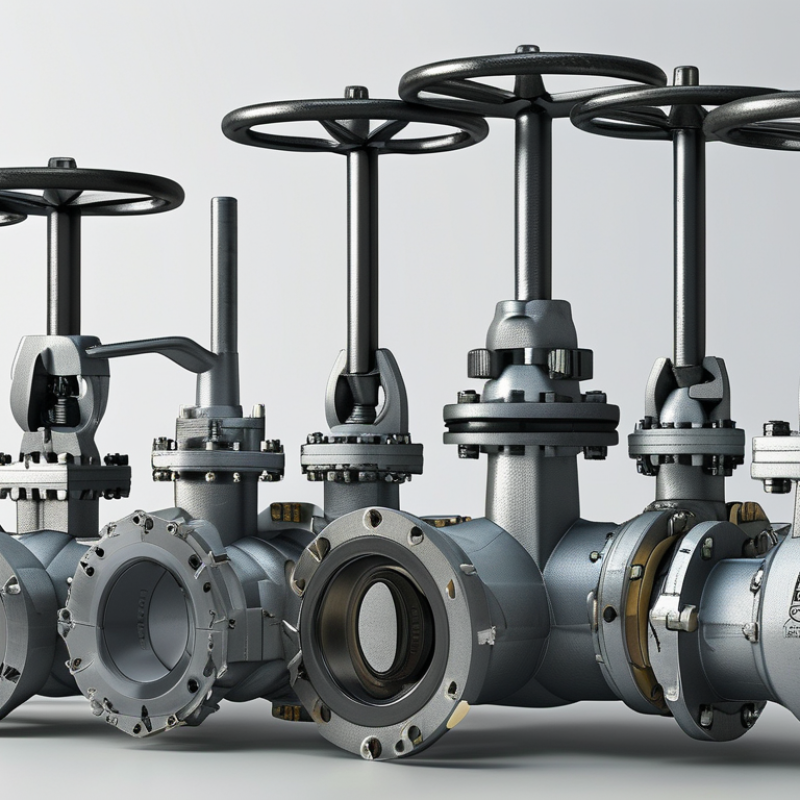
Top Gate Valve Types for Your Industrial Needs?

Top Gate Valve Types for Your Industrial Needs

Gate valves play a crucial role in various industrial applications. They are designed to start or stop the flow of liquids and gases. Research indicates that gate valves can operate effectively in conditions up to 2000 psi. Their simple design provides minimal resistance to flow, making them ideal for high-volume transport needs. Industries often prioritize durability and reliability in gate valves for optimal performance.

Two main types of gate valves are wedge and parallel. Wedge gate valves use a V-shaped disk to close tightly against the valve seat. They are known for their robust sealing capacity. On the other hand, parallel gate valves feature a flat disk. These are often used in situations where consistent flow control is necessary.

According to industry reports, up to 43% of downtime in industrial facilities results from valve-related issues. Choosing the right type of gate valve can mitigate this risk. Ensuring proper installation and regular maintenance is essential. However, not all facilities have the resources for optimum upkeep, which can lead to unexpected challenges. Addressing these concerns proactively is vital for enhancing operational efficiency.

Top Gate Valve Types for Your Industrial Needs

Overview of Gate Valves: Definition and Functionality in Industry

Gate valves are essential components in industrial systems. They control the flow of fluids through pipelines. Typically used in applications requiring minimal pressure loss, gate valves are designed for on/off service rather than flow regulation. Their wedge-shaped disc provides a tight seal, preventing any leakage.

The functionality of gate valves is straightforward but crucial. When fully open, the passage is clear, allowing for unrestricted flow. This characteristic is vital in industries such as oil and gas, waterworks, and HVAC systems. However, gate valves may have limitations. They can be slow to operate, and their bulky design may not suit every space.

Users often face challenges when selecting the right type of gate valve. This requires balancing between flow efficiency and installation constraints. Additionally, regular maintenance is necessary to ensure valve longevity and reliability. Neglecting upkeep can lead to performance issues. Each application demands a thoughtful choice, considering the operational environment and specific requirements.

Key Types of Gate Valves: Wedge, Parallel, and Expanding Designs

Gate valves play a critical role in various industrial applications. Choosing the right type can significantly impact performance and efficiency. There are three primary designs: wedge, parallel, and expanding. Each has unique characteristics suited for different use cases.

Wedge gate valves feature a tapered disc that fits into a machined seat. This design provides a tight seal, ideal for high-pressure systems. They handle flow well but may require more effort for operation. Parallel gate valves, on the other hand, use two flat discs to create a seal. They offer a smoother operation but can be less effective in high-pressure situations. These valves are great for applications where precise control is essential.

Expanding gate valves are somewhat different. They utilize a mechanism that allows the gate to expand and contract. This design is particularly beneficial in situations with fluctuating pressures. However, they may not provide the same reliability as wedge valves in critical applications. Each type has advantages and drawbacks, and understanding these is key to making an informed decision. This knowledge can help enhance industrial operations while ensuring safety and efficiency.

Material Selection for Gate Valves: Stainless Steel vs. CI vs. PVC

When selecting gate valves for industrial applications, material choice is crucial. Stainless steel, cast iron (CI), and PVC each present unique strengths and weaknesses. Stainless steel is known for its corrosion resistance and strength. It performs well in high-pressure environments. However, it can be more expensive and may not be suitable for all types of applications.

Cast iron is a common choice for lower-pressure systems. Its durability is impressive, but it is prone to rust if not properly maintained. This can lead to unexpected failures in applications involving water or chemicals. PVC offers an inexpensive alternative, especially for corrosive environments. It is lightweight and easy to install, but it has limitations in terms of temperature and pressure resistance.

Ultimately, each material has its place in the industrial landscape. Users must reflect on their specific needs and limitations before making a decision. Consider factors such as pressure requirements, installation environment, and budget constraints. This careful contemplation will lead to more effective valve selection.

Performance Metrics: Pressure Ratings and Temperature Ranges Explained

When selecting gate valves for industrial applications, performance metrics are crucial. Pressure ratings determine how much internal pressure a valve can withstand without failure. Typical pressure ratings for industrial gate valves range from 150 PSI to 3000 PSI. Research shows that valves rated for higher pressures often require more robust materials. For example, a valve operating at 1500 PSI will likely use stronger alloys compared to one rated at 300 PSI.

Temperature ranges also play an essential role. Many gate valves are designed to handle temperatures from -20°F to 800°F. The materials chosen must maintain integrity under these extremes. A report from the American Society of Mechanical Engineers indicates that inadequate temperature ratings can lead to early valve failures. These failures often occur in high-temperature environments, making proper selection imperative.

Manufacturers often provide performance charts to assist in decision-making. However, users frequently overlook this vital information. Understanding how pressure and temperature affect valve life is necessary. It can prevent costly downtime and repair work in industrial settings. Adjustments may be required based on specific applications. A thorough analysis of operating conditions is often essential, but many overlook this detail.

Conclusion

Gate valves are essential components in various industrial applications, known for their ability to fully open or close to control fluid flow. This article provides an overview of gate valves, detailing their definition and functionality within industrial systems. It explores three key types of gate valves: wedge, parallel, and expanding designs, each tailored for specific operational requirements.

Material selection is crucial, as options such as stainless steel, cast iron (CI), and PVC each offer distinct advantages depending on the application. Performance metrics, including pressure ratings and temperature ranges, are also discussed to ensure optimal performance of gate valves in demanding conditions. Additionally, the article highlights emerging trends in gate valve technology, particularly the integration of automation and smart control systems, which enhance efficiency and reliability in industrial operations.

Copyright 2025 Fluidra S.A. | Created by BCM Marketing Agencia Privacy Policy Legal note | Cookie policy |

Technical cookies are strictly necessary for our website to work and you can navigate through it. These types of cookies are those that, for example, allow us to identify you, give you access to certain restricted parts of the page if necessary, or remember different options or services already selected by you, such as your privacy preferences. Therefore, they are activated by default, your authorization not being necessary in this regard. Through the configuration of your browser, you can block or alert the presence of this type of cookies, although such blocking will affect the proper functioning of the different functionalities of our website.


The analysis cookies allow us to study the navigation of the users of our website in general (for example, which sections of the page are the most visited, which services are used most and if they work correctly, etc.). From the statistical information on navigation on our website, we can improve both the operation of the page itself and the different services it offers. Therefore, these cookies do not have an advertising purpose, but only serve to make our website work better, adapting to our users in general. By activating them you will contribute to this continuous improvement. You can enable or disable these cookies by checking the corresponding box, being disabled by default.


Functionality cookies allow us to remember your preferences, to personalize certain characteristics and general options of our website, every time you access it (for example, the language in which the information is presented to you, the sections marked as favorites, your browser type, etc.) Therefore, this type of cookies does not have an advertising purpose, but by activating them you will improve the functionality of the website (for example, adapting to your type of browser) and the customization of it based on your preferences (for example, by presenting the information in the language that you have chosen in previous occasions), which will contribute to the ease, usability and comfort of our page during your navigation. You can enable or disable these cookies by checking the corresponding box, being disabled by default.


Advertising cookies allow us to manage the advertising spaces included in our website based on criteria such as the content shown or the frequency in which the ads are displayed. For example, if you have been shown the same ad several times on our website, and you have not shown a personal interest by clicking on it, it will not appear again. In summary, by activating this type of cookies, the advertising shown on our website will be more useful and diverse, and less repetitive. You can enable or disable these cookies by checking the corresponding box, being disabled by default.


Behavioral advertising cookies allow us to obtain information based on the observation of your browsing habits and behaviors on the web, in order to show you advertising content that best suits your personal tastes and interests. To understand it in a very simple way, we will give you a fictitious example: if your last searches on the web were related to suspense literature, we would show you advertising about suspense books. Therefore, activating this type of cookies, the advertising that we show you on our website will not be generic, but will be oriented to your searches, tastes and interests, therefore adjusting exclusively to you. You can enable or disable these cookies by checking the corresponding box, being disabled by default.
To understand it in a very simple way, we will give you a fictitious example: if your last searches on the web were related to suspense literature, we would show you advertising about suspense books. Therefore, activating this type of cookies, the advertising that we show you on our website will not be generic, but will be oriented to your searches, tastes and interests, therefore adjusting exclusively to you. You can enable or disable these cookies by checking the corresponding box, being disabled by default.

SAVE

We use our own and third-party cookies to ensure the proper functioning of the website and to analyse our services, improve your experience on our website and show you advertisements related to your interests according to profiling based on your browsing habits (e.g. websites visited). You can accept all cookies by clicking "ACCEPT" or set or reject them by clicking here. If you would like to know more about the use of cookies, please see our COOKIE POLICY.


ACCEPT ALL
Reject no essentials


