
Top 5 Tips for Choosing Industrial Metal Detectors Today?
FLUID HANDLING EXPERTS

Blog, all our news

Top 5 Tips for Choosing Industrial Metal Detectors Today?

Choosing the right Industrial Metal Detectors can be challenging. These devices are essential in various industries, from food processing to pharmaceuticals. They ensure product safety by detecting harmful metal contaminants. A well-chosen metal detector can significantly reduce risks and enhance quality assurance.

There are numerous options available today. Each model offers different features, specifications, and price points. It's crucial to consider factors like sensitivity and detection speed. However, some buyers often overlook these aspects. Understanding your specific needs is vital. A detector that works for one industry might not suit another.

Many manufacturers provide detailed specifications, but these can be overwhelming. Potential users must take time to research and consult experts. This attentiveness improves decision-making. In the end, investing in the right industrial metal detectors pays off in product safety and brand reputation.
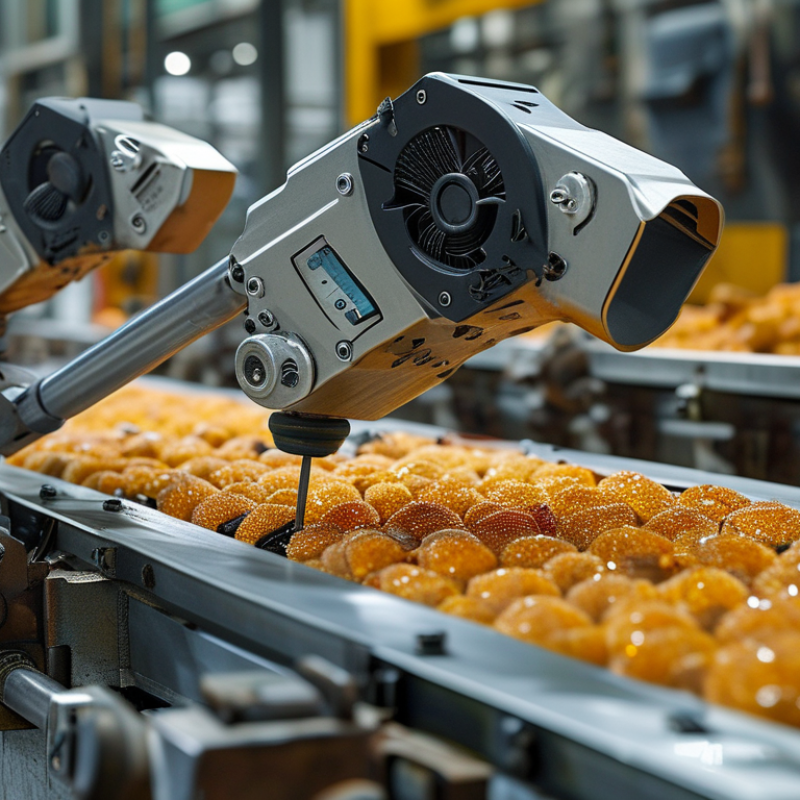
Top 5 Tips for Choosing Industrial Metal Detectors Today?

Key Considerations for Industrial Metal Detectors Selection

When selecting industrial metal detectors, understanding your specific needs is crucial. Consider the type of materials you handle. Different metals require distinct detection capabilities. If your production includes a mix of ferrous and non-ferrous materials, ensure the detector can identify both effectively. The environment also matters; dusty or wet conditions might affect performance.

Another key factor is sensitivity levels. Choose a detector that balances sensitivity and stability. If sensitivity is too high, false alarms can disrupt operations. Conversely, too low sensitivity may miss critical contaminants. Evaluate the average size of metal particles that typically enter your production line. A detector optimized for that size will improve accuracy.

Installation and maintenance are frequently overlooked. Complex systems may require more time and resources for upkeep. This adds to operational costs. Assess if the detector can be easily integrated into your existing systems. User-friendliness matters, too. An intuitive interface can reduce training time for your staff. Consider feedback from your team; their insights may reveal unanticipated challenges.

Understanding Detection Technology: Types and Mechanisms

When selecting industrial metal detectors, understanding detection technology is crucial. There are various types of detectors, each with its unique mechanisms. Magnetic induction detectors are common in many industries. They work by using electromagnetic fields to identify metal objects. These detectors are often effective in processes like recycling or food production.

Another type is the Capacitive Metal Detector. This technology detects changes in capacitance caused by nearby metals. It is suitable for applications where space is limited. Ultrasonic metal detectors offer a different approach. They use sound waves to locate metal objects. These are less common, but can be very effective in certain situations.

Choosing the right technology can be challenging. Each method has its advantages and limitations. Users may find that some detectors miss specific metal types or sizes. Real-world testing is crucial for reliable results. Understanding the operational environment is key to optimizing performance. Not all detection solutions work perfectly in every scenario. Taking time to evaluate different options will lead to better decisions.

Assessing Sensitivity and Accuracy for Your Specific Needs

When selecting an industrial metal detector, sensitivity and accuracy are critical factors. Sensitivity determines how small a metal object can be detected. Reports suggest that detectors with a sensitivity rating of 0.5 mm can identify pins and other small metal items effectively. However, higher sensitivity is not always better. Too much sensitivity can lead to false positives, making the detection process inefficient.

Accuracy is equally important and involves the ability to accurately identify metal types. Surveys indicate that systems with advanced discrimination technology can differentiate between ferrous and non-ferrous metals. This feature drastically reduces errors in manufacturing. A detector's ability to pinpoint exact locations also enhances operational efficiency. Many users report a 20% increased productivity when using detectors with better accuracy.

The environmental conditions of your workspace should also be considered. Factors like humidity and temperature can affect performance. Some reports highlight an increase in false positives in areas with high moisture. Regular calibration and testing are necessary to maintain optimal performance. In the long run, understanding these nuances can significantly impact your effectiveness in metal detection.

Evaluating Compliance Standards and Certifications

When selecting industrial metal detectors, compliance standards and certifications play a crucial role. Organizations such as ISO and FDA set benchmarks that ensure safety and efficiency. According to a recent industry report by MarketsandMarkets, the demand for compliant industrial detection systems is projected to grow by 6.3% annually, highlighting the importance of meeting these standards.

It's vital to assess certifications pertinent to your industry. Look for detectors that align with FDA and HACCP guidelines. These certifications indicate rigorous testing. They also assure users about quality and reliability. You can avoid potential pitfalls by choosing certified equipment. Even minor lapses in compliance can lead to significant operational risks.

Consider these tips: Ensure that the detector meets relevant local and international compliance standards. Verify its performance with third-party testing results. Stay informed about evolving regulations that may impact your operations. Remember that choosing a detector with robust compliance can save you time and resources in the long run. Without proper certifications, you may face costly recalls or loss of business reputation. Prioritize compliance to enhance safety and effectiveness in your operations.

Top 5 Tips for Choosing Industrial Metal Detectors

Cost-Effectiveness: Balancing Budget and Quality

When selecting industrial metal detectors, cost-effectiveness is key. Companies often face tight budgets. Balancing quality and price can be challenging. This is where understanding features becomes essential. Look for detectors that offer a wide detection range without sacrificing performance.

Evaluate the total cost of ownership, not just the initial price. Maintenance costs can quickly add up. Some models may require frequent calibration, leading to hidden expenses. In contrast, investing in reliable technology can save money long-term.

Consider your specific needs. Every industry has unique requirements. A one-size-fits-all approach may lead to overpaying for unnecessary features. Research and gather feedback from industry experts can provide valuable insights. Seek equipment that aligns with your operational needs while remaining within budget.

Copyright 2025 Fluidra S.A. | Created by BCM Marketing Agencia Privacy Policy Legal note | Cookie policy |

Technical cookies are strictly necessary for our website to work and you can navigate through it. These types of cookies are those that, for example, allow us to identify you, give you access to certain restricted parts of the page if necessary, or remember different options or services already selected by you, such as your privacy preferences. Therefore, they are activated by default, your authorization not being necessary in this regard. Through the configuration of your browser, you can block or alert the presence of this type of cookies, although such blocking will affect the proper functioning of the different functionalities of our website.


The analysis cookies allow us to study the navigation of the users of our website in general (for example, which sections of the page are the most visited, which services are used most and if they work correctly, etc.). From the statistical information on navigation on our website, we can improve both the operation of the page itself and the different services it offers. Therefore, these cookies do not have an advertising purpose, but only serve to make our website work better, adapting to our users in general. By activating them you will contribute to this continuous improvement. You can enable or disable these cookies by checking the corresponding box, being disabled by default.


Functionality cookies allow us to remember your preferences, to personalize certain characteristics and general options of our website, every time you access it (for example, the language in which the information is presented to you, the sections marked as favorites, your browser type, etc.) Therefore, this type of cookies does not have an advertising purpose, but by activating them you will improve the functionality of the website (for example, adapting to your type of browser) and the customization of it based on your preferences (for example, by presenting the information in the language that you have chosen in previous occasions), which will contribute to the ease, usability and comfort of our page during your navigation. You can enable or disable these cookies by checking the corresponding box, being disabled by default.


Advertising cookies allow us to manage the advertising spaces included in our website based on criteria such as the content shown or the frequency in which the ads are displayed. For example, if you have been shown the same ad several times on our website, and you have not shown a personal interest by clicking on it, it will not appear again. In summary, by activating this type of cookies, the advertising shown on our website will be more useful and diverse, and less repetitive. You can enable or disable these cookies by checking the corresponding box, being disabled by default.


Behavioral advertising cookies allow us to obtain information based on the observation of your browsing habits and behaviors on the web, in order to show you advertising content that best suits your personal tastes and interests. To understand it in a very simple way, we will give you a fictitious example: if your last searches on the web were related to suspense literature, we would show you advertising about suspense books. Therefore, activating this type of cookies, the advertising that we show you on our website will not be generic, but will be oriented to your searches, tastes and interests, therefore adjusting exclusively to you. You can enable or disable these cookies by checking the corresponding box, being disabled by default.
To understand it in a very simple way, we will give you a fictitious example: if your last searches on the web were related to suspense literature, we would show you advertising about suspense books. Therefore, activating this type of cookies, the advertising that we show you on our website will not be generic, but will be oriented to your searches, tastes and interests, therefore adjusting exclusively to you. You can enable or disable these cookies by checking the corresponding box, being disabled by default.

SAVE

We use our own and third-party cookies to ensure the proper functioning of the website and to analyse our services, improve your experience on our website and show you advertisements related to your interests according to profiling based on your browsing habits (e.g. websites visited). You can accept all cookies by clicking "ACCEPT" or set or reject them by clicking here. If you would like to know more about the use of cookies, please see our COOKIE POLICY.


ACCEPT ALL
Reject no essentials


