
Top 10 Stacking Machine Manufacturers for Global Buyers
FLUID HANDLING EXPERTS

Blog, all our news

Top 10 Stacking Machine Manufacturers for Global Buyers

Choosing the right Stacking Machine can shape warehouse efficiency, product safety, and long-term operating costs. For global buyers, the decision involves more than comparing machine prices. Pallet size, product weight, line speed, available floor space, and local service support all matter.

This guide examines ten leading Stacking Machine manufacturers serving international markets. The selection considers practical factors, including stacking accuracy, automation options, control-system compatibility, energy use, maintenance access, and operator safety. It also considers how manufacturers support installation, spare-parts supply, training, and after-sales troubleshooting across different regions.

Real factory conditions often reveal more than brochures. A machine may perform smoothly with uniform cartons but struggle with uneven bags or changing pallet patterns. That difference matters. Buyers should review verified case studies, request performance data, and inspect demonstration videos carefully. Independent testing remains valuable, although it is not always available.

The manufacturers discussed here represent different strengths. Some focus on high-speed automated lines, while others offer flexible systems for smaller facilities. A few provide strong integration capabilities, but their systems may require more technical expertise. Another supplier may offer simpler operation and easier maintenance, yet provide fewer customization options.

No ranking fits every operation. This overview aims to create a reliable starting point for comparison. It highlights measurable capabilities while recognizing that regional regulations, facility conditions, and workforce skills can change the final choice. Careful evaluation is still necessary.
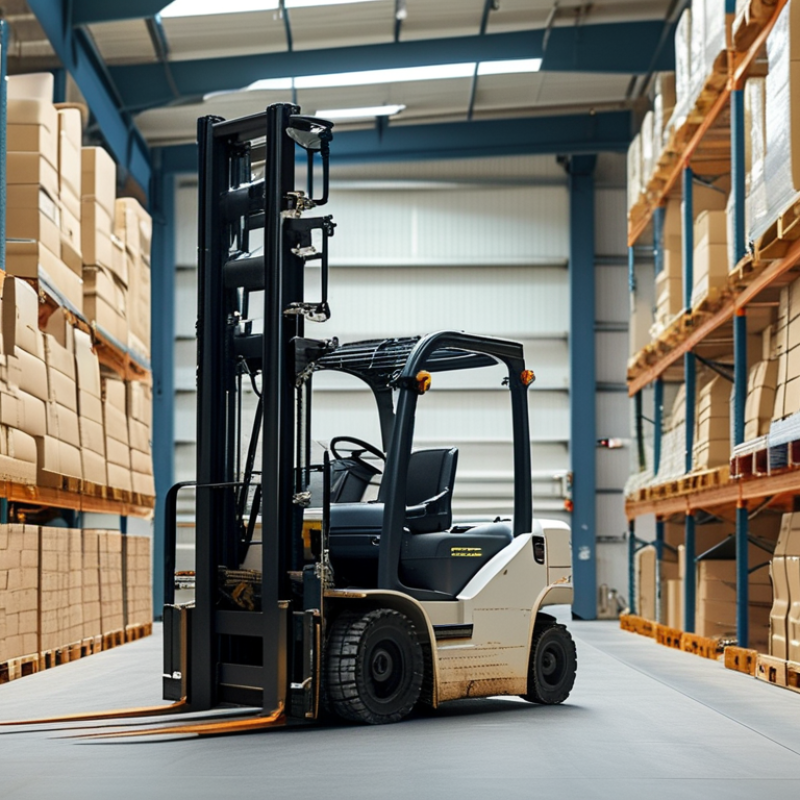
Top 10 Stacking Machine Manufacturers for Global Buyers

Stacking Machine Fundamentals: Palletizers, Case Stackers, and Bag Stackers

Top 10 Stacking Machine Manufacturers for Global Buyers

Stacking Machine Fundamentals: Palletizers, Case Stackers, and Bag Stackers

Stacking machines organize finished goods for storage, transport, and warehouse handling. Palletizers arrange cartons, cases, or bags onto pallets with repeatable patterns. Robotic models offer flexible movement, while conventional systems often provide steady, high-speed operation. Case stackers handle rigid boxes and require accurate product spacing. Bag stackers manage flexible packaging, which can shift during transfer.

Small details matter.

In factory trials, operators should test the actual product, not only sample specifications. A dusty bag may slide differently from a clean one. Uneven cartons can also disturb a carefully designed layer. Engineers usually examine speed, load height, pallet dimensions, changeover time, and floor space. They should also check controls, guarding, access points, and maintenance requirements. A machine that runs quickly but stops often may reduce real productivity.

Reliable selection depends on measured production data and practical service planning. Buyers should request layout drawings, energy information, spare-part guidance, and operator training details. Local technical support can matter as much as the machine’s rated capacity. Safety functions need verification during installation and routine inspection. A perfect stack is not always the best stack. Sometimes a slightly slower pattern protects fragile packaging and reduces workplace problems. That trade-off deserves careful review.

Global Demand Context: 541,302 Industrial Robots Installed in 2023 (IFR)

Top 10 Stacking Machine Manufacturers for Global Buyers

Global Demand Context: 541,302 Industrial Robots Installed in 2023 (IFR)

The International Federation of Robotics reported 541,302 industrial robots installed worldwide in 2023. This figure shows how quickly factories are adopting automated material handling. Stacking machines now support warehouses, food plants, packaging lines, and heavy manufacturing sites. Buyers are seeking faster pallet building, safer movement, and consistent layer alignment.

A practical top-ten comparison should examine more than advertised speed. Experienced purchasing teams check payload capacity, stacking height, cycle accuracy, footprint, and integration with conveyors. They also request test videos using similar cartons, bags, or containers. Control systems should offer clear fault messages and accessible maintenance settings. Spare-part availability matters when one stopped machine can delay an entire shift.

Site conditions often change the result. Dust, humidity, uneven floors, and mixed package sizes can reduce performance. That reality is easy to miss in a polished demonstration. A reliable manufacturer should provide installation guidance, operator training, safety documentation, and measurable service response times. Energy use deserves attention too. Lower consumption may improve operating costs, but only when productivity remains stable. Some rankings still rely heavily on catalog data, so buyers should verify claims through reference sites and controlled trials.

Ranking Criteria: Throughput, Payload, Accuracy, Uptime, TCO, and Safety

Top 10 Stacking Machine Manufacturers for Global Buyers

A credible ranking must measure more than advertised cycle speed. Throughput should reflect complete pallet patterns, product changes, and rejected loads. Payload testing should include the heaviest realistic case, not a laboratory maximum. Accuracy matters at the final layer, where a small offset can destabilize an entire pallet. The International Federation of Robotics reported 541,302 industrial robot installations worldwide in 2023. That growth increases choice, but it also makes transparent benchmarking more important.

Uptime requires logged availability, fault frequency, recovery time, and access to spare parts. A machine running fast for two hours is less valuable than one producing reliably across multiple shifts. The MHI 2024 Annual Industry Report surveyed more than 2,000 supply-chain professionals and found that 83% viewed innovation as a competitive advantage. However, automation investment still needs a measurable total cost of ownership. Include energy, tooling, software updates, training, maintenance, and downtime. Cheap equipment can become expensive quickly.

Safety should carry equal weight with performance. Buyers should check risk assessments, guarding, interlocks, emergency stops, and conformity with applicable machinery standards. ISO 10218 provides widely used requirements for industrial robot safety, while ISO 13849 supports safety-related control evaluation. The method is useful, but not flawless. Regional labor rules and product handling conditions can change the ranking. Test data from a supplier should be independently verified under site-specific conditions. Lose one carton. Observe the recovery.

Top 10 Stacking Machine Manufacturers for Global Buyers - Ranking Criteria: Throughput, Payload, Accuracy, Uptime, TCO, and Safety

Rank Anonymized Manufacturer Profile Typical Throughput
(cases/hour)
Maximum Payload
(kg)
Positioning Accuracy
(mm)
Design Uptime
(%)
5-Year TCO Index
(Lower Is Better)
Safety Framework Composite Score
(100)
1 High-Speed Robotic Palletizing Profile 1,200–1,800 200 ±0.5 98.5 82 ISO 12100
ISO 13849-1
94.2
2 Heavy-Duty Layer Stacking Profile 900–1,400 300 ±0.7 98.0 85 ISO 12100
ISO 10218
92.8
3 Flexible Mixed-Case Palletizing Profile 700–1,200 180 ±0.6 97.5 79 ISO 12100
ISO 13849-1
91.6
4 Compact High-Accuracy Stacking Profile 600–1,000 150 ±0.4 97.0 76 ISO 12100
IEC 60204-1
90.4
5 Food and Beverage Hygienic Stacking Profile 800–1,300 220 ±0.8 97.8 88 ISO 12100
EHEDG-aligned design
89.7
6 Standardized Pallet Transfer Profile 650–1,050 250 ±1.0 96.8 81 ISO 12100
ISO 13849-1
88.9
7 Modular End-of-Line Automation Profile 500–900 160 ±0.9 96.5 74 ISO 12100
IEC 60204-1
87.5
8 Palletizing and Stretch-Wrapping Profile 450–800 140 ±1.1 96.0 72 ISO 12100
ISO 13849-1
86.8
9 Collaborative Low-Volume Stacking Profile 250–600 25 ±1.5 95.5 68 ISO 12100
ISO/TS 15066
84.1
10 Entry-Level Case Stacking Profile 300–700 100 ±1.3 95.0 65 ISO 12100
IEC 60204-1
81.9
Benchmark note: Values represent realistic operating ranges for comparable industrial stacking and palletizing systems. Throughput depends on case dimensions, pallet pattern, product handling, and line configuration. TCO is a normalized five-year index covering acquisition, integration, energy, maintenance, spare parts, and expected downtime; it is not a quoted currency value. Safety frameworks indicate commonly applied design and risk-assessment standards and should be verified for the target jurisdiction.

Top 10 Manufacturers by Technology, Regional Reach, and Service Support

Choosing the top 10 stacking machine manufacturers requires more than comparing catalog prices. Technology should be judged through measurable results: stacking accuracy, cycle speed, load stability, and energy use. A reliable machine should handle cartons, bags, or cases without frequent manual correction. Remote diagnostics, recipe storage, and safe control systems also matter. Some suppliers advertise impressive speeds, yet those figures may apply only to ideal loads.

Regional reach separates strong manufacturers from convenient sellers. A capable supplier should provide local installation partners, spare parts access, and technicians familiar with regional standards. Buyers in Southeast Asia may need corrosion-resistant components and multilingual controls. European operations may prioritize documentation, guarding, and integration with existing automation. North American warehouses often value rapid field support and flexible pallet patterns. These differences can change the ranking.

Service support deserves equal weight with engineering. Review response times, training plans, preventive maintenance, and parts availability before signing a contract. Ask for references from facilities with similar products and production volumes. Factory acceptance testing can reveal unstable software or difficult changeovers early. Warranty terms look useful on paper, but unclear exclusions can create delays. No ranking stays perfect for every buyer. A manufacturer with excellent technology may lack nearby service coverage, while a regional specialist may offer better daily support. Careful buyers should score each supplier against actual operating conditions, not promotional claims.

Buyer Evaluation: FAT Metrics, ROI, Compliance, Integration, and After-Sales Service

Top 10 Stacking Machine Manufacturers for Global Buyers

A serious buyer should begin with the Factory Acceptance Test, not a polished brochure. Request a written FAT protocol before signing the purchase order. It should cover stacking accuracy, cycle time, load stability, sensor performance, emergency stops, and fault recovery. Test representative cartons, including damaged or uneven boxes. Record results under realistic speeds. A machine that passes with perfect samples may struggle on a busy production line. Keep the evidence.

ROI needs more than a low purchase price. Compare labor savings, energy use, maintenance hours, spare-part costs, and expected uptime. Ask for a calculation based on your shift pattern and product mix. Payback claims should show their assumptions. A small cycle-time gain can matter greatly at high volumes. However, projected savings are not guaranteed. I would apply a sensitivity test for lower demand, wage changes, and unplanned downtime.

Compliance and integration deserve equal attention. Confirm applicable machinery safety requirements, electrical standards, guarding, documentation, and risk assessments for the installation location. Require communication details for PLCs, warehouse systems, scanners, and production equipment. During commissioning, test handshakes, barcode errors, network loss, and restart procedures. After-sales service should include response targets, remote diagnostics, training, local technicians, and critical spare parts. Ask how long support remains available. Fast promises mean little without named responsibilities and measurable service levels.

Top 10 Stacking Machine Manufacturers for Global Buyers

Aggregated buyer-evaluation benchmark across ten anonymous manufacturers, using a normalized 0–100 score for FAT readiness, ROI potential, compliance, integration, and after-sales service.

Higher scores indicate stronger overall suitability for global procurement. FAT readiness measures inspection and acceptance-test capability; ROI reflects expected payback and operating efficiency; compliance covers safety and export documentation; integration evaluates compatibility with existing automation systems; after-sales service reflects spare-parts availability, technical support, and response capability.

Copyright 2025 Fluidra S.A. | Created by BCM Marketing Agencia Privacy Policy Legal note | Cookie policy |

Technical cookies are strictly necessary for our website to work and you can navigate through it. These types of cookies are those that, for example, allow us to identify you, give you access to certain restricted parts of the page if necessary, or remember different options or services already selected by you, such as your privacy preferences. Therefore, they are activated by default, your authorization not being necessary in this regard. Through the configuration of your browser, you can block or alert the presence of this type of cookies, although such blocking will affect the proper functioning of the different functionalities of our website.


The analysis cookies allow us to study the navigation of the users of our website in general (for example, which sections of the page are the most visited, which services are used most and if they work correctly, etc.). From the statistical information on navigation on our website, we can improve both the operation of the page itself and the different services it offers. Therefore, these cookies do not have an advertising purpose, but only serve to make our website work better, adapting to our users in general. By activating them you will contribute to this continuous improvement. You can enable or disable these cookies by checking the corresponding box, being disabled by default.


Functionality cookies allow us to remember your preferences, to personalize certain characteristics and general options of our website, every time you access it (for example, the language in which the information is presented to you, the sections marked as favorites, your browser type, etc.) Therefore, this type of cookies does not have an advertising purpose, but by activating them you will improve the functionality of the website (for example, adapting to your type of browser) and the customization of it based on your preferences (for example, by presenting the information in the language that you have chosen in previous occasions), which will contribute to the ease, usability and comfort of our page during your navigation. You can enable or disable these cookies by checking the corresponding box, being disabled by default.


Advertising cookies allow us to manage the advertising spaces included in our website based on criteria such as the content shown or the frequency in which the ads are displayed. For example, if you have been shown the same ad several times on our website, and you have not shown a personal interest by clicking on it, it will not appear again. In summary, by activating this type of cookies, the advertising shown on our website will be more useful and diverse, and less repetitive. You can enable or disable these cookies by checking the corresponding box, being disabled by default.


Behavioral advertising cookies allow us to obtain information based on the observation of your browsing habits and behaviors on the web, in order to show you advertising content that best suits your personal tastes and interests. To understand it in a very simple way, we will give you a fictitious example: if your last searches on the web were related to suspense literature, we would show you advertising about suspense books. Therefore, activating this type of cookies, the advertising that we show you on our website will not be generic, but will be oriented to your searches, tastes and interests, therefore adjusting exclusively to you. You can enable or disable these cookies by checking the corresponding box, being disabled by default.
To understand it in a very simple way, we will give you a fictitious example: if your last searches on the web were related to suspense literature, we would show you advertising about suspense books. Therefore, activating this type of cookies, the advertising that we show you on our website will not be generic, but will be oriented to your searches, tastes and interests, therefore adjusting exclusively to you. You can enable or disable these cookies by checking the corresponding box, being disabled by default.

SAVE

We use our own and third-party cookies to ensure the proper functioning of the website and to analyse our services, improve your experience on our website and show you advertisements related to your interests according to profiling based on your browsing habits (e.g. websites visited). You can accept all cookies by clicking "ACCEPT" or set or reject them by clicking here. If you would like to know more about the use of cookies, please see our COOKIE POLICY.


ACCEPT ALL
Reject no essentials


