
Top 10 Shuttering Magnet Types for Concrete Formwork
FLUID HANDLING EXPERTS

Blog, all our news

Top 10 Shuttering Magnet Types for Concrete Formwork

Concrete formwork is becoming more industrialized, repeatable, and quality-controlled. Global Market Insights reported that the concrete formwork market exceeded USD 7 billion in 2023. Its outlook also indicates steady growth through 2032, supported by infrastructure and modular construction demand.

This growth places greater pressure on small connection components. A Shuttering Magnet can hold a formwork rail against a steel table without drilling, welding, or permanent modification. That detail matters when factories repeat the same casting cycle hundreds of times. The magnet’s holding force, housing design, release mechanism, and corrosion resistance directly affect positioning accuracy and working speed.

The Precast/Prestressed Concrete Institute emphasizes reliable mold systems, dimensional control, and safe production practices in its technical guidance. ACI 347R also highlights formwork stability, pressure management, and proper inspection. These principles help explain why magnet selection should involve more than rated force alone.

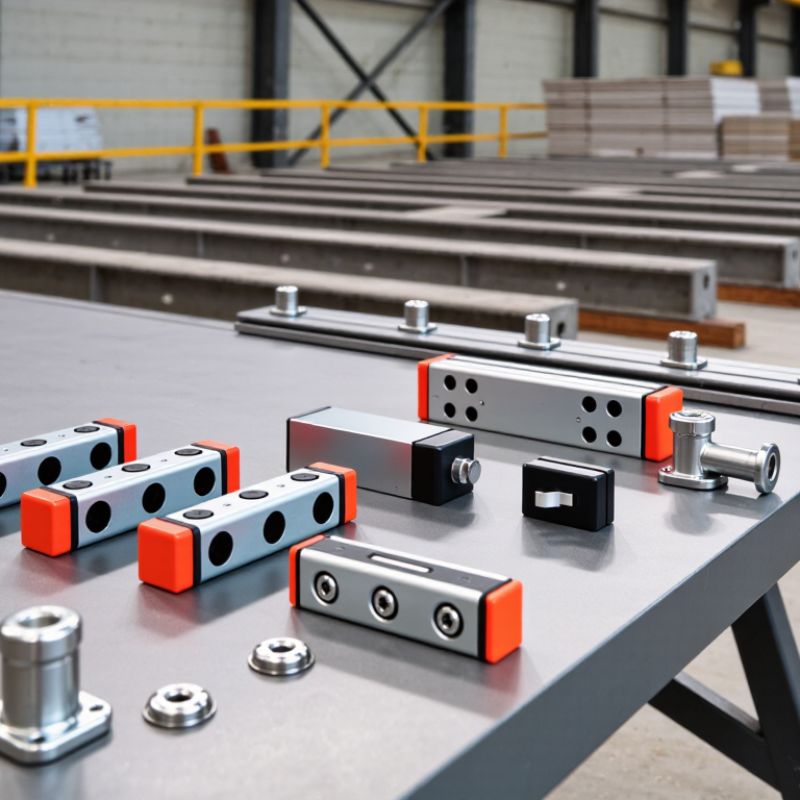
This guide examines the top 10 Shuttering Magnet types used in concrete formwork. It compares push-button, switchable, side-mounted, corner, recessed, and customized designs. Each type solves a different production problem. Some suit heavy steel beds. Others fit narrow profiles or rapid relocation.

Small hardware matters.

Real factory conditions are less perfect than catalogs suggest. Concrete paste can enter gaps, steel surfaces may carry rust, and operators may apply uneven pressure. Therefore, this review considers practical handling, maintenance, compatibility, and service life. Manufacturer claims require verification through testing, drawings, and site experience. No single magnet is ideal for every mold, panel, or production cycle.
Top 10 Shuttering Magnet Types for Concrete Formwork

Core Principles and Components of Shuttering Magnets

Shuttering magnets hold concrete formwork against a steel casting table without drilling or welding. Their core principle is controlled magnetic force. Permanent magnets create attraction through a steel housing, while a mechanical switch engages or releases the magnetic circuit. This allows workers to reposition forms quickly and reduce surface damage.

A typical unit includes a steel body, high-strength permanent magnets, an activation lever, and protective rubber pads. The housing directs magnetic flux toward the table. The pads improve contact and help prevent scratches. Anchor points connect side rails, angles, or custom formwork. Clean contact matters. Dust, hardened concrete, and small gaps can sharply reduce holding strength.

In field use, I check the table surface before every placement. I also inspect the lever, welds, and fasteners for wear. Rated force should never be treated as a universal guarantee. Temperature, paint thickness, vibration, and uneven steel can change performance. That assumption can fail. A practical test involves applying the magnet, checking full contact, and observing movement during the first pour. I prefer several smaller magnets when load distribution is uncertain. They can provide steadier support, although installation takes longer. One overlooked weakness remains manual release effort. Operators need clear access and proper gloves, especially when concrete residue stiffens the mechanism.

Ten Major Shuttering Magnet Types for Concrete Formwork

Concrete formwork supports a huge global workload. The Global Cement and Concrete Association reports roughly 14 billion cubic metres of concrete are produced annually. That scale makes reliable shuttering magnet selection important.

Ten major shuttering magnet types serve different formwork conditions: standard box magnets, high-strength box magnets, push-pull magnets, rail magnets, side-form magnets, corner magnets, edge magnets, threaded magnets, lifting magnets, and electromagnetic units. Standard box magnets suit repeated precast beds. High-strength versions handle heavier mould pressures. Push-pull magnets allow faster positioning and removal. Rail magnets secure long steel profiles. Side-form, corner, and edge magnets improve alignment around panels and narrow returns. Threaded magnets support adjustable inserts. Lifting magnets assist controlled handling, while electromagnetic units offer switchable holding force. ACI 347R highlights accurate formwork alignment, support, and safe removal as core quality factors. Magnet strength cannot replace sound bracing.

Tips: Match the magnet to panel weight, vibration, surface condition, and reuse frequency. Clean concrete paste from contact plates after every pour. Check holding force before placement, not after movement begins. Operators should record slips and misalignment; small failures often reveal weak layouts. The best choice is not always the strongest magnet. Excessive force can slow removal and damage delicate mould surfaces. This point is easy to overlook. Data from the GCCA’s Concrete Future Roadmap also stresses lower waste and higher construction efficiency, yet real sites remain inconsistent. Rain, rust, rough steel, and hurried cleaning can reduce performance. A practical trial on one panel is wiser than trusting a catalogue figure alone.

Top 10 Shuttering Magnet Types for Concrete Formwork - Ten Major Shuttering Magnet Types for Concrete Formwork
Rank Shuttering Magnet Type Typical Configuration Typical Holding Force Common Formwork Application Mounting and Release Method Main Advantages Key Limitations
1 Push-Button Shuttering Magnet Steel housing with an integrated mechanical push-button release 900–2,100 kgf
(8.8–20.6 kN)
Standard precast wall panels, beams, columns, and table forms Positioned on a steel casting bed; released by pressing the upper or side button with a suitable tool Fast operation, compact design, repeatable positioning, and reduced manual prying Release buttons must remain clean and accessible; force varies with the condition and thickness of the steel bed
2 Pneumatic Shuttering Magnet Magnetic unit operated by compressed air through a pneumatic actuator 1,000–2,500 kgf
(9.8–24.5 kN)
High-throughput precast production lines and automated formwork systems Placed on the casting table; activated or released through a pneumatic control circuit Suitable for automation, quick release, and consistent operation in repetitive production Requires an air supply, hoses, valves, and regular maintenance; less practical for small sites
3 Hydraulic Shuttering Magnet Magnetic box integrated with a hydraulic release mechanism 1,500–3,000 kgf
(14.7–29.4 kN)
Large precast elements, heavy-duty molds, and high-load production tables Installed against the steel formwork base and released using hydraulic pressure High operating force, stable clamping, and suitability for heavy or rigid form systems Higher system cost, greater weight, and possible leakage or maintenance issues in the hydraulic circuit
4 Electromagnetic Shuttering Magnet Electrically energized coil producing magnetic holding force 500–2,000 kgf
(4.9–19.6 kN)
Automated production tables, adjustable formwork, and electronically controlled setups Activated by electrical power and released when power is switched off or reversed, depending on design Easy remote control, quick release, and compatibility with automated manufacturing systems Needs electrical wiring and control equipment; holding performance depends on power and system reliability
5 Permanent Magnetic Shuttering Box Permanent magnet assembly enclosed in a protective steel body 600–2,000 kgf
(5.9–19.6 kN)
General precast beds, small and medium wall forms, and reusable steel molds Placed directly on a clean steel surface; released with a lever, wedge, or mechanical switch No external power, low operating cost, strong resistance to routine site use, and simple installation Manual release is required; magnetic performance decreases when an air gap, scale, or debris is present
6 Magnetic Side Rail System Long magnetic rail or modular magnetic strip used with a removable side profile 300–1,500 kgf per unit
(2.9–14.7 kN)
Precast slabs, floor panels, sandwich panels, and long straight edge forms Aligned along the form edge; switched or mechanically released before stripping the concrete product Provides continuous edge support, reduces individual clamps, and helps create consistent panel dimensions Requires accurate alignment; long rails can be heavier and more difficult to clean and handle
7 Magnetic Chamfer Strip Profiled magnetic strip with a triangular, beveled, or radiused forming face 100–600 kgf per meter
(1.0–5.9 kN/m)
Chamfered corners, architectural panels, beams, columns, and decorative concrete edges Attached magnetically to the steel form surface and removed after initial concrete hardening Creates uniform edge details, reduces separate fastening, and can be reused many times Not intended for major structural restraint; damaged profiles can affect the finished concrete edge
8 Magnetic Recess Former Magnetic base with a replaceable rubber, polymer, or steel recess profile 200–900 kgf per unit
(2.0–8.8 kN)
Lifting-anchor recesses, service openings, connection pockets, and embedded fitting details Placed on the steel table in the required position and removed after the concrete has set sufficiently Fast positioning, repeatable recess geometry, and reduced drilling or secondary fabrication Profile wear can change dimensions; correct release timing is needed to avoid damaging green concrete
9 Magnetic Insert and Anchor Holder Small magnetic fixture that positions threaded inserts, lifting sockets, or embedded components 50–400 kgf per unit
(0.5–3.9 kN)
Precast façade panels, utility products, stairs, beams, and structural connection components Mounted on the steel formwork surface before pouring and removed after demolding Improves insert placement accuracy, reduces temporary fixtures, and supports repeatable production Holding force is lower than that of main formwork magnets; it must not replace structural reinforcement or designed anchors
10 Magnetic Adjustable Formwork Clamp Magnetic base combined with an adjustable clamp, bracket, or threaded positioning mechanism 500–1,800 kgf per unit
(4.9–17.7 kN)
Variable-width molds, custom precast shapes, openings, and frequently reconfigured formwork Placed on the casting table, adjusted to the required position, and mechanically released after use Flexible positioning, reduced drilling of steel tables, and useful for custom or short-run production More components require inspection; incorrect adjustment can cause form movement or dimensional error
Technical note: Holding-force figures are typical working ranges for clean, flat steel contact surfaces. Actual performance depends on magnet design, steel grade and thickness, surface flatness, air gaps, rust, concrete residue, temperature, vibration, and the direction of the applied load. Always verify the manufacturer’s rated force and conduct a site-specific safety check before use.

Formwork Applications for Different Magnet Designs

Shuttering Magnet Types for Concrete Formwork

Shuttering magnets serve different formwork applications, so design selection matters. Standard box magnets suit straight steel side forms and repeated precast production. Their broad contact surface helps maintain stable positioning during concrete vibration. Use them on long panels. Flush magnets work well where the form surface must remain nearly level. Their compact profile reduces interference with reinforcement placement and finishing tools.

Threaded magnets support adjustable fixtures, such as sockets, rails, and embedded connection points. They are useful when crews change layouts frequently. Corner magnets create clean right-angle junctions for beams, columns, and stair components. Rubber-coated magnets protect painted steel surfaces and reduce sliding on dusty beds. Lever-release designs can improve removal speed without striking the housing. Choose them carefully.

Small button magnets fit narrow inserts and lightweight templates. Heavy-duty magnetic boxes handle larger forms and stronger vibration, but they still require clean contact surfaces. Hydraulic or mechanically assisted systems may help on high-volume lines, especially when removal is frequent. However, automation adds maintenance points. That trade-off deserves attention.

In practice, magnet strength is only one selection factor. Steel thickness, concrete pressure, vibration intensity, and surface cleanliness also affect performance. A magnet may hold well in testing but shift on a rough production bed. We have found that trial panels reveal problems earlier than catalog calculations. Inspect housings for dents, check release mechanisms, and remove concrete residue after each cycle. Small oversights can become expensive alignment errors.

How to Select the Right Shuttering Magnet

Top 10 Shuttering Magnet Types for Concrete Formwork

How to Select the Right Shuttering Magnet

Choosing a shuttering magnet starts with the formwork, not the magnet catalogue. Check the steel plate thickness, panel weight, concrete pressure, and casting position. A small side magnet may suit a light partition panel. It may not resist movement beneath a heavy table mould.

Compare rated holding force with real working conditions. Dust, vibration, uneven steel, and repeated impacts can reduce performance. Keep a practical safety margin. Do not rely only on a laboratory value. In our experience, magnets with protected housings perform better when workers move panels frequently. However, poor cleaning can still weaken the connection.

Measure the available installation space before selecting a type. Low-profile magnets fit narrow beams, while adjustable systems help with changing layouts. For large panels, distribute several magnets rather than depending on one powerful unit. Check the release mechanism, handle position, and access for removal. These details affect daily productivity more than many buyers expect.

Test a sample on the actual formwork. Use the same steel thickness and surface condition. Observe shifting during concrete placement. Also inspect the magnet after several cycles. Some selections look efficient at first, but cleaning becomes slow and costly. I have found that choosing maximum force is not always wise. Excessive force can delay removal and strain workers. The right magnet balances holding strength, placement speed, durability, and safe handling.

Top 10 Shuttering Magnet Types for Concrete Formwork

Comparative selection scores based on typical holding performance, setup speed, reusability, flexibility, and cost efficiency in concrete formwork applications.

Higher scores indicate a stronger overall fit for general formwork use. Actual performance depends on steel thickness, concrete pressure, surface condition, magnet layout, and required lifting force.

Installation, Maintenance, and Safe Handling Practices

Choosing among the ten common shuttering magnet types—standard, corner, recessed, adjustable, threaded, and high-holding designs—matters only when installation is controlled. In field work, I wipe the contact plate before positioning each unit. Dust, oil, and hardened grout can reduce grip. ACI 347R recommends inspecting formwork before concrete placement, including connections, supports, and alignment. The same discipline should apply to magnetic fixtures.

Use two hands when moving heavy magnets. Keep fingers away from the release lever and steel contact surface. OSHA’s 2022 Fatal Four summary recorded 106 struck-by deaths in construction. A suddenly released magnet can create a similar pinch or impact hazard. Mark each unit’s rated holding capacity, but do not treat that rating as guaranteed on rough or painted steel. I also keep strong magnets away from pacemakers, loose tools, and electronic measuring devices. Small oversights happen.

After stripping, remove concrete residue with a non-damaging scraper. Do not hammer the magnet body. Check cracks, bent handles, corrosion, and weak or uneven engagement. Store units dry, with protective separators, rather than allowing them to collide in a steel bin. HSE reported 51 fatal injuries in UK construction during 2023/24; these figures are not magnet-specific, and that limitation deserves attention. Still, they show why routine inspection cannot be treated as paperwork. Before reuse, test placement on the actual formwork surface, record damaged units, and quarantine anything that slips unexpectedly.

Copyright 2025 Fluidra S.A. | Created by BCM Marketing Agencia Privacy Policy Legal note | Cookie policy |

Technical cookies are strictly necessary for our website to work and you can navigate through it. These types of cookies are those that, for example, allow us to identify you, give you access to certain restricted parts of the page if necessary, or remember different options or services already selected by you, such as your privacy preferences. Therefore, they are activated by default, your authorization not being necessary in this regard. Through the configuration of your browser, you can block or alert the presence of this type of cookies, although such blocking will affect the proper functioning of the different functionalities of our website.


The analysis cookies allow us to study the navigation of the users of our website in general (for example, which sections of the page are the most visited, which services are used most and if they work correctly, etc.). From the statistical information on navigation on our website, we can improve both the operation of the page itself and the different services it offers. Therefore, these cookies do not have an advertising purpose, but only serve to make our website work better, adapting to our users in general. By activating them you will contribute to this continuous improvement. You can enable or disable these cookies by checking the corresponding box, being disabled by default.


Functionality cookies allow us to remember your preferences, to personalize certain characteristics and general options of our website, every time you access it (for example, the language in which the information is presented to you, the sections marked as favorites, your browser type, etc.) Therefore, this type of cookies does not have an advertising purpose, but by activating them you will improve the functionality of the website (for example, adapting to your type of browser) and the customization of it based on your preferences (for example, by presenting the information in the language that you have chosen in previous occasions), which will contribute to the ease, usability and comfort of our page during your navigation. You can enable or disable these cookies by checking the corresponding box, being disabled by default.


Advertising cookies allow us to manage the advertising spaces included in our website based on criteria such as the content shown or the frequency in which the ads are displayed. For example, if you have been shown the same ad several times on our website, and you have not shown a personal interest by clicking on it, it will not appear again. In summary, by activating this type of cookies, the advertising shown on our website will be more useful and diverse, and less repetitive. You can enable or disable these cookies by checking the corresponding box, being disabled by default.


Behavioral advertising cookies allow us to obtain information based on the observation of your browsing habits and behaviors on the web, in order to show you advertising content that best suits your personal tastes and interests. To understand it in a very simple way, we will give you a fictitious example: if your last searches on the web were related to suspense literature, we would show you advertising about suspense books. Therefore, activating this type of cookies, the advertising that we show you on our website will not be generic, but will be oriented to your searches, tastes and interests, therefore adjusting exclusively to you. You can enable or disable these cookies by checking the corresponding box, being disabled by default.
To understand it in a very simple way, we will give you a fictitious example: if your last searches on the web were related to suspense literature, we would show you advertising about suspense books. Therefore, activating this type of cookies, the advertising that we show you on our website will not be generic, but will be oriented to your searches, tastes and interests, therefore adjusting exclusively to you. You can enable or disable these cookies by checking the corresponding box, being disabled by default.

SAVE

We use our own and third-party cookies to ensure the proper functioning of the website and to analyse our services, improve your experience on our website and show you advertisements related to your interests according to profiling based on your browsing habits (e.g. websites visited). You can accept all cookies by clicking "ACCEPT" or set or reject them by clicking here. If you would like to know more about the use of cookies, please see our COOKIE POLICY.


ACCEPT ALL
Reject no essentials


