
Top 10 OCR Inspection Systems for Global Buyers
FLUID HANDLING EXPERTS

Blog, all our news

Top 10 OCR Inspection Systems for Global Buyers

Ocr Inspection systems turn printed characters into measurable production data. They read lot codes, expiry dates, serial numbers, and labels as products move along a line. For global buyers, a convincing demonstration is not enough. Performance must hold across fonts, substrates, lighting conditions, and operating speeds.

Computer-vision pioneer Dr. Fei-Fei Li has said, “If we want machines to think, we need to teach them to see.” Her observation speaks to a core challenge: machines must interpret visual details, not merely capture images. In this guide, the Top 10 OCR Inspection Systems for Global Buyers are compared through practical purchasing criteria, including reading accuracy, inspection speed, integration options, language support, and service availability. Small details matter. A glossy pouch can create glare; a curved bottle can distort a code.

No single system suits every factory. Results depend on camera setup, print quality, product variation, and the cost of missed or incorrect reads. Buyers should test real samples under real line conditions, then review failure cases—not just headline accuracy. That step is easy to overlook. This comparison aims to clarify trade-offs, while recognizing that vendor specifications do not replace a site-specific trial. Even a strong system may need careful tuning. A useful shortlist begins with evidence, not promises.
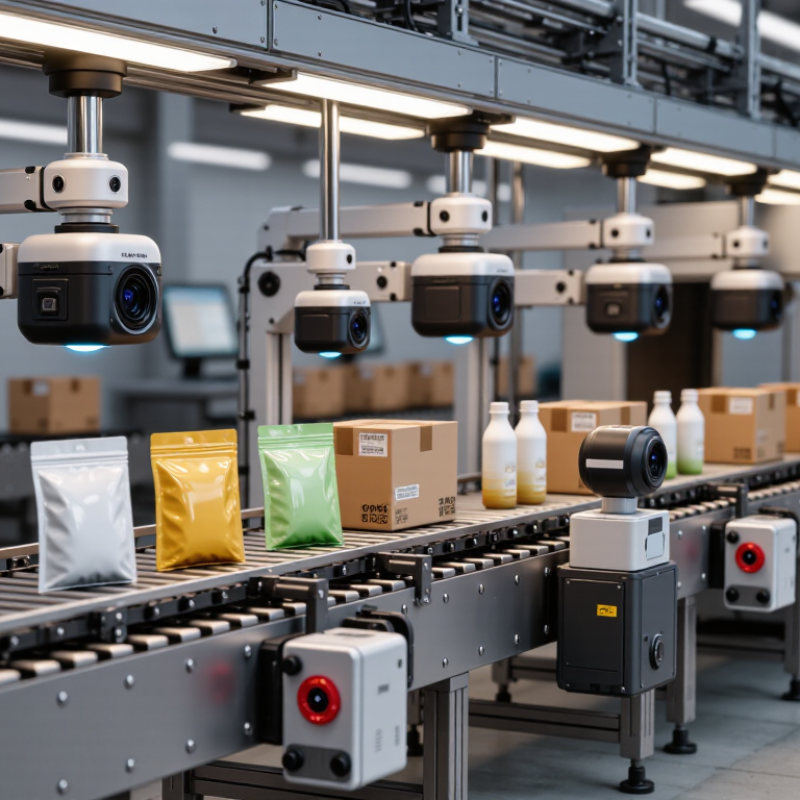
Top 10 OCR Inspection Systems for Global Buyers

Defining OCR Inspection: OCR, OCV, and Their Roles on Production Lines

OCR turns printed or marked characters into readable data; OCV checks whether those characters match an expected value. On a packaging line, OCR may read a date code from a moving carton. OCV can then verify that the code matches the scheduled format and product record. They overlap, but they answer different questions: “What does it say?” and “Is it correct?” Small errors matter.

Selection depends on the inspection task, not just camera resolution. Consider print contrast, glare on glossy film, line speed, code location, and character spacing. A system should flag unreadable codes as well as readable-but-wrong ones. Good lighting and stable image capture often matter as much as recognition software. Still, no setup is perfect; condensation, worn printheads, or a slightly skewed label can create false rejects. Review sample images and challenge the system with realistic defects before setting acceptance limits.

Tips: Test codes at normal line speed, including faint and smudged examples. Keep inspection logs, and periodically check whether reject rates reflect real defects or tuning issues.

Measuring Performance: Read Rate, False Rejects, and Line Speed

An OCR inspection system should be judged on the code it reads at production speed, not only on clean test images. Measure read rate across real print variation: pale ink, curved bottles, glare, and small date codes. Record results by product and shift, since one average can hide recurring failures. A 99.8% read rate sounds strong. Check the denominator.

False rejects deserve equal attention. A system that rejects readable codes can stop a line and trigger manual checks. Review rejected images to separate actual defects from lighting changes, vibration, or poor focus. Keep a sample log. It is tedious, but useful. Set acceptance limits with operators and quality staff, then revisit them after label or setup changes. A threshold that works on cartons may not suit glossy film.

Test line speed with the actual conveyor, item spacing, and trigger timing. Measure sustained throughput, not a brief peak, and confirm that every item receives an image and decision. At high speed, missed frames matter. Request recorded trials with representative samples, including damaged and low-contrast codes. Repeat testing after installation; setup drift is real. No single score settles the choice. Compare read rate, false rejects, and throughput together, while noting where the evidence remains thin.

Verifying Code Quality: ISO/IEC 15416 and 15415 Use a 0–4 Grade Scale

For global buyers, OCR inspection and barcode verification solve related but different problems. OCR checks whether printed characters match the expected text. ISO/IEC 15416:2016 and ISO/IEC 15415:2011 assess the quality of linear and two-dimensional symbols. Their reported grade uses a 0–4 scale: 4 is highest, while 0 is lowest. Numbers matter.

A grade is not a universal pass mark. GS1 General Specifications set application-specific requirements, so buyers should match acceptance limits to the symbol type and scanning environment. A verifier’s aperture, illumination, and setup can affect results; comparing scores without checking these conditions can mislead. One good scan proves little.

For example, a crisp code on a flat sample may score well, while the same code near a curved package seam may suffer uneven lighting or distortion. Ask suppliers to show grade reports from representative production samples, not only ideal test labels. Check that the report identifies the standard, grading conditions, and measured result. OCR confidence should be reviewed separately; it does not replace an ISO symbol grade. A tidy dashboard can still hide a weak sampling plan.

Comparing 10 OCR Inspection Systems by Accuracy, Integration, and Global Support

Choosing among ten OCR inspection systems requires more than comparing headline accuracy. Test each system on the same production images, including faint printing, curved packaging, glare, and slightly shifted labels. Record character-level accuracy, false rejects, and missed defects separately. A single accuracy score can hide costly errors. A clean demonstration may also overstate real-line performance.

Integration matters just as much. Check camera compatibility, lighting controls, line speed, and connections to existing PLC or manufacturing software. Ask how operators review uncertain reads and whether results can be exported in usable formats. Global support should include clear documentation, practical training, and service coverage across your operating hours. Response times deserve verification, not assumptions. Even a strong system can disappoint when local teams cannot troubleshoot it quickly.

Tips: Prepare a small image set from real shifts, not only ideal samples. Repeat tests after changing lighting or print position. Keep the results; your first comparison may miss an important edge case.

Selecting a System for GS1 DataMatrix, Multilingual Text, and Regulatory Needs

Global buyers should evaluate OCR inspection systems against real packaging, not polished sample images. A GS1 DataMatrix code needs reliable decoding, while printed human-readable text needs separate character recognition. These tasks can fail differently. Test codes on curved cartons, glossy labels, and low-contrast areas. Check whether the system reports unreadable data clearly, rather than quietly passing uncertain results.

Multilingual inspection adds another challenge. Ask whether the system supports the scripts, accents, and fonts used on your actual labels. Include small characters, mixed languages, and text near seams in trial runs. Regulatory workflows also depend on traceable records: capture inspection results, timestamps, rejected images, and change history. Confirm that records can be retrieved in the format your quality team uses. A fast camera is not enough. We sometimes give too much weight to peak speed and too little to setup changes between product runs.

Tips: Test at normal line speed with real lighting. Keep a few difficult samples for repeat checks. Review false rejects with operators; one confusing label can reveal a setup weakness.

Top 10 OCR Inspection Priorities for Global Buyers

A practical scorecard for GS1 DataMatrix, multilingual text, and regulatory requirements

The percentages are illustrative planning weights, totaling 100%—not results from a market survey or a ranking of specific systems. They highlight common evaluation areas such as GS1 DataMatrix decoding, OCR across languages, code quality, traceability, and auditability. Adjust the weights to match your products, production line, and regulatory context.

Copyright 2025 Fluidra S.A. | Created by BCM Marketing Agencia Privacy Policy Legal note | Cookie policy |

Technical cookies are strictly necessary for our website to work and you can navigate through it. These types of cookies are those that, for example, allow us to identify you, give you access to certain restricted parts of the page if necessary, or remember different options or services already selected by you, such as your privacy preferences. Therefore, they are activated by default, your authorization not being necessary in this regard. Through the configuration of your browser, you can block or alert the presence of this type of cookies, although such blocking will affect the proper functioning of the different functionalities of our website.


The analysis cookies allow us to study the navigation of the users of our website in general (for example, which sections of the page are the most visited, which services are used most and if they work correctly, etc.). From the statistical information on navigation on our website, we can improve both the operation of the page itself and the different services it offers. Therefore, these cookies do not have an advertising purpose, but only serve to make our website work better, adapting to our users in general. By activating them you will contribute to this continuous improvement. You can enable or disable these cookies by checking the corresponding box, being disabled by default.


Functionality cookies allow us to remember your preferences, to personalize certain characteristics and general options of our website, every time you access it (for example, the language in which the information is presented to you, the sections marked as favorites, your browser type, etc.) Therefore, this type of cookies does not have an advertising purpose, but by activating them you will improve the functionality of the website (for example, adapting to your type of browser) and the customization of it based on your preferences (for example, by presenting the information in the language that you have chosen in previous occasions), which will contribute to the ease, usability and comfort of our page during your navigation. You can enable or disable these cookies by checking the corresponding box, being disabled by default.


Advertising cookies allow us to manage the advertising spaces included in our website based on criteria such as the content shown or the frequency in which the ads are displayed. For example, if you have been shown the same ad several times on our website, and you have not shown a personal interest by clicking on it, it will not appear again. In summary, by activating this type of cookies, the advertising shown on our website will be more useful and diverse, and less repetitive. You can enable or disable these cookies by checking the corresponding box, being disabled by default.


Behavioral advertising cookies allow us to obtain information based on the observation of your browsing habits and behaviors on the web, in order to show you advertising content that best suits your personal tastes and interests. To understand it in a very simple way, we will give you a fictitious example: if your last searches on the web were related to suspense literature, we would show you advertising about suspense books. Therefore, activating this type of cookies, the advertising that we show you on our website will not be generic, but will be oriented to your searches, tastes and interests, therefore adjusting exclusively to you. You can enable or disable these cookies by checking the corresponding box, being disabled by default.
To understand it in a very simple way, we will give you a fictitious example: if your last searches on the web were related to suspense literature, we would show you advertising about suspense books. Therefore, activating this type of cookies, the advertising that we show you on our website will not be generic, but will be oriented to your searches, tastes and interests, therefore adjusting exclusively to you. You can enable or disable these cookies by checking the corresponding box, being disabled by default.

SAVE

We use our own and third-party cookies to ensure the proper functioning of the website and to analyse our services, improve your experience on our website and show you advertisements related to your interests according to profiling based on your browsing habits (e.g. websites visited). You can accept all cookies by clicking "ACCEPT" or set or reject them by clicking here. If you would like to know more about the use of cookies, please see our COOKIE POLICY.


ACCEPT ALL
Reject no essentials


