
Top 10 CNC Machining Companies for Custom Parts
FLUID HANDLING EXPERTS

Blog, all our news

Top 10 CNC Machining Companies for Custom Parts

A custom part can look simple on a screen and still prove difficult to make well. A thin aluminum bracket may warp during milling; a tapped hole can miss its position by a fraction of a millimeter. Choosing a supplier therefore means judging more than machine count or quoted price. Process knowledge matters.

Grand View Research estimated the global CNC machine market at $101.2 billion in 2023 and projected a 9.3% compound annual growth rate from 2024 to 2030. That report measures machine sales, not custom-part services, so it signals industry scale rather than ranking suppliers. Still, it helps explain why buyers face many options—and why careful comparison matters.

CNC Cookbook author and educator Bob Warfield describes the core term as “computer numerical control.” The definition is brief. The work behind it is not. A capable shop must interpret drawings, select suitable materials and tooling, manage tolerances, and inspect finished parts. Those details separate a useful quote from a reliable production plan.

This guide compares ten CNC machining companies for custom parts, with attention to capabilities, materials, order fit, and quality practices. A prototype shop may not suit repeat production; a high-volume supplier may be a poor match for one urgent component. No ranking can replace a drawing review or a direct conversation. Some comparisons remain imperfect, because suppliers publish different levels of detail. Treat this list as a starting point, then confirm tolerances, lead times, inspection methods, and total cost before committing.
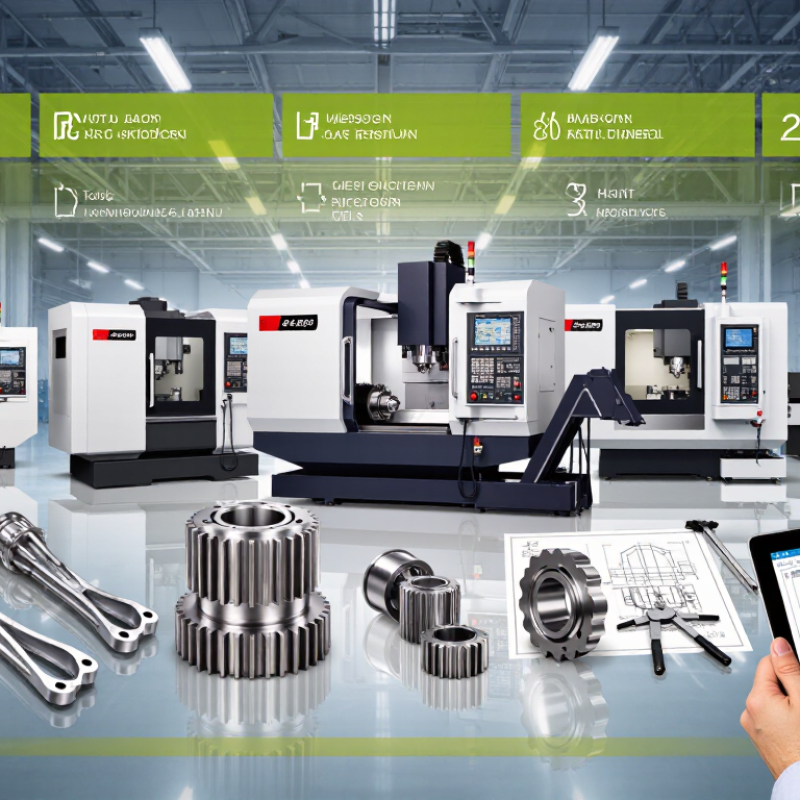
Top 10 CNC Machining Companies for Custom Parts

CNC Machining for Custom Parts: Processes, Materials, and Applications

CNC machining turns a digital model into a physical part by removing material with controlled cutting tools. Milling suits pockets, flat faces, and complex contours; turning is efficient for shafts and other round components. Grand View Research valued the global CNC machine market at USD 101.22 billion in 2023, reflecting broad industrial investment in automated production. That figure describes machine sales, not custom-part demand, so it should not be read as a direct measure of job-shop capacity.

Material choice changes both cutting behavior and part performance. Aluminum is light and machines quickly, while stainless steel offers corrosion resistance but can generate more heat during cutting. The USGS Mineral Commodity Summaries 2024 reported U.S. primary aluminum production of about 750,000 metric tons in 2023. For a bracket, an aluminum alloy may reduce weight; for a fluid-handling fitting, stainless steel may be more suitable. Plastic stock can work for insulating or low-load components. A perfect finish is not always necessary.

Custom parts serve robotics, medical equipment, automotive systems, and industrial fixtures. Before machining, designers should check wall thickness, tool access, hole depth, and tolerance requirements. A deep, narrow pocket may raise machining time and cost. Tight tolerances can also require extra inspection. That trade-off is easy to underestimate. A practical drawing specifies critical dimensions clearly and leaves noncritical surfaces less constrained.

Top 10 CNC Machining Companies for Custom Parts - CNC Machining for Custom Parts: Processes, Materials, and Applications

This comparison covers ten common CNC machining process options rather than ranking or identifying individual companies. Tolerance and surface-finish figures are indicative ranges for suitable features; actual results depend on material, part geometry, setup, tooling, and inspection requirements.

No. CNC Process Common Materials Indicative Tolerance Typical Surface Finish (Ra) Suitable Applications
1 3-Axis CNC Milling Aluminum, steel, stainless steel, brass, engineering plastics About ±0.05–0.10 mm for many standard features About 1.6–3.2 µm as machined Prismatic housings, plates, brackets, pockets, and general-purpose prototypes
2 4- or 5-Axis CNC Milling Aluminum, titanium, stainless steel, tool steel, engineering plastics About ±0.025–0.10 mm, depending on feature and setup About 1.6–3.2 µm as machined Multi-sided parts, contoured components, impellers, aerospace features, and parts needing fewer setups
3 CNC Turning Aluminum, brass, steel, stainless steel, titanium, plastics About ±0.025–0.05 mm for common turned features About 0.8–3.2 µm, depending on tooling and feed Shafts, pins, bushings, threaded parts, and cylindrical components
4 CNC Mill-Turn Machining Aluminum, stainless steel, alloy steel, brass, titanium About ±0.025–0.10 mm, depending on feature and operation About 0.8–3.2 µm on suitable turned or milled surfaces Complex parts combining turned diameters with cross-holes, flats, slots, or milled features
5 Swiss-Type CNC Turning Stainless steel, titanium, brass, aluminum, engineering plastics About ±0.01–0.05 mm for suitable small features About 0.4–1.6 µm on suitable turned surfaces Small-diameter, slender, high-volume components such as precision pins, fittings, and medical-device parts
6 CNC Drilling and Boring Aluminum, steel, stainless steel, cast iron, plastics About ±0.05–0.15 mm for hole features; tighter results may require boring or reaming About 1.6–6.3 µm, depending on the hole-making operation Mounting holes, bore features, manifolds, and components requiring controlled hole location or diameter
7 CNC Grinding Hardened steel, tool steel, stainless steel, carbide, ceramics About ±0.002–0.01 mm for suitable precision features About 0.2–0.8 µm Precision shafts, flat surfaces, bearing seats, hardened components, and close-tolerance finishing
8 Wire EDM Electrically conductive metals, including tool steel, titanium, and copper alloys About ±0.005–0.02 mm, depending on part thickness and cutting passes About 0.2–1.6 µm, depending on finish passes Through-cuts, intricate profiles, narrow slots, punches, and dies in conductive materials
9 Sinker EDM Electrically conductive metals, including hardened steel, tool steel, and carbide About ±0.01–0.03 mm for suitable cavities and details About 0.2–3.2 µm, depending on electrode and finishing settings Blind cavities, deep ribs, sharp internal details, and mold or die features that are difficult to mill
10 CNC Routing Plastics, acrylic, wood, aluminum sheet, and composite panels About ±0.10–0.25 mm for many panel and sheet parts About 3.2–6.3 µm, depending on material and cutter Panels, enclosures, signage, fixtures, flat patterns, and larger parts made from sheet or board stock

Global CNC Machine Market: $101.22B in 2023, per Grand View Research

The global CNC machine market was valued at $101.22 billion in 2023, according to the estimate cited in the subtitle. That figure signals a large industrial base, but it is not the same as revenue earned by custom-parts suppliers. That distinction matters. The market value reflects demand for CNC machinery, while a buyer ordering a milled bracket or turned shaft pays for a specific production service. Equipment investment may point to expanding capacity or automation. It cannot prove that every shop offers shorter lead times or lower prices.

For procurement teams, the number is useful context. Not a supplier scorecard. A capable shop still needs suitable spindle capacity, tooling, work envelope, and inspection methods. An aluminum enclosure may require smooth edges and consistent hole spacing. A stainless component may call for slower cutting and careful heat management. Ask for tolerance reports, material records, and sample inspection results when comparing quotes. Setup fees and minimum quantities can also reshape the final cost. They are easy to overlook. Broad market estimates hide regional differences, and a single year offers only a narrow view of changing demand.

How to Evaluate CNC Suppliers: Tolerances, Lead Times, and Certifications

A CNC supplier should be evaluated against the drawing, not a broad promise of “high precision.” Specify critical dimensions, datums, material, finish, and inspection method before comparing quotes. A tolerance of ±0.05 mm may suit a bracket but fail on a mating bore. Ask how the shop verifies each feature, and request a sample inspection report or first-article results. The ISO Survey 2022 recorded 1,265,216 valid ISO 9001 certificates worldwide. That figure shows how widely the system is used, not whether a particular shop can hold your tolerance.

Lead time needs the same scrutiny. Ask for separate dates for programming, first-article inspection, production, and shipping. Confirm whether the quoted schedule assumes available material and includes rework time. Then check recent delivery performance, not just the best-case estimate. A shop floor is rarely as tidy as a quote. That detail matters. For certifications, verify the certificate’s scope, site, and current validity; a logo on a website is not enough.

Tips: Send the same drawing and revision to every supplier. Mark must-hold dimensions clearly, and ask which inspection tools will measure them. Request a written delivery schedule and sample quality records. If a supplier cannot explain a tolerance in practical terms, pause and ask again.

CNC Supplier Evaluation: Example Tolerance Targets

Illustrative dimensional tolerance targets shown as absolute deviation in micrometers. These are example requirements, not universal CNC capability ratings; confirm achievable tolerances, lead times, and relevant certifications with each supplier.

Top 10 CNC Machining Companies for Custom Parts: Capabilities Compared

When comparing the top 10 CNC machining companies for custom parts, look beyond machine counts and polished capability charts. A useful comparison covers materials, part size, tolerances, production volume, and inspection methods. One shop may excel at quick aluminum prototypes, while another handles repeat batches of stainless steel components more consistently. Details matter.

Ask how each provider verifies critical dimensions. A coordinate measuring machine can inspect complex features, but simple parts may need calibrated gauges and clear inspection records. Check whether quoted tolerances apply across the whole part or only selected features. Surface finish, deburring, and packaging also affect how parts perform when they arrive. Lead times deserve scrutiny, too: a short estimate may exclude programming, finishing, or first-article approval. A capability sheet is helpful, but it cannot show every shop-floor constraint.

Tips: Send the same drawing and quantity to each candidate. Request a sample inspection report, material certification, and a clear list of assumptions. Compare the answers, not just the prices. If a supplier avoids explaining a tolerance or delivery date, pause and ask again. Even a careful comparison has limits; drawings sometimes leave important details open to interpretation.

Choosing a Supplier: ISO 2768-1 Class m Allows ±0.2 mm at 6–30 mm

When comparing CNC machining suppliers, read the tolerance note before judging a quote. ISO 2768-1 class m permits ±0.2 mm for untoleranced linear dimensions from 6 mm to 30 mm. A 20 mm feature could measure from 19.8 mm to 20.2 mm when that general tolerance applies. That is a 0.4 mm band. Check the drawing.

This allowance may suit a bracket or cover, but it can be too loose for a locating pin or mating bore. Put tighter requirements directly on critical dimensions, rather than assuming class m covers every fit. It does not replace specified tolerances, and it does not define every geometric requirement. A supplier should flag unclear dimensions before machining, not guess at their function.

Ask how parts will be measured and whether inspection records can be provided for critical features. A caliper may work for a broad external dimension; a bore gauge or suitable measuring machine may be needed for a close-fitting hole. Also discuss material, burr removal, and inspection conditions, since these can affect results. It is easy to call ±0.2 mm generous. That judgment can be wrong. A clear drawing and a shared interpretation prevent avoidable rework, though no tolerance note can fix a poorly chosen design.

Copyright 2025 Fluidra S.A. | Created by BCM Marketing Agencia Privacy Policy Legal note | Cookie policy |

Technical cookies are strictly necessary for our website to work and you can navigate through it. These types of cookies are those that, for example, allow us to identify you, give you access to certain restricted parts of the page if necessary, or remember different options or services already selected by you, such as your privacy preferences. Therefore, they are activated by default, your authorization not being necessary in this regard. Through the configuration of your browser, you can block or alert the presence of this type of cookies, although such blocking will affect the proper functioning of the different functionalities of our website.


The analysis cookies allow us to study the navigation of the users of our website in general (for example, which sections of the page are the most visited, which services are used most and if they work correctly, etc.). From the statistical information on navigation on our website, we can improve both the operation of the page itself and the different services it offers. Therefore, these cookies do not have an advertising purpose, but only serve to make our website work better, adapting to our users in general. By activating them you will contribute to this continuous improvement. You can enable or disable these cookies by checking the corresponding box, being disabled by default.


Functionality cookies allow us to remember your preferences, to personalize certain characteristics and general options of our website, every time you access it (for example, the language in which the information is presented to you, the sections marked as favorites, your browser type, etc.) Therefore, this type of cookies does not have an advertising purpose, but by activating them you will improve the functionality of the website (for example, adapting to your type of browser) and the customization of it based on your preferences (for example, by presenting the information in the language that you have chosen in previous occasions), which will contribute to the ease, usability and comfort of our page during your navigation. You can enable or disable these cookies by checking the corresponding box, being disabled by default.


Advertising cookies allow us to manage the advertising spaces included in our website based on criteria such as the content shown or the frequency in which the ads are displayed. For example, if you have been shown the same ad several times on our website, and you have not shown a personal interest by clicking on it, it will not appear again. In summary, by activating this type of cookies, the advertising shown on our website will be more useful and diverse, and less repetitive. You can enable or disable these cookies by checking the corresponding box, being disabled by default.


Behavioral advertising cookies allow us to obtain information based on the observation of your browsing habits and behaviors on the web, in order to show you advertising content that best suits your personal tastes and interests. To understand it in a very simple way, we will give you a fictitious example: if your last searches on the web were related to suspense literature, we would show you advertising about suspense books. Therefore, activating this type of cookies, the advertising that we show you on our website will not be generic, but will be oriented to your searches, tastes and interests, therefore adjusting exclusively to you. You can enable or disable these cookies by checking the corresponding box, being disabled by default.
To understand it in a very simple way, we will give you a fictitious example: if your last searches on the web were related to suspense literature, we would show you advertising about suspense books. Therefore, activating this type of cookies, the advertising that we show you on our website will not be generic, but will be oriented to your searches, tastes and interests, therefore adjusting exclusively to you. You can enable or disable these cookies by checking the corresponding box, being disabled by default.

SAVE

We use our own and third-party cookies to ensure the proper functioning of the website and to analyse our services, improve your experience on our website and show you advertisements related to your interests according to profiling based on your browsing habits (e.g. websites visited). You can accept all cookies by clicking "ACCEPT" or set or reject them by clicking here. If you would like to know more about the use of cookies, please see our COOKIE POLICY.


ACCEPT ALL
Reject no essentials



