
China Top Vision Inspection Equipment Suppliers?
FLUID HANDLING EXPERTS

Blog, all our news

China Top Vision Inspection Equipment Suppliers?

China has become a major manufacturing base for Vision Inspection Equipment, supported by extensive electronics, automotive, battery, and packaging production. The International Federation of Robotics reported 276,288 industrial robot installations in China during 2023. This scale creates strong demand for cameras, lighting systems, image-processing software, and automated defect detection.

Yet identifying China’s top suppliers requires more than checking export volume or factory photos. A reliable evaluation should examine optical accuracy, false-rejection rates, inspection speed, software stability, traceability, and after-sales support. MarketsandMarkets has projected continued growth in the global machine vision market, driven by automation and quality-control requirements. That growth sounds impressive. Supplier quality still varies.

Leading Chinese companies may offer compact systems for label inspection, surface checking, dimensional measurement, and assembly verification. Some integrate robotics, barcode readers, and artificial intelligence into one production cell. Others focus on specialized applications, such as lithium battery electrode inspection or semiconductor packaging. Real production evidence matters more than a polished demonstration. Ask for sample test reports, repeatability data, lighting specifications, and performance results from comparable materials.

This guide compares China’s leading suppliers through practical and technical criteria. It considers engineering experience, industry certifications, integration capability, maintenance response, and transparent documentation. Standards such as ISO 9001 and application-specific quality procedures can support supplier credibility, but certification alone proves little. A machine may detect a tiny scratch under controlled conditions, yet struggle beside a vibrating conveyor. That gap deserves attention. The best supplier is not always the largest one; it is the partner that delivers stable accuracy under real factory conditions.
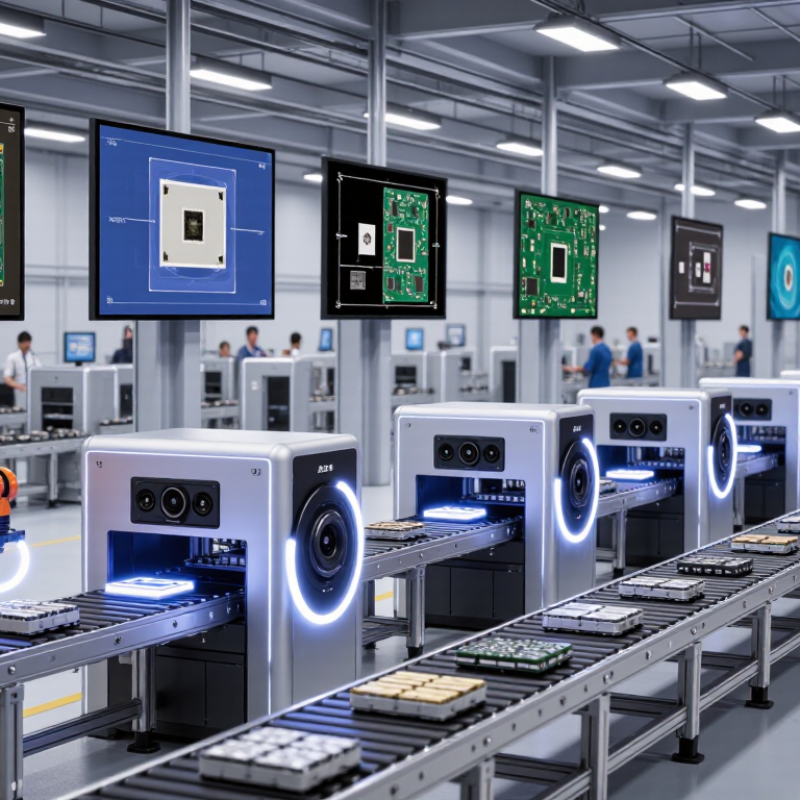
China Top Vision Inspection Equipment Suppliers?

China Vision Inspection Suppliers: Market Scope, Standards, and Core Technologies

China Vision Inspection Suppliers: Market Scope, Standards, and Core Technologies

China’s vision inspection market is expanding with factory automation and stricter quality control. IFR’s World Robotics 2024 report recorded 276,288 industrial robot installations in China during 2023. That represented about 51% of global installations. This installed base supports demand for inline inspection, barcode reading, surface defect detection, and dimensional measurement. MarketsandMarkets projects the global machine vision market to grow from USD 13.7 billion in 2024 to USD 19.5 billion by 2029. Definitions differ between reports, so buyers should check each report’s scope carefully.

Reliable suppliers should explain compliance, calibration, and integration details. Common references include ISO 9001 for quality management, ISO/IEC 17025 for calibration laboratories, and ISO 13849 for safety-related control systems. Core technologies include industrial cameras, telecentric lenses, controlled lighting, 3D sensors, and edge-based artificial intelligence. In practice, lighting often matters more than camera resolution. A reflective metal surface can defeat an otherwise advanced algorithm.

Tips: Request sample testing with real production parts. Ask for false-rejection and missed-defect rates, not only accuracy claims. Check cycle time at the required resolution. Confirm calibration records and software update procedures. A pilot run is wiser than a polished demonstration. Even experienced teams can underestimate dust, vibration, and product variation.

Supplier Categories: 2D, 3D, AOI, and AI-Based Inspection Systems

China Top Vision Inspection Equipment Suppliers?

China’s vision inspection market includes suppliers specializing in 2D, 3D, AOI, and AI-based systems. Each category solves different production problems. 2D inspection uses cameras, lighting, and software to detect scratches, missing parts, labels, and surface defects. It suits flat products and high-speed lines. 3D inspection measures height, depth, volume, and shape. Structured light or laser sensors can reveal uneven glue, bent pins, and incomplete assemblies.

AOI systems are common in electronics manufacturing. They inspect boards after component placement and soldering. A reliable supplier should provide stable lighting, repeatable calibration, and clear defect reports. AI-based inspection systems learn from approved and rejected samples. They can handle changing textures better than fixed-rule software. However, AI is not magic. Poor samples create poor decisions, and rare defects may remain difficult to classify. That weakness deserves honest testing.

Tips: Ask suppliers to inspect your real products, not only sample images. Check false rejection rates, cycle time, camera resolution, and maintenance access. Request a trial report with measured results. Review how operators adjust lighting and retrain models. A useful system should fit the line, not merely look impressive during a demonstration. Conversational after-sales support also matters when production stops at midnight.

China Top Vision Inspection Equipment Suppliers: Category Comparison

The chart compares commonly deployed capabilities across four supplier-system categories in China’s machine-vision market. Scores are normalized industry reference values rather than company or brand data: 2D systems emphasize surface and pattern inspection, 3D systems measure height and volume, AOI systems support automated electronics inspection, and AI-based systems improve anomaly classification and inspection flexibility.

Evaluation Metrics: ≥99.5% Detection Rate, GR&R ≤10%, and UPH

China Top Vision Inspection Equipment Suppliers?

A strong vision inspection supplier should prove a detection rate of at least 99.5% under real production conditions. This figure must include difficult samples, surface variation, glare, dust, and acceptable defects. Laboratory results alone are not enough. In factory trials, I review the confusion matrix, missed defects, false alarms, and inspection images. Numbers can mislead. A 99.5% rate may hide poor performance on one critical defect type.

GR&R should remain at or below 10%, showing that the system produces consistent measurement results. The study should cover different operators, shifts, lighting conditions, and repeated inspections. I also check whether fixtures, lenses, and software settings influence the outcome. Our early trial exposed unstable readings after minor product movement. That result required better fixturing, not a rushed acceptance decision. Measurement repeatability deserves attention.

UPH connects technical performance with production value. Suppliers should state the tested UPH, camera exposure time, processing time, and reject-handling delay. A high theoretical UPH means little if images queue during peak operation. I prefer a sustained test using production-speed samples for several hours. The report should record downtime, false rejects, and manual interventions. A reliable evaluation combines ≥99.5% detection, GR&R ≤10%, and verified UPH without hiding trade-offs. There is still room for review.

Leading Chinese Suppliers by Industry, Product Type, and Integration Capability

China Top Vision Inspection Equipment Suppliers?

China’s vision-inspection supplier landscape is best assessed by industry, product type, and integration capability. MarketsandMarkets estimates the global machine-vision market will grow from about USD 13.7 billion in 2024 to USD 20.8 billion by 2029. This expansion supports demand across electronics, automotive, batteries, pharmaceuticals, food, and logistics. However, market growth does not guarantee stable inspection results.

For electronics and battery lines, leading Chinese suppliers typically provide high-resolution cameras, telecentric lenses, lighting controllers, and defect-classification software. Automotive projects often require three-dimensional measurement, barcode reading, and robotic guidance. Food manufacturers usually prioritize hygienic enclosures, foreign-object detection, and fast rejection systems. Product selection should match the defect size, conveyor speed, surface reflectivity, and allowable false-rejection rate. Small details matter.

Integration capability separates equipment vendors from complete solution providers. Experienced teams can connect cameras with PLCs, MES platforms, robots, and traceability systems. The International Federation of Robotics reported more than 2.5 million industrial robots operating worldwide in 2023, reinforcing the need for reliable machine-vision integration. During factory trials, buyers should request sample testing, cycle-time evidence, calibration records, and image-storage rules. A supplier may demonstrate excellent accuracy on clean samples but struggle with dust, vibration, or changing materials. That weakness deserves honest review. Supplier rankings also change by application, so a universal “top” list can be misleading.

Selection Criteria: ISO 9001, ISO 2859-1, Traceability, Service, and ROI

Choosing China’s top vision inspection equipment suppliers requires more than comparing camera resolution or purchase price. Start with ISO 9001 certification and verify its current scope. A supplier should explain how design changes, calibration, training, and corrective actions are controlled. Ask for documented inspection samples, not polished demonstrations alone. Real factory conditions are messy.

ISO 2859-1 knowledge matters when inspection results support acceptance sampling. The supplier should connect defect levels, lot sizes, inspection levels, and sampling plans to your production risks. Traceability must reach each image, product ID, operator action, and software version. Check whether records are time-stamped and protected from silent editing. Otherwise, an impressive dashboard may provide weak evidence.

Service quality often decides whether equipment earns its cost. Review response times, spare-part availability, remote support, and technician training. Request a factory acceptance test using your actual materials, lighting, speed, and defect library. Calculate ROI from reduced labor, scrap, recalls, and line stoppages. Include maintenance, integration, validation, and operator training costs. Many evaluations overestimate savings because they ignore false rejects. That mistake is common. A short pilot can expose it. Even then, results may vary after installation, especially when products, lighting, or dust conditions change. Suppliers who discuss these limitations usually inspire more confidence than those promising perfect detection.

China Top Vision Inspection Equipment Suppliers? - Selection Criteria: ISO 9001, ISO 2859-1, Traceability, Service, and ROI

Evaluation Dimension Objective Requirement Recommended Acceptance Benchmark Verification Evidence Suggested Weight
Quality Management System The supplier should operate a documented quality management system covering design, purchasing, assembly, testing, delivery, and corrective action. Current ISO 9001 certification with a clearly defined scope that includes the relevant equipment design, manufacture, or service activities. Valid certificate, certification-body details, certificate scope, expiry date, internal quality procedures, and sample corrective-action records. 15%
Inspection Sampling and Acceptance Inspection plans should define lot size, sample size, inspection level, AQL, acceptance number, rejection number, and defect classification. The supplier can configure documentation and inspection procedures consistently with ISO 2859-1 when sampling inspection is used. Sample inspection plan, lot definition, AQL table, defect-level rules, inspection records, and customer approval procedure. 10%
Important Standard Limitation ISO 2859-1 defines sampling procedures indexed by AQL; it does not certify the accuracy of a vision system and does not automatically require 100% inspection. The supplier clearly separates sampling acceptance from machine capability, process validation, and continuous production monitoring. Written quality plan explaining when sampling is used and separate machine-performance validation using representative production parts. 5%
Measurement and Detection Capability The system should detect specified defects while controlling false rejects and missed defects under defined production conditions. Acceptance limits are agreed using customer samples, golden samples, defect libraries, repeatability checks, and production-speed trials. Factory acceptance test, capability report, confusion matrix or defect-detection results, repeatability study, and signed sample approval. 20%
Traceability and Data Integrity Each inspection result should be linked to the relevant product, batch, production time, recipe, result image, operator or station, and equipment status. Unique record identification, time-stamped results, controlled recipe versions, image retention rules, audit logs, backup procedures, and exportable data. Demonstration of search and retrieval, audit-log review, data-export test, user-access controls, backup-and-restore test, and retention policy. 15%
Calibration and Preventive Maintenance Critical measuring devices and reference standards should be identified, maintained, and checked at defined intervals. Documented calibration status, maintenance schedule, spare-parts list, inspection of lighting and optics, and controlled change records. Calibration certificates where applicable, maintenance records, equipment status screen, service checklist, and replacement-part availability statement. 10%
Installation, Training, and Validation The project should include installation qualification, operational checks, user training, recipe approval, and production acceptance testing. A documented commissioning plan with responsibilities, test samples, line-speed conditions, acceptance limits, training records, and handover documents. Project plan, FAT/SAT protocols, training attendance records, approved recipes, punch-list closure, and signed acceptance report. 10%
Technical Service and Support Support should cover remote diagnostics, escalation, software updates, spare parts, preventive maintenance, and on-site assistance where required. Contractual response and restoration targets, named support contacts, escalation path, spare-parts lead times, and documented service coverage for the installation location. Service-level agreement, support organization chart, sample service reports, spare-parts plan, escalation procedure, and references for comparable applications. 10%
ROI and Total Cost of Ownership The business case should include purchase cost, integration, training, maintenance, consumables, software, downtime, labor savings, scrap reduction, and quality-risk reduction. Use measured baseline data and conservative assumptions. Calculate payback period, annual net benefit, and total cost of ownership over the planned service life. Itemized quotation, operating-cost assumptions, labor model, scrap and rework records, throughput data, downtime assumptions, and sensitivity analysis. 5%
Total Suggested Evaluation Weight 100%
Scoring method: Rate each criterion from 0 to 5, where 0 = no evidence, 1 = insufficient, 2 = partially documented, 3 = acceptable, 4 = strong, and 5 = fully verified. The weighted score is calculated as (criterion score ÷ 5) × criterion weight.

ROI formula: Payback period = initial investment ÷ annual net benefit. Annual net benefit should include verified labor savings, reduced scrap and rework, avoided downtime, and other measurable benefits minus additional operating and maintenance costs.
Copyright 2025 Fluidra S.A. | Created by BCM Marketing Agencia Privacy Policy Legal note | Cookie policy |

Technical cookies are strictly necessary for our website to work and you can navigate through it. These types of cookies are those that, for example, allow us to identify you, give you access to certain restricted parts of the page if necessary, or remember different options or services already selected by you, such as your privacy preferences. Therefore, they are activated by default, your authorization not being necessary in this regard. Through the configuration of your browser, you can block or alert the presence of this type of cookies, although such blocking will affect the proper functioning of the different functionalities of our website.


The analysis cookies allow us to study the navigation of the users of our website in general (for example, which sections of the page are the most visited, which services are used most and if they work correctly, etc.). From the statistical information on navigation on our website, we can improve both the operation of the page itself and the different services it offers. Therefore, these cookies do not have an advertising purpose, but only serve to make our website work better, adapting to our users in general. By activating them you will contribute to this continuous improvement. You can enable or disable these cookies by checking the corresponding box, being disabled by default.


Functionality cookies allow us to remember your preferences, to personalize certain characteristics and general options of our website, every time you access it (for example, the language in which the information is presented to you, the sections marked as favorites, your browser type, etc.) Therefore, this type of cookies does not have an advertising purpose, but by activating them you will improve the functionality of the website (for example, adapting to your type of browser) and the customization of it based on your preferences (for example, by presenting the information in the language that you have chosen in previous occasions), which will contribute to the ease, usability and comfort of our page during your navigation. You can enable or disable these cookies by checking the corresponding box, being disabled by default.


Advertising cookies allow us to manage the advertising spaces included in our website based on criteria such as the content shown or the frequency in which the ads are displayed. For example, if you have been shown the same ad several times on our website, and you have not shown a personal interest by clicking on it, it will not appear again. In summary, by activating this type of cookies, the advertising shown on our website will be more useful and diverse, and less repetitive. You can enable or disable these cookies by checking the corresponding box, being disabled by default.


Behavioral advertising cookies allow us to obtain information based on the observation of your browsing habits and behaviors on the web, in order to show you advertising content that best suits your personal tastes and interests. To understand it in a very simple way, we will give you a fictitious example: if your last searches on the web were related to suspense literature, we would show you advertising about suspense books. Therefore, activating this type of cookies, the advertising that we show you on our website will not be generic, but will be oriented to your searches, tastes and interests, therefore adjusting exclusively to you. You can enable or disable these cookies by checking the corresponding box, being disabled by default.
To understand it in a very simple way, we will give you a fictitious example: if your last searches on the web were related to suspense literature, we would show you advertising about suspense books. Therefore, activating this type of cookies, the advertising that we show you on our website will not be generic, but will be oriented to your searches, tastes and interests, therefore adjusting exclusively to you. You can enable or disable these cookies by checking the corresponding box, being disabled by default.

SAVE

We use our own and third-party cookies to ensure the proper functioning of the website and to analyse our services, improve your experience on our website and show you advertisements related to your interests according to profiling based on your browsing habits (e.g. websites visited). You can accept all cookies by clicking "ACCEPT" or set or reject them by clicking here. If you would like to know more about the use of cookies, please see our COOKIE POLICY.


ACCEPT ALL
Reject no essentials


