
Global buyers searching for the best Rtls Tags need more than a product list. They need a dependable fit between technology, workplace, and operating goals. A hospital may require one-meter accuracy beside moving beds. A warehouse may value long battery life, impact resistance, and simple deployment. A manufacturer may prioritize metal performance and stable coverage across noisy production areas.
No tag wins every site.
As RFID and RTLS analyst Mark Roberti explains, “Technology creates value only when it improves a business process.” That principle matters when comparing UWB, BLE, Wi-Fi, and active RFID tags. Each option carries trade-offs in accuracy, infrastructure, battery replacement, data integration, and total ownership cost. The smallest tag may not deliver the longest service life. The most accurate tag may require more anchors, calibration, and maintenance.
This guide examines leading Rtls Tags for international buyers, with attention to practical purchasing details. These include IP ratings, operating temperature, motion sensors, emergency buttons, firmware support, and compatibility with existing platforms. It also considers supplier experience, regional service capability, product testing, and transparent documentation. Those details often decide whether a pilot becomes a reliable long-term system.
The comparison is not perfectly simple. Vendor claims can look impressive under controlled conditions, while real facilities contain steel racks, thick walls, forklifts, interference, and changing workflows. Buyers should test tags in their actual environment before committing to volume orders. That extra step may feel slower. It can prevent expensive disappointment later.
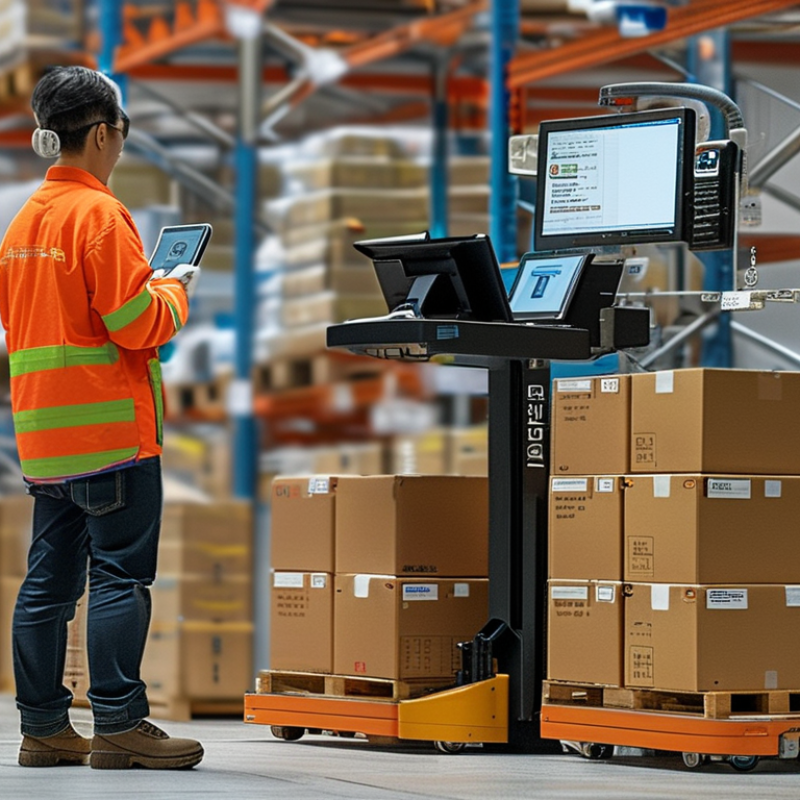
RTLS tags are small wireless devices that identify and locate people, tools, pallets, or equipment. They transmit signals to anchors, gateways, or readers. A software platform then converts those signals into location data. In China, manufacturers commonly supply BLE, UWB, RFID, Wi-Fi, GNSS, and cellular tags. Each technology serves a different environment. UWB can support precise indoor positioning, often within 10–30 centimeters under suitable conditions. BLE tags usually reduce cost and power use, but their accuracy varies with building materials and receiver placement.
The purpose is practical: reduce search time, monitor valuable assets, improve workflow visibility, and support safety alerts. Grand View Research estimates the global RTLS market could grow at about 20% annually through 2030. That growth reflects demand from healthcare, logistics, manufacturing, and construction. However, market forecasts are not deployment guarantees. A tag that performs well in a clean warehouse may struggle near metal racks, dense machinery, or cold storage. Battery life also depends on reporting frequency, temperature, and network design.
Tips: Ask for an IP rating, operating-temperature range, battery test method, and communication protocol. Request a sample deployment before purchasing in volume. Check whether location data can integrate with your existing platform. This detail is often overlooked. Global buyers should also review regional radio requirements and data-handling rules. No tag is universally best. In my experience, total performance matters more than the smallest quoted price.

This comparison shows representative positioning-accuracy ranges commonly associated with major RTLS tag technologies. UWB generally provides the highest precision for industrial tracking, while BLE, Wi-Fi, and passive RFID are often selected for broader coverage, lower infrastructure cost, or simpler asset identification.
What Are the Top China RTLS Tags for Global Buyers?
China-made RTLS tags generally fall into four practical categories: BLE, UWB, RFID, and GNSS-cellular units. BLE tags suit hospitals, warehouses, and offices because they are compact and energy-efficient. UWB tags provide more precise positioning, often within 10–30 centimeters in controlled environments. RFID tags remain useful for lower-cost identification at gates, shelves, and loading points. GNSS-cellular tags support outdoor fleets, containers, and remote assets.
The choice should follow the tracking environment, not the product brochure. MarketsandMarkets estimated the global RTLS market at about USD 6.2 billion in 2023, with projected growth to USD 13.6 billion by 2028. That expansion reflects demand for location data, but accuracy claims need careful testing. Battery life matters. Ask for measured performance with metal racks, concrete walls, cold storage, and moving equipment. A tag that performs well in an empty test room may behave differently in a busy warehouse.
Global buyers should also examine communication protocols, encryption support, replaceable batteries, ingress protection, and software integration. China-made tags can offer strong customization, including private firmware, sensor combinations, and casing designs. However, customization may increase certification work and maintenance costs. This is where many purchasing plans oversimplify. Request sample units, test them for at least two weeks, and compare reported battery life with real operating conditions. The best type is the one that remains readable, serviceable, and compatible with local deployment requirements.
A practical comparison of commonly available China-made RTLS tag categories for asset tracking, personnel safety, logistics, healthcare, manufacturing, and outdoor operations.
| RTLS Tag Type | Primary Wireless Technology | Typical Location Accuracy | Typical Operating Range | Typical Battery Life | Common Enclosure Rating | Best-Fit Applications | Key Buying Considerations |
|---|---|---|---|---|---|---|---|
| BLE Beacon Tag | Bluetooth Low Energy, usually 2.4 GHz | Approximately 2–10 m, depending on beacon density and calibration | About 30–100 m indoors; up to 100–300 m in open areas with suitable settings | Approximately 6 months–5 years, depending on transmission interval and battery size | Typically IP54–IP67 | Low-cost asset tracking, room-level location, visitor management, retail, and healthcare equipment | Beacon interval, TX power, battery replacement method, mobile compatibility, and gateway density |
| BLE AoA/AoD Tag | Bluetooth Low Energy direction finding, 2.4 GHz | Typically 0.3–3 m with a properly designed antenna array | Usually 20–80 m indoors, subject to walls and radio interference | Approximately 6 months–3 years | Typically IP54–IP67 | Zone-level and sub-meter tracking of tools, medical equipment, workers, and production assets | Receiver antenna design, site survey, orientation performance, firmware support, and calibration requirements |
| UWB Precision Tag | Ultra-Wideband impulse radio, commonly in the 3.1–10.6 GHz regulatory range | Approximately 10–50 cm in optimized indoor deployments | Typically 30–100 m line-of-sight; less through dense obstacles | Approximately 1 month–2 years, depending on update frequency and motion sensing | Typically IP65–IP67 | Robotics, forklifts, collision avoidance, high-value assets, worker safety, and automated warehouses | Local radio regulations, anchor installation, time synchronization, update rate, and interoperability with the positioning engine |
| Active RFID Tag | Active RFID, commonly operating in sub-GHz or 2.4 GHz bands | Approximately 3–10 m for zone or proximity positioning | About 30–150 m, depending on frequency, reader design, and environment | Approximately 1–5 years | Typically IP54–IP67 | Warehouse assets, industrial containers, personnel badges, and long-range zone monitoring | Reader compatibility, regional radio requirements, anti-collision capacity, alarm inputs, and battery replacement policy |
| Passive UHF RFID Label or Hard Tag | Passive UHF RFID, commonly within the 860–960 MHz global allocation | Usually portal, shelf, doorway, or reader-zone level rather than continuous coordinates | Up to approximately 3–15 m, depending on tag, reader power, orientation, and materials | No battery; service life commonly follows the attached product or label | Varies from paper label to IP68-rated industrial housing | Inventory control, supply-chain visibility, item identification, and automated entry/exit recording | Regional UHF band, tag material compatibility, read sensitivity, metal/liquid performance, and reader placement |
| Wi-Fi RTLS Tag | Wi-Fi, commonly 2.4 GHz and/or 5 GHz | Approximately 3–15 m using RSSI; improved systems may use time-based methods | Typically 30–100 m indoors, depending on access-point layout | Approximately 1–12 months for frequently transmitting tags | Typically IP54–IP65 | Hospitals, factories, campuses, and facilities that already operate compatible Wi-Fi infrastructure | Power consumption, network authentication, roaming behavior, access-point compatibility, and cybersecurity requirements |
| GNSS Cellular Tracker | GNSS positioning with cellular data; some models also include BLE or Wi-Fi scanning | Typically 2–10 m outdoors under open-sky conditions | Global outdoor coverage depends on the cellular subscription and network availability | Approximately several days–2 years, depending on reporting interval and battery capacity | Typically IP65–IP67 | Vehicles, shipping containers, outdoor equipment, field service, and cross-border logistics | LTE-M/NB-IoT/4G support, carrier certification, roaming, SIM or eSIM model, charging method, and data costs |
| Hybrid BLE + GNSS Tag | GNSS and cellular outdoors; BLE for local or indoor proximity detection | Approximately 2–10 m outdoors; room or zone-level indoors unless paired with additional infrastructure | Outdoor cellular coverage plus approximately 10–100 m BLE proximity range | Approximately 1 month–2 years, depending on GNSS and cellular reporting frequency | Typically IP65–IP67 | Mobile workforces, rental equipment, logistics, construction assets, and mixed indoor/outdoor operations | Fallback positioning logic, roaming agreements, geofencing, motion detection, charging access, and total connectivity cost |
China-made RTLS tags serve different positioning environments, depending on accuracy, range, and battery needs. Bluetooth Low Energy tags suit warehouses, hospitals, and retail spaces. They transmit signals to nearby gateways, which estimate location through signal strength or angle measurement. The result is affordable, room-level tracking, although metal shelves can distort readings.
Ultra-wideband tags provide more precise positioning, often within tens of centimeters. Workers may wear them on helmets, while assets carry small adhesive tags. Anchors installed around a site calculate distance from radio signals. UWB performs well in busy industrial areas, but installation requires careful calibration. Small errors matter.
Other tags use passive or active RFID for checkpoints and inventory movement. Wi-Fi positioning can reuse existing networks, yet accuracy may change when access points move. GNSS tags support outdoor fleets and remote equipment, but buildings weaken satellite signals. Some devices combine technologies. A tag might use UWB indoors and GNSS outdoors, switching automatically through configured rules.
In practical testing, battery life rarely matches the most optimistic specification. Signal performance also depends on walls, humidity, mounting surfaces, and gateway placement. Buyers should request test units and measure location accuracy during normal operations. A clean laboratory result can mislead. Reliable procurement includes firmware support, encryption, regional radio compliance, replacement access, and clear data-handling policies. No positioning method is perfect. The right tag fits the physical workflow, not just the product sheet.
Global buyers assessing China RTLS tags should begin with the use case, not the catalogue price. A hospital asset tag needs quiet operation and easy cleaning. A warehouse tag needs range, shock resistance, and fast location updates. MarketsandMarkets valued the RTLS market at about USD 5.9 billion in 2024 and forecasts strong growth through 2029. That growth increases choice, but it also increases specification risk.
Accuracy claims require careful testing. UWB can support precise positioning, while Bluetooth Low Energy usually offers lower hardware cost and longer battery life. Wi-Fi may simplify infrastructure, but it can consume more power. Ask for accuracy results in metal racks, concrete rooms, cold storage, and moving zones. Test it cold. A laboratory result may not represent a busy factory. Battery figures also need conditions, including update frequency, temperature, and transmission power. Battery claims vary.
Selection should include antenna design, enclosure rating, mounting method, firmware updates, encryption, and API compatibility. Check whether the tag supports regional radio requirements, such as FCC, CE, or UKCA rules, before import. The Fortune Business Insights RTLS report estimated the market at USD 6.42 billion in 2024, showing why long-term support matters. Buyers should request sample units, failure-rate data, a security process, and a five-year total-cost estimate. I would still question any supplier promising perfect indoor accuracy. Buildings change. Tags age. Good procurement leaves room for those inconvenient facts.
Global buyers evaluating China-made RTLS tags should examine compliance before comparing prices. A tag may use UWB, BLE, or RFID technology, but its radio performance must match the destination market. Request test reports, frequency details, safety documents, and battery specifications. Requirements can differ across countries and product categories.
Integration deserves equal attention. Ask whether tags connect with existing gateways, warehouse software, and cloud platforms through documented APIs. Check location accuracy in metal racks, cold rooms, loading areas, and crowded production lines. Confirm battery life under real update intervals, not only laboratory conditions. Small details matter.
A reliable supplier should provide samples, traceable production records, firmware policies, and responsive technical support. Packaging and battery transport documents also need careful review. Data protection should be discussed when tags transmit worker, asset, or movement information. The buyer should define access controls and retention periods with local advisers.
The cheapest quote can become expensive after installation. A pilot with twenty or fifty tags often reveals signal loss, mounting problems, and weak software mapping. No checklist is perfect. I would still ask for a second technical review before a large order. Some buyers overlook replacement batteries, regional certifications, or customs paperwork. These gaps are avoidable, but only when procurement, engineering, and compliance teams communicate early.

Cepex is the brand for the fluid handling market belonging to the Fluidra group. One of the leading european manufacturer of valves and fittings in thermoplastic materials.
Dedicated to the swimming pool, irrigation and industrial markets, we distribute our products worldwide with the Fluidra commercial network and presence in 46 countries with 136 sales branches.


