
Top 10 Types of Prefab Steel Buildings for Sale?
FLUID HANDLING EXPERTS

Blog, all our news

Top 10 Types of Prefab Steel Buildings for Sale?

Prefab Steel Buildings are changing how owners plan warehouses, workshops, garages, offices, and agricultural facilities. Their controlled factory production can reduce material waste, shorten installation time, and improve consistency. Still, steel is not automatically the cheapest option. Site access, insulation, foundation work, and local weather conditions can change the final budget.

McKinsey & Company reported that construction productivity grew by only about 1% annually during the previous two decades. Its research also identified a potential $1.6 trillion productivity opportunity worldwide. These figures explain the growing interest in factory-made structures and repeatable building systems. A separate report from Grand View Research projects continued expansion in the global modular construction market through 2030. However, market forecasts differ. They should guide decisions, not replace project-level estimates.

Mark Lawson, an offsite-housing researcher and author, has cautioned that “offsite construction is not a panacea.” That warning matters. Prefabrication can simplify construction, but poor design coordination can still create delays. This guide examines the Top 10 Types of Prefab Steel Buildings for Sale, from compact garages to large distribution centers. Each type has different span requirements, loading conditions, ventilation needs, and finishing expectations. Some buildings look similar from the road. Their engineering demands may be completely different.

The comparison will focus on practical use, approximate cost factors, customization, durability, and buyer suitability. The ranking is useful, but not perfect. Local codes and actual site conditions remain decisive.
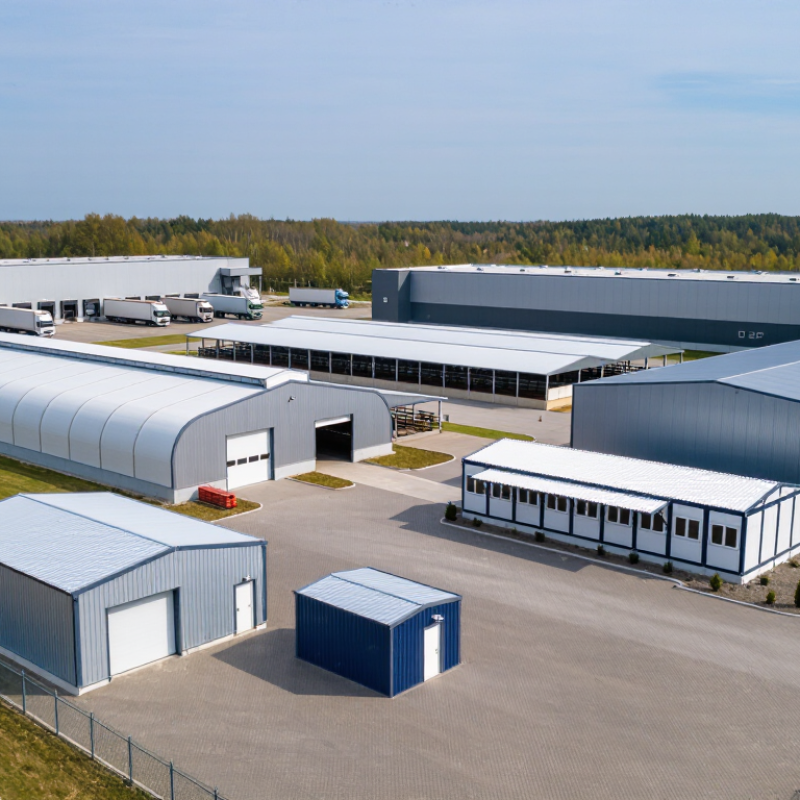
Top 10 Types of Prefab Steel Buildings for Sale?

Prefab Steel Building Basics: Frames, Panels, Loads, and 250–355 MPa Steel

Top 10 types of prefab steel buildings for sale often include warehouses, workshops, garages, farm storage buildings, aircraft hangars, retail shells, offices, sports facilities, cold-storage units, and equipment shelters. Each type uses a different balance of frame depth, panel insulation, and interior clearance. A warehouse may need tall portal frames and wide loading doors. A workshop may require stronger floor planning for machinery.

The frame carries gravity, wind, snow, and sometimes seismic loads. Panels usually provide enclosure, insulation, and weather resistance, but they are not always the primary structural system. Common steel grades range from 250 to 355 MPa yield strength. Higher strength can reduce steel weight, yet it does not automatically create a safer building. Connections, bracing, corrosion protection, and foundation anchors still control performance. This detail is easy to overlook.

Tips: Ask for load assumptions, steel certificates, panel specifications, and connection drawings. Confirm local climate data before comparing prices. Check door sizes with actual trucks or equipment. A small mismatch becomes expensive later. Do not judge quality by frame thickness alone. An experienced engineer should review the final design, although even experienced teams can miss drainage details or thermal bridges. Prefabrication improves consistency, but site measurements can still be imperfect. Allow time for correction.

Top 10 Types of Prefab Steel Buildings for Sale

Typical clear-span planning ranges for common prefabricated steel building applications. Steel frames are commonly designed around structural loads, panel systems, site conditions, and specified yield strengths such as 250–355 MPa.

The ranges are representative preliminary-planning values in metres, not final engineering limits. Actual spans and member sizes depend on snow, wind, seismic, occupancy, equipment, fire, and local code requirements.

Ten Main Types: Warehouses, Factories, Offices, Retail, and More

Top 10 Types of Prefab Steel Buildings for Sale

Prefab steel buildings serve many commercial and practical needs. Warehouses provide wide, open storage areas for pallets and machinery. Factories support production lines, loading zones, and overhead crane systems. Offices can include insulated walls, glazed entrances, meeting rooms, and efficient workspaces. Retail buildings often need attractive fronts, clear customer circulation, and flexible displays. Each design should match its daily use.

Agricultural buildings protect livestock, feed, tractors, and harvested crops from harsh weather. Workshops offer durable space for repairs, fabrication, and equipment maintenance. Sports and recreation buildings can cover courts, training areas, or community halls. Aircraft hangars require large doors, strong frames, and careful clearance planning. Schools and clinics benefit from quick installation, adaptable layouts, and controlled indoor comfort. These are ten distinct building types, not simple variations of one shell.

Details matter more than impressive renderings. Check local structural requirements, foundation conditions, fire protection, insulation, drainage, and delivery access before ordering. A reliable supplier should provide clear drawings, material specifications, connection details, and realistic project timelines. The lowest quote may exclude foundations, interior finishes, or installation work. That mistake becomes expensive later. A small design change, such as adding roof ventilation, can improve comfort significantly. Yet every extra feature increases cost and coordination. Careful review is necessary.

Top 10 Types of Prefab Steel Buildings for Sale? - Ten Main Types: Warehouses, Factories, Offices, Retail, and More

Typical planning characteristics of prefabricated steel buildings. Actual dimensions and specifications depend on local building codes, site conditions, occupancy, loads, and the final engineering design.
Building Type Typical Clear Span Common Eave Height Primary Applications Common Exterior Systems Important Design Considerations
1. Steel Warehouses 20–60 m 6–12 m General storage, distribution, logistics, inventory handling, and fulfillment operations. Insulated or single-skin metal wall and roof panels; loading docks and sectional doors. Column-free storage areas, forklift circulation, rack layout, fire protection, ventilation, and truck access.
2. Manufacturing Factories 20–50 m 8–15 m Assembly lines, fabrication, processing, machinery installation, and industrial production. Insulated metal panels, durable wall cladding, roof skylights, and reinforced service areas. Equipment loads, overhead cranes, vibration control, power distribution, exhaust systems, and production flow.
3. Prefab Steel Offices 10–25 m 3–5 m Administrative offices, site offices, project headquarters, and modular workplace facilities. Insulated sandwich panels, glazed curtain walls, windows, suspended ceilings, and finished interior partitions. Thermal comfort, daylighting, acoustic performance, accessibility, HVAC capacity, and flexible floor layouts.
4. Retail and Showroom Buildings 15–35 m 4–8 m Retail stores, vehicle showrooms, wholesale outlets, garden centers, and commercial display spaces. Insulated panels, storefront glazing, architectural metal façades, canopies, and entrance systems. Customer circulation, prominent entrances, signage zones, parking, lighting, accessibility, and energy efficiency.
5. Agricultural and Farm Buildings 12–30 m 4–8 m Equipment storage, grain handling, livestock housing, hay storage, and agricultural workshops. Galvanized or coated steel cladding, ventilated roof systems, open-sided walls, and corrosion-resistant components. Moisture control, agricultural dust, natural ventilation, drainage, animal welfare, and equipment clearance.
6. Sports and Recreation Buildings 25–60 m 7–14 m Indoor courts, gyms, training centers, skating facilities, community halls, and event spaces. Insulated roof panels, acoustic wall systems, impact-resistant interior finishes, and glazed entrances. Large unobstructed spaces, acoustic control, spectator capacity, emergency egress, humidity, and lighting.
7. Aircraft Hangars 25–90 m 8–25 m Aircraft storage, maintenance, private aviation, emergency services, and aerospace operations. Long-span steel frames, insulated metal panels, large sliding or bi-fold doors, and durable floor systems. Door opening dimensions, wind loads, aircraft clearance, fire safety, ventilation, and specialized floor loading.
8. Vehicle and Equipment Workshops 15–35 m 5–9 m Automotive repair, fleet maintenance, heavy equipment servicing, and mechanical workshops. Insulated wall panels, durable metal cladding, translucent roof panels, and industrial doors. Vehicle bay sizes, lifting equipment, oil-resistant floors, exhaust extraction, drainage, and fire protection.
9. Cold Storage and Food Facilities 15–40 m 6–12 m Refrigerated warehouses, frozen food storage, food processing, and temperature-controlled distribution. High-performance insulated panels, vapor-control layers, hygienic interior surfaces, and sealed doors. Thermal bridges, vapor movement, refrigeration loads, hygiene standards, condensation control, and loading efficiency.
10. Schools and Institutional Buildings 10–30 m 3–6 m Classrooms, training centers, laboratories, libraries, healthcare support spaces, and public facilities. Insulated panels, masonry or architectural façade combinations, glazed corridors, and finished interior systems. Occupant safety, accessibility, fire resistance, acoustics, daylight, ventilation, durability, and future expansion.

Planning note: The dimensions shown are representative industry planning ranges rather than fixed standards. A licensed structural engineer should verify the final design for snow, wind, seismic, fire, thermal, occupancy, and foundation requirements.

Large-Span Buildings: Hangars, Arenas, and Workshops Over 30 Metres Wide

Large-span prefab steel buildings over 30 metres wide suit aircraft hangars, sports arenas, agricultural workshops, and heavy-equipment shelters. Their clear-span frames remove interior columns, allowing cranes, vehicles, and crowds to move freely. World Steel Association’s World Steel in Figures 2024 reports about 1.89 billion tonnes of crude steel production in 2023. This scale supports steel’s role in efficient, industrial construction, but material volume alone does not guarantee a safe structure.

For hangars, engineers must check aircraft clearance, large door movement, wind pressure, and roof drainage. Arenas need different thinking. Crowd loads, acoustic zones, suspended lighting, and emergency access can control the frame more than the span itself. Workshops often require stronger floor slabs, crane beams, ventilation, and future expansion joints. Design teams should verify these conditions under ASCE 7-22 or the relevant Eurocode, including snow, wind, seismic, and accidental loads. A 30-metre span is not automatically economical.

Tips: Confirm the clear internal width, not only the outside frame width. Request connection drawings, coating specifications, fire-performance details, and a realistic erection sequence. Site access can become the hidden cost. Prefabrication reduces cutting and welding on site, yet transport limits may force split frames. That compromise deserves early review. Some early layouts look elegant but leave too little space around doors, cranes, or maintenance routes. Recheck them with real equipment dimensions.

Specialized Buildings: Garages, Agricultural Sheds, Cold Storage, and Shelters

Top 10 Types of Prefab Steel Buildings for Sale

Specialized prefab steel buildings solve practical problems beyond ordinary storage. Garages need reinforced doors, clean slab edges, and enough height for vehicles or equipment. A small workshop also benefits from bright skylights and protected electrical routing. On site, I have seen poor ventilation create condensation on tools within weeks. That detail is easy to miss during planning.

Agricultural sheds require wide clear spans, strong bracing, and flexible openings for tractors, feed, or livestock handling. Galvanized steel helps resist moisture, but drainage still matters around the foundation. Designers should check local snow, wind, fire, and anchoring requirements before ordering. I once underestimated turning space beside a shed. The building worked, but daily movement became frustrating.

Cold storage buildings demand tighter envelopes than standard metal shelters. Insulated panels, sealed joints, vapor control, and correctly sized refrigeration equipment work together. Even a small gap can increase energy use and cause frost around doors. Shelters for machinery, vehicles, or outdoor materials may use simpler walls, but roof runoff needs careful planning. Buyers should compare structural drawings, insulation values, warranty terms, and installation responsibilities. A low price can hide site preparation costs. Professional review is worthwhile, especially when the building stores food, chemicals, or temperature-sensitive products.

How to Compare the 10 Types by Codes, Cost, Fire Rating, and Lead Time

Top 10 Types of Prefab Steel Buildings for Sale

Prefab steel buildings include warehouses, agricultural barns, workshops, garages, retail units, offices, aircraft hangars, cold-storage facilities, sports buildings, and equipment shelters. Their prices vary widely. A simple equipment shelter may cost less than an insulated warehouse with loading doors and mechanical systems. However, square-foot pricing can mislead buyers. Site work, foundations, insulation, transport, permits, and erection may add substantial costs.

Building codes should guide the comparison. Warehouse and retail projects often require different occupancy, egress, accessibility, and fire-safety provisions. Agricultural buildings may have lighter requirements, but local rules still control. Snow, wind, seismic loads, and soil conditions affect the structural design. Fire rating depends on the complete wall, roof, column, and opening assemblies. Steel alone does not guarantee a rated building. Sprinklers, protected steel, and fire-rated insulation may be necessary.

Lead time usually includes engineering, permit review, fabrication, delivery, and installation. A basic garage may move quickly, while cold storage or an aircraft hangar needs more coordination. Ask for a schedule with approval milestones. Also request stamped calculations, material specifications, and test reports. I would not accept a low quote without checking exclusions. That shortcut often becomes expensive later. Even careful comparisons have uncertainty, especially when local code interpretations change. A qualified structural engineer and fire consultant should review the final design before purchase.

Copyright 2025 Fluidra S.A. | Created by BCM Marketing Agencia Privacy Policy Legal note | Cookie policy |

Technical cookies are strictly necessary for our website to work and you can navigate through it. These types of cookies are those that, for example, allow us to identify you, give you access to certain restricted parts of the page if necessary, or remember different options or services already selected by you, such as your privacy preferences. Therefore, they are activated by default, your authorization not being necessary in this regard. Through the configuration of your browser, you can block or alert the presence of this type of cookies, although such blocking will affect the proper functioning of the different functionalities of our website.


The analysis cookies allow us to study the navigation of the users of our website in general (for example, which sections of the page are the most visited, which services are used most and if they work correctly, etc.). From the statistical information on navigation on our website, we can improve both the operation of the page itself and the different services it offers. Therefore, these cookies do not have an advertising purpose, but only serve to make our website work better, adapting to our users in general. By activating them you will contribute to this continuous improvement. You can enable or disable these cookies by checking the corresponding box, being disabled by default.


Functionality cookies allow us to remember your preferences, to personalize certain characteristics and general options of our website, every time you access it (for example, the language in which the information is presented to you, the sections marked as favorites, your browser type, etc.) Therefore, this type of cookies does not have an advertising purpose, but by activating them you will improve the functionality of the website (for example, adapting to your type of browser) and the customization of it based on your preferences (for example, by presenting the information in the language that you have chosen in previous occasions), which will contribute to the ease, usability and comfort of our page during your navigation. You can enable or disable these cookies by checking the corresponding box, being disabled by default.


Advertising cookies allow us to manage the advertising spaces included in our website based on criteria such as the content shown or the frequency in which the ads are displayed. For example, if you have been shown the same ad several times on our website, and you have not shown a personal interest by clicking on it, it will not appear again. In summary, by activating this type of cookies, the advertising shown on our website will be more useful and diverse, and less repetitive. You can enable or disable these cookies by checking the corresponding box, being disabled by default.


Behavioral advertising cookies allow us to obtain information based on the observation of your browsing habits and behaviors on the web, in order to show you advertising content that best suits your personal tastes and interests. To understand it in a very simple way, we will give you a fictitious example: if your last searches on the web were related to suspense literature, we would show you advertising about suspense books. Therefore, activating this type of cookies, the advertising that we show you on our website will not be generic, but will be oriented to your searches, tastes and interests, therefore adjusting exclusively to you. You can enable or disable these cookies by checking the corresponding box, being disabled by default.
To understand it in a very simple way, we will give you a fictitious example: if your last searches on the web were related to suspense literature, we would show you advertising about suspense books. Therefore, activating this type of cookies, the advertising that we show you on our website will not be generic, but will be oriented to your searches, tastes and interests, therefore adjusting exclusively to you. You can enable or disable these cookies by checking the corresponding box, being disabled by default.

SAVE

We use our own and third-party cookies to ensure the proper functioning of the website and to analyse our services, improve your experience on our website and show you advertisements related to your interests according to profiling based on your browsing habits (e.g. websites visited). You can accept all cookies by clicking "ACCEPT" or set or reject them by clicking here. If you would like to know more about the use of cookies, please see our COOKIE POLICY.


ACCEPT ALL
Reject no essentials


