
Top 10 HRC Slitting Line Manufacturers Worldwide
FLUID HANDLING EXPERTS

Blog, all our news

Top 10 HRC Slitting Line Manufacturers Worldwide

Choosing a reliable Hrc Slitting Line manufacturer requires more than comparing catalog photos or advertised speeds. Hot-rolled coil processing demands stable tension, accurate knife positioning, and a frame that withstands continuous industrial loads. In practice, a line may look impressive on paper yet struggle with edge quality, coil shape, or changeover time. Details matter. This introduction presents ten manufacturers frequently considered by buyers, integrators, and service teams across major steel-processing markets. The list is intended as a practical starting point, not a universal verdict.

Our comparison focuses on engineering capability, machine configuration, production references, after-sales support, and the clarity of technical documentation. Important indicators include decoiler capacity, strip-width range, thickness handling, slitting tolerances, line speed, recoiler design, automation, and safety systems. We also consider commissioning support, spare-parts access, operator training, and response times. A dependable supplier should explain limitations openly. That builds trust.

Because plant conditions differ, the best choice for one buyer may not suit another. Coil grade, annual tonnage, floor space, electrical standards, labor skills, and expansion plans can change the decision. Some published specifications are difficult to compare directly. No ranking is perfect. Readers should verify test results, inspect reference installations, and request a detailed technical proposal before signing a purchase agreement. The following overview combines industry knowledge with a cautious buyer’s perspective, helping readers ask sharper questions and avoid costly assumptions.
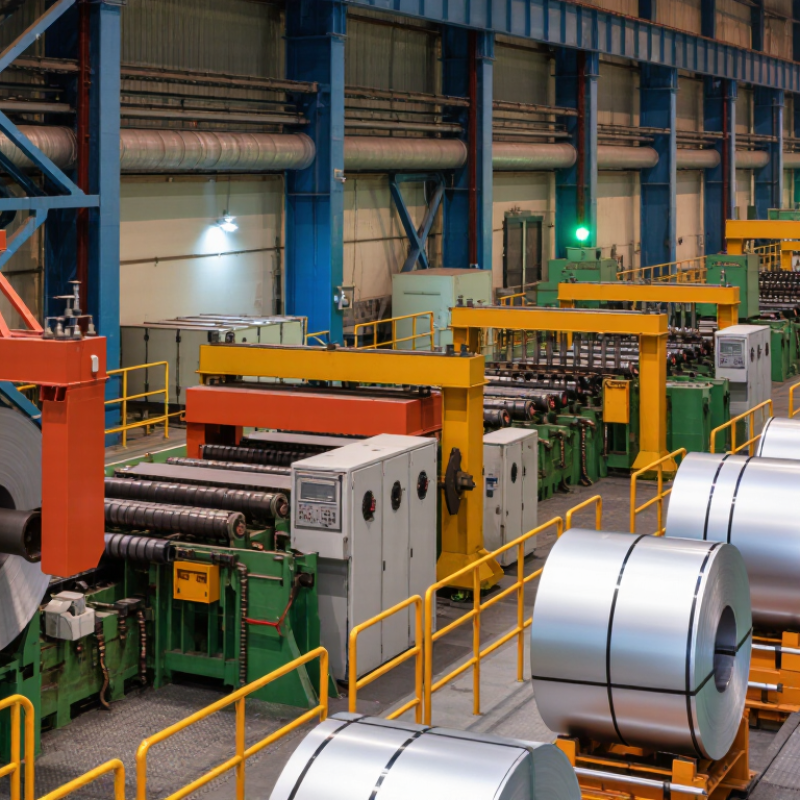
Top 10 HRC Slitting Line Manufacturers Worldwide

HRC Slitting Lines: Global Market Scope and 10 Leading Manufacturers

HRC slitting lines serve steel service centers, tube producers, and automotive supply chains. The global market remains tied to hot-rolled coil demand and regional manufacturing output. World Steel Association data reported about 1.89 billion tonnes of crude steel production in 2023. This scale supports continuous investment in precision processing equipment. Industry reports from Grand View Research also identify automation, narrower tolerances, and energy efficiency as major market drivers.

The ten leading manufacturers are generally evaluated across Europe, Asia, and North America. Their differences appear in line speed, coil weight, strip width, knife-change time, and tension control. Some systems process coils above 30 tonnes and reach speeds exceeding 1,000 metres per minute. However, supplier rankings can be subjective. A strong manufacturer should provide documented production references, stable after-sales support, and measurable uptime data. Buyers should inspect weld quality, recoiler design, edge-trim handling, and safety interlocks. A glossy catalogue is not enough. Real operating evidence matters more.

Tips: Compare at least three technical proposals. Request sample slitting results using your own HRC grade. Check maintenance access around the shear head. Energy use deserves attention, although published figures are not always comparable. Reports from the International Energy Agency and the World Steel Association show continuing pressure to reduce industrial emissions. Therefore, efficient drives and regenerative braking may improve both operating cost and environmental performance. One practical warning remains: the cheapest line may create expensive width variation later.

HRC Processing Ranges: 1.2–25 mm Thickness and Up to 2,000 mm Width

Top 10 HRC Slitting Line Manufacturers Worldwide

Selecting leading HRC slitting line manufacturers requires more than comparing production speed. The key test is stable processing across 1.2–25 mm thickness and coil widths up to 2,000 mm. Thin hot rolled coil demands accurate tension control, while heavier gauges require stronger tooling and drive systems. A reliable line should maintain clean edges, consistent strip width, and safe coil handling during long production runs. In practical plant evaluations, operators should inspect changeover time, knife adjustment accuracy, and support for different steel grades. These details often reveal more than impressive catalog figures.

Tips: Confirm the full working range with actual mill certificates, not only advertised limits. Request trial slitting with your common HRC grades. Check knife life, scrap handling, recoiler stability, and maintenance access. A 2,000 mm width rating may not deliver the same performance at 25 mm thickness. Verify both conditions.

Experience also shows that automation needs careful review. Sensors can reduce setup errors, but poor calibration still creates uneven strips. One overlooked issue is floor space around the recoiler. It affects lifting safety and daily productivity. Energy use, spare-part availability, and technician training deserve equal attention. Specifications are useful, but real coil trials remain the most dependable evidence. Some selection plans are too optimistic. Reflection is necessary before signing a purchase contract.

Top 10 Manufacturer Comparison: Speed, Coil Weight, Capacity, and Automation

Top 10 HRC Slitting Line Manufacturers Worldwide

Top 10 Manufacturer Comparison: Speed, Coil Weight, Capacity, and Automation

Comparing the top ten HRC slitting line manufacturers requires more than reading catalog figures. A stated speed of 300 meters per minute may depend on strip width, gauge, material strength, and operator experience. During factory evaluations, request production records using comparable hot-rolled coil grades. Numbers can mislead.

Coil weight directly affects handling equipment, entry car design, and recoiler stability. Many advanced lines process coils above 30 tonnes, but heavier coils demand stronger mandrels and reliable braking systems. Capacity also depends on slit width, knife setup time, scrap management, and daily operating hours. A line with impressive peak speed may deliver less usable output after changeovers.

Automation separates modern systems from merely fast machines. Look for automatic tension control, recipe storage, edge guiding, knife positioning, coil tracking, and fault diagnostics. These features reduce manual adjustments near moving equipment and improve repeatability. Ask for commissioning evidence, maintenance records, training plans, and service response data. Experienced suppliers should explain limitations clearly, not only advertise maximum performance. Some specifications remain difficult to verify. Independent acceptance testing is worth the additional time.

Regional Profiles of Leading HRC Slitting Line Manufacturers Worldwide

Regional capability often matters more than a global ranking when selecting an HRC slitting line manufacturer. East Asian suppliers commonly emphasize high-speed automation, compact layouts, and stable tension control. Their lines often include hydraulic pushers, automatic knife positioning, and recoiling systems for demanding steel service centers. Production efficiency remains a major strength.

European manufacturers usually focus on engineering precision, safety integration, and long operating life. Their equipment may offer advanced edge-trimming control, servo-driven expansion shafts, and detailed process monitoring. These features suit processors handling varied coil widths and strict dimensional tolerances. However, premium engineering can increase installation and maintenance costs.

North American producers often design for robust operation, accessible servicing, and integration with existing material-handling systems. Indian and Turkish manufacturers frequently compete through flexible customization, responsive project support, and practical pricing. Across the ten leading regional groups, buyers should examine strip thickness ranges, maximum coil weight, line speed, and knife-change time. Small details matter. A smooth quotation does not guarantee smooth commissioning.

A careful evaluation should include reference sites, spare-parts availability, operator training, and documented performance data. Energy consumption also deserves attention, especially where lines run multiple shifts. Some manufacturers present impressive output figures under ideal conditions, yet real plants face mixed coil quality, uneven operators, and delayed maintenance. That gap deserves honest discussion. Regional reputation helps, but verified production evidence remains more reliable.

Selection Benchmarks: 30–60 m/min Speed and ±0.1 mm Width Accuracy

Top 10 HRC Slitting Line Manufacturers Worldwide

Selection Benchmarks: 30–60 m/min Speed and ±0.1 mm Width Accuracy

When comparing HRC slitting line manufacturers, stated speed is only a starting point. A practical line should maintain 30–60 m/min while processing real hot rolled coil, not only thin test material. Ask for trial data covering coil width, thickness, yield strength, and target strip widths. Stable tension matters. Without it, edge quality may decline as speed increases.

Width accuracy of ±0.1 mm requires more than a precise setup screen. Verify the slitter head, spacer system, servo control, and measuring instruments. Request calibration records and sample reports from recent production runs. Inspect slit edges closely for burrs, camber, and uneven recoiling. A clean edge at 40 m/min is more convincing than a brief peak at 60 m/min.

Operator experience also affects results. Look for automatic tension control, repeatable knife positioning, and clear fault diagnostics. Maintenance access should be simple, especially around the recoiler and scrap handling system. Some brochures promise ±0.1 mm, but the tolerance may apply only under narrow conditions. That deserves scrutiny. I would also compare changeover time, energy use, spare-part availability, and training support. These details often decide whether a fast line remains productive after installation. Real factory references are useful, but production records are better. Ask difficult questions.

Copyright 2025 Fluidra S.A. | Created by BCM Marketing Agencia Privacy Policy Legal note | Cookie policy |

Technical cookies are strictly necessary for our website to work and you can navigate through it. These types of cookies are those that, for example, allow us to identify you, give you access to certain restricted parts of the page if necessary, or remember different options or services already selected by you, such as your privacy preferences. Therefore, they are activated by default, your authorization not being necessary in this regard. Through the configuration of your browser, you can block or alert the presence of this type of cookies, although such blocking will affect the proper functioning of the different functionalities of our website.


The analysis cookies allow us to study the navigation of the users of our website in general (for example, which sections of the page are the most visited, which services are used most and if they work correctly, etc.). From the statistical information on navigation on our website, we can improve both the operation of the page itself and the different services it offers. Therefore, these cookies do not have an advertising purpose, but only serve to make our website work better, adapting to our users in general. By activating them you will contribute to this continuous improvement. You can enable or disable these cookies by checking the corresponding box, being disabled by default.


Functionality cookies allow us to remember your preferences, to personalize certain characteristics and general options of our website, every time you access it (for example, the language in which the information is presented to you, the sections marked as favorites, your browser type, etc.) Therefore, this type of cookies does not have an advertising purpose, but by activating them you will improve the functionality of the website (for example, adapting to your type of browser) and the customization of it based on your preferences (for example, by presenting the information in the language that you have chosen in previous occasions), which will contribute to the ease, usability and comfort of our page during your navigation. You can enable or disable these cookies by checking the corresponding box, being disabled by default.


Advertising cookies allow us to manage the advertising spaces included in our website based on criteria such as the content shown or the frequency in which the ads are displayed. For example, if you have been shown the same ad several times on our website, and you have not shown a personal interest by clicking on it, it will not appear again. In summary, by activating this type of cookies, the advertising shown on our website will be more useful and diverse, and less repetitive. You can enable or disable these cookies by checking the corresponding box, being disabled by default.


Behavioral advertising cookies allow us to obtain information based on the observation of your browsing habits and behaviors on the web, in order to show you advertising content that best suits your personal tastes and interests. To understand it in a very simple way, we will give you a fictitious example: if your last searches on the web were related to suspense literature, we would show you advertising about suspense books. Therefore, activating this type of cookies, the advertising that we show you on our website will not be generic, but will be oriented to your searches, tastes and interests, therefore adjusting exclusively to you. You can enable or disable these cookies by checking the corresponding box, being disabled by default.
To understand it in a very simple way, we will give you a fictitious example: if your last searches on the web were related to suspense literature, we would show you advertising about suspense books. Therefore, activating this type of cookies, the advertising that we show you on our website will not be generic, but will be oriented to your searches, tastes and interests, therefore adjusting exclusively to you. You can enable or disable these cookies by checking the corresponding box, being disabled by default.

SAVE

We use our own and third-party cookies to ensure the proper functioning of the website and to analyse our services, improve your experience on our website and show you advertisements related to your interests according to profiling based on your browsing habits (e.g. websites visited). You can accept all cookies by clicking "ACCEPT" or set or reject them by clicking here. If you would like to know more about the use of cookies, please see our COOKIE POLICY.


ACCEPT ALL
Reject no essentials


