
Top 10 Filter Materials Lamination Machine Suppliers
FLUID HANDLING EXPERTS

Blog, all our news

Top 10 Filter Materials Lamination Machine Suppliers

Filter Materials Lamination Machine suppliers now serve a demanding filtration industry. Membrane layers must bond evenly, resist delamination, and maintain stable airflow. A small wrinkle can become a serious production defect.

The global filtration market continues to expand across air, water, automotive, medical, and industrial applications. MarketsandMarkets’ Filtration Market report identifies rising contamination control requirements and stricter performance expectations as major growth drivers. Smithers’ The Future of Global Nonwovens to 2028 also highlights filtration as an important nonwoven end-use sector. These findings matter because laminating equipment affects material uniformity, throughput, energy use, and final filter performance.

Dr. Behnam Pourdeyhimi, a leading nonwovens researcher, often emphasizes an engineering principle: “Nonwovens are engineered materials, not simply fabrics.” That idea applies directly here. The best suppliers understand coating weight, nip pressure, thermal stability, web tension, and adhesive compatibility. They also provide testing support, operator training, and realistic production data.

Not every impressive brochure proves machine capability. Some claims need closer inspection. A reliable comparison should examine working width, line speed, heating control, automation, maintenance access, and after-sales response. Factory trials can reveal more than polished specifications. This guide reviews ten Filter Materials Lamination Machine suppliers through those practical criteria, while recognizing that regional service quality and application experience may change the final ranking.
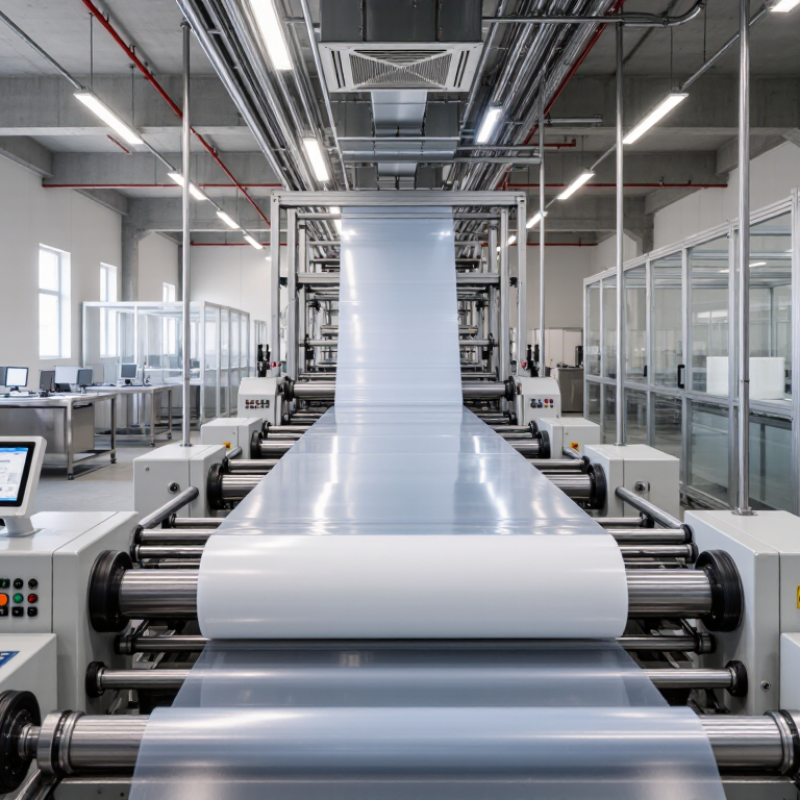
Top 10 Filter Materials Lamination Machine Suppliers

Filter Material Lamination Machines: Types, Layers, and Core Functions

Top 10 Filter Materials Lamination Machine Suppliers

Filter material lamination machines bond two or more functional layers into one stable web. Common machine types include hot-melt laminators, thermal calender systems, ultrasonic units, and adhesive coating lines. Hot-melt equipment suits many nonwoven combinations and offers controlled bonding without soaking the media. Thermal calenders use heated rollers and pressure, but excessive heat can damage delicate fibers. Ultrasonic bonding creates localized seams with limited thermal exposure. Each type requires trials with the actual material, not only supplier specifications.

A typical filter structure may include a support scrim, spunbond layer, meltblown media, and protective cover sheet. Some designs add activated carbon or a moisture-resistant membrane. The machine should unwind each layer smoothly, control web tension, apply adhesive evenly, and align edges accurately. Heated rollers, nip pressure, cooling sections, and slitting units shape the final result. Online inspection can detect wrinkles, weak bonds, coating gaps, and contamination before production rolls are packed.

When evaluating suppliers, ask for sample trials, peel-strength data, bonding uniformity, and long-run operating records. A reliable supplier should explain temperature ranges, line speed, maintenance intervals, and operator training clearly. Check whether the control system records tension and pressure changes. Small details matter. A wider web is not always better. Higher speed may reduce bond quality or increase waste. That assumption deserves testing. In my experience, practical trials often reveal flaws hidden by polished technical brochures. Supplier support after installation can matter as much as the machine itself.

Key Specifications: 0.1–2.0 mm Films, 300–1,500 mm Webs, and 5–80 m/min

Top 10 Filter Materials Lamination Machine Suppliers

Key Specifications: 0.1–2.0 mm Films, 300–1,500 mm Webs, and 5–80 m/min

Selecting a lamination machine for filter materials requires more than comparing catalog prices. Film thickness, web width, and running speed directly affect bonding quality and production stability. For 0.1–2.0 mm films, the machine should provide accurate tension control and even nip pressure. Thin films can wrinkle easily. Thicker films may need stronger heating and compression. A reliable supplier should explain these limits with test data, not vague promises.

In production trials, 300–1,500 mm web widths reveal whether the machine handles edge alignment consistently. Automatic guiding, adjustable rollers, and a stable unwinding system are practical necessities. Speeds from 5–80 m/min also demand responsive temperature and tension controls. Low speeds support careful setup and inspection. Higher speeds expose weak sealing, uneven coating, or poor synchronization. Test real filter media.

Ask suppliers for sample results, machine drawings, maintenance schedules, and acceptance criteria. A credible technical team should measure peel strength, thickness variation, and web tracking during trials. Safety systems and operator access matter too. No machine is perfect. I would still question any specification without evidence. Minor details, such as roller surface finish and splice detection, can determine whether a line runs smoothly or wastes material.

Top 10 Filter Lamination Machine Suppliers and Their Technical Strengths

Top 10 Filter Lamination Machine Suppliers

The top ten filter lamination machine suppliers compete through process control, material compatibility, and after-sales engineering. Their technical strengths differ significantly.

Several suppliers specialize in hot-melt lamination for nonwoven layers, activated carbon sheets, and melt-blown media. Others focus on ultrasonic bonding, thermal calendaring, or adhesive coating systems. Strong suppliers provide servo-driven tension control, automatic web alignment, recipe storage, and inline inspection. These features reduce wrinkles, uneven bonding, and production waste. A reliable machine should also handle changing roll widths without lengthy setup.

Industry data supports this investment. MarketsandMarkets estimates the global filtration market could grow from about 57 billion dollars in 2024 to nearly 79 billion dollars by 2029. Smithers also identifies higher-performance filtration media as a continuing growth area. These figures are useful, but they are not purchasing guarantees. Forecasts often miss energy prices, regional demand, and maintenance shortages.

Technical evaluation should include lamination temperature stability, adhesive spread accuracy, line speed, and cleaning access. Ask for trial data using the actual filter substrate. Request bonding-strength results after humidity and heat exposure. Not every supplier publishes this evidence. That is a weakness worth noting. Experienced buyers should examine downtime records, spare-part response, operator training, and compliance with applicable machinery and workplace standards. A fast machine is not automatically a dependable machine.

Top 10 Filter Lamination Machine Suppliers: Technical Strengths

The chart compares commonly evaluated technical capabilities in filter-media lamination equipment. Scores are normalized engineering benchmarks based on web-handling stability, production speed, temperature control, coating precision, automation, and material flexibility; they are not company-specific rankings.

Material Compatibility: Nonwovens, PTFE, Meltblown, Glass Fiber, and Foams

Top 10 Filter Materials Lamination Machine Suppliers

When comparing the top 10 filter materials lamination machine suppliers, check compatibility before production speed. Nonwovens require stable web tension and gentle pressure. Meltblown layers can deform under excessive heat. PTFE often needs controlled temperature and accurate alignment. Glass fiber is rigid and brittle, so uneven rollers may create cracks. Foams need adjustable compression, especially when their thickness changes across a roll.

Ask suppliers for documented trials using your actual materials. Request peel-strength results, coating uniformity data, and sample laminations. Experienced engineers should explain temperature ranges, line speed, adhesive behavior, and cleaning requirements. A reliable supplier will discuss limitations openly, not promise every material will run perfectly. That matters during audits and scale-up. Small details matter.

Tips: Send representative samples, including the thinnest and thickest layers. Measure surface energy before choosing adhesive systems. Confirm whether the machine supports solvent-free, thermal, or reactive bonding. Check roller hardness, nip-pressure control, and tension feedback. For glass fiber, inspect edge handling and dust-control provisions. For foams, test recovery after compression. These checks can prevent costly rework.

A practical supplier comparison should include operator training, spare-part availability, calibration records, and after-sales response times. I have found that a fast machine is not always the best machine. Sometimes, slower processing gives better bonding and fewer wrinkles. This is easy to overlook. Trial results should be repeated, because one successful roll proves very little. Different humidity, batch density, and adhesive age can change the outcome.

Supplier Comparison by ISO 16890, EN 1822, Automation, Service, and Cost

Top 10 Filter Materials Lamination Machine Suppliers

Comparing the top ten suppliers requires more than checking speed and purchase price. Filter lamination machines should support materials tested under ISO 16890 and EN 1822 requirements. These standards evaluate filter performance, but they do not automatically certify the machine itself. Experienced buyers should request trial records, material compatibility data, and stable lamination samples.

Automation creates a clear difference during long production runs. Automatic tension control, web alignment, adhesive dosing, and roll changing can reduce wrinkles and uneven bonding. Sensors should record temperature, pressure, and line speed. A practical test uses several roll widths and different nonwoven thicknesses. One successful sample is not enough. Suppliers offering remote diagnostics, spare parts training, and rapid technical response usually reduce production interruptions.

Cost comparison must include installation, energy use, tooling, maintenance, and operator training. A cheaper machine may require more manual adjustment and generate higher material waste. In plant evaluations, I would inspect the control cabinet, safety systems, and cleaning access before accepting a quotation. Service quality is often difficult to measure, which makes supplier claims less reliable without customer references. No comparison is perfect; production conditions change, and laboratory results may not match factory behavior. Buyers should leave room for a supervised trial and revise their ranking after real materials are tested.

Top 10 Filter Materials Lamination Machine Suppliers - Supplier Comparison by ISO 16890, EN 1822, Automation, Service, and Cost

Anonymized supplier comparison based on commonly documented market configurations for filter-media lamination equipment. Cost figures are indicative 2025–2026 equipment budgets and should be confirmed through a technical quotation.

Rank Supplier Reference Primary Filter Materials ISO 16890 Production Support EN 1822 Production Support Typical Lamination Process Working Width Line Speed Automation Level Quality-Control Functions Service Coverage Typical Lead Time Indicative Machine Cost Overall Fit
1 Supplier Profile 01 Glass fiber, synthetic nonwoven, PTFE membrane ePM1–ePM10 media configurations H13–H14 media configurations Hot-melt adhesive coating with pressure-roll lamination 1,600–2,200 mm Up to 45 m/min Fully automatic; PLC, recipe control, auto tension Web-tension monitoring, coating-weight control, splice detection Remote diagnostics plus regional commissioning 6–8 months US$420,000–680,000 High-throughput HEPA and HVAC production
2 Supplier Profile 02 PP spunbond, PET spunbond, meltblown, composite media ePM10–ePM1 media configurations H10–H13 media configurations Thermal bonding and adhesive film lamination 1,400–2,000 mm Up to 40 m/min Automatic line with servo drive synchronization Edge guiding, temperature control, web-break alarms Installation, operator training, spare-parts support 5–7 months US$310,000–520,000 Balanced cost and flexibility
3 Supplier Profile 03 Cellulose, polyester, glass fiber, activated-carbon layers ePM10–ePM2.5 media configurations E10–H13 media configurations Powder adhesive or hot-melt lamination 1,200–1,800 mm Up to 32 m/min Automatic tension and speed control Basis-weight monitoring, roll-length counter, alarm logging Domestic service network and online support 4–6 months US$240,000–410,000 General-purpose filtration media
4 Supplier Profile 04 Nanofiber-coated synthetic media, PET, PP ePM1–ePM10 media configurations H13–H14 media configurations Precision adhesive coating with membrane lamination 1,000–1,600 mm Up to 28 m/min High automation; closed-loop coating control Coating-weight feedback, camera inspection, data logging Application engineering and validation assistance 7–10 months US$480,000–760,000 Premium media and low-pressure-drop products
5 Supplier Profile 05 Glass fiber, cellulose, synthetic blends ePM10–ePM2.5 media configurations E10–H12 media configurations Hot-air activation and nip-roll lamination 1,000–1,500 mm Up to 25 m/min Semi-automatic; assisted setup and recipe storage Temperature display, tension indication, batch counter Commissioning and scheduled maintenance support 4–6 months US$180,000–320,000 Cost-conscious medium-volume production
6 Supplier Profile 06 PTFE membrane, ePTFE laminate, glass fiber ePM1–ePM10 media configurations H13–U17 media configurations Clean-room-compatible adhesive and membrane lamination 800–1,400 mm Up to 22 m/min Automatic; clean-process monitoring and recipe control Particle-control provisions, tension control, inspection camera Specialist process support and on-site qualification 8–12 months US$560,000–900,000 High-purity and ultra-high-efficiency applications
7 Supplier Profile 07 PP, PET, meltblown, spunbond composites ePM10–ePM2.5 media configurations E10–H13 media configurations Ultrasonic bonding with optional adhesive module 800–1,400 mm Up to 30 m/min Semi-automatic to automatic configurations Ultrasonic power monitoring, edge alignment, fault alarms Remote support with optional field service 3–5 months US$150,000–290,000 Flexible compact-line applications
8 Supplier Profile 08 Activated-carbon media, polyester, cellulose ePM10–ePM2.5 media configurations Not normally optimized for H13–H14 production Powder adhesive scattering and heated-roll lamination 1,200–1,800 mm Up to 20 m/min Automatic feeding with manual changeover Adhesive-feed control, roll-diameter monitoring, temperature alarms Standard warranty and remote troubleshooting 4–7 months US$170,000–300,000 Odor-control and gas-phase filter media
9 Supplier Profile 09 Glass fiber, synthetic nonwoven, multilayer HVAC media ePM10–ePM1 media configurations E10–H13 media configurations Hot-melt film and adhesive bead lamination 1,000–1,600 mm Up to 26 m/min Automatic speed control; manual recipe selection Web guiding, adhesive-temperature control, production counter Regional service partners and online assistance 5–8 months US$210,000–360,000 Small and medium HVAC filter plants
10 Supplier Profile 10 Cellulose, PP, PET, fiberglass, specialty composites ePM10–ePM2.5 media configurations E10–H12 media configurations Modular adhesive lamination with interchangeable coating heads 600–1,300 mm Up to 18 m/min Basic automatic control with manual material handling Temperature and pressure display, length counter, safety interlocks Basic commissioning and spare-parts package 3–5 months US$95,000–190,000 Entry-level and pilot-scale production
Technical note: ISO 16890 and EN 1822 classify the performance of completed air-filter products and test systems; they do not independently certify a lamination machine. Final classification depends on the finished filter design, media structure, seal integrity, testing laboratory, and production controls.
Copyright 2025 Fluidra S.A. | Created by BCM Marketing Agencia Privacy Policy Legal note | Cookie policy |

Technical cookies are strictly necessary for our website to work and you can navigate through it. These types of cookies are those that, for example, allow us to identify you, give you access to certain restricted parts of the page if necessary, or remember different options or services already selected by you, such as your privacy preferences. Therefore, they are activated by default, your authorization not being necessary in this regard. Through the configuration of your browser, you can block or alert the presence of this type of cookies, although such blocking will affect the proper functioning of the different functionalities of our website.


The analysis cookies allow us to study the navigation of the users of our website in general (for example, which sections of the page are the most visited, which services are used most and if they work correctly, etc.). From the statistical information on navigation on our website, we can improve both the operation of the page itself and the different services it offers. Therefore, these cookies do not have an advertising purpose, but only serve to make our website work better, adapting to our users in general. By activating them you will contribute to this continuous improvement. You can enable or disable these cookies by checking the corresponding box, being disabled by default.


Functionality cookies allow us to remember your preferences, to personalize certain characteristics and general options of our website, every time you access it (for example, the language in which the information is presented to you, the sections marked as favorites, your browser type, etc.) Therefore, this type of cookies does not have an advertising purpose, but by activating them you will improve the functionality of the website (for example, adapting to your type of browser) and the customization of it based on your preferences (for example, by presenting the information in the language that you have chosen in previous occasions), which will contribute to the ease, usability and comfort of our page during your navigation. You can enable or disable these cookies by checking the corresponding box, being disabled by default.


Advertising cookies allow us to manage the advertising spaces included in our website based on criteria such as the content shown or the frequency in which the ads are displayed. For example, if you have been shown the same ad several times on our website, and you have not shown a personal interest by clicking on it, it will not appear again. In summary, by activating this type of cookies, the advertising shown on our website will be more useful and diverse, and less repetitive. You can enable or disable these cookies by checking the corresponding box, being disabled by default.


Behavioral advertising cookies allow us to obtain information based on the observation of your browsing habits and behaviors on the web, in order to show you advertising content that best suits your personal tastes and interests. To understand it in a very simple way, we will give you a fictitious example: if your last searches on the web were related to suspense literature, we would show you advertising about suspense books. Therefore, activating this type of cookies, the advertising that we show you on our website will not be generic, but will be oriented to your searches, tastes and interests, therefore adjusting exclusively to you. You can enable or disable these cookies by checking the corresponding box, being disabled by default.
To understand it in a very simple way, we will give you a fictitious example: if your last searches on the web were related to suspense literature, we would show you advertising about suspense books. Therefore, activating this type of cookies, the advertising that we show you on our website will not be generic, but will be oriented to your searches, tastes and interests, therefore adjusting exclusively to you. You can enable or disable these cookies by checking the corresponding box, being disabled by default.

SAVE

We use our own and third-party cookies to ensure the proper functioning of the website and to analyse our services, improve your experience on our website and show you advertisements related to your interests according to profiling based on your browsing habits (e.g. websites visited). You can accept all cookies by clicking "ACCEPT" or set or reject them by clicking here. If you would like to know more about the use of cookies, please see our COOKIE POLICY.


ACCEPT ALL
Reject no essentials


