
What Are China Top 10 Endoscope Lens Manufacturers?
FLUID HANDLING EXPERTS

Blog, all our news

What Are China Top 10 Endoscope Lens Manufacturers?

What Are China Top 10 Endoscope Lens Manufacturers? This question matters to hospitals, device developers, and distributors seeking dependable optical partners. An Endoscope Lens must deliver more than a bright image. It should preserve fine tissue detail, maintain color accuracy, and perform reliably inside a narrow, humid channel.

Professor Guido Costamagna, a recognized endoscopy specialist, has offered a useful principle: “Good technology must serve diagnosis, not distract from it.” That idea should guide every manufacturer comparison. A technically impressive lens still needs stable focusing, low distortion, suitable illumination, and consistent assembly quality. Small optical errors can blur vessel edges or hide subtle mucosal changes.

This guide examines ten Chinese manufacturers through practical criteria. These include lens design, sapphire or glass selection, coating quality, miniature assembly, inspection systems, customization capability, certifications, and after-sales support. Manufacturing experience also matters. A supplier may show a polished sample, yet struggle with repeatability across thousands of units.

The ranking is not absolute.

Public information can be incomplete.

Some companies disclose limited production data. Others specialize in private-label projects, making direct comparisons difficult. Buyers should verify optical test reports, tolerances, sterilization compatibility, and sample performance before signing contracts. Field trials remain important, especially for flexible and rigid endoscope applications.

The following overview aims to support careful decisions, not promote a single vendor. It considers both established capabilities and visible limitations. In this market, the strongest partner may not be the largest name. It may be the manufacturer that communicates clearly, documents every process, and improves after receiving uncomfortable technical feedback.
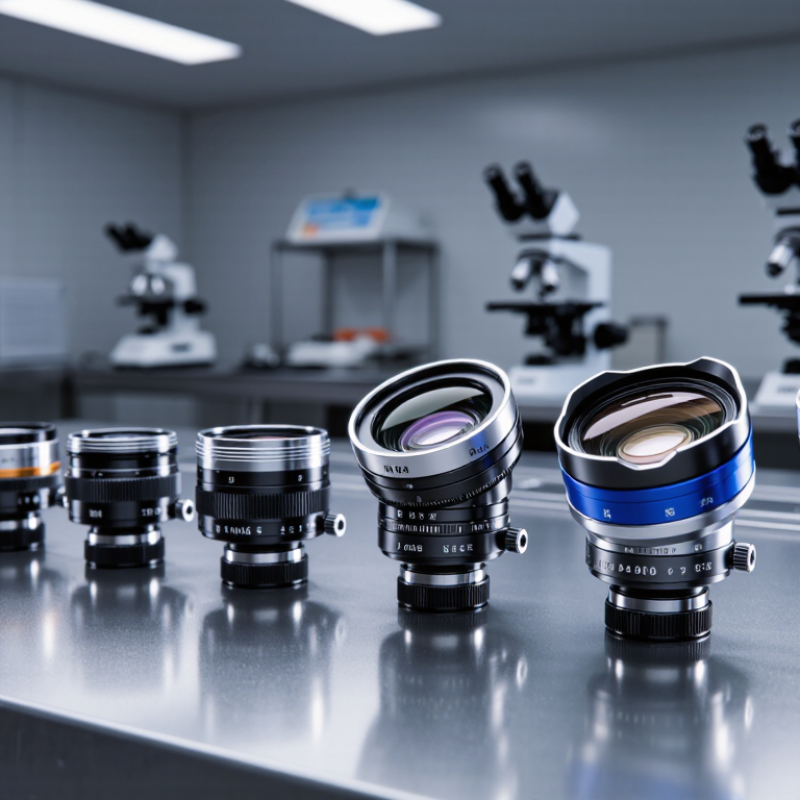
What Are China Top 10 Endoscope Lens Manufacturers?

Endoscope Lens Basics: 4K Resolution, 0°–70° Viewing Angles, and Key Types

Endoscope lens selection now depends on more than sharp marketing language. A 4K label does not guarantee a clinically clearer image. Resolution also depends on sensor size, illumination, focusing accuracy, and image processing. Fortune Business Insights valued the global endoscopy devices market at approximately USD 31.89 billion in 2023. Its forecast suggests strong demand for advanced visualization systems through 2032.

Viewing angle changes the operator’s experience. A 0° lens shows a direct, forward-facing scene, useful for controlled navigation. Angled lenses, including 30°, 45°, and 70°, reveal sidewalls and recessed anatomy. The 70° option can expose more detail around corners, but it may increase orientation difficulty. Small movements feel amplified. That matters.

When comparing China’s top ten endoscope lens manufacturers, buyers should examine measured MTF, edge sharpness, distortion, light transmission, and sterilization-cycle stability. ISO 8600 testing principles can support more reliable endoscope evaluations. In practice, I would request paired images from the same target, distance, and light level. Do not trust charts alone. A 2024 market analysis by Grand View Research also highlights imaging performance and minimally invasive procedures as key market drivers. Yet some comparisons remain imperfect. Suppliers may publish different test conditions, making direct ranking difficult. Experienced hospitals should review sample images, service records, and repeatability before choosing a lens partner.

China’s Top 10 Manufacturers: Ranking by Revenue, Capacity, and Export Reach

China’s top ten endoscope lens manufacturers should be ranked by more than factory size. Revenue offers the clearest starting point, yet lens-only sales are rarely disclosed. A practical ranking therefore combines audited medical-device revenue, optical production capacity, and overseas shipments. Grand View Research estimates the global endoscopy devices market reached about US$33 billion in 2023. This demand supports China’s expanding supplier base, especially for rigid scopes, flexible scopes, and miniature optical assemblies.

Capacity separates established producers from smaller workshops. Key indicators include annual lens output, automated polishing lines, cleanroom controls, and inspection equipment. Export reach adds another layer. China Customs data can track medical and optical product shipments, although HS codes do not always isolate endoscope lenses.

That limitation matters. The ranking should also review ISO 13485 certification, regulatory registrations, delivery records, and engineering support. Intertek and TÜV audit practices show why traceability and process control deserve serious weight. Some manufacturers report impressive installed capacity, but utilization rates remain unclear. That is an uncomfortable gap.

A balanced scoring model could assign 40% to revenue, 35% to verified capacity, and 25% to export reach.

Public filings, customs records, factory audits, and distributor coverage should support each score. Industry forecasts from Fortune Business Insights indicate continued endoscopy market growth through the decade, but forecasts are not purchase orders. Buyers should test optical clarity, distortion, coating durability, and batch consistency before accepting any ranking.

Numbers help. Evidence matters more.

Optical Performance Comparison: MTF, FOV, Distortion, and Lens Diameter

What Are China’s Top 10 Endoscope Lens Manufacturers?

Optical Performance Comparison: MTF, FOV, Distortion, and Lens Diameter

Comparing China’s top ten endoscope lens manufacturers requires more than checking resolution claims. MTF shows how well a lens preserves contrast at different spatial frequencies. High MTF at the center is useful, but edge performance often reveals the real design quality. In practical inspection, a lens should keep fine markings readable near the image boundary, not only at the center.

FOV affects coverage inside narrow cavities. A wider FOV captures more area, but it may increase distortion and reduce corner sharpness. Barrel distortion can make straight tubes appear curved. This matters during measurement and alignment. Lens diameter also creates a clear trade-off. A smaller diameter supports access through tight channels, while a larger design may collect more light and improve optical stability. However, larger is not always better. System integration, illumination, working distance, and sensor matching can change the final result.

Tips: Request MTF charts at several field positions, not one center value. Check distortion with a grid target. Confirm whether measurements use the final assembly. A polished prototype can still perform differently after sealing, sterilization, or cable integration. That limitation deserves attention. I would also compare samples under identical lighting, because bright laboratory conditions can hide weak edge performance. Keep the raw test images; marketing tables rarely show every compromise.

Quality and Compliance: ISO 13485, NMPA, CE, and FDA Registration Data

What Are China Top 10 Endoscope Lens Manufacturers?

Quality and compliance should guide any review of China’s top ten endoscope lens manufacturers. Price and production capacity matter, but documented controls matter more. The ISO Survey 2023 reported more than 35,000 ISO 13485 certificates worldwide, showing how widely medical quality systems are used. However, certification alone does not prove optical consistency, biocompatibility control, or long-term reliability.

A credible manufacturer should provide a current ISO 13485 certificate, audited scope, and certificate number. Buyers should verify the issuing body and check whether the scope covers endoscope lenses or related optical components. NMPA registration supports market access in China, while CE conformity under the Medical Device Regulation requires technical documentation, risk management, and post-market obligations. FDA establishment registration is also important for United States distribution, but registration does not mean FDA clearance or product approval. This distinction is often misunderstood.

Ask for coating durability results, focal-length tolerances, image-resolution records, and traceability from glass batch to finished lens. Independent laboratory reports add useful confidence. Still, documents can become outdated. Paperwork matters. Not enough. A factory may display strong certificates yet provide weak evidence for a specific lens model. Supplier audits, sample inspections, and complaint-history reviews remain necessary. Data from ISO, NMPA, FDA, and European regulatory databases should support the shortlist, not replace hands-on technical judgment.

Buyer’s Selection Guide: MOQ, Lead Time, Customization, and After-Sales Support

When comparing ten shortlisted endoscope lens manufacturers, buyers should examine evidence, not attractive catalogs. Fortune Business Insights’ 2024 Endoscopy Devices Market report values the global market at about US$31.9 billion in 2023. Grand View Research also forecasts annual growth above 6% through the decade. This expanding demand makes capacity checks essential. Request the MOQ for prototypes and production separately. A practical starting point may be five to twenty samples. Confirm whether inspection, coating, and packaging are included.

Lead time needs written milestones. Ask for sample delivery, tooling completion, pilot production, and final shipment dates. For specialized lenses, four to eight weeks is common, but complex coatings can extend schedules. Customization should cover diameter, focal length, distortion, numerical aperture, coating, and working temperature. Request optical test data for every batch. I would not treat a polished certificate as proof of performance. Verify traceability, calibration records, and quality-system documents, preferably aligned with ISO 13485 requirements.

Tips: Put service terms in the purchase agreement. Define response time, replacement rules, failure analysis, and spare-lens availability. A 24–48-hour technical response is useful, yet response speed alone proves little. Ask for a named engineer and a sample corrective-action report. The FDA’s medical-device quality guidance emphasizes documented controls and post-market feedback, which supports this approach. A low MOQ may reduce risk, but it can increase unit cost and weaken process consistency. Review both before choosing.

What Are China Top 10 Endoscope Lens Manufacturers? - Buyer’s Selection Guide: MOQ, Lead Time, Customization, and After-Sales Support

Anonymous buyer-screening table based on commonly quoted manufacturing ranges for China-based optical and endoscope lens suppliers. Actual terms should be confirmed in a written quotation and quality agreement.
Supplier Profile Typical Product Focus Common Lens Materials Prototype MOQ Production MOQ Sample Lead Time Bulk Lead Time Customization Capability Quality and Compliance Documents After-Sales Support Best Fit for Buyers
Profile 01 Rigid endoscope opticsHigh-resolution assemblies Optical glass; fused silica for selected applications 1–5 sets 100–300 sets 3–5 weeks 8–12 weeks Strong Dimensional inspection, optical test report, material certificate, incoming inspection records 12–24 months limited warranty; remote technical response usually within 2 business days Medical device developers requiring stable optical performance
Profile 02 Camera endoscope lensesCompact optical modules Optical glass; optical polymers for selected low-cost designs 5–10 sets 300–1,000 sets 2–4 weeks 6–10 weeks Strong Coating data, MTF or resolution test, drawing approval, RoHS and REACH declarations where applicable Replacement parts and application engineering support; warranty terms vary by project Portable inspection equipment and compact imaging systems
Profile 03 Industrial borescope opticsHigh-temperature inspection Optical glass; sapphire or fused silica for demanding environments 1–3 sets 50–200 sets 4–6 weeks 10–14 weeks Strong Temperature testing, scratch-dig inspection, coating durability data, dimensional reports 12-month standard warranty; failure analysis and repair assessment available Aerospace, automotive, energy, and industrial inspection applications
Profile 04 Disposable endoscope opticsCost-sensitive assemblies Optical polymers; glass elements for selected designs 10–20 sets 1,000–5,000 sets 3–5 weeks 8–12 weeks Moderate Material declarations, visual inspection standards, lot traceability, basic optical test results Batch replacement policy; process feedback generally handled through the purchasing team High-volume single-use diagnostic devices
Profile 05 Flexible endoscope lensesDistal-tip optical parts Optical glass; polymer lenses for miniature configurations 5–10 sets 200–800 sets 4–7 weeks 10–16 weeks Strong Centering data, surface quality report, optical performance report, sterilization compatibility data when available Engineering support for alignment and integration; warranty commonly 12 months Flexible scopes and small-diameter medical imaging products
Profile 06 Wide-angle endoscope lensesLow-distortion optics Optical glass; hybrid glass-polymer configurations 1–5 sets 100–500 sets 3–6 weeks 8–14 weeks Strong Field-of-view data, distortion test, MTF report, coating specification, approved drawings Optical redesign assistance and corrective-action reports for verified quality issues Applications requiring broad viewing angles and image uniformity
Profile 07 OEM replacement lensesLegacy optical parts Optical glass; customer-specified materials 5–10 sets 100–300 sets 4–8 weeks 10–16 weeks Strong Reverse-engineering report, dimensional comparison, sample approval record, batch inspection report Replacement and refurbishment support; response time depends on drawing and sample availability Equipment maintenance and discontinued-part replacement programs
Profile 08 Coated optical windowsProtective endoscope elements Optical glass; sapphire; fused silica 10–20 pieces 500–2,000 pieces 2–4 weeks 6–10 weeks Moderate Coating curve, adhesion test, abrasion test, transmission data, thickness and flatness report Coating failure review and replacement evaluation; warranty normally linked to agreed test conditions Protection, illumination, and transmission-window requirements
Profile 09 Illumination and imaging opticsLED-compatible assemblies Optical glass; optical-grade polymers; diffuser materials 5–15 sets 300–1,000 sets 3–5 weeks 8–12 weeks Strong Transmission data, illumination uniformity test, optical drawing, material and coating records Integration guidance for light paths and optical alignment; standard technical support during development Endoscopes requiring balanced illumination and image brightness
Profile 10 Small-batch custom opticsResearch and development projects Customer-specified glass, quartz, sapphire, or optical polymer 1–3 prototypes 20–100 sets 5–8 weeks 12–20 weeks Very strong Design review, tolerance analysis, first-article inspection, optical test report, change-control records Direct engineering communication, design iteration support, and nonconformance investigation Start-ups, laboratories, and specialized low-volume instruments
Buyer’s note: MOQ, lead time, coating availability, inspection standards, warranty coverage, and regulatory documentation can change according to lens diameter, tolerance, coating specification, assembly requirements, forecast volume, and intended application. Request a controlled drawing, approved sample, inspection plan, and written after-sales agreement before placing a production order.

Article Source:

Copyright 2025 Fluidra S.A. | Created by BCM Marketing Agencia Privacy Policy Legal note | Cookie policy |

Technical cookies are strictly necessary for our website to work and you can navigate through it. These types of cookies are those that, for example, allow us to identify you, give you access to certain restricted parts of the page if necessary, or remember different options or services already selected by you, such as your privacy preferences. Therefore, they are activated by default, your authorization not being necessary in this regard. Through the configuration of your browser, you can block or alert the presence of this type of cookies, although such blocking will affect the proper functioning of the different functionalities of our website.


The analysis cookies allow us to study the navigation of the users of our website in general (for example, which sections of the page are the most visited, which services are used most and if they work correctly, etc.). From the statistical information on navigation on our website, we can improve both the operation of the page itself and the different services it offers. Therefore, these cookies do not have an advertising purpose, but only serve to make our website work better, adapting to our users in general. By activating them you will contribute to this continuous improvement. You can enable or disable these cookies by checking the corresponding box, being disabled by default.


Functionality cookies allow us to remember your preferences, to personalize certain characteristics and general options of our website, every time you access it (for example, the language in which the information is presented to you, the sections marked as favorites, your browser type, etc.) Therefore, this type of cookies does not have an advertising purpose, but by activating them you will improve the functionality of the website (for example, adapting to your type of browser) and the customization of it based on your preferences (for example, by presenting the information in the language that you have chosen in previous occasions), which will contribute to the ease, usability and comfort of our page during your navigation. You can enable or disable these cookies by checking the corresponding box, being disabled by default.


Advertising cookies allow us to manage the advertising spaces included in our website based on criteria such as the content shown or the frequency in which the ads are displayed. For example, if you have been shown the same ad several times on our website, and you have not shown a personal interest by clicking on it, it will not appear again. In summary, by activating this type of cookies, the advertising shown on our website will be more useful and diverse, and less repetitive. You can enable or disable these cookies by checking the corresponding box, being disabled by default.


Behavioral advertising cookies allow us to obtain information based on the observation of your browsing habits and behaviors on the web, in order to show you advertising content that best suits your personal tastes and interests. To understand it in a very simple way, we will give you a fictitious example: if your last searches on the web were related to suspense literature, we would show you advertising about suspense books. Therefore, activating this type of cookies, the advertising that we show you on our website will not be generic, but will be oriented to your searches, tastes and interests, therefore adjusting exclusively to you. You can enable or disable these cookies by checking the corresponding box, being disabled by default.
To understand it in a very simple way, we will give you a fictitious example: if your last searches on the web were related to suspense literature, we would show you advertising about suspense books. Therefore, activating this type of cookies, the advertising that we show you on our website will not be generic, but will be oriented to your searches, tastes and interests, therefore adjusting exclusively to you. You can enable or disable these cookies by checking the corresponding box, being disabled by default.

SAVE

We use our own and third-party cookies to ensure the proper functioning of the website and to analyse our services, improve your experience on our website and show you advertisements related to your interests according to profiling based on your browsing habits (e.g. websites visited). You can accept all cookies by clicking "ACCEPT" or set or reject them by clicking here. If you would like to know more about the use of cookies, please see our COOKIE POLICY.


ACCEPT ALL
Reject no essentials


