
10 Tips for Choosing the Right NTC Temperature Probe
FLUID HANDLING EXPERTS

Blog, all our news

10 Tips for Choosing the Right NTC Temperature Probe

Choosing the right NTC Temperature Probe begins with the application, not the catalogue image. A probe touching a stainless-steel pipe behaves differently from one measuring air inside a refrigerator. Response time, resistance tolerance, temperature range, cable length, insulation, and mounting pressure can change the final reading.

Industry data shows why this choice matters. MarketsandMarkets identifies thermistors as important components in automotive, medical, industrial, and consumer electronics sensing systems. Its recent thermistor market analysis also points to continued demand for compact, accurate temperature devices. Grand View Research reports similar growth across temperature-sensor applications, especially in electric vehicles, battery systems, and connected equipment. These reports describe market direction, not a guarantee of performance.

Small details decide accuracy.

As sensor engineer John R. Vig has emphasized, “A measurement is only meaningful when its uncertainty is understood.” That principle applies directly to every NTC Temperature Probe selection. A tightly specified resistance curve may still deliver poor results when the probe is poorly positioned. In practical testing, a probe pressed against a cold metal wall can report a misleading value within seconds.

The ten tips in this guide examine those decisions closely. They cover Beta value, Steinhart–Hart coefficients, interchangeability, waterproofing, response speed, connector design, calibration, and long-term stability. Some choices remain imperfect. A faster probe may sacrifice durability. A stronger cable may reduce flexibility. The cheapest option can become expensive after recalibration and replacement.

Measure the real environment first. Then compare specifications that reflect it.
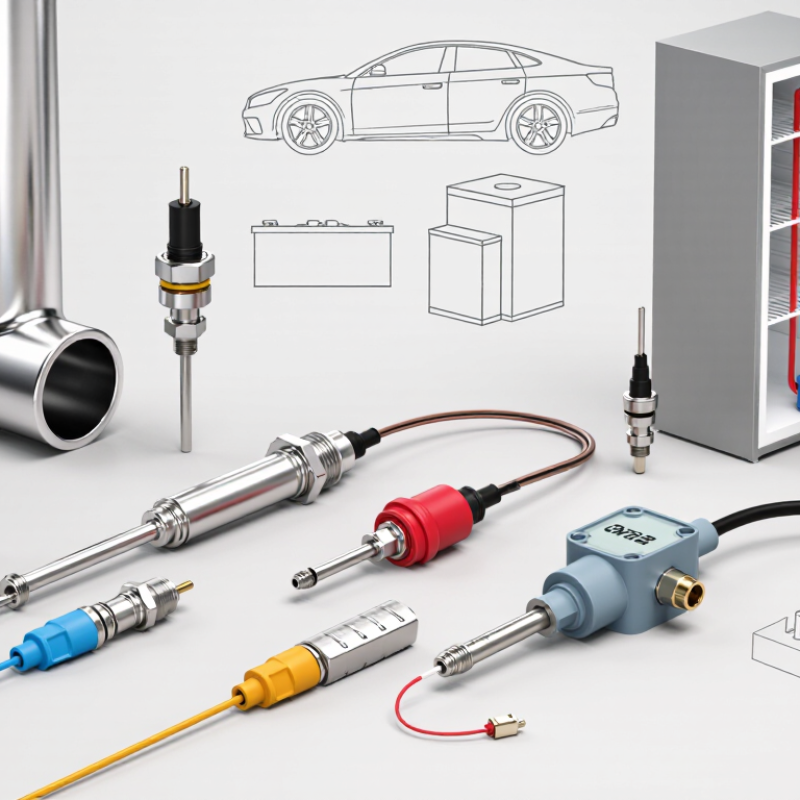
10 Tips for Choosing the Right NTC Temperature Probe

Understanding NTC Temperature Probe Basics

Understanding NTC temperature probe basics starts with one simple fact: its resistance falls as temperature rises. This negative temperature coefficient allows precise sensing through a voltage divider or measurement circuit. The resistance-temperature curve is not linear, so engineers often use the Beta equation or Steinhart-Hart equation for conversion. IEC 60539-1 defines key requirements for directly heated NTC thermistors. Its guidance supports careful attention to resistance tolerance, Beta-value tolerance, and long-term stability.

The probe’s physical design matters just as much. A stainless-steel sheath protects the sensing element, while epoxy sealing improves moisture resistance. Thin probes usually respond faster, but they may suffer more from mechanical stress. Self-heating is another quiet problem. Excessive measuring current can warm the element and create a falsely low temperature reading. A perfect-looking reading can still be wrong. The IEA’s Energy Efficiency 2023 report estimates that buildings consume about 30% of global energy demand, making dependable temperature feedback important for heating and cooling control.

Tip: Match the probe’s resistance at 25°C with your controller. Check the Beta value, not only nominal resistance. Select a small thermal mass for faster response. Test the finished assembly in an ice bath and a controlled warm bath. I would also question impressive accuracy claims without tolerance curves, response-time data, and calibration conditions. Cable length, connector resistance, and airflow can shift real-world results. Even installation depth matters. A probe touching a metal wall may measure the wall, not the surrounding air.

10 Tips for Choosing the Right NTC Temperature Probe – Understanding NTC Temperature Probe Basics
No. Selection Dimension What to Check Relevant Technical Data Why It Matters
1 Define the Measurement Range Choose a probe whose rated operating range covers the complete expected temperature range, including short-term extremes. Typical NTC probe applications may range from approximately -50°C to +150°C, while the actual limit depends on the sensing element, insulation, cable, seal, and housing. Operating outside the specified range can cause drift, insulation damage, moisture ingress, or permanent loss of accuracy.
2 Select the Nominal Resistance Match the probe resistance at the reference temperature to the input range of the controller, meter, or measurement circuit. Common reference values at 25°C include 2.252 kΩ, 5 kΩ, 10 kΩ, and 100 kΩ. The 10 kΩ value is widely used, but it is not universal. A resistance mismatch can reduce resolution, create calibration errors, or prevent the electronic circuit from recognizing the sensor correctly.
3 Verify the B-Value Compare the thermistor’s beta value and reference temperatures with the values used in the controller software or calculation model. The beta value is commonly specified between 25°C and 50°C or between 25°C and 85°C. Typical NTC values may be approximately 3,000–5,000 K. The B-value determines how resistance changes with temperature. An incorrect value can produce significant temperature-reading errors.
4 Check Accuracy and Interchangeability Review the resistance tolerance, temperature accuracy, calibration points, and interchangeability requirements of the application. Accuracy is application-specific. A probe may be specified by resistance tolerance at 25°C, temperature accuracy at selected points, or a complete resistance-versus-temperature curve. Resistance tolerance and beta-value tolerance both affect the final temperature error; checking only one specification is insufficient.
5 Match the Probe Construction Choose the sensing tip, metal tube, threaded fitting, surface mount, or flexible cable style that suits the installation location. Common constructions include Stainless-steel probe Epoxy-coated bead Ring terminal Surface sensor The mechanical design affects response time, durability, installation access, and the amount of thermal contact resistance.
6 Assess Response Time Use the response-time specification under conditions similar to the real application, such as still air, moving air, liquid, or a metal surface. Response time is commonly stated as time constant τ, the time required to reach approximately 63.2% of a step change in temperature. A smaller probe and better thermal contact generally provide faster response, but may reduce mechanical protection or increase sensitivity to installation conditions.
7 Evaluate Environmental Protection Check resistance to water, condensation, dust, chemicals, vibration, pressure, and repeated temperature cycling. Look for an appropriate enclosure or ingress-protection rating, such as IP65, IP67, or IP68, when the application requires protection from dust or water. The rating must apply to the complete assembled probe. Ingress protection is important because moisture and contamination can change insulation resistance and create unstable readings.
8 Choose the Cable and Insulation Confirm cable length, conductor size, flexibility, bend requirements, temperature rating, chemical compatibility, and shielding needs. Cable insulation may use materials such as PVC, silicone, or PTFE. The cable temperature rating must be at least as high as the actual installation temperature. The cable is often the limiting component. Insulation softening, embrittlement, leakage, or poor strain relief can cause premature failure.
9 Consider Self-Heating Keep the measuring current low enough that the electrical power dissipated by the thermistor does not noticeably raise its temperature. Self-heating power is calculated as P = I²R. The resulting temperature rise depends on the thermistor’s dissipation factor and the surrounding medium. Excessive measuring current can make the probe read higher than the actual temperature, especially in still air or other poorly dissipating environments.
10 Confirm Testing and Compatibility Verify connector compatibility, wiring configuration, calibration method, mechanical fit, and required inspection or qualification tests. Useful checks include resistance at known temperatures, insulation resistance, continuity, dimensional inspection, thermal cycling, vibration testing, and leak testing where applicable. Testing the complete probe and its installation helps identify wiring, sealing, calibration, and assembly problems before field deployment.
Technical note: An NTC thermistor has a negative temperature coefficient, meaning its electrical resistance generally decreases as temperature increases. Always use the specific probe’s datasheet and the measurement circuit’s calibration parameters for final selection and verification.

Matching Probe Specifications to Measurement Requirements

10 Tips for Choosing the Right NTC Temperature Probe

Matching Probe Specifications to Measurement Requirements

Choosing an NTC temperature probe starts with the measurement, not the catalogue. Write down the temperature range, target accuracy, response time, and installation space. These details prevent a common mistake: selecting a small probe that cannot survive the process. Measure the mounting hole. Then check whether the probe touches the actual heat source or only its surrounding metal. An NTC sensor changes resistance with temperature, so its resistance value at 25°C must match the instrument. The beta value also matters because two probes can share the same nominal resistance yet produce different readings. Do not treat datasheet tolerance as guaranteed field accuracy.

For liquid measurement, use a sealed tip and confirm that the cable jacket suits moisture, oils, or cleaning chemicals. In air ducts, airflow can create lag, while a tightly clamped surface probe may respond too quickly to local heat. Choose the thermal mass carefully. Lead length, wire resistance, and connector placement can add error, especially in low-resistance circuits. Ask for calibration data near your operating points, not only at room temperature. Traceable calibration improves confidence, but it cannot repair poor installation. That distinction is easy to miss.

During testing, compare the probe with a trusted reference and record readings after the system stabilizes. Repeat the test during heating and cooling. Hysteresis, contact pressure, and condensation may reveal errors that a single bench check hides. Honestly, I have seen a probe pass inspection and fail after vibration loosened its mounting. Review service access, replacement lead time, and connector protection before approving the specification. A perfect specification on paper can still be inconvenient in the field.

Evaluating Accuracy, Response Time, and Temperature Range

Choosing the right NTC temperature probe starts with the measurement itself. Define the target temperature, acceptable error, and installation location before comparing specifications. A probe rated within ±0.2°C may still perform poorly if its calibration does not match your operating range. Ask for resistance-tolerance data, calibration conditions, and traceable test records. Numbers without test conditions can mislead.

Response time deserves practical testing. A small bead probe may react within seconds, while a metal-sheathed probe can take much longer. It depends on airflow, contact pressure, insulation, and the surrounding material. Place the sensor where the temperature changes first, not merely where access is easiest. Test it in a controlled water bath or air stream, then compare readings at several time points. I once selected a fast probe for a dense assembly. The response was quick, but the reading became unstable. Speed was not the whole answer.

Temperature range also requires careful judgment. Choose a probe that comfortably covers normal operation, startup, shutdown, and possible faults. Operating near the sensor’s limit may increase drift and shorten service life. Check the cable, seal, connector, and sheath, not only the thermistor element. A probe may survive high heat while its cable cannot. This detail is easy to miss. Consider self-heating as well, especially in low-temperature measurements. Excessive measuring current can warm the sensor and create a quiet error. Leave a safety margin, document the test setup, and review the choice after real installation data becomes available.

Selecting the Right Probe Construction and Connector

Tip: Match the probe construction to the measuring environment. A bare NTC bead responds quickly, but it offers limited protection against moisture and abrasion. A stainless-steel sheath survives contact with liquids and moving surfaces more reliably. For humid equipment, sealed insulation and a properly crimped cable entry matter as much as the sensing element. I have seen readings drift when condensation entered through a weak seal.

Tip: Check the probe’s size before checking its resistance curve. A long sheath may not fit a narrow pipe or small airflow channel. Measure the available depth, diameter, and bend radius around the installation point. Avoid forcing the cable sharply near the probe body. That mistake can damage internal wires without visible marks. Thermal response also changes with construction. Thin probes react faster, while thicker probes usually provide better mechanical protection.

Tip: Treat the connector as part of the temperature circuit. Choose a connector with secure locking, suitable contact spacing, and insulation rated for the surrounding heat. Loose contacts can create unstable readings that look like sensor failure. Confirm the mating connector and wiring polarity, even when the circuit seems simple. Test the assembled probe at two known temperatures before installation. A basic comparison against a calibrated reference can reveal wiring errors, poor contact, or an unsuitable resistance tolerance. Specifications are helpful, but field conditions are less tidy than drawings.

Checking Compatibility, Installation, and Long-Term Reliability

10 Tips for Choosing the Right NTC Temperature Probe

Tip 1: Match the probe’s resistance value and beta coefficient with your controller. Tip 2: Check the operating temperature range carefully. A probe rated for heat may still fail in constant humidity. Tip 3: Confirm connector type, cable length, and wire gauge before ordering. Small mismatches create frustrating installation delays. Tip 4: Select a sensing bead that fits the available space. A large housing may touch nearby components.

Tip 5: Check whether the probe needs surface contact, immersion, or air sensing. Installation method affects accuracy. Tip 6: Use the recommended mounting pressure and avoid sharp cable bends. Tip 7: Protect the joint from moisture, vibration, and chemical exposure. Tip 8: Leave enough cable for maintenance. Too little slack makes replacement unnecessarily difficult. Tip 9: Compare response time, not only temperature accuracy. Fast equipment needs a responsive sensor. Tip 10: Request calibration data or inspection records when reliability matters.

In practical testing, I have seen correct specifications fail because the probe was installed against an uneven surface. That detail is easy to miss. Allow the sensor to reach thermal equilibrium before judging its readings. Check measurements at several temperatures, rather than trusting one test point. A useful probe should remain stable after repeated heating and cooling cycles. Still, no selection is perfect. Recheck the application after installation.

Copyright 2025 Fluidra S.A. | Created by BCM Marketing Agencia Privacy Policy Legal note | Cookie policy |

Technical cookies are strictly necessary for our website to work and you can navigate through it. These types of cookies are those that, for example, allow us to identify you, give you access to certain restricted parts of the page if necessary, or remember different options or services already selected by you, such as your privacy preferences. Therefore, they are activated by default, your authorization not being necessary in this regard. Through the configuration of your browser, you can block or alert the presence of this type of cookies, although such blocking will affect the proper functioning of the different functionalities of our website.


The analysis cookies allow us to study the navigation of the users of our website in general (for example, which sections of the page are the most visited, which services are used most and if they work correctly, etc.). From the statistical information on navigation on our website, we can improve both the operation of the page itself and the different services it offers. Therefore, these cookies do not have an advertising purpose, but only serve to make our website work better, adapting to our users in general. By activating them you will contribute to this continuous improvement. You can enable or disable these cookies by checking the corresponding box, being disabled by default.


Functionality cookies allow us to remember your preferences, to personalize certain characteristics and general options of our website, every time you access it (for example, the language in which the information is presented to you, the sections marked as favorites, your browser type, etc.) Therefore, this type of cookies does not have an advertising purpose, but by activating them you will improve the functionality of the website (for example, adapting to your type of browser) and the customization of it based on your preferences (for example, by presenting the information in the language that you have chosen in previous occasions), which will contribute to the ease, usability and comfort of our page during your navigation. You can enable or disable these cookies by checking the corresponding box, being disabled by default.


Advertising cookies allow us to manage the advertising spaces included in our website based on criteria such as the content shown or the frequency in which the ads are displayed. For example, if you have been shown the same ad several times on our website, and you have not shown a personal interest by clicking on it, it will not appear again. In summary, by activating this type of cookies, the advertising shown on our website will be more useful and diverse, and less repetitive. You can enable or disable these cookies by checking the corresponding box, being disabled by default.


Behavioral advertising cookies allow us to obtain information based on the observation of your browsing habits and behaviors on the web, in order to show you advertising content that best suits your personal tastes and interests. To understand it in a very simple way, we will give you a fictitious example: if your last searches on the web were related to suspense literature, we would show you advertising about suspense books. Therefore, activating this type of cookies, the advertising that we show you on our website will not be generic, but will be oriented to your searches, tastes and interests, therefore adjusting exclusively to you. You can enable or disable these cookies by checking the corresponding box, being disabled by default.
To understand it in a very simple way, we will give you a fictitious example: if your last searches on the web were related to suspense literature, we would show you advertising about suspense books. Therefore, activating this type of cookies, the advertising that we show you on our website will not be generic, but will be oriented to your searches, tastes and interests, therefore adjusting exclusively to you. You can enable or disable these cookies by checking the corresponding box, being disabled by default.

SAVE

We use our own and third-party cookies to ensure the proper functioning of the website and to analyse our services, improve your experience on our website and show you advertisements related to your interests according to profiling based on your browsing habits (e.g. websites visited). You can accept all cookies by clicking "ACCEPT" or set or reject them by clicking here. If you would like to know more about the use of cookies, please see our COOKIE POLICY.


ACCEPT ALL
Reject no essentials



