
7 Tips for Choosing the Best Automatic Stacker?
FLUID HANDLING EXPERTS

Blog, all our news

7 Tips for Choosing the Best Automatic Stacker?

Choosing the right Automatic Stacker can improve warehouse flow, reduce manual lifting, and protect valuable products. Yet the best model is not always the fastest or most expensive option. A small distribution center may need a compact unit for narrow aisles. A busy manufacturing site may require higher lift capacity, longer battery life, and stronger forks. Real working conditions matter more than impressive catalog numbers.

This guide presents seven practical tips for making a more reliable choice. It considers load weight, lifting height, aisle width, power systems, controls, safety features, and after-sales support. Each factor affects daily performance. For example, a 1,200-kilogram pallet may seem manageable until uneven flooring causes movement or instability. Check the machine under realistic conditions. Test turning space. Watch how operators position the forks. Small details often reveal larger problems.

Experience helps, but it is not enough. Specifications should match manufacturer documentation, maintenance records, and recognized safety practices. Ask about spare parts, service response times, battery charging, and operator training. These details influence ownership costs for years. Do not trust vague promises.

No checklist is perfect.

A common mistake is choosing equipment before measuring the workplace. I have seen teams focus on lifting height while ignoring doorway clearance and floor conditions. Careful evaluation prevents that error. With honest testing and professional advice, buyers can select an Automatic Stacker that supports safer, steadier, and more efficient material handling.
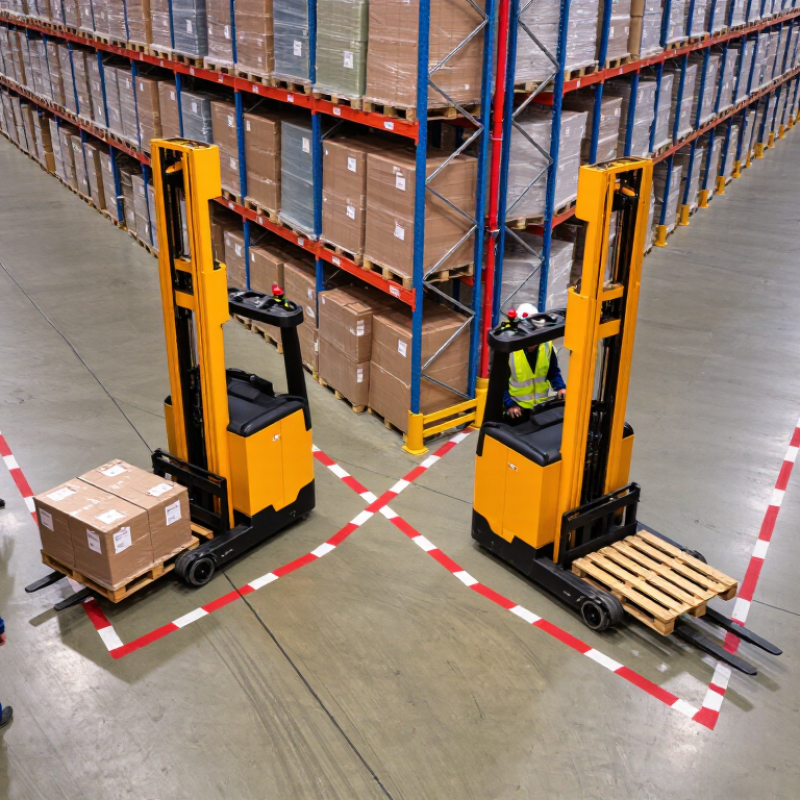
7 Tips for Choosing the Best Automatic Stacker?

What an Automatic Stacker Is and How It Works

An automatic stacker is a powered machine that lifts and places cartons, trays, or pallets into orderly stacks with less manual handling. In a warehouse, an operator or conveyor presents a load, and sensors check its position and height. A controller then directs the lifting and transfer mechanism to the selected level. It sounds simple. Alignment is not.

Depending on its design, a stacker may use forks, rollers, a mast, or a guided carriage. Photoelectric sensors can detect load edges, while safety devices may pause operation when they detect an obstruction. Operators set stack patterns and load limits, then monitor alarms and material flow. A crooked pallet can disrupt the cycle. Real floors are rarely perfect.

MHI and Deloitte’s 2024 Annual Industry Report found strong interest in supply-chain technology: 55% of surveyed professionals planned to increase technology investment. That figure signals interest, not guaranteed savings. An automatic stacker works best when load dimensions, throughput, floor conditions, and handoff points are measured before installation. Record cycle times during a representative shift; peak-hour estimates can mislead. Data is often incomplete.

7 Tips for Choosing the Best Automatic Stacker? - What an Automatic Stacker Is and How It Works

Tip What an Automatic Stacker Is and How It Works What to Evaluate Practical Selection Check
1. Understand the operation An automatic pallet stacker receives, lifts, aligns, and stacks or dispenses pallets using a powered lifting mechanism and sensors or controls. It is commonly integrated with a conveyor or production line. Whether the application needs pallet stacking, pallet dispensing, or both; how pallets enter and leave the unit; and how the stacker communicates with the surrounding line. Map the pallet flow from infeed to outfeed, including where operators load or remove pallet stacks and where jams can be cleared safely.
2. Match the pallet format Pallet dimensions, entry direction, deck-board design, and condition affect how reliably a stacker can pick up and align each pallet. Confirm the full range of pallet sizes and types used. Common formats include 1,200 × 800 mm and 1,200 × 1,000 mm, but local and industry-specific formats vary. Test representative pallets, including worn or slightly damaged examples, and confirm the required orientation and fork-entry direction.
3. Check load and stack limits The lifting system and frame must support the pallet stack and operate within the equipment’s rated limits. Maximum pallet weight, permitted stack height, pallet condition, and the total load handled during each cycle. Limits depend on the specific machine and application. Compare actual pallet weights and required stack heights with the supplier’s rated specifications; do not assume a rating applies to every pallet type.
4. Size for the required throughput A stacker must complete its handling cycle at a pace that suits the line without becoming a production bottleneck. Line rate, pallet arrival pattern, time needed to remove or replenish a stack, and the effect of stops or changeovers. Use measured peak production demand—not only average output—and confirm the quoted cycle rate under the intended pallet and operating conditions.
5. Verify layout and interfaces Conveyors, guards, controls, and access routes all need to fit around the stacker for reliable operation and maintenance. Available floor space, conveyor height and direction, ceiling clearance, electrical supply, control signals, and access for pallet replenishment. Review a layout drawing against site measurements and confirm how the stacker will interface with upstream and downstream equipment.
6. Prioritize safety and access Automatic movement creates potential hazards at lifting points, conveyor openings, and areas where pallets are loaded or removed. Risk assessment, guarding, access doors, emergency stops, safe jam-clearing procedures, and applicable local workplace safety requirements. Ask for the safety design and maintenance procedures, and ensure operators can replenish pallets and clear faults without entering hazardous areas unsafely.
7. Plan for maintenance and reliability Routine inspection and access to wear parts, sensors, and lifting components help keep the equipment available for production. Inspection intervals, spare-parts availability, fault diagnostics, cleaning needs, service access, and expected support response. Review the maintenance schedule and identify who will perform routine checks, keep critical spares, and respond to downtime.

Note: Capacity, cycle rate, stack height, and compatible pallet formats are equipment- and application-specific. Confirm all operating limits with the supplier using the actual pallets and site conditions.

How to Match Stacker Capacity to Your Loads

When matching an automatic stacker to your loads, use the heaviest complete unit—not just the product weight. Include the pallet, wrap, and any load-bearing attachments.

Weigh a real shipment if possible; estimates often miss the extra few kilograms from packaging. Measure it twice.

Next, check load dimensions and load center. A long carton or uneven pallet can shift weight forward, reducing the stacker’s safe capacity.

OSHA’s Powered Industrial Trucks guidance explains that rated capacity depends on load center and lift conditions; its standard, 29 CFR 1910.178(o)(2), requires loads to stay within the truck’s rated capacity.

Check the capacity plate or chart at your required lift height, rather than relying on the headline maximum. The awkward part: a unit that feels manageable at floor level may behave differently on a high rack.

Finally, match the rating to your actual workflow. Note peak load weight, lift height, travel distance, and how often operators move loads each hour.

For example, a 500-kilogram load lifted repeatedly to a high shelf calls for a different assessment than the same load moved briefly at floor level.

Check aisle width and floor condition, too. A small, uneven load can still be awkward.

I would leave a sensible operating margin, then verify it with a loaded trial; that step is easy to skip when schedules are tight. OSHA’s guidance and capacity rules are useful checks, but the equipment’s own rating chart must govern the final selection.

Which Stacker Type Fits Your Workspace and Workflow

Choosing a stacker starts with the space, not the catalogue. Measure the narrowest aisle, doorways, rack openings, and turning points with a loaded pallet in mind. Walkie stackers suit short, low-volume moves and tight routes. Rider models reduce operator walking on longer runs. Straddle stackers handle varied pallet widths, while counterbalanced types avoid front legs beneath the load. Need higher storage? Check lift height and mast clearance, too.

Tip 1: Match the machine to the floor and load. Confirm pallet dimensions, load weight, ramp gradients, floor condition, and charging access. Measure twice. A semi-electric model may suit occasional lifting, while a fully electric unit can support repeated shifts. MHI’s 2024 Annual Industry Report, produced with Deloitte, found 55% of surveyed supply-chain leaders planned to increase technology investment. That trend supports careful automation planning, not buying the most automated option by default.

Tip 2: Walk the workflow before choosing. Track where pallets enter, wait, turn, and leave; then test the proposed route with a representative load. Check visibility, stopping space, and pedestrian crossings. A compact stacker may fit the aisle yet slow replenishment if operators must make repeated extra trips. That detail is easy to miss. Reassess after a trial shift, since a tidy floor plan rarely captures every real-world delay.

7 Tips for Choosing the Best Automatic Stacker

Which stacker type fits your workspace and workflow? Start by checking the aisle space available.

Indicative planning allowances: pedestrian stackers generally suit tighter aisles, while counterbalance forklifts need more room to maneuver. Actual aisle requirements vary with the model, pallet and load dimensions, and turning space; confirm them against the equipment specifications.

How to Compare Controls, Safety Features, and Power Options

7 Tips for Choosing the Best Automatic Stacker?

How to Compare Controls, Safety Features, and Power Options

Tip: Test the controls on your actual floor. Check steering response, lift and lower buttons, emergency stop, and slow-speed maneuvering. Can an operator position a loaded pallet without twisting to see the forks? Small control differences matter in narrow aisles. The U.S. Bureau of Labor Statistics’ 2022 Census of Fatal Occupational Injuries recorded 73 fatal workplace injuries involving forklifts. That figure covers forklifts broadly, not stackers alone, but it underlines why handling equipment deserves careful review.

Tip: Inspect safety features with a real load. Compare rated capacity at the lift height you need, braking, horn, visibility, and protection around moving parts. OSHA’s powered industrial truck standard, 29 CFR 1910.178, requires operator training and evaluation; a safety checklist cannot replace them. Ask for a practical demonstration, not just a brochure. A feature that looks useful on paper may be awkward with gloves or in a cramped aisle.

Tip: Match power to the work pattern. Compare battery runtime, charging time, charger location, and maintenance needs across every shift. Lithium-ion may suit frequent opportunity charging; lead-acid can require planned charging and battery care. Verify these details with the supplier and your duty-cycle data. I’d also check the turning radius with an empty pallet—the quoted specification can feel different on a crowded floor.

How to Evaluate Maintenance Needs and Supplier Support

Before choosing an automatic stacker, ask how routine maintenance fits your actual shifts. Check the service manual for inspection intervals, lubrication points, and parts that require specialist tools. Ask how long common wear parts usually take to replace. A clear answer is more useful than a vague promise of low maintenance. Small details matter. Look for accessible panels, readable fault codes, and a safe way to isolate power during servicing. Compare the recommended maintenance schedule with your operating hours, dust levels, and floor conditions. A machine used in a dusty warehouse may need more frequent cleaning than the brochure suggests. That estimate can be imperfect; verify it with a technician who understands your site.

Supplier support deserves the same scrutiny as the equipment. Ask who handles breakdown calls, what hours support is available, and whether technicians can visit your location. Request typical response times and a sample parts list for routine repairs. Ask for proof, such as a written service plan or technician training records. Clarify which costs fall outside the warranty, including travel and labor. If possible, speak with a customer operating similar equipment and ask about actual repair delays. A polished demonstration does not reveal how support feels during a busy shift. I would not choose on response-time promises alone; confirm how those times are measured, and consider keeping critical spare parts on site.

Copyright 2025 Fluidra S.A. | Created by BCM Marketing Agencia Privacy Policy Legal note | Cookie policy |

Technical cookies are strictly necessary for our website to work and you can navigate through it. These types of cookies are those that, for example, allow us to identify you, give you access to certain restricted parts of the page if necessary, or remember different options or services already selected by you, such as your privacy preferences. Therefore, they are activated by default, your authorization not being necessary in this regard. Through the configuration of your browser, you can block or alert the presence of this type of cookies, although such blocking will affect the proper functioning of the different functionalities of our website.


The analysis cookies allow us to study the navigation of the users of our website in general (for example, which sections of the page are the most visited, which services are used most and if they work correctly, etc.). From the statistical information on navigation on our website, we can improve both the operation of the page itself and the different services it offers. Therefore, these cookies do not have an advertising purpose, but only serve to make our website work better, adapting to our users in general. By activating them you will contribute to this continuous improvement. You can enable or disable these cookies by checking the corresponding box, being disabled by default.


Functionality cookies allow us to remember your preferences, to personalize certain characteristics and general options of our website, every time you access it (for example, the language in which the information is presented to you, the sections marked as favorites, your browser type, etc.) Therefore, this type of cookies does not have an advertising purpose, but by activating them you will improve the functionality of the website (for example, adapting to your type of browser) and the customization of it based on your preferences (for example, by presenting the information in the language that you have chosen in previous occasions), which will contribute to the ease, usability and comfort of our page during your navigation. You can enable or disable these cookies by checking the corresponding box, being disabled by default.


Advertising cookies allow us to manage the advertising spaces included in our website based on criteria such as the content shown or the frequency in which the ads are displayed. For example, if you have been shown the same ad several times on our website, and you have not shown a personal interest by clicking on it, it will not appear again. In summary, by activating this type of cookies, the advertising shown on our website will be more useful and diverse, and less repetitive. You can enable or disable these cookies by checking the corresponding box, being disabled by default.


Behavioral advertising cookies allow us to obtain information based on the observation of your browsing habits and behaviors on the web, in order to show you advertising content that best suits your personal tastes and interests. To understand it in a very simple way, we will give you a fictitious example: if your last searches on the web were related to suspense literature, we would show you advertising about suspense books. Therefore, activating this type of cookies, the advertising that we show you on our website will not be generic, but will be oriented to your searches, tastes and interests, therefore adjusting exclusively to you. You can enable or disable these cookies by checking the corresponding box, being disabled by default.
To understand it in a very simple way, we will give you a fictitious example: if your last searches on the web were related to suspense literature, we would show you advertising about suspense books. Therefore, activating this type of cookies, the advertising that we show you on our website will not be generic, but will be oriented to your searches, tastes and interests, therefore adjusting exclusively to you. You can enable or disable these cookies by checking the corresponding box, being disabled by default.

SAVE

We use our own and third-party cookies to ensure the proper functioning of the website and to analyse our services, improve your experience on our website and show you advertisements related to your interests according to profiling based on your browsing habits (e.g. websites visited). You can accept all cookies by clicking "ACCEPT" or set or reject them by clicking here. If you would like to know more about the use of cookies, please see our COOKIE POLICY.


ACCEPT ALL
Reject no essentials


