
7 Tips for Choosing a High Speed Packaging Machine
FLUID HANDLING EXPERTS

Blog, all our news

7 Tips for Choosing a High Speed Packaging Machine

Choosing a high speed packaging machine is not simply a race for the highest bags-per-minute rating. The right decision depends on product behavior, package format, sealing accuracy, changeover time, operator safety, and long-term service support. A machine that runs quickly but creates frequent film jams can quietly reduce production capacity. That detail is easy to miss.

Jorge Izquierdo, former Vice President of Market Development at PMMI, has emphasized, “Automation must improve the entire operation, not just one machine.” This principle should guide every evaluation. Buyers need to inspect real production samples, measure seal quality, and test the machine with actual film, powder, granules, or fragile products. A showroom demonstration is useful, but it is not the whole story.

This guide presents seven practical tips for selecting a high speed packaging machine with greater confidence. It examines output requirements, servo control, format flexibility, sanitation, energy use, maintenance access, and total ownership cost. Pay attention to the small details: a tool-free film change, a clear error message, or a reachable sealing jaw can save hours each week. Do not trust impressive specifications alone. Ask for verified performance data and references from comparable factories. Some recommendations may still require reconsideration, because every product line behaves differently. The fastest machine is not always the most productive choice. Reliability matters more.
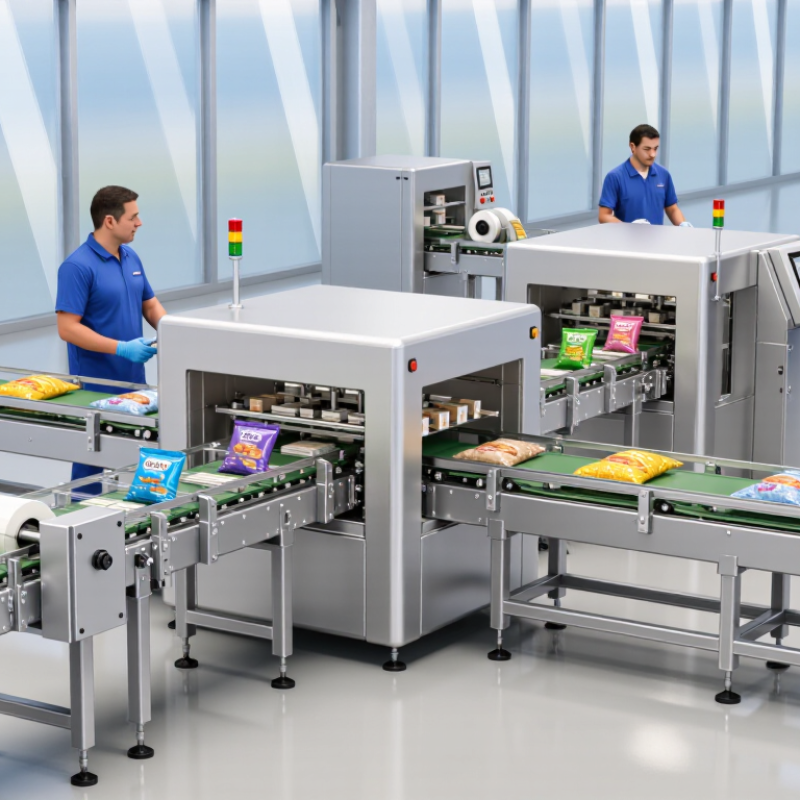
7 Tips for Choosing a High Speed Packaging Machine

Define Product, Package, and Production Requirements

7 Tips for Choosing a High Speed Packaging Machine

Define Product, Package, and Production Requirements

Tip 1: Define the product before chasing speed. Record weight, shape, viscosity, temperature, fragility, and surface moisture. A fast machine may fail with sticky sauce or uneven granules. Measure the complete SKU mix, not one perfect sample. In my experience, real products behave less politely during long shifts.

The International Federation of Robotics reported 541,302 industrial robot installations worldwide in 2023. This growth reflects stronger automation demand, but automation still needs accurate product data.

The U.S. Census Bureau reported that e-commerce represented 15.4% of total U.S. retail sales in 2023. That figure makes package durability and consistent presentation more important.

Tip 2: Describe the package in measurable terms. Specify film thickness, seal width, carton dimensions, pouch stiffness, and acceptable leak rates. Test recycled or lightweight materials before approving a machine. Packaging changes can affect sealing temperature and machine stability. Do not trust a sample run alone.

Tip 3: Translate production goals into operating conditions. State target output, shifts per day, changeover frequency, sanitation time, labor availability, utilities, and floor space. Ask for sustained speed, not only the maximum cycle rate. Include planned growth and seasonal demand.

A useful calculation is required output divided by effective operating time, including stoppages.

The Packaging Machinery Manufacturers Institute highlights integration, flexibility, and labor efficiency as major machinery considerations. Still, every facility has different constraints. A slightly slower machine may deliver better uptime and fewer rejected packs.

Match Machine Speed With Line Capacity and Product Characteristics

A high-speed packaging machine should match the whole line, not just its brochure rating. PMMI’s 2023 State of the Industry report valued U.S. packaging machinery shipments at about $10.3 billion in 2022. That growth reflects automation demand, but speed alone does not create productivity. Measure the filler, conveyor, labeling, inspection, and case-packing rates before selecting equipment. The slowest station sets the real ceiling.

Check product behavior under pressure. Powder may bridge. Sticky sauces can smear seals. Fragile snacks may break during acceleration. Test the actual product, film, container, and closure at production temperature. Ask for sustained output, not a short peak-speed demonstration. A ten-minute trial can hide an hour of cleaning and adjustment. It happens.

Calculate usable capacity with changeovers, rejects, micro-stops, and sanitation included. An 80% effective rate may outperform a machine rated 30% faster. The OEE Institute commonly identifies 85% OEE as a world-class benchmark, though many plants should treat it as an aspiration, not a promise. Confirm the machine’s speed range, recipe controls, and recovery time after jams. Match sensors and control logic to your line. Leave room for future demand, but avoid buying unused capacity. IFR’s World Robotics 2024 reported 541,302 industrial robots installed worldwide in 2023, showing how quickly automated lines are expanding. Still, faster equipment can magnify poor upstream planning. Run a full-line acceptance test with real operators, real materials, and realistic product variation.

Evaluate Filling Accuracy, Changeover Time, and Operational Flexibility

Choosing a high-speed packaging machine starts with measurements, not impressive cycle claims. Filling accuracy protects product cost, package consistency, and customer trust. During a factory trial, weigh at least thirty consecutive fills from each head. Record the average, variation, and rejected units. A fast machine that spills powder around the seal is not truly efficient. Ask whether accuracy changes near the hopper’s minimum level. That detail often exposes weak control logic.

Changeover time should be measured from the final good pack to the first approved pack. Include cleaning, tooling removal, recipe selection, calibration, and quality checks. Use a stopwatch, then repeat the test with a different operator. My experience is that demonstrations are usually cleaner than production reality. The floor is noisier. Tools go missing. A well-designed machine uses clear settings, accessible parts, and guided adjustments. Still, some changeovers depend too heavily on one experienced technician. That is a risk worth recording.

Operational flexibility matters when products, films, or pack sizes change. Check the usable speed range, feeder compatibility, seal-jaw adjustment, and control access. Test small batches, not only the longest production run. A machine may perform beautifully at one speed and struggle during careful starts. Ask operators to perform a realistic changeover without engineering assistance. Document every pause, adjustment, and manual intervention. Reliable decisions come from repeatable evidence, not a polished showroom cycle.

7 Tips for Choosing a High-Speed Packaging Machine

Evaluate filling accuracy, changeover time, throughput, and operational flexibility before selecting equipment.

The ranges shown are representative preliminary RFQ benchmarks commonly used for high-speed packaging evaluations: filling deviation of 0.2–0.5%, changeover time of 15–30 minutes, throughput of 60–120 packs per minute, and support for 3–8 package formats. Actual results depend on product characteristics, package size, machine configuration, and factory acceptance testing.

Check Automation, Safety Features, Hygiene, and Maintenance Access

7 Tips for Choosing a High Speed Packaging Machine

A high-speed packaging machine should move quickly, but speed alone rarely protects output. Start with automation that matches your operators and product changes. Servo controls, recipe storage, and automatic format adjustment can reduce manual errors. PMMI’s 2023 report on packaging automation identifies labor shortages, faster changeovers, and better data collection as major investment drivers. The machine should record speed, stoppages, rejects, and alarm history. Useful data matters.

Safety features must work during real production, not only during audits. Guard interlocks, emergency stops, light curtains, and safe access points deserve practical testing. The U.S. Bureau of Labor Statistics reported 5,283 fatal work injuries in 2023, reinforcing the importance of risk reduction across industrial workplaces. Operators should reach controls without crossing moving parts. Some interfaces still make this harder than necessary.

Hygiene and maintenance access often decide long-term performance. Follow cleanable design principles reflected in the FDA Food Code 2022. Choose sloped surfaces, sealed frames, tool-less panels, and drainage without hidden corners. Plant Engineering’s 2023 Maintenance Study reported that reactive maintenance represented about 42% of maintenance activity. That number should encourage better planning. Remote diagnostics help, but teams may still ignore alarms. Measure access time, cleaning time, and changeover time during trials. A beautiful machine can remain inconvenient.

Compare Total Ownership Costs, Supplier Support, and Future Scalability

A high-speed packaging machine should be judged by total ownership cost, not its purchase price. PMMI reported that U.S. packaging machinery shipments reached approximately $10.2 billion in 2023. That investment reflects strong automation demand, but output alone can mislead. Calculate energy, film waste, changeover labor, maintenance, spare parts, software updates, and planned downtime. The U.S. Department of Energy notes that motor-driven systems can represent more than 70% of industrial electricity use. Efficient motors and controlled acceleration may therefore reduce operating costs. Ask for measured energy data at your target speed. Test it with your product, not a perfect sample.

Supplier support is equally important. Request response-time commitments, remote diagnostics, technician coverage, training hours, and spare-parts availability. A machine stopping at 2 a.m. does not care about a sales presentation. Review service records from comparable installations. Also inspect the control cabinet and changeover points yourself. Small access problems become expensive after thousands of cycles. I have seen teams overvalue maximum speed and undervalue recovery time. That choice deserves criticism.

Scalability requires open communication protocols, modular feeding systems, recipe management, and space for future inspection equipment. A 2024 industry outlook from PMMI continues to identify labor pressure and automation as major investment drivers. Choose a platform that can add stations without replacing the entire line. Compare five-year cost scenarios at 70%, 85%, and peak utilization. Include product changes, new pack formats, and additional shifts. The cheapest quote may not stay cheap. Ask harder questions.

Copyright 2025 Fluidra S.A. | Created by BCM Marketing Agencia Privacy Policy Legal note | Cookie policy |

Technical cookies are strictly necessary for our website to work and you can navigate through it. These types of cookies are those that, for example, allow us to identify you, give you access to certain restricted parts of the page if necessary, or remember different options or services already selected by you, such as your privacy preferences. Therefore, they are activated by default, your authorization not being necessary in this regard. Through the configuration of your browser, you can block or alert the presence of this type of cookies, although such blocking will affect the proper functioning of the different functionalities of our website.


The analysis cookies allow us to study the navigation of the users of our website in general (for example, which sections of the page are the most visited, which services are used most and if they work correctly, etc.). From the statistical information on navigation on our website, we can improve both the operation of the page itself and the different services it offers. Therefore, these cookies do not have an advertising purpose, but only serve to make our website work better, adapting to our users in general. By activating them you will contribute to this continuous improvement. You can enable or disable these cookies by checking the corresponding box, being disabled by default.


Functionality cookies allow us to remember your preferences, to personalize certain characteristics and general options of our website, every time you access it (for example, the language in which the information is presented to you, the sections marked as favorites, your browser type, etc.) Therefore, this type of cookies does not have an advertising purpose, but by activating them you will improve the functionality of the website (for example, adapting to your type of browser) and the customization of it based on your preferences (for example, by presenting the information in the language that you have chosen in previous occasions), which will contribute to the ease, usability and comfort of our page during your navigation. You can enable or disable these cookies by checking the corresponding box, being disabled by default.


Advertising cookies allow us to manage the advertising spaces included in our website based on criteria such as the content shown or the frequency in which the ads are displayed. For example, if you have been shown the same ad several times on our website, and you have not shown a personal interest by clicking on it, it will not appear again. In summary, by activating this type of cookies, the advertising shown on our website will be more useful and diverse, and less repetitive. You can enable or disable these cookies by checking the corresponding box, being disabled by default.


Behavioral advertising cookies allow us to obtain information based on the observation of your browsing habits and behaviors on the web, in order to show you advertising content that best suits your personal tastes and interests. To understand it in a very simple way, we will give you a fictitious example: if your last searches on the web were related to suspense literature, we would show you advertising about suspense books. Therefore, activating this type of cookies, the advertising that we show you on our website will not be generic, but will be oriented to your searches, tastes and interests, therefore adjusting exclusively to you. You can enable or disable these cookies by checking the corresponding box, being disabled by default.
To understand it in a very simple way, we will give you a fictitious example: if your last searches on the web were related to suspense literature, we would show you advertising about suspense books. Therefore, activating this type of cookies, the advertising that we show you on our website will not be generic, but will be oriented to your searches, tastes and interests, therefore adjusting exclusively to you. You can enable or disable these cookies by checking the corresponding box, being disabled by default.

SAVE

We use our own and third-party cookies to ensure the proper functioning of the website and to analyse our services, improve your experience on our website and show you advertisements related to your interests according to profiling based on your browsing habits (e.g. websites visited). You can accept all cookies by clicking "ACCEPT" or set or reject them by clicking here. If you would like to know more about the use of cookies, please see our COOKIE POLICY.


ACCEPT ALL
Reject no essentials


