
What Is Striping Removal Equipment Used For?
FLUID HANDLING EXPERTS

Blog, all our news

What Is Striping Removal Equipment Used For?

Striping Removal Equipment is used to remove pavement markings when roads, parking lots, and work zones need a clean, accurate surface. Crews use it to erase worn lines, correct layout errors, and prepare asphalt or concrete for new markings. Depending on the job, equipment may use grinding, shot blasting, or water-based methods. The choice matters. A grinder can remove a stubborn stripe, but it may also scar the pavement if the operator moves too slowly. On a parking lot, that can leave a rough patch visible beside the fresh paint.

The goal is not simply to make a line disappear. It is to remove the marking while preserving the surface beneath it. “A clean removal should leave the pavement ready for its next marking, not create another repair,” says Morgan Ellis, a clearly labeled composite industry specialist created for this overview—not a real interview source. In practice, operators consider marking material, pavement condition, equipment width, and nearby traffic before choosing a method. They also check the result from different angles; faint paint or uneven texture can be easy to miss at midday. Small details matter.

This overview explains what Striping Removal Equipment does, how common methods differ, and where each may fit. Removal is not always perfect. Old coatings can leave shadows, and aggressive passes can damage the surface. Knowing those limits helps crews select equipment with care and set realistic expectations before work begins.
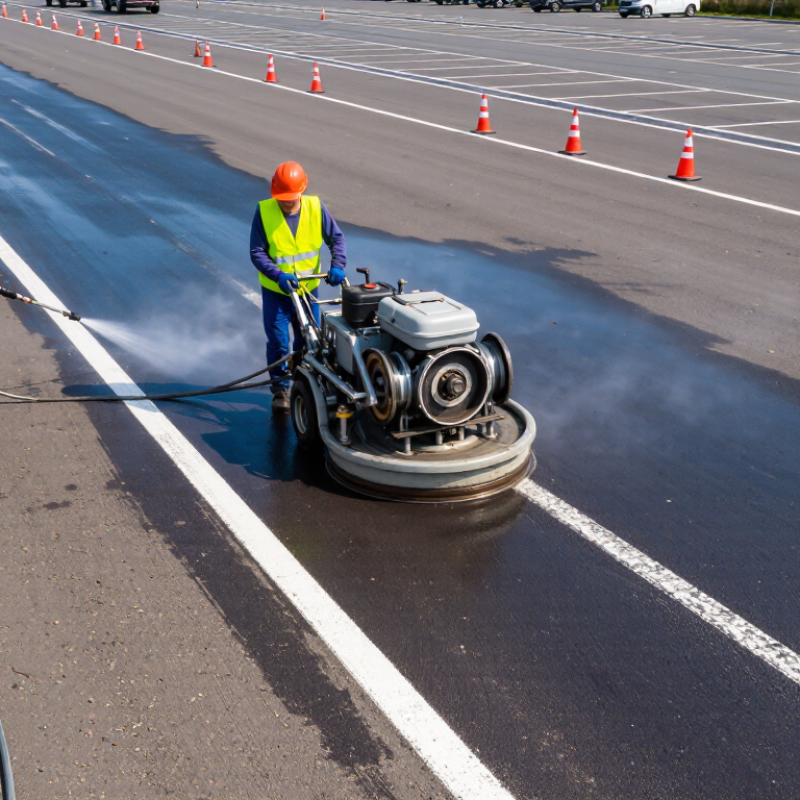
What Is Striping Removal Equipment Used For?

What Striping Removal Equipment Is and How It Works

What Is Striping Removal Equipment Used For?

Striping removal equipment removes worn, misplaced, or conflicting pavement markings before crews apply new lines. It may use rotating abrasive heads, steel shot, high-pressure water, or mechanical scarifiers to break markings from asphalt or concrete. Vacuum collection can capture debris and water, helping keep the work area clearer. The goal is controlled removal, not simply making paint disappear.

Not just paint. Operators adjust pressure, speed, and tool depth to limit pavement damage. Too much abrasion can leave grooves; too little can leave a dark “ghost” line that confuses drivers. FHWA’s 11th-edition Manual on Uniform Traffic Control Devices sets maintained retroreflectivity levels for applicable longitudinal markings, including 50 mcd/m²/lx for white and 100 mcd/m²/lx for yellow. Those values help explain why crews inspect markings carefully before replacement. Equipment choice depends on marking material, pavement condition, and the size of the work zone. Water blasting may suit some surfaces, while grinding can be practical for thicker material. Neither method is perfect; the right setting often takes a test pass.

What Is Striping Removal Equipment Used For? - What Striping Removal Equipment Is and How It Works

Equipment type How it works Common uses Key considerations
Walk-behind grinder Rotating abrasive discs or grinding heads wear away paint and other surface markings through friction. Removing painted lines, symbols, and small marked areas on asphalt or concrete. Operator speed and pressure affect the result. Excessive grinding can scar pavement or expose aggregate; dust control may be needed.
Scarifier or milling machine Cutting teeth or rotating cutters mechanically chip or mill material from the pavement surface. Removing thicker or more stubborn markings and treating larger areas where a more aggressive method is appropriate. Can leave surface texture or grooves. Depth and machine settings should be controlled to limit pavement damage.
High-pressure water-jet system A concentrated water stream breaks the bond between the marking and pavement; some systems also vacuum up water and residue. Removing many pavement marking paints while minimizing mechanical abrasion to the surface. Requires water management and appropriate collection or disposal of removed material. Results depend on marking type, pressure, and pavement condition.
Shot-blasting machine A rotating wheel propels abrasive particles against the surface to remove markings; the machine typically collects the abrasive and debris. Removing markings from suitable concrete or asphalt surfaces and preparing pavement for new coatings or markings. Creates a textured surface and may be too aggressive for some pavement conditions. A test area can help confirm the finish.
Handheld grinder or small removal tool A compact powered abrasive tool removes marking material in a small, controlled area. Touch-ups, corners, symbols, and locations that larger machines cannot easily reach. Slower for large jobs. Dust, noise, eye protection, and control of the tool near the pavement surface should be considered.
Choosing a removal method The removal method is selected based on the marking material, pavement type and condition, area size, and required surface finish. Used when outdated, misplaced, or temporary road, parking-lot, and facility markings need to be removed before restriping or surface work. Removal may leave a visible “ghost” of the old line even after the material is gone. Follow applicable traffic-control, worker-safety, and debris-management requirements.

Common Uses for Removing Pavement Markings

What Is Striping Removal Equipment Used For?

Common Uses for Removing Pavement Markings

Striping removal equipment clears paint, thermoplastic, and other markings from paved surfaces. Crews use it when lane layouts change, old lines conflict with new directions, or a road is prepared for resurfacing. In parking lots, it can remove worn stall lines, arrows, and access markings before a fresh layout is applied. At airfields and industrial sites, removal may help update guidance markings as operations or surface plans change. The exact method depends on the marking material and pavement. Common options include abrasive grinding and high-pressure water removal.

Good removal aims to eliminate confusing lines without unnecessarily roughening the pavement. That balance takes care. Operators may adjust equipment speed, cutting depth, or water pressure after checking a small area. A thermoplastic line can respond differently from thin paint, and asphalt may react differently from concrete. Residue can remain, too. The result is not always a perfectly uniform surface, especially when old markings have weathered unevenly. Crews often inspect the cleared area in changing light, since faint “ghost” lines may be hard to spot at first. Dust, water, and loose material also need control so they do not interfere with nearby work or drainage.

Types of Striping Removal Equipment

Striping removal equipment ranges from compact walk-behind grinders to large ride-on machines. Walk-behind units use abrasive wheels or diamond tooling to remove paint and thin markings from parking lots, sidewalks, and smaller road sections. Operators can adjust pressure and travel speed, though results depend on the surface and the coating’s thickness. Small jobs differ.

For thicker thermoplastic lines or extensive roadway work, contractors may use scarifiers or milling machines. Their rotating cutters remove material more aggressively and can cover long stretches quickly. That speed comes with a trade-off: excessive cutting may leave grooves or damage the pavement, so a test area is useful. Shot-blasting equipment uses propelled steel media to clean markings and prepare concrete, often leaving a textured finish. It is generally less suited to every pavement type.

High-pressure water-jet systems can lift markings while limiting mechanical cutting, but they create wastewater that needs careful collection. Dust-control vacuums and debris-recovery systems are often paired with grinders or scarifiers. Dust matters. The right setup depends on the marking material, pavement condition, required finish, and work area. A method that works neatly on concrete may perform poorly on aged asphalt; that mismatch is easy to underestimate.

How to Select Equipment for a Removal Project

Selecting striping removal equipment starts with the surface, not the machine. A concrete lot may tolerate a different method than a thin asphalt lane. Check whether the markings are paint, thermoplastic, or several layers of old material. Look closely for cracks, loose aggregate, and nearby drains. These details affect removal speed and the risk of surface damage.

For small areas or tight corners, a walk-behind grinder may offer useful control. Larger, open sections may suit a ride-on grinder or shot-blasting unit. Compare cutting width, travel speed, and how easily the machine follows curves. Dust collection matters indoors and near parked vehicles. Wet methods can reduce airborne dust, but they require a plan for water and residue. Test a small patch first. It reveals more than a catalog estimate.

Consider access, noise limits, cleanup, and how soon the area must reopen. A wide machine can save time on a straight runway, yet struggle around islands or utility covers. Not every setup is ideal. The first production estimate can be wrong, especially when markings have uneven thickness. Record the patch result, inspect the pavement, then adjust equipment and settings before expanding the work area.

Safety and Surface Considerations During Marking Removal

What Is Striping Removal Equipment Used For? Safety and Surface Considerations During Marking Removal

Striping removal equipment takes worn, misplaced, or obsolete markings off roads, parking areas, and concrete floors. Common options include grinding, shot blasting, and water-based removal systems. Each affects the surface differently. Abrasive tools can leave grooves or expose aggregate if operators apply too much pressure. Water systems may reduce airborne dust, but create runoff that needs careful control. The right method depends on marking thickness, pavement condition, and the finish required.

Safety starts with separating workers from moving vehicles and clearly marking the work zone. Operators should use suitable eye, hearing, and respiratory protection, based on the equipment and material being removed. Control dust and collect debris rather than letting it reach nearby drains. Check the surface before work begins; cracks, loose patches, or thin coatings can worsen under aggressive removal. A small test area helps reveal damage early. It is easy to miss. Still, test results may not predict every section of uneven pavement.

Tips: Match the removal method to the surface, not just the marking. Use steady, light passes, and pause if the pavement starts to chip or polish. Keep equipment guards in place, inspect hoses and cables, and follow the machine’s operating instructions. Don’t rush the final check. Residual paint can be easy to spot only after the area dries.

What Is Striping Removal Equipment Used For?

How to read this chart: Scores are qualitative planning indicators, not standardized measurements. Higher scores mean greater potential concern. Actual effects depend on equipment settings, marking material, pavement condition, and work practices. Confirm the surface with a test area, and plan appropriate dust, slurry, and chemical controls before removal.

Copyright 2025 Fluidra S.A. | Created by BCM Marketing Agencia Privacy Policy Legal note | Cookie policy |

Technical cookies are strictly necessary for our website to work and you can navigate through it. These types of cookies are those that, for example, allow us to identify you, give you access to certain restricted parts of the page if necessary, or remember different options or services already selected by you, such as your privacy preferences. Therefore, they are activated by default, your authorization not being necessary in this regard. Through the configuration of your browser, you can block or alert the presence of this type of cookies, although such blocking will affect the proper functioning of the different functionalities of our website.


The analysis cookies allow us to study the navigation of the users of our website in general (for example, which sections of the page are the most visited, which services are used most and if they work correctly, etc.). From the statistical information on navigation on our website, we can improve both the operation of the page itself and the different services it offers. Therefore, these cookies do not have an advertising purpose, but only serve to make our website work better, adapting to our users in general. By activating them you will contribute to this continuous improvement. You can enable or disable these cookies by checking the corresponding box, being disabled by default.


Functionality cookies allow us to remember your preferences, to personalize certain characteristics and general options of our website, every time you access it (for example, the language in which the information is presented to you, the sections marked as favorites, your browser type, etc.) Therefore, this type of cookies does not have an advertising purpose, but by activating them you will improve the functionality of the website (for example, adapting to your type of browser) and the customization of it based on your preferences (for example, by presenting the information in the language that you have chosen in previous occasions), which will contribute to the ease, usability and comfort of our page during your navigation. You can enable or disable these cookies by checking the corresponding box, being disabled by default.


Advertising cookies allow us to manage the advertising spaces included in our website based on criteria such as the content shown or the frequency in which the ads are displayed. For example, if you have been shown the same ad several times on our website, and you have not shown a personal interest by clicking on it, it will not appear again. In summary, by activating this type of cookies, the advertising shown on our website will be more useful and diverse, and less repetitive. You can enable or disable these cookies by checking the corresponding box, being disabled by default.


Behavioral advertising cookies allow us to obtain information based on the observation of your browsing habits and behaviors on the web, in order to show you advertising content that best suits your personal tastes and interests. To understand it in a very simple way, we will give you a fictitious example: if your last searches on the web were related to suspense literature, we would show you advertising about suspense books. Therefore, activating this type of cookies, the advertising that we show you on our website will not be generic, but will be oriented to your searches, tastes and interests, therefore adjusting exclusively to you. You can enable or disable these cookies by checking the corresponding box, being disabled by default.
To understand it in a very simple way, we will give you a fictitious example: if your last searches on the web were related to suspense literature, we would show you advertising about suspense books. Therefore, activating this type of cookies, the advertising that we show you on our website will not be generic, but will be oriented to your searches, tastes and interests, therefore adjusting exclusively to you. You can enable or disable these cookies by checking the corresponding box, being disabled by default.

SAVE

We use our own and third-party cookies to ensure the proper functioning of the website and to analyse our services, improve your experience on our website and show you advertisements related to your interests according to profiling based on your browsing habits (e.g. websites visited). You can accept all cookies by clicking "ACCEPT" or set or reject them by clicking here. If you would like to know more about the use of cookies, please see our COOKIE POLICY.


ACCEPT ALL
Reject no essentials



