
How to Source Quality Metal Parts in 2026?
FLUID HANDLING EXPERTS

Blog, all our news

How to Source Quality Metal Parts in 2026?

Sourcing quality Metal Parts in 2026 will require more than comparing unit prices. Buyers must examine material traceability, process capability, inspection records, delivery resilience, and total landed cost. A polished sample can hide inconsistent hardness, poor thread accuracy, or unstable coating thickness. Small defects become expensive when they reach assembly.

Deloitte’s 2023 Smart Manufacturing and Operations Survey found that 86% of manufacturers expect smart manufacturing to become a primary competitiveness driver within three years. That expectation is already influencing supplier selection. Digital inspection reports, machine monitoring, automated vision systems, and secure production data can make quality easier to verify. They do not make it flawless. Human review still matters. The World Economic Forum’s Future of Jobs Report 2025 also highlights rapid technology and skill changes through 2030, reminding procurement teams to assess a supplier’s technical capability, not just its equipment list.

Harry Moser, founder of the Reshoring Initiative, states: “The key is to look at total cost, not just piece price.” That principle deserves practical testing. Compare scrap rates, tooling ownership, freight exposure, corrective-action speed, and warranty risk. Ask for recent certificates, sample inspection plans, and evidence from comparable Metal Parts projects. Visit the factory when risk justifies the cost. Check how operators handle a rejected batch at 2:00 a.m.

No checklist is perfect. Supplier claims can still be incomplete, and digital records can still contain errors. The strongest sourcing decision combines audited evidence, engineering judgment, and a willingness to question attractive promises.
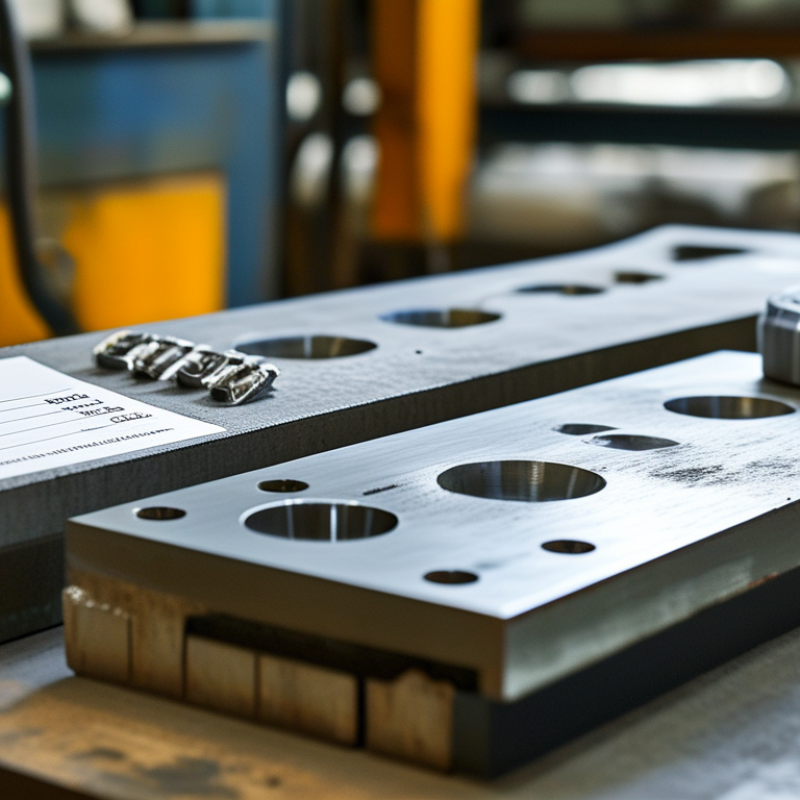
How to Source Quality Metal Parts in 2026?

Define Part Requirements, Performance Standards, and Production Volumes

How to Source Quality Metal Parts in 2026?

Define Part Requirements, Performance Standards, and Production Volumes

Sourcing quality metal parts in 2026 starts with a precise definition, not a supplier shortlist. Before requesting quotes, document the alloy or grade, dimensions, tolerances, surface finish, heat treatment, and inspection points. Add a drawing revision, three-dimensional model, and photographs of critical features. If a hole must accept a specific fastener, state its fit and gauge method. Vague terms like “high strength” create expensive interpretation gaps.

In one project, our team focused on price before clarifying flatness. The first batch met the drawing but failed assembly. That mistake still shapes our reviews.

Performance standards should connect material data with real service conditions. Specify tensile strength, hardness, corrosion exposure, operating temperature, fatigue expectations, and allowable variation. Ask for material certificates, dimensional reports, coating thickness results, and traceable lot records. A recognized test method matters. “Tested” alone proves little. For safety-critical or heavily loaded parts, require sample approval and a documented first-article inspection.

Small pilot runs help. They expose burrs, distortion, tool marks, and packaging weaknesses while changes remain affordable.

Define production volume by phase, not one annual estimate. Separate prototype quantity, pilot demand, monthly consumption, and peak orders. This helps manufacturers choose machining, forming, casting, or fabrication methods realistically. Include forecast flexibility and acceptable lead-time variation. A low-volume part may need different tooling economics than 50,000 repeat pieces. Be honest about uncertainty. False precision distorts quotes and capacity plans. Recheck requirements after field testing; the original specification may be technically correct yet operationally wrong.

Evaluate Materials, Finishes, Tolerances, and Compliance Needs

Quality metal sourcing starts with a material decision, not a factory quote. Match the alloy to the load, temperature, corrosion exposure, and forming method. Aluminum may reduce weight, while stainless steel can protect a damp assembly. Ask for heat numbers, mill certificates, and traceability records before approval. Paperwork matters. Still, certificates do not replace testing. Request hardness checks, coating thickness readings, or corrosion testing when the application requires them.

Finishes should support function, not merely appearance. A thin coating may fail near sharp edges, threads, or constant contact points. Specify the finish, coverage, color range, surface roughness, and inspection method. A practical drawing should identify cosmetic zones clearly. It should also define acceptable scratches, dents, and stains. Small details create disputes. One overlooked masking area can leave bare metal inside a mounting hole.

Tolerances need functional reasoning. Marking ±0.01 mm everywhere can increase cost without improving performance. Define critical dimensions, datums, and tolerance stack-ups around the assembly. Inspect those features with calibrated gauges or documented measurement equipment. Leave noncritical surfaces looser. The uncomfortable part is that even a careful process can miss a burr or distortion after finishing. Build sample checks around real failure points, not only easy measurements. For compliance, confirm applicable market requirements, restricted-substance declarations, material origin records, and change-control procedures. Never accept a copied declaration without checking its revision and supporting evidence. Good sourcing is not flawless. It is reviewable, testable, and willing to question its own assumptions.

How to Source Quality Metal Parts in 2026?

Typical dimensional tolerance capability varies by manufacturing process. Use these values as an initial sourcing benchmark, then confirm the supplier’s inspection method, material certification, surface-finish requirements, and applicable compliance documentation before placing an order.

Representative industry ranges shown as typical maximum deviation from nominal dimensions; actual results depend on part size, geometry, material, tooling, and supplier process control.

Identify and Compare Qualified Metal Parts Suppliers

How to Source Quality Metal Parts in 2026?

Identify and Compare Qualified Metal Parts Suppliers

A qualified supplier should prove capability, not only offer a low quotation. Request current ISO 9001 certification, process maps, inspection plans, and material traceability records. The ISO Survey 2023 reported 1,265,216 ISO 9001 certificates worldwide. Certification helps, but it does not guarantee consistent metal parts. Review the supplier’s recent audit findings, corrective actions, and equipment calibration history. Ask for samples from normal production conditions, not specially prepared pieces.

Compare suppliers with a practical scorecard. Measure dimensional capability, surface finish, delivery reliability, communication speed, and total landed cost. For critical dimensions, request Cpk data and inspect the measurement method. A supplier reporting perfect results deserves careful questions. Real production has variation. World Bank’s Logistics Performance Index 2023 emphasizes reliability, tracking, and delivery timeliness as key supply-chain factors. Check these points with shipment records, not promises. I have seen attractive quotes fail after tooling changes, unclear tolerances, or weak packaging. The mistake is easy to repeat.

Tips: Start with a small pilot order. Confirm drawings, tolerances, packaging, and acceptance criteria in writing. Visit the facility when risk justifies the expense. Compare at least three suppliers using identical technical requirements. Keep one backup source, but do not assume it is truly qualified until it passes the same tests. Supplier reviews should continue after approval. A good first batch can still hide future process drift.

Verify Manufacturing Capability Through Samples and Quality Audits

Sourcing quality metal parts in 2026 requires evidence, not polished promises. Before approving a supplier, request samples from the same machines, materials, and processes used for production. Inspect critical dimensions with calibrated gauges or a coordinate measuring machine. Ask for material certificates, surface-finish readings, and a dimensional inspection report. One attractive sample proves little.

A practical sample review should include several production pieces, not one hand-finished part. Check burrs around drilled holes, thread engagement, flatness, coating uniformity, and edge damage after packaging. Compare results with the drawing’s tolerances. Record every deviation. ASQ has reported that poor quality can consume 15% to 20% of sales in many organizations, making early verification financially important. Small defects become expensive during large-volume production.

Quality audits should examine the factory floor, not only the certification folder. Review calibration records, nonconformance logs, operator training, process controls, and lot traceability. ISO’s latest Survey continues to show more than one million ISO 9001 certificates worldwide, but certification alone cannot confirm capability for your part. Ask the auditor to follow one batch from raw material receipt to final shipment. That trail often exposes weak handoffs. I have seen suppliers pass a document review while lacking stable control of drilling depth. The lesson is uncomfortable: audit checklists can create false confidence. Use witnessed production runs, repeat sampling, and corrective-action verification before signing a long-term order.

Compare Total Costs, Lead Times, Risks, and Long-Term Support

A low unit price rarely reveals the real cost of metal parts.
In sourcing reviews, I compare machining, inspection, packaging, freight, duties, rework, and payment terms. A supplier quoting 15% less may still cost more after two rejected batches. The World Bank’s Logistics Performance Index 2023 links shipment visibility and customs efficiency with stronger supply-chain reliability. Ask for measurable evidence: material certificates, calibration records, first-article results, and process capability data. Not just promises.

Lead time deserves equal attention.
UNCTAD’s Review of Maritime Transport 2024 states that shipping carries over 80% of global merchandise trade by volume. Port disruption can therefore erase a carefully planned schedule. For critical parts, request a production calendar, safety-stock proposal, and a second qualified process. Audit the supplier’s capacity before approving the drawing. I once treated quoted capacity as actual capacity. That shortcut looked efficient, but a shared machine later delayed an urgent order. The lesson is uncomfortable: price comparisons need operational proof.

Long-term support should include engineering-change response, replacement tooling, traceability, and documented corrective actions.
The 2024 Manufacturing Industry Outlook reports continuing pressure from labor shortages and supply-chain uncertainty, making technical continuity more valuable. Review the supplier after delivery, not only before purchase. Track defect rates, response hours, corrective-action closure, and on-time delivery for at least three production cycles. Some metrics will disappoint. That is useful. A visible weakness is easier to manage than an attractive quotation hiding risk.

Copyright 2025 Fluidra S.A. | Created by BCM Marketing Agencia Privacy Policy Legal note | Cookie policy |

Technical cookies are strictly necessary for our website to work and you can navigate through it. These types of cookies are those that, for example, allow us to identify you, give you access to certain restricted parts of the page if necessary, or remember different options or services already selected by you, such as your privacy preferences. Therefore, they are activated by default, your authorization not being necessary in this regard. Through the configuration of your browser, you can block or alert the presence of this type of cookies, although such blocking will affect the proper functioning of the different functionalities of our website.


The analysis cookies allow us to study the navigation of the users of our website in general (for example, which sections of the page are the most visited, which services are used most and if they work correctly, etc.). From the statistical information on navigation on our website, we can improve both the operation of the page itself and the different services it offers. Therefore, these cookies do not have an advertising purpose, but only serve to make our website work better, adapting to our users in general. By activating them you will contribute to this continuous improvement. You can enable or disable these cookies by checking the corresponding box, being disabled by default.


Functionality cookies allow us to remember your preferences, to personalize certain characteristics and general options of our website, every time you access it (for example, the language in which the information is presented to you, the sections marked as favorites, your browser type, etc.) Therefore, this type of cookies does not have an advertising purpose, but by activating them you will improve the functionality of the website (for example, adapting to your type of browser) and the customization of it based on your preferences (for example, by presenting the information in the language that you have chosen in previous occasions), which will contribute to the ease, usability and comfort of our page during your navigation. You can enable or disable these cookies by checking the corresponding box, being disabled by default.


Advertising cookies allow us to manage the advertising spaces included in our website based on criteria such as the content shown or the frequency in which the ads are displayed. For example, if you have been shown the same ad several times on our website, and you have not shown a personal interest by clicking on it, it will not appear again. In summary, by activating this type of cookies, the advertising shown on our website will be more useful and diverse, and less repetitive. You can enable or disable these cookies by checking the corresponding box, being disabled by default.


Behavioral advertising cookies allow us to obtain information based on the observation of your browsing habits and behaviors on the web, in order to show you advertising content that best suits your personal tastes and interests. To understand it in a very simple way, we will give you a fictitious example: if your last searches on the web were related to suspense literature, we would show you advertising about suspense books. Therefore, activating this type of cookies, the advertising that we show you on our website will not be generic, but will be oriented to your searches, tastes and interests, therefore adjusting exclusively to you. You can enable or disable these cookies by checking the corresponding box, being disabled by default.
To understand it in a very simple way, we will give you a fictitious example: if your last searches on the web were related to suspense literature, we would show you advertising about suspense books. Therefore, activating this type of cookies, the advertising that we show you on our website will not be generic, but will be oriented to your searches, tastes and interests, therefore adjusting exclusively to you. You can enable or disable these cookies by checking the corresponding box, being disabled by default.

SAVE

We use our own and third-party cookies to ensure the proper functioning of the website and to analyse our services, improve your experience on our website and show you advertisements related to your interests according to profiling based on your browsing habits (e.g. websites visited). You can accept all cookies by clicking "ACCEPT" or set or reject them by clicking here. If you would like to know more about the use of cookies, please see our COOKIE POLICY.


ACCEPT ALL
Reject no essentials


