
What Is Seamless Steel Tube Used For?
FLUID HANDLING EXPERTS

Blog, all our news

What Is Seamless Steel Tube Used For?

Seamless Steel Tube supports systems where pressure, heat, and reliability cannot be treated casually. Unlike welded tube, it is formed from a solid billet and pierced into a hollow shape. This process removes a longitudinal weld seam, creating a continuous tube wall. That difference matters.

Metallurgist George Krauss, author of Steels: Processing, Structure, and Performance, offers a useful principle: “Steel performance depends on processing, structure, and properties.” His point applies directly here. A tube’s service life depends on more than its label. Grade, wall thickness, heat treatment, surface condition, and inspection all influence performance. A poorly selected tube can fail quietly.

Pressure changes everything.

In oil and gas facilities, Seamless Steel Tube carries crude oil, natural gas, hydraulic fluids, and high-pressure process media. Refineries and chemical plants use it in heat exchangers, boilers, and process piping. Power stations rely on heat-resistant grades for steam lines, superheaters, and feedwater systems. In automotive manufacturing, smaller seamless tubes support fuel systems, hydraulic parts, and precision components. Construction equipment also uses them in cylinders, axles, and structural assemblies.

The choice is not always obvious. Seamless tube often costs more than welded tube, especially in large sizes. Its production may also create dimensional limits and material waste. Engineers must compare pressure ratings, corrosion exposure, temperature, fatigue cycles, and applicable standards before purchasing. A shiny surface proves little. Mill certificates, ultrasonic testing, hydrostatic testing, and traceable quality records provide stronger evidence.

This article examines where Seamless Steel Tube is used, why engineers specify it, and when another tube option may be more practical. Real-world service conditions remain the final judge.
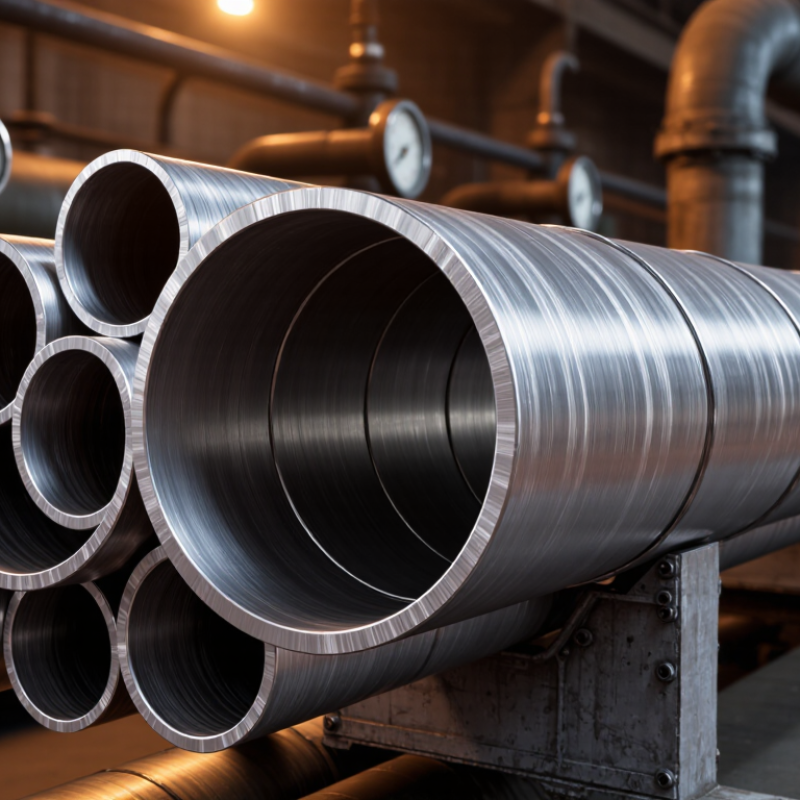
What Is Seamless Steel Tube Used For?

What Is a Seamless Steel Tube?

A seamless steel tube is a hollow steel product made without a longitudinal weld. Manufacturers usually heat a solid steel billet, pierce its center, and roll it into a hollow shape. Further cold drawing or heat treatment can improve its dimensions, surface quality, and mechanical properties. It has no weld. That detail matters.

Seamless tubes are selected when pressure resistance, smooth internal flow, or dependable performance is important. They appear in boilers, heat exchangers, hydraulic systems, oil and gas equipment, automotive parts, and structural assemblies. Engineers may also use them for shafts, cylinders, and high-temperature pipelines. Their strength comes from continuous steel around the tube, but seamless does not mean flawless or automatically stronger. That assumption is incomplete.

Wall thickness, steel grade, manufacturing method, and heat treatment all affect performance. During practical inspections, technicians check outside diameter, wall thickness, straightness, hardness, and surface defects. Ultrasonic or hydrostatic testing may reveal hidden problems. The correct tube must also match temperature, pressure, corrosion exposure, and connection requirements. A poorly specified tube can fail despite its seamless construction. Not always. Careful sizing and traceable quality records remain essential.

What Is Seamless Steel Tube Used For? - What Is a Seamless Steel Tube?

Application Area Typical Service Conditions Why Seamless Tube Is Used Common Tube Characteristics Typical Examples
Oil and Gas Transport Internal pressure, long-distance fluid transport, and exposure to corrosive or abrasive fluids. The continuous tube wall avoids a longitudinal welded seam and can provide reliable pressure containment when properly specified and manufactured. Carbon steel or low-alloy steel; controlled wall thickness; pressure-tested supply may be required. Gathering lines, process piping, well tubing, and high-pressure transmission components.
Boilers and Steam Systems High-temperature water, steam, thermal cycling, and elevated internal pressure. Seamless construction is widely used for pressure-containing boiler and superheater components designed for demanding thermal service. Carbon, low-alloy, or stainless steel selected for temperature and pressure requirements. Boiler tubes, superheater tubes, water-wall tubes, and steam piping.
Heat Exchangers Heat transfer between liquids or gases, often with pressure and temperature differences across the tube wall. Uniform dimensions and a continuous wall support dependable heat transfer and pressure separation. Carbon steel, stainless steel, or other heat-resistant alloys; smooth internal surfaces may be specified. Shell-and-tube exchanger tubes, condenser tubes, and process-heating equipment.
Hydraulic and Pneumatic Systems High fluid pressure, repeated pressure cycles, and close dimensional requirements. The tube can be cold-drawn or precision-finished to achieve accurate dimensions and a smooth bore for fluid control. Precision outside diameter, controlled wall thickness, low surface roughness, and good concentricity. Hydraulic cylinders, pneumatic cylinders, pressure lines, and actuator components.
Automotive and Transportation Vibration, cyclic loading, impact, and the need for weight-efficient components. Seamless tubes can be formed into strong, lightweight components with consistent mechanical properties around the circumference. Low-carbon or alloy steel; supplied for bending, forming, machining, or heat treatment. Drive shafts, axle components, steering parts, suspension components, and structural members.
Mechanical Engineering Static loads, rotating loads, machining operations, and general fabrication requirements. The absence of a welded seam can simplify applications where uniformity, machinability, or resistance to localized seam-related defects is important. Carbon steel, alloy steel, or stainless steel; available in hot-finished or cold-finished forms. Machine shafts, rollers, gears, sleeves, bushings, and fabricated equipment parts.
Structural Construction Compression, tension, bending, impact, and outdoor environmental exposure. Round seamless sections provide efficient load distribution and can be used where structural reliability and clean geometry are required. Structural carbon steel or low-alloy steel; corrosion protection may be added separately. Columns, frames, trusses, railings, support posts, and tubular structures.
Chemical and Process Equipment Contact with chemicals, elevated temperatures, pressure, and potentially corrosive process media. Seamless tubes can be selected with corrosion-resistant alloys and a continuous wall suited to pressure-containing process equipment. Stainless steel, duplex stainless steel, nickel alloys, or other materials chosen for the process environment. Process piping, reactor components, instrumentation lines, and chemical plant equipment.
Mining and Heavy Equipment High impact, abrasion, vibration, and heavy hydraulic loading. Strong tube sections can withstand demanding mechanical service when the material, wall thickness, and heat treatment are correctly selected. Alloy steel or wear-resistant steel; heavy-wall designs are common in high-load applications. Hydraulic cylinders, drill components, support structures, and equipment frames.
General Fluid Conveyance Transport of water, oil, gas, air, or other fluids under low, medium, or high pressure. Seamless tubes offer a continuous pressure boundary and are available in a wide range of sizes, grades, and wall thicknesses. Material and dimensions selected according to pressure, temperature, corrosion, and applicable design requirements. Industrial piping, compressed-air systems, pump connections, and utility lines.

A seamless steel tube is produced from a solid steel billet that is pierced and formed into a hollow section without a longitudinal weld. The appropriate tube grade, dimensions, manufacturing process, and inspection requirements depend on the application, operating pressure, temperature, corrosion conditions, and applicable engineering standard.

How Seamless Steel Tubes Are Manufactured

What Is Seamless Steel Tube Used For?

How Seamless Steel Tubes Are Manufactured

Seamless steel tubes begin as solid round billets. Workers heat each billet until it becomes red-hot and workable. A rotary piercing mill then pushes a piercing plug through its center. This creates a hollow shell without welding a seam. The shell passes through elongation and sizing equipment. These stages control the tube’s diameter, wall thickness, and overall length.

Manufacturers may use hot finishing for large tubes or cold drawing for tighter tolerances. Cold drawing also improves surface quality and dimensional accuracy. After forming, the tube can receive heat treatment, straightening, cutting, and end preparation. Inspectors check dimensions, surface condition, and mechanical properties. Non-destructive testing may reveal hidden flaws. The process sounds controlled, but small temperature changes can affect the final result.

Tips: Confirm the required grade, outside diameter, wall thickness, and pressure rating before production. Ask for inspection records and test results. A clean surface is not enough; internal quality matters too. For high-temperature or high-pressure service, verify the relevant industry standard with a qualified engineer. Leaving this step vague can cause problems later.

Key Properties of Seamless Steel Tubes

What Is Seamless Steel Tube Used For?

Seamless steel tubes are widely used where pressure, heat, and structural stress demand dependable performance. They are formed from solid steel billets, so they do not contain a welded seam. This structure supports consistent strength around the tube’s circumference. Engineers commonly specify them for hydraulic lines, boiler systems, heat exchangers, oil and gas equipment, and heavy machinery. Their smooth internal surface can also help control fluid resistance and reduce turbulence.

Key Properties of Seamless Steel Tubes

High pressure resistance is a major advantage. A uniform wall helps the tube handle internal pressure with fewer local weaknesses. Seamless tubes also perform well under elevated temperatures and repeated mechanical loads. Their strength depends on steel grade, wall thickness, heat treatment, and manufacturing accuracy. Corrosion resistance is not automatic. Moisture, chemicals, and temperature can still damage the surface without suitable protection. No tube is perfect. Selecting a tube by habit can create costly problems. Practical inspection should include dimensions, surface condition, hardness, and pressure requirements. Confirming these details improves reliability and supports safer engineering decisions.

Tips: Match the tube grade to the working fluid, temperature, and pressure. Check both the outer diameter and wall thickness. Keep tubes dry during storage. Small surface marks deserve attention before installation.

Major Applications Across Industrial Sectors

What Is Seamless Steel Tube Used For?

Major Applications Across Industrial Sectors

Seamless steel tube is used where strength, pressure resistance, and dependable performance matter. Its continuous structure has no welded seam, reducing potential weak points during demanding service. Oil and gas facilities use it for high-pressure pipelines, drilling equipment, and well-control systems. Engineers select the tube according to pressure, temperature, corrosion exposure, and required wall thickness.

Power plants rely on seamless tubes in boilers, superheaters, and steam lines. These systems face repeated heating and cooling, so material quality affects operational safety. Chemical processing plants also use them for fluid transport, heat exchangers, and reactor connections. In these environments, engineers must check chemical compatibility carefully. A strong tube can still fail when the medium is highly corrosive.

Automotive and mechanical manufacturers use smaller seamless tubes for hydraulic cylinders, fuel systems, axles, and precision components. Construction projects apply larger sections to structural supports, piling, and high-load frameworks. Seamless tube is not automatically the best choice. It can cost more than welded alternatives and may require stricter inspection. In practical maintenance work, teams examine surface defects, dimensions, hardness, and hydrostatic test results before installation. Small errors matter. Improper storage can introduce rust, ovality, or contamination. Engineers also need traceable material certificates and suitable joining procedures. Without these checks, even a well-made tube may perform poorly in service.

What Is Seamless Steel Tube Used For? Major Applications Across Industrial Sectors

Seamless steel tubes are used where pressure resistance, dimensional reliability, and high-temperature performance are important. The chart shows representative upper service temperatures for common applications; actual limits vary according to steel grade, wall thickness, pressure, corrosion conditions, and applicable engineering standards.

Advantages and Limitations of Seamless Steel Tubes

Seamless steel tubes are used where pressure, heat, and reliability matter. They are common in oil wells, gas processing units, boilers, heat exchangers, and hydraulic systems. Their structure has no longitudinal weld, reducing potential weak points under repeated stress. Correctly specified tubes can handle high internal pressure and demanding temperatures. World Steel Association reported 1.892 billion tonnes of crude steel production in 2023, showing the scale behind modern steel infrastructure.

Their main advantage is consistency through critical service conditions. Seamless tubes also offer strong resistance to vibration and fatigue when the grade and wall thickness are suitable. However, they usually cost more than welded alternatives. Manufacturing can also create dimensional variation, especially in heavy-wall sections.

Corrosion remains a serious limitation. Carbon steel may deteriorate quickly in wet, acidic, or high-salinity environments. The International Energy Agency’s Oil 2024 report continues to identify large industrial demand for oil and gas infrastructure, but demand does not remove material-selection risks. No material is flawless. Engineers still need inspection data, pressure calculations, and service-history evidence.

Tips: Check the operating pressure, temperature, fluid chemistry, and corrosion allowance before ordering. Match the tube with applicable ASTM, ASME, or API requirements. Ask for mill test certificates and non-destructive examination records. A cheaper tube may become expensive after premature replacement. Also, do not assume seamless always means safer; poor installation, contamination, or incorrect heat treatment can undermine its advantages.

Copyright 2025 Fluidra S.A. | Created by BCM Marketing Agencia Privacy Policy Legal note | Cookie policy |

Technical cookies are strictly necessary for our website to work and you can navigate through it. These types of cookies are those that, for example, allow us to identify you, give you access to certain restricted parts of the page if necessary, or remember different options or services already selected by you, such as your privacy preferences. Therefore, they are activated by default, your authorization not being necessary in this regard. Through the configuration of your browser, you can block or alert the presence of this type of cookies, although such blocking will affect the proper functioning of the different functionalities of our website.


The analysis cookies allow us to study the navigation of the users of our website in general (for example, which sections of the page are the most visited, which services are used most and if they work correctly, etc.). From the statistical information on navigation on our website, we can improve both the operation of the page itself and the different services it offers. Therefore, these cookies do not have an advertising purpose, but only serve to make our website work better, adapting to our users in general. By activating them you will contribute to this continuous improvement. You can enable or disable these cookies by checking the corresponding box, being disabled by default.


Functionality cookies allow us to remember your preferences, to personalize certain characteristics and general options of our website, every time you access it (for example, the language in which the information is presented to you, the sections marked as favorites, your browser type, etc.) Therefore, this type of cookies does not have an advertising purpose, but by activating them you will improve the functionality of the website (for example, adapting to your type of browser) and the customization of it based on your preferences (for example, by presenting the information in the language that you have chosen in previous occasions), which will contribute to the ease, usability and comfort of our page during your navigation. You can enable or disable these cookies by checking the corresponding box, being disabled by default.


Advertising cookies allow us to manage the advertising spaces included in our website based on criteria such as the content shown or the frequency in which the ads are displayed. For example, if you have been shown the same ad several times on our website, and you have not shown a personal interest by clicking on it, it will not appear again. In summary, by activating this type of cookies, the advertising shown on our website will be more useful and diverse, and less repetitive. You can enable or disable these cookies by checking the corresponding box, being disabled by default.


Behavioral advertising cookies allow us to obtain information based on the observation of your browsing habits and behaviors on the web, in order to show you advertising content that best suits your personal tastes and interests. To understand it in a very simple way, we will give you a fictitious example: if your last searches on the web were related to suspense literature, we would show you advertising about suspense books. Therefore, activating this type of cookies, the advertising that we show you on our website will not be generic, but will be oriented to your searches, tastes and interests, therefore adjusting exclusively to you. You can enable or disable these cookies by checking the corresponding box, being disabled by default.
To understand it in a very simple way, we will give you a fictitious example: if your last searches on the web were related to suspense literature, we would show you advertising about suspense books. Therefore, activating this type of cookies, the advertising that we show you on our website will not be generic, but will be oriented to your searches, tastes and interests, therefore adjusting exclusively to you. You can enable or disable these cookies by checking the corresponding box, being disabled by default.

SAVE

We use our own and third-party cookies to ensure the proper functioning of the website and to analyse our services, improve your experience on our website and show you advertisements related to your interests according to profiling based on your browsing habits (e.g. websites visited). You can accept all cookies by clicking "ACCEPT" or set or reject them by clicking here. If you would like to know more about the use of cookies, please see our COOKIE POLICY.


ACCEPT ALL
Reject no essentials


