
What Is a Prehung Door and What Types Are Available?
FLUID HANDLING EXPERTS

Blog, all our news

What Is a Prehung Door and What Types Are Available?

A prehung door is a door supplied already attached to a frame, or jamb, with hinges fitted. The assembly is designed to sit inside a prepared wall opening. By contrast, a door slab is just the door panel; the installer must fit its hinges and align it with a separate frame. That distinction can save time, but it does not make installation effortless. The opening still needs careful measurement, and the frame must be level and secured properly.

Prehung Doors come in several forms for different rooms and building conditions. Interior models are commonly used for bedrooms, closets, and bathrooms, while exterior models include weather-resistant seals and sturdy thresholds. You can also find solid-core and hollow-core options, along with styles such as panel, flush, and glazed doors. Some are made for new construction; others are intended to replace an existing unit. Details vary by manufacturer, so check the rough-opening dimensions, handing, wall thickness, and included hardware before buying. Small details matter.

A prehung unit may simplify alignment because its parts are assembled, yet a poorly prepared opening can still cause sticking or uneven gaps. It is worth checking the floor and surrounding walls, not just the door measurements. This is where plans can meet reality. Understanding the available types helps narrow the choice by privacy, durability, light, and exposure to weather. The right fit depends on the room, the frame, and the care taken during installation.
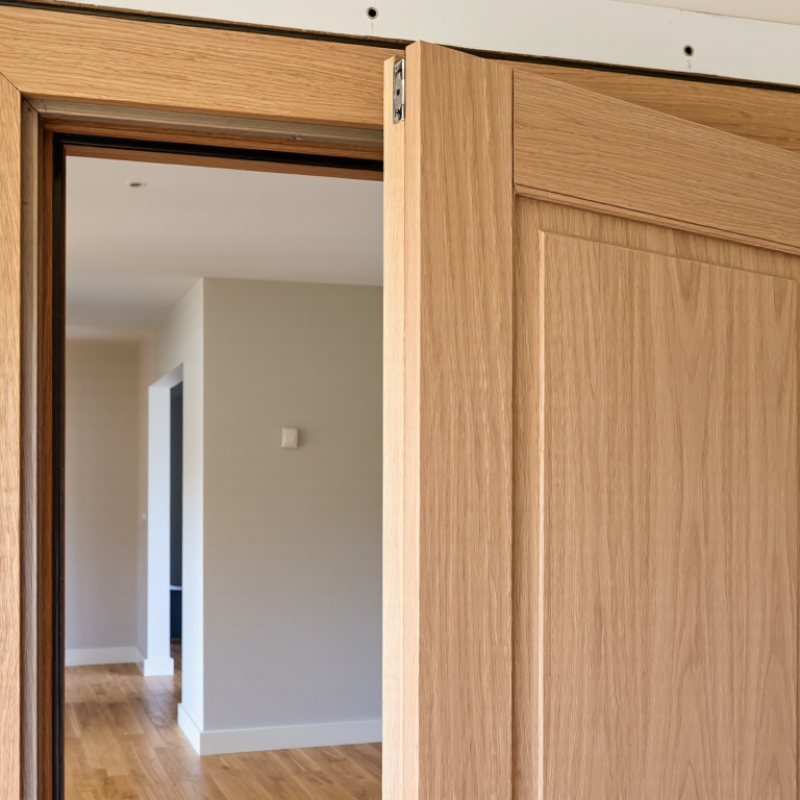
What Is a Prehung Door and What Types Are Available?

What Defines a Prehung Door?

A prehung door is a door slab already attached to a frame, also called a jamb, with hinges fitted in place. The complete unit is installed into a rough opening in the wall. This differs from a slab door, which arrives without its frame or attached hinges. Depending on the model, a prehung unit may also include a threshold, weatherstripping, or a pre-cut opening for a lockset. Check the product details; these parts are not guaranteed.

The frame helps position the door and maintain an even gap around the slab. Installers still need to make the unit level, plumb, and square. A small tilt can make the door swing open by itself or rub against the jamb. Prehung doors are available for interior and exterior use, in single or double-door configurations, and with different swing directions. Exterior versions typically have weather-resistant features, while interior units often have lighter frames. The distinction is easy to miss when comparing listings.

Tips: Measure the rough opening, not just the old door. Confirm the hinge side and swing direction before buying. If the floor is uneven, allow time for careful shimming; it can take longer than expected.

Which Components Make Up a Prehung Door Unit?

A prehung door arrives with its door slab already attached to a frame. The main components are the slab, jambs, hinges, and door stop. The slab is the moving panel. Side jambs run vertically, while the head jamb spans the top. Together, they form the frame that fits into the wall opening.

Hinges connect the slab to one side jamb and let it swing. The stop is a narrow strip fixed inside the frame; the slab rests against it when closed. A strike plate may be fitted to the opposite jamb, where the latch catches. Exterior units often include weatherstripping and a sill or threshold to help limit drafts and rain. Details vary, though, so check the unit before assuming every part is included.

Tips: Check that the frame is square before fastening it. A level and a few shims can help keep the gaps even. Look for consistent space around the slab, especially near the latch. If the door rubs, it may need adjustment; a small gap can be easy to overlook, but it affects the fit.

How Does a Prehung Door Differ from a Slab Door?

A prehung door is a door panel already mounted in a frame, with hinges attached. The frame, or jamb, is supplied as part of the unit. Some exterior models also include a threshold. That sounds simple. The main difference is what you install: a prehung unit replaces the door and its frame, while a slab door is only the panel. A slab has no built-in hinges or jamb, so it must be fitted to an existing frame.

A prehung door can be a practical choice when the old jamb is damaged or a wall is being built. It still needs careful installation. The frame must sit square and plumb; otherwise, the door may swing open, rub at the top, or leave an uneven gap. Floor height matters, too. A thick new floor can leave too little clearance beneath the panel.

A slab door may suit a sound, accurately measured frame, or a project that needs a specific panel style. It often requires hinge mortises and precise trimming, so it is not always the quicker option. Available prehung units vary by material, swing direction, and interior or exterior use. Check the opening measurements and hinge side before choosing; small differences can create frustrating adjustments.

What Types of Prehung Doors Are Available by Operation?

A prehung door arrives already attached to its frame, with hinges fitted and the assembly prepared for installation. By operation, the common choice is a hinged door that swings inward or outward. It may be single or double, such as a pair of French doors. Check the handing carefully: stand on the side where you can see the hinges to identify which way the door swings.

Other operating styles include bifold doors, which fold along a track, and pocket doors, which slide into a cavity in the wall. Sliding patio doors move on a track without swinging into the room. These systems may be sold with frames or tracks, but sellers do not always call them “prehung.” The labels can be confusing, so confirm exactly what the kit includes.

Tips: Measure the rough opening, wall thickness, and available swing space before choosing. A door that clears the wall may still hit a nearby cabinet. Measure twice. Also check whether the floor is level; even a small slope can affect how a hinged door closes.

Which Materials and Designs Are Used for Prehung Doors?

A prehung door includes a slab already fitted to its jamb, making material choice important for both fit and upkeep. Solid wood offers visible grain, repairable surfaces, and traditional panel designs, but it moves with humidity. The USDA Forest Products Laboratory’s 2021 Wood Handbook reports that tangential shrinkage in many woods is roughly 1.5 to 2 times radial shrinkage. That movement can affect clearances over time. Not every opening is square. Measure the wall depth and opening carefully before ordering.

Steel doors often use an insulated core and suit simple flush or raised-panel designs. Fiberglass can imitate painted wood grain, resist moisture, and accommodate glazed inserts. Interior prehung doors commonly use hollow-core or solid-core construction; the latter feels heavier and can reduce sound transfer. Designs range from flat, modern slabs to divided-light glass and classic six-panel styles. NFRC labels provide numeric U-factor and solar heat gain data for rated glazed doors, while ENERGY STAR Version 7.0 sets performance criteria across four climate zones. Check the actual rating, not just the material name. A well-made frame cannot compensate for poor weatherstripping or a threshold that sits unevenly.

Common Prehung Door Slab Widths

Common U.S. single-door slab widths include 24, 28, 30, 32, and 36 inches; 80 inches is a typical height. These are slab dimensions, not the overall prehung unit or rough-opening dimensions. Prehung doors pair a slab with a frame and may be made from solid or engineered wood, MDF, steel, or fiberglass. Styles include flush, panel, and glazed designs. Availability and sizing vary by application.

Copyright 2025 Fluidra S.A. | Created by BCM Marketing Agencia Privacy Policy Legal note | Cookie policy |

Technical cookies are strictly necessary for our website to work and you can navigate through it. These types of cookies are those that, for example, allow us to identify you, give you access to certain restricted parts of the page if necessary, or remember different options or services already selected by you, such as your privacy preferences. Therefore, they are activated by default, your authorization not being necessary in this regard. Through the configuration of your browser, you can block or alert the presence of this type of cookies, although such blocking will affect the proper functioning of the different functionalities of our website.


The analysis cookies allow us to study the navigation of the users of our website in general (for example, which sections of the page are the most visited, which services are used most and if they work correctly, etc.). From the statistical information on navigation on our website, we can improve both the operation of the page itself and the different services it offers. Therefore, these cookies do not have an advertising purpose, but only serve to make our website work better, adapting to our users in general. By activating them you will contribute to this continuous improvement. You can enable or disable these cookies by checking the corresponding box, being disabled by default.


Functionality cookies allow us to remember your preferences, to personalize certain characteristics and general options of our website, every time you access it (for example, the language in which the information is presented to you, the sections marked as favorites, your browser type, etc.) Therefore, this type of cookies does not have an advertising purpose, but by activating them you will improve the functionality of the website (for example, adapting to your type of browser) and the customization of it based on your preferences (for example, by presenting the information in the language that you have chosen in previous occasions), which will contribute to the ease, usability and comfort of our page during your navigation. You can enable or disable these cookies by checking the corresponding box, being disabled by default.


Advertising cookies allow us to manage the advertising spaces included in our website based on criteria such as the content shown or the frequency in which the ads are displayed. For example, if you have been shown the same ad several times on our website, and you have not shown a personal interest by clicking on it, it will not appear again. In summary, by activating this type of cookies, the advertising shown on our website will be more useful and diverse, and less repetitive. You can enable or disable these cookies by checking the corresponding box, being disabled by default.


Behavioral advertising cookies allow us to obtain information based on the observation of your browsing habits and behaviors on the web, in order to show you advertising content that best suits your personal tastes and interests. To understand it in a very simple way, we will give you a fictitious example: if your last searches on the web were related to suspense literature, we would show you advertising about suspense books. Therefore, activating this type of cookies, the advertising that we show you on our website will not be generic, but will be oriented to your searches, tastes and interests, therefore adjusting exclusively to you. You can enable or disable these cookies by checking the corresponding box, being disabled by default.
To understand it in a very simple way, we will give you a fictitious example: if your last searches on the web were related to suspense literature, we would show you advertising about suspense books. Therefore, activating this type of cookies, the advertising that we show you on our website will not be generic, but will be oriented to your searches, tastes and interests, therefore adjusting exclusively to you. You can enable or disable these cookies by checking the corresponding box, being disabled by default.

SAVE

We use our own and third-party cookies to ensure the proper functioning of the website and to analyse our services, improve your experience on our website and show you advertisements related to your interests according to profiling based on your browsing habits (e.g. websites visited). You can accept all cookies by clicking "ACCEPT" or set or reject them by clicking here. If you would like to know more about the use of cookies, please see our COOKIE POLICY.


ACCEPT ALL
Reject no essentials


