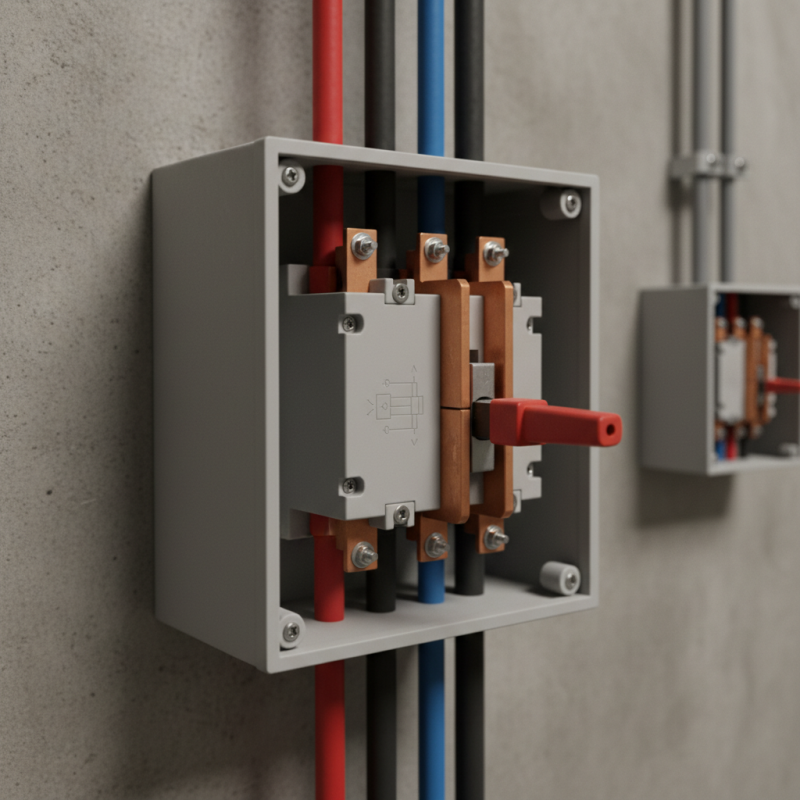
What is a Load Isolation Switch and How Does It Work?
A Load Isolation Switch is a crucial component in electrical systems. It provides safety and reliability in managing electrical loads. This device is designed to isolate a section of the electrical circuit, making maintenance and repairs safer.
Understanding how a Load Isolation Switch operates is essential for both homeowners and professionals. It allows users to shut off power to specific areas without affecting the entire system. This targeted shutdown can prevent accidents and ensure a stable electrical environment.
However, many people overlook the importance of this switch. Neglecting its function can lead to unsafe situations. It's vital to recognize that maintaining electrical safety is a shared responsibility. Being informed about tools like the Load Isolation Switch can greatly enhance this safety.
Definition of Load Isolation Switch and Its Purpose
A load isolation switch is a crucial component in electrical systems. Its primary purpose is to disconnect power in a safe manner. This ensures both equipment safety and personnel protection during maintenance. Without this switch, working on live circuits could be hazardous.
Load isolation switches come in various configurations. They can be used in residential settings or large industrial facilities. These switches allow for control over electrical loads without interrupting the entire system. When operating, it's essential to ensure that the load is de-energized. This process requires training and experience. New users may find it challenging to understand proper procedures.
Proper installation is key to prevent accidents. Misplacement can lead to malfunction or safety risks. It’s vital to consult a professional for installation. Regular inspections can further enhance reliability. Ultimately, while load isolation switches are effective, understanding their operation is just as important.
Load Isolation Switch Usage Comparison
This bar chart represents the distribution of load isolation switches used across various application areas, highlighting their significance in commercial, industrial, residential, and renewable energy sectors.
Components of a Load Isolation Switch
A load isolation switch is crucial for electrical safety and system maintenance. Understanding its components helps users appreciate its significant role.
The main component of a load isolation switch is the actuator, which provides manual or automated operation. This engaging mechanism allows users to ensure that power is safely disconnected during maintenance.
Then, there’s the contact assembly, which includes fixed and movable contacts. These components manage electrical flow, ensuring the switch can interrupt power effectively when necessary.
Enclosures are another vital part. They protect internal components from environmental factors. Yet, not all enclosures are created equal. Some may have gaps that could allow dust or moisture to enter, compromising safety. It’s essential to assess enclosure integrity regularly.
Lastly, indicator lights show the switch's current status. These visual cues are critical for safe operation, but sometimes they can fail or mislead users. Regular testing and maintenance keep the equipment reliable.
How Load Isolation Switches Operate
Load isolation switches are crucial in electrical systems. Their primary function is to disconnect power during maintenance or emergencies. These switches can handle high voltage and current, ensuring safety for both equipment and personnel. A recent industry report highlights that over 30% of electrical failures are linked to improper switching mechanisms. This suggests the importance of using reliable load isolation switches.
These switches operate by either manually or automatically isolating the load from the supply. When a fault occurs, they efficiently interrupt current flow. The switch’s design incorporates robust materials to withstand harsh conditions. The National Electrical Manufacturers Association reports that proper maintenance can extend the life of load isolation switches by up to 50%. This can significantly reduce operational costs, yet many installations fail due to lack of regular checks.
Many users overlook the need for periodical testing. This oversight can lead to premature failure. A study found that 20% of businesses had untested load isolation switches, putting their operations at risk. By ensuring these switches are routinely evaluated, risks diminish, protecting both infrastructure and safety. Regular checks can reveal potential faults, increasing reliability and performance.
Applications of Load Isolation Switches in Electrical Systems
Load isolation switches play a crucial role in electrical systems. They provide a means to disconnect power from specific circuits. By doing so, they enhance safety and allow for maintenance. According to a report by the International Electrotechnical Commission, around 30% of electrical failures stem from improper isolation procedures. Thus, using load isolation switches is not just a safety measure but also a practical necessity.
In industrial settings, load isolation switches are vital. They are used in various applications, from power distribution to renewable energy systems. Many facilities rely on these switches to protect equipment during maintenance. A study in the IEEE Transactions on Power Systems indicates that poorly managed electrical systems lead to downtime, which can cost industries thousands of dollars per hour. The integration of load isolation switches helps mitigate these risks.
Load isolation switches are not foolproof. Regular maintenance and inspections are essential. Some users may overlook this, leading to potential failures. Reports show that 10% of electrical accidents involve switch malfunctions due to lack of upkeep. Therefore, while these devices are critical, their effectiveness relies on consistent monitoring and proper handling by trained personnel.
Safety Considerations and Maintenance for Load Isolation Switches
Load isolation switches are crucial for electrical safety. Regular maintenance is essential to ensure their reliability. A thorough inspection can prevent unexpected failures. Check the connections for corrosion or loose wires. It is also important to test the switch regularly.
When maintaining load isolation switches, follow the guidelines provided in the manufacturer’s manual. Ensure that the switch is de-energized during maintenance. Use appropriate tools and wear personal protective equipment. This minimizes the risk of accidents. It’s advisable to keep detailed records of maintenance activities for future reference.
Safety considerations go beyond just hardware. Training personnel on the correct use of load isolation switches is vital. Even minor oversights can lead to serious incidents. Clear communication about switch status can help prevent misuse. Remaining vigilant and proactive in these areas is crucial for overall safety.
What is a Load Isolation Switch and How Does It Work? - Safety Considerations and Maintenance for Load Isolation Switches
Aspect
Details
Definition
A device used to isolate electrical circuits for safe maintenance and operation.
Functionality
Disconnects the load from the power source, preventing electrical hazards.
Common Applications
Used in industrial settings, commercial buildings, and electrical panels.
Safety Considerations
Ensure proper installation, regular inspection, and adhere to voltage ratings.
Maintenance Tips
Perform visual inspections, check for wear and tear, and test functionality regularly.
Voltage Ratings
Commonly rated from 250V to 600V, depending on the application.
Cepex is the brand for the fluid handling market belonging to the Fluidra group. One of the leading european manufacturer of valves and fittings in thermoplastic materials.
Dedicated to the swimming pool, irrigation and industrial markets, we distribute our products worldwide with the Fluidra commercial network and presence in 46 countries with 136 sales branches.
Your data will be processed by CEPEX S.A., with address at C. Lluís Companys, 51-53, 08400, Granollers (Barcelona), and C.I.F. nº A-08928707, to send you communications about our products based on your interests. You can consult more information about the processing of your data and how to exercise your rights as described in the Privacy Policy.
Technical cookies are strictly necessary for our website to work and you can navigate through it. These types of cookies are those that, for example, allow us to identify you, give you access to certain restricted parts of the page if necessary, or remember different options or services already selected by you, such as your privacy preferences. Therefore, they are activated by default, your authorization not being necessary in this regard. Through the configuration of your browser, you can block or alert the presence of this type of cookies, although such blocking will affect the proper functioning of the different functionalities of our website.
The analysis cookies allow us to study the navigation of the users of our website in general (for example, which sections of the page are the most visited, which services are used most and if they work correctly, etc.). From the statistical information on navigation on our website, we can improve both the operation of the page itself and the different services it offers. Therefore, these cookies do not have an advertising purpose, but only serve to make our website work better, adapting to our users in general. By activating them you will contribute to this continuous improvement. You can enable or disable these cookies by checking the corresponding box, being disabled by default.
Functionality cookies allow us to remember your preferences, to personalize certain characteristics and general options of our website, every time you access it (for example, the language in which the information is presented to you, the sections marked as favorites, your browser type, etc.) Therefore, this type of cookies does not have an advertising purpose, but by activating them you will improve the functionality of the website (for example, adapting to your type of browser) and the customization of it based on your preferences (for example, by presenting the information in the language that you have chosen in previous occasions), which will contribute to the ease, usability and comfort of our page during your navigation. You can enable or disable these cookies by checking the corresponding box, being disabled by default.
Advertising cookies allow us to manage the advertising spaces included in our website based on criteria such as the content shown or the frequency in which the ads are displayed. For example, if you have been shown the same ad several times on our website, and you have not shown a personal interest by clicking on it, it will not appear again. In summary, by activating this type of cookies, the advertising shown on our website will be more useful and diverse, and less repetitive. You can enable or disable these cookies by checking the corresponding box, being disabled by default.
Behavioral advertising cookies allow us to obtain information based on the observation of your browsing habits and behaviors on the web, in order to show you advertising content that best suits your personal tastes and interests. To understand it in a very simple way, we will give you a fictitious example: if your last searches on the web were related to suspense literature, we would show you advertising about suspense books. Therefore, activating this type of cookies, the advertising that we show you on our website will not be generic, but will be oriented to your searches, tastes and interests, therefore adjusting exclusively to you. You can enable or disable these cookies by checking the corresponding box, being disabled by default. To understand it in a very simple way, we will give you a fictitious example: if your last searches on the web were related to suspense literature, we would show you advertising about suspense books. Therefore, activating this type of cookies, the advertising that we show you on our website will not be generic, but will be oriented to your searches, tastes and interests, therefore adjusting exclusively to you. You can enable or disable these cookies by checking the corresponding box, being disabled by default.
We use our own and third-party cookies to ensure the proper functioning of the website and to analyse our services, improve your experience on our website and show you advertisements related to your interests according to profiling based on your browsing habits (e.g. websites visited). You can accept all cookies by clicking "ACCEPT" or set or reject them by clicking here. If you would like to know more about the use of cookies, please see our COOKIE POLICY.