
Top 10 Investment Cast Techniques for Food Machinery Production?
FLUID HANDLING EXPERTS

Blog, all our news

Top 10 Investment Cast Techniques for Food Machinery Production?

Investment Cast for Food Machinery is a crucial process in modern manufacturing. This technique offers precision and durability for components used in food processing equipment. By utilizing advanced materials and methods, manufacturers can create intricate designs that withstand rigorous operational conditions.

The benefits of investment casting include reduced waste and enhanced performance. However, there are challenges that need careful attention. Variability in mold production and the choice of alloys can impact the final product. Each cast must be meticulously evaluated to ensure quality and consistency.

As the food industry evolves, so too must the methods used to produce essential machinery components. Understanding the top techniques in investment casting helps manufacturers stay competitive. This is especially true in an industry where efficiency and reliability are paramount. The subsequent sections will delve deeper into the top investment cast techniques that shape the future of food machinery production.
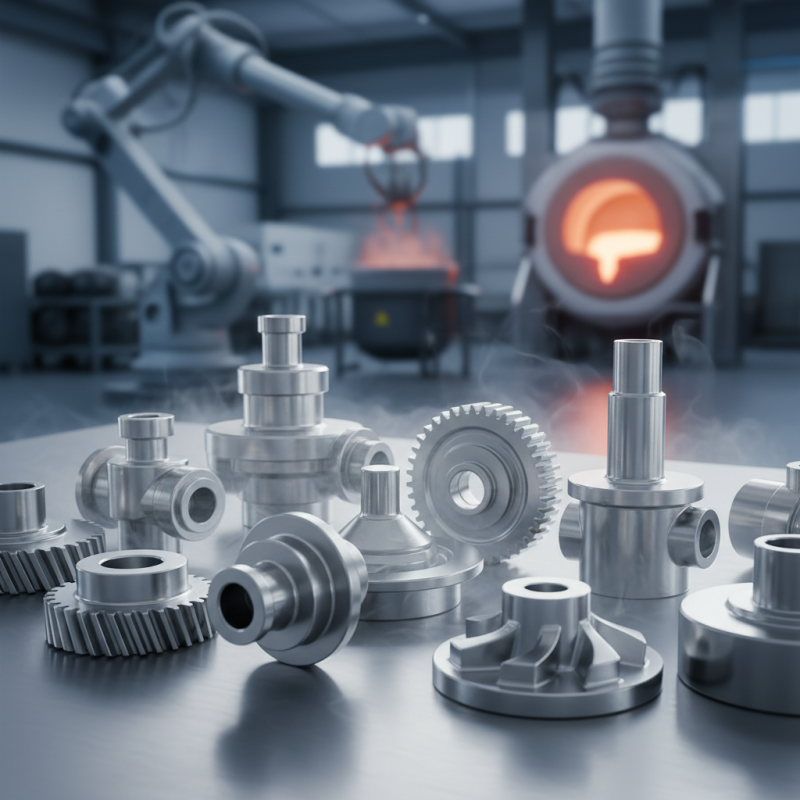
Top 10 Investment Cast Techniques for Food Machinery Production?

Understanding Investment Casting in Food Machinery Production

Investment casting plays a crucial role in food machinery production. This technique allows for intricate designs and high precision in manufacturing components. According to industry data, investment casting can achieve tolerances as tight as ±0.5 mm. This accuracy is essential in food machinery, where equipment must meet strict hygiene and safety standards.

The process begins with creating a wax pattern, which is coated in ceramic material. After heating, the wax melts away, leaving a detailed mold. This method reduces waste and produces complex geometries that traditional manufacturing cannot achieve. Reports indicate that up to 25% of materials can be conserved using this technique. This is significant for sustainability, a growing concern in food production.

However, challenges exist. The initial setup costs can be high. Small-scale producers might find it hard to justify these costs. Additionally, the lead time for creating molds can be longer than other methods. These factors require careful consideration in project planning. Overall, understanding investment casting is essential for advancing efficiency and sustainability in food machinery production.

Top 10 Investment Cast Techniques for Food Machinery Production

Technique Material Used Precision Level Applications in Food Machinery Advantages
Shell Casting Stainless Steel High Precision Pumps and Valves Excellent surface finish
Ceramic Mold Casting Nickel Alloys Moderate Precision Mixers and Blenders Good thermal resistance
Investment Casting Aluminum Alloy Very High Precision Food Processing Machinery Complex geometries
Lost Wax Casting Copper Alloys High Precision Heat Exchangers Excellent detail
Die Casting Zinc Alloys Moderate Precision Packaging Machines Cost-effective
Sand Casting Gray Iron Low Precision Large Equipment Versatile
Centrifugal Casting Bronze Moderate Precision Pipes and Tubes Internal strength
3D Printed Molds Specialty Alloys Very High Precision Custom Parts Customization
Continuous Casting Carbon Steel Moderate Precision Structural Components High efficiency
Lost Foam Casting Aluminum High Precision Motor Housings Reduced finishing work

Key Materials Used in Investment Casting for Food Machinery

Investment casting is an effective method for producing intricate components used in food machinery. The materials selected for this process greatly influence the final product’s quality and performance. Among the most commonly used materials are stainless steel, carbon steel, and aluminum alloys. Stainless steel stands out due to its corrosion resistance and strength. A report from the Food Machinery Association indicates that stainless steel accounts for 40% of the materials used in this sector.

Carbon steel, known for its toughness, is another popular choice. It is effective in high-stress applications. When used in investment casting, it enables precise and durable components. Aluminum alloys are lightweight and can be cast into complex shapes, making them ideal for applications where weight reduction is critical. A recent industry study highlighted that the demand for aluminum components has surged by 25% over the past two years in food machinery.

Tip: Regularly assess material performance during production. This helps identify potential improvements. Small variations in casting techniques may lead to significant shifts in component quality.

Investors and manufacturers should also consider sustainability. Recycling of metals reduces waste and lowers costs in the long run. Exploration of new materials, such as biodegradable polymers, could revolutionize production. An awareness of changing material trends is vital for staying competitive.

Step-by-Step Process of Investment Casting in Food Machinery

Investment casting is a crucial process in food machinery production. This technique allows for high precision and meticulous detail in each component. Industry reports indicate that over 60% of food machinery manufacturers favor investment casting due to its versatility. This method produces intricate designs that traditional casting techniques cannot achieve.

The step-by-step process begins with creating a wax pattern. Each pattern is coated with a ceramic shell. After heating, the wax melts away, leaving a precise cavity. Molten metal is then poured into this cavity, ensuring the final product closely mirrors the original design. A study from the American Foundry Society highlights that investment casting improves production rates by up to 30% while maintaining quality.

However, challenges exist. Variations in temperature can lead to flaws in the cast. Companies must regularly monitor and fine-tune their processes. Defects can arise from several sources, such as mold misalignment or material inconsistencies. Understanding these weaknesses can enhance overall production and reliability, ensuring that food machinery meets stringent industry standards.

Advantages of Investment Casting Techniques for Food Equipment

Investment casting techniques have gained prominence in food machinery production, owing to their unique benefits. This method allows for intricate designs and tight tolerances. As a result, manufacturers can produce equipment parts that meet strict hygiene standards. The smooth surface finish of investment cast components minimizes food contaminants. This is crucial in the food industry, where cleanliness is paramount.

The durability of cast equipment cannot be overlooked. Investment casting produces strong and resilient parts. They withstand the rigors of daily food production. Not only does this save costs in the long run, but it also reduces downtime from equipment failures. Potential challenges arise when selecting the right materials and techniques. Not all metals are suitable for food contact. It’s essential to consult with experts to find safe options.

Tips: Always consider your specific application. Each food processing environment has unique needs. Testing prototypes can identify issues early on. Conduct quality checks throughout the casting process to ensure compliance. This diligence pays off by preventing costly mistakes later. Seeking feedback from end-users can also enhance design efficiency.

Future Trends in Investment Casting for the Food Industry

The future of investment casting in the food machinery sector is evolving rapidly. As food safety standards tighten, manufacturers seek more reliable techniques. Investment casting offers precision and durability. These components must resist corrosion while maintaining efficiency during food processing.

Technological advancements are reshaping the casting landscape. 3D printing allows for quicker prototypes and design adjustments. This method reduces waste and promotes sustainability in production. Yet, adapting to new technologies can be challenging. Some manufacturers struggle to transition from traditional methods. Training staff is essential to fully leverage these advancements.

Food machinery producers are also focusing on customization. Investment casting can tailor equipment to specific needs. This flexibility can enhance performance and reduce costs. However, it requires careful planning and understanding of the market. Future trends indicate a shift toward more agile production processes. Balancing these trends with quality assurance will be crucial. Maintaining reliability while innovating is a complex task that demands continuous improvement.

Copyright 2025 Fluidra S.A. | Created by BCM Marketing Agencia Privacy Policy Legal note | Cookie policy |

Technical cookies are strictly necessary for our website to work and you can navigate through it. These types of cookies are those that, for example, allow us to identify you, give you access to certain restricted parts of the page if necessary, or remember different options or services already selected by you, such as your privacy preferences. Therefore, they are activated by default, your authorization not being necessary in this regard. Through the configuration of your browser, you can block or alert the presence of this type of cookies, although such blocking will affect the proper functioning of the different functionalities of our website.


The analysis cookies allow us to study the navigation of the users of our website in general (for example, which sections of the page are the most visited, which services are used most and if they work correctly, etc.). From the statistical information on navigation on our website, we can improve both the operation of the page itself and the different services it offers. Therefore, these cookies do not have an advertising purpose, but only serve to make our website work better, adapting to our users in general. By activating them you will contribute to this continuous improvement. You can enable or disable these cookies by checking the corresponding box, being disabled by default.


Functionality cookies allow us to remember your preferences, to personalize certain characteristics and general options of our website, every time you access it (for example, the language in which the information is presented to you, the sections marked as favorites, your browser type, etc.) Therefore, this type of cookies does not have an advertising purpose, but by activating them you will improve the functionality of the website (for example, adapting to your type of browser) and the customization of it based on your preferences (for example, by presenting the information in the language that you have chosen in previous occasions), which will contribute to the ease, usability and comfort of our page during your navigation. You can enable or disable these cookies by checking the corresponding box, being disabled by default.


Advertising cookies allow us to manage the advertising spaces included in our website based on criteria such as the content shown or the frequency in which the ads are displayed. For example, if you have been shown the same ad several times on our website, and you have not shown a personal interest by clicking on it, it will not appear again. In summary, by activating this type of cookies, the advertising shown on our website will be more useful and diverse, and less repetitive. You can enable or disable these cookies by checking the corresponding box, being disabled by default.


Behavioral advertising cookies allow us to obtain information based on the observation of your browsing habits and behaviors on the web, in order to show you advertising content that best suits your personal tastes and interests. To understand it in a very simple way, we will give you a fictitious example: if your last searches on the web were related to suspense literature, we would show you advertising about suspense books. Therefore, activating this type of cookies, the advertising that we show you on our website will not be generic, but will be oriented to your searches, tastes and interests, therefore adjusting exclusively to you. You can enable or disable these cookies by checking the corresponding box, being disabled by default.
To understand it in a very simple way, we will give you a fictitious example: if your last searches on the web were related to suspense literature, we would show you advertising about suspense books. Therefore, activating this type of cookies, the advertising that we show you on our website will not be generic, but will be oriented to your searches, tastes and interests, therefore adjusting exclusively to you. You can enable or disable these cookies by checking the corresponding box, being disabled by default.

SAVE

We use our own and third-party cookies to ensure the proper functioning of the website and to analyse our services, improve your experience on our website and show you advertisements related to your interests according to profiling based on your browsing habits (e.g. websites visited). You can accept all cookies by clicking "ACCEPT" or set or reject them by clicking here. If you would like to know more about the use of cookies, please see our COOKIE POLICY.


ACCEPT ALL
Reject no essentials



