
What is an Intensive Mixer and How Does it Work?
FLUID HANDLING EXPERTS

Blog, all our news

What is an Intensive Mixer and How Does it Work?

An Intensive mixer is a powerful tool used in various industries. It is designed to blend materials thoroughly and efficiently. These mixers are essential in processes like food production, pharmaceuticals, and plastics.

The working mechanism involves the use of high-speed blades. These blades create strong forces that ensure uniform mixing. Users often appreciate the speed and consistency it provides. However, achieving perfect mixing can sometimes be challenging. An operator must carefully monitor the process.

Understanding how an intensive mixer functions is crucial for optimizing its use. This machine can improve product quality, but it requires experience and knowledge. Identifying the right settings may take time and experimentation. Reliable sources of information can help guide users in this process.
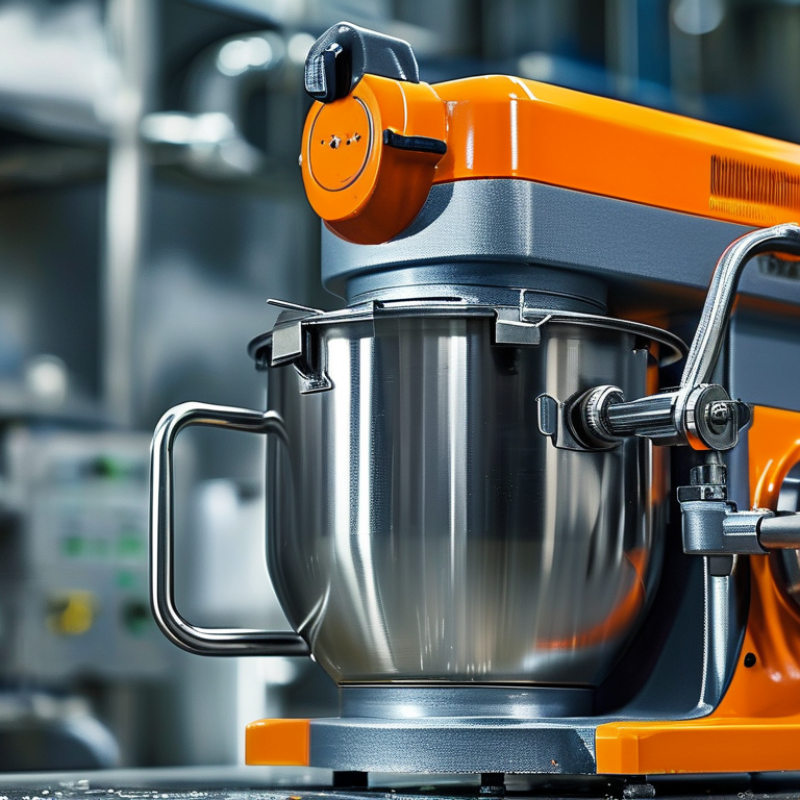
What is an Intensive Mixer and How Does it Work?

What is an Intensive Mixer?

An intensive mixer is a high-performance machine used in various industries. It efficiently combines and disperses materials to achieve uniform blending. These mixers play a crucial role in sectors such as food production, plastics, and pharmaceuticals. Their ability to handle challenging mixing tasks makes them essential for ensuring quality in the final product.

Intensive mixers operate by using high shear forces. This allows them to break down particles and create a smooth mixture. The design typically includes rotating blades or paddles that promote thorough mixing. It’s important to monitor the mixing time closely. Over-mixing can lead to inefficiencies and inconsistencies in the final product.

Tips: Pay attention to the type of materials you are mixing. Different materials require different mixing techniques. Also, regular maintenance is crucial. Check the blades for wear and tear frequently. Such diligence can save time and extend the mixer’s lifespan. Testing small batches before large runs can help refine processes too. Adapting your methods based on real-time observations is key for successful outcomes.

Key Components of an Intensive Mixer

Intensive mixers play a crucial role in various industries, notably in the production of plastics, rubber, and food ingredients. These machines are designed to provide high shear and intense mixing, allowing for efficient blending of materials. The key components include the mixing chamber, rotors, and drive systems, each contributing to the mixer’s effectiveness.

The mixing chamber is where materials come into contact. It often features a specific geometry that promotes turbulence. This promotes a uniform distribution of particulate matter. Rotors, strategically positioned, create shear forces that break down clumps and ensure consistent mixing. Drive systems, which can be mechanical or hydraulic, impart the necessary energy for successful mixing. According to a report by Grand View Research, the intensive mixer market is expected to grow significantly, driven by the demand for energy-efficient mixing solutions.

However, it’s worth noting that not all mixers perform equally in every application. Some may struggle with specific formulations, requiring adjustments in design or operation strategies. This highlights the need for continuous evaluation of mixer performance, especially in industries where precision is critical. A meticulous approach to selecting and optimizing mixers can lead to superior product quality and operational efficiency.

Principle of Operation in Intensive Mixers

Intensive mixers are specialized machines designed for thorough mixing of materials, particularly in industries like plastics, pharmaceuticals, and food processing. The principle of operation revolves around generating high shear forces and turbulence within the mixing chamber. This allows for the rapid and uniform distribution of ingredients, which is critical for product quality.

The mixing process typically involves a combination of rotating blades and a stationary vessel. High-speed rotation increases the collision rate among particles, enhancing the mixing efficiency. According to industry reports, an intensive mixer can achieve mixing times as short as 30 seconds for certain applications. This efficiency is crucial for production lines aiming for high output while maintaining consistency.

However, the effectiveness of intensive mixers depends on proper operation parameters. Incorrect blade design or inadequate feed rates can lead to suboptimal results. In some cases, excessive shear may damage sensitive components or affect the properties of the materials being mixed. Continuous monitoring and adjustment are recommended to ensure optimal performance, as the balance between speed and material integrity can be challenging to maintain.

What is an Intensive Mixer and How Does it Work?

Dimension Description
Capacity Typically ranges from 100 to 5000 liters.
Speed Common operating speeds between 50 to 200 RPM.
Power Consumption Usually between 5 to 200 kW depending on size and application.
Mixing Cycle Time Typically around 3 to 10 minutes for a complete mix.
Applications Used in food processing, chemical manufacturing, and plastics processing.
Mixing Principle Utilizes high shear forces to achieve thorough blending and dispersion of materials.

Applications of Intensive Mixers in Industry

Intensive mixers play a pivotal role across various industries, particularly in the fields of food production, pharmaceuticals, and polymers. They enhance the efficiency of blending processes. According to a recent market report, the global market for intensive mixers is expected to reach $2.5 billion by 2026, driven by rising demands for high-quality products.

In the food industry, these mixers are utilized to create uniform mixtures of ingredients. They enable precise control over the mixing process, ensuring consistent texture and flavor in products like sauces and baked goods. In pharmaceuticals, intensive mixers are vital for producing homogenous formulations. They help in achieving the correct dosage and improving the bioavailability of active ingredients.

Tip: When selecting an intensive mixer, consider the material being mixed. Different materials require specific mixer designs for optimal performance.

In polymers, intensive mixers are essential for compounding materials. They achieve even dispersion of additives and fillers, which improves product properties. However, improper settings can lead to overmixing or inadequate blending, impacting quality. Monitoring the mixing parameters is crucial to avoid these pitfalls.

Tip: Regular maintenance of mixers can prevent breakdowns and ensure consistent output. Always follow the manufacturer's guidelines for best results.

Advantages of Using Intensive Mixers

Intensive mixers are essential in various industries, particularly in materials processing. Their primary advantage lies in their ability to achieve a homogeneous mixture quickly. Unlike traditional mixers, intensive mixers use high shear forces. This mechanism allows for better integration of materials. It is efficient for both dry and wet mixtures.

One major benefit of using an intensive mixer is time savings. These machines reduce mixing time significantly. Operators can increase production rates. This efficiency can lower operational costs. Additionally, the robust design of these mixers allows for handling tough materials. They achieve consistent quality, which is critical in industries like pharmaceuticals and food production.

However, there are challenges. High energy consumption can be a concern. Regular maintenance is crucial to avoid downtime. Some users might find the initial investment high. Balancing these aspects is important for optimal use. Achieving the perfect mix sometimes requires fine-tuning settings. Overall, the advantages often outweigh these concerns for many operational settings.

Copyright 2025 Fluidra S.A. | Created by BCM Marketing Agencia Privacy Policy Legal note | Cookie policy |

Technical cookies are strictly necessary for our website to work and you can navigate through it. These types of cookies are those that, for example, allow us to identify you, give you access to certain restricted parts of the page if necessary, or remember different options or services already selected by you, such as your privacy preferences. Therefore, they are activated by default, your authorization not being necessary in this regard. Through the configuration of your browser, you can block or alert the presence of this type of cookies, although such blocking will affect the proper functioning of the different functionalities of our website.


The analysis cookies allow us to study the navigation of the users of our website in general (for example, which sections of the page are the most visited, which services are used most and if they work correctly, etc.). From the statistical information on navigation on our website, we can improve both the operation of the page itself and the different services it offers. Therefore, these cookies do not have an advertising purpose, but only serve to make our website work better, adapting to our users in general. By activating them you will contribute to this continuous improvement. You can enable or disable these cookies by checking the corresponding box, being disabled by default.


Functionality cookies allow us to remember your preferences, to personalize certain characteristics and general options of our website, every time you access it (for example, the language in which the information is presented to you, the sections marked as favorites, your browser type, etc.) Therefore, this type of cookies does not have an advertising purpose, but by activating them you will improve the functionality of the website (for example, adapting to your type of browser) and the customization of it based on your preferences (for example, by presenting the information in the language that you have chosen in previous occasions), which will contribute to the ease, usability and comfort of our page during your navigation. You can enable or disable these cookies by checking the corresponding box, being disabled by default.


Advertising cookies allow us to manage the advertising spaces included in our website based on criteria such as the content shown or the frequency in which the ads are displayed. For example, if you have been shown the same ad several times on our website, and you have not shown a personal interest by clicking on it, it will not appear again. In summary, by activating this type of cookies, the advertising shown on our website will be more useful and diverse, and less repetitive. You can enable or disable these cookies by checking the corresponding box, being disabled by default.


Behavioral advertising cookies allow us to obtain information based on the observation of your browsing habits and behaviors on the web, in order to show you advertising content that best suits your personal tastes and interests. To understand it in a very simple way, we will give you a fictitious example: if your last searches on the web were related to suspense literature, we would show you advertising about suspense books. Therefore, activating this type of cookies, the advertising that we show you on our website will not be generic, but will be oriented to your searches, tastes and interests, therefore adjusting exclusively to you. You can enable or disable these cookies by checking the corresponding box, being disabled by default.
To understand it in a very simple way, we will give you a fictitious example: if your last searches on the web were related to suspense literature, we would show you advertising about suspense books. Therefore, activating this type of cookies, the advertising that we show you on our website will not be generic, but will be oriented to your searches, tastes and interests, therefore adjusting exclusively to you. You can enable or disable these cookies by checking the corresponding box, being disabled by default.

SAVE

We use our own and third-party cookies to ensure the proper functioning of the website and to analyse our services, improve your experience on our website and show you advertisements related to your interests according to profiling based on your browsing habits (e.g. websites visited). You can accept all cookies by clicking "ACCEPT" or set or reject them by clicking here. If you would like to know more about the use of cookies, please see our COOKIE POLICY.


ACCEPT ALL
Reject no essentials


