
What is an Industrial PC and How Does it Benefit Your Business?
FLUID HANDLING EXPERTS

Blog, all our news

What is an Industrial PC and How Does it Benefit Your Business?

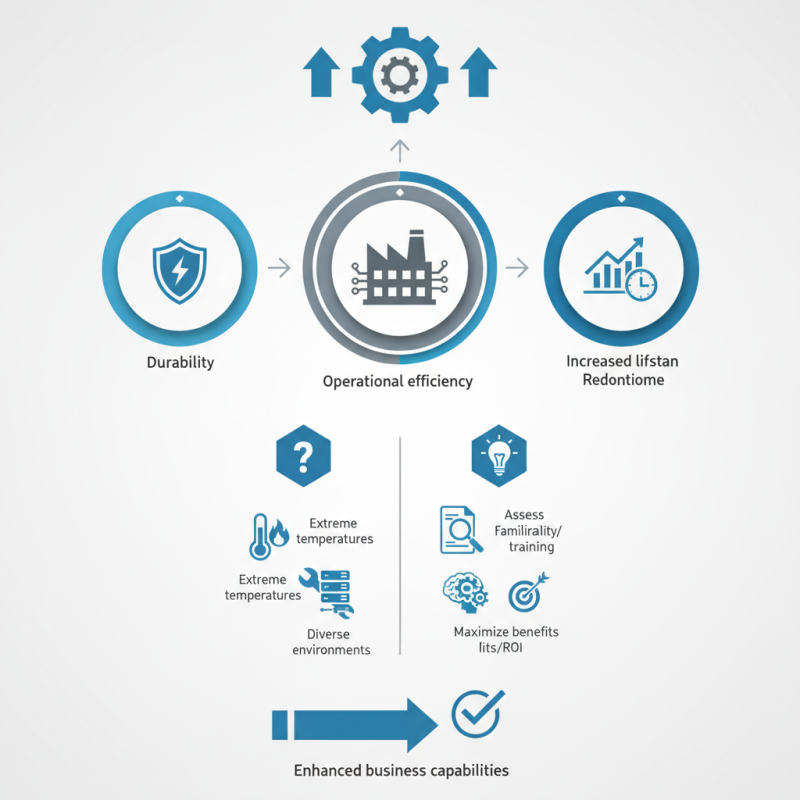
In the fast-paced world of industry, the role of an Industrial PC is crucial. These robust systems are designed to endure harsh conditions while providing reliable processing power. As Mark Thompson, an industry expert and CEO of Tech Solutions Inc., once said, "Industrial PCs transform operational efficiency with their durability and performance." This sentiment highlights the importance of integrating advanced technology in manufacturing.

Businesses are continually seeking ways to enhance productivity and reduce downtime. An Industrial PC offers various advantages, including increased lifespan and versatility in various applications. They can operate in extreme temperatures, making them suitable for diverse environments. However, choosing the right Industrial PC can be challenging. Companies must assess their specific needs and understand how to maximize the benefits of these rugged machines.

While the benefits are clear, some organizations may struggle to implement Industrial PCs effectively. Familiarity with the technology is crucial, yet many teams require training. Addressing these gaps can lead to improved efficiency and a better return on investment. Ultimately, embracing Industrial PCs can significantly enhance a business's operational capabilities when done thoughtfully.
What is an Industrial PC and How Does it Benefit Your Business?

What Defines an Industrial PC?

Industrial PCs are specialized computers designed for harsh environments. They are built to withstand extreme conditions like high temperatures, dust, and vibrations. Their robust design often includes features like fanless operation and metal enclosures, which enhance durability. This makes them suitable for sectors such as manufacturing, automation, and transportation.

The performance of industrial PCs is critical. They generally use powerful processors to handle demanding applications. Many feature extended lifecycle components, ensuring consistent support over time. This reliability is essential for mission-critical operations that cannot afford downtime. However, not all industrial PCs are the same. Factors such as scalability, I/O options, and software compatibility should be considered based on specific business needs.

Businesses can struggle with integration issues or configuration challenges. Finding the right fit requires careful evaluation of existing systems and processes. It's important to weigh factors like total cost of ownership and potential return on investment. Through thoughtful analysis, companies can make informed decisions that align with their operational goals.

Key Features of Industrial PCs

Industrial PCs are designed for demanding environments. They must operate under high temperatures, vibrations, and dust. These machines can function reliably in factories and outdoor settings. According to a report by Grand View Research, the global industrial PC market is set to grow significantly, with an expected CAGR of 7.5% by 2025. This growth highlights their increasing importance in modern manufacturing.

Key features distinguish industrial PCs from standard ones. They often have robust enclosures that protect against environmental hazards. Additionally, they come with extended lifecycle support. This is critical for industries that rely on long-term stability. Many manufacturers prefer systems that offer less frequent updates, limiting disruptions. The ability to use legacy software is another advantage, as it ensures compatibility with existing systems.

Tip: When selecting an industrial PC, consider the warranty and support options. A long warranty can save costs in the long run. Also, remember that not all systems are the same. Evaluate the unique needs of your business before making a decision.

Industrial PC Key Features and Benefits

Comparison Between Industrial PCs and Consumer PCs

Industrial PCs (IPCs) differ significantly from consumer PCs in design and functionality. IPCs are built for demanding environments. They often feature rugged hardware, enabling them to withstand extreme temperatures, vibrations, and dust. According to a report by Markets and Markets, the industrial PC market is projected to reach $6.71 billion by 2025, reflecting a growing reliance on these robust systems in various industries.

Consumer PCs, while versatile, prioritize aesthetics over durability. They are often tailored for everyday tasks, such as browsing or office work. In contrast, IPCs include features like extended lifecycle support and advanced connectivity options. A study from Grand View Research states that 60% of manufacturers prefer IPCs due to their long-term reliability. This underscores the importance of choosing the right technology for specific operational needs.

The cost difference also merits consideration. While IPCs may have a higher upfront cost, their longevity often leads to lower total operational costs. A miscalculation in selecting a consumer PC could result in frequent replacements or repairs, ultimately affecting productivity. Each technology serves its purpose well, but the choice should be informed by the operational context and specific business demands. Some businesses may overlook the need for rugged solutions, risking performance and safety.

What is an Industrial PC and How Does it Benefit Your Business? - Comparison Between Industrial PCs and Consumer PCs

Feature Industrial PC Consumer PC
Durability High resistance to extreme conditions (temperature, dust, moisture) Standard consumer-grade durability
Longevity Designed for long-term use (often 5-10 years) Typically replaced every 2-4 years
Performance Optimized for specific industrial applications General-purpose performance
Customization Highly customizable to fit specific needs Limited customization options
Cost Higher initial investment, but lower total cost of ownership Lower upfront cost, but may require frequent replacements
Maintenance Designed for easy maintenance in industrial settings Maintenance may be more challenging

Benefits of Industrial PCs for Different Industries

Industrial PCs serve diverse industries with specific needs. In manufacturing, they enhance productivity by providing reliable automation control. These PCs operate under harsh conditions, showcasing their resilience. They can handle vibrations, dust, and extreme temperatures. Such capabilities mean fewer breakdowns and more uptime.

In the healthcare sector, industrial PCs streamline workflows. They manage patient data and medical equipment efficiently. With real-time processing, they ensure timely responses in critical situations. However, integrating new technology can pose challenges. Staff training is sometimes overlooked, impacting overall efficiency.

The transportation industry also reaps the benefits. Industrial PCs track logistics and monitor fleet performance. They improve route planning, which can save time and costs. Yet, outdated systems may lead to inefficiencies. Transitioning to modern solutions requires thoughtful planning and investment. Embracing new technology is a journey, not a destination.

Case Studies: Successful Implementation of Industrial PCs

Industrial PCs (IPCs) have revolutionized many sectors by enabling enhanced efficiency and reliability. Case studies show significant success in various industries. For instance, a manufacturing plant implemented IPCs into their assembly lines. This led to a 30% increase in production speed. Moreover, the downtime decreased dramatically. Data suggests that 70% of companies report improved operational continuity after integrating IPCs.

In the food processing sector, IPCs ensured compliance with stricter safety regulations. One notable case involved a food manufacturer that faced regulatory pressures. By using IPCs, they automated quality checks and improved traceability in their processes. This resulted in a 25% reduction in non-compliance issues. Such implementations demonstrate how IPCs can transform operations and ensure adherence to industry standards.

However, challenges remain. Not every organization adapts smoothly to the technology shift. Some employees may struggle with new systems. Resistance to change is common. Furthermore, initial costs can be a barrier for small businesses. Reflecting on these experiences is essential. Evaluating the implementation process can provide insights for future improvements.

Copyright 2025 Fluidra S.A. | Created by BCM Marketing Agencia Privacy Policy Legal note | Cookie policy |

Technical cookies are strictly necessary for our website to work and you can navigate through it. These types of cookies are those that, for example, allow us to identify you, give you access to certain restricted parts of the page if necessary, or remember different options or services already selected by you, such as your privacy preferences. Therefore, they are activated by default, your authorization not being necessary in this regard. Through the configuration of your browser, you can block or alert the presence of this type of cookies, although such blocking will affect the proper functioning of the different functionalities of our website.


The analysis cookies allow us to study the navigation of the users of our website in general (for example, which sections of the page are the most visited, which services are used most and if they work correctly, etc.). From the statistical information on navigation on our website, we can improve both the operation of the page itself and the different services it offers. Therefore, these cookies do not have an advertising purpose, but only serve to make our website work better, adapting to our users in general. By activating them you will contribute to this continuous improvement. You can enable or disable these cookies by checking the corresponding box, being disabled by default.


Functionality cookies allow us to remember your preferences, to personalize certain characteristics and general options of our website, every time you access it (for example, the language in which the information is presented to you, the sections marked as favorites, your browser type, etc.) Therefore, this type of cookies does not have an advertising purpose, but by activating them you will improve the functionality of the website (for example, adapting to your type of browser) and the customization of it based on your preferences (for example, by presenting the information in the language that you have chosen in previous occasions), which will contribute to the ease, usability and comfort of our page during your navigation. You can enable or disable these cookies by checking the corresponding box, being disabled by default.


Advertising cookies allow us to manage the advertising spaces included in our website based on criteria such as the content shown or the frequency in which the ads are displayed. For example, if you have been shown the same ad several times on our website, and you have not shown a personal interest by clicking on it, it will not appear again. In summary, by activating this type of cookies, the advertising shown on our website will be more useful and diverse, and less repetitive. You can enable or disable these cookies by checking the corresponding box, being disabled by default.


Behavioral advertising cookies allow us to obtain information based on the observation of your browsing habits and behaviors on the web, in order to show you advertising content that best suits your personal tastes and interests. To understand it in a very simple way, we will give you a fictitious example: if your last searches on the web were related to suspense literature, we would show you advertising about suspense books. Therefore, activating this type of cookies, the advertising that we show you on our website will not be generic, but will be oriented to your searches, tastes and interests, therefore adjusting exclusively to you. You can enable or disable these cookies by checking the corresponding box, being disabled by default.
To understand it in a very simple way, we will give you a fictitious example: if your last searches on the web were related to suspense literature, we would show you advertising about suspense books. Therefore, activating this type of cookies, the advertising that we show you on our website will not be generic, but will be oriented to your searches, tastes and interests, therefore adjusting exclusively to you. You can enable or disable these cookies by checking the corresponding box, being disabled by default.

SAVE

We use our own and third-party cookies to ensure the proper functioning of the website and to analyse our services, improve your experience on our website and show you advertisements related to your interests according to profiling based on your browsing habits (e.g. websites visited). You can accept all cookies by clicking "ACCEPT" or set or reject them by clicking here. If you would like to know more about the use of cookies, please see our COOKIE POLICY.


ACCEPT ALL
Reject no essentials


