What is an Industrial Overhead Crane and How to Choose One?
FLUID HANDLING EXPERTS

Blog, all our news

What is an Industrial Overhead Crane and How to Choose One?

industrial overhead cranes play a crucial role in modern manufacturing and warehousing. According to a report by MarketsandMarkets, the global overhead crane market is projected to reach USD 7.4 billion by 2025, driven by increasing automation and efficiency demands. These cranes facilitate the movement of heavy loads, enhancing productivity and safety within various industries.

Choosing the right industrial overhead crane involves understanding the specific needs of an operation. Factors include load capacity, span, lift height, and speed. An unsuitable selection can result in operational inefficiencies and safety hazards. For instance, OSHA reports indicate that improper crane usage leads to significant workplace accidents. This underscores the need for careful consideration and planning.

The process of selecting an industrial overhead crane is not always straightforward. Many professionals face challenges in assessing their requirements. Evaluating available options and consulting with experts can help. It is crucial to prioritize reliability and safety when making this investment. Consideration of these factors could lead to improved operational performance and reduced risks.
What is an Industrial Overhead Crane and How to Choose One?

What is an Industrial Overhead Crane: Definition and Components

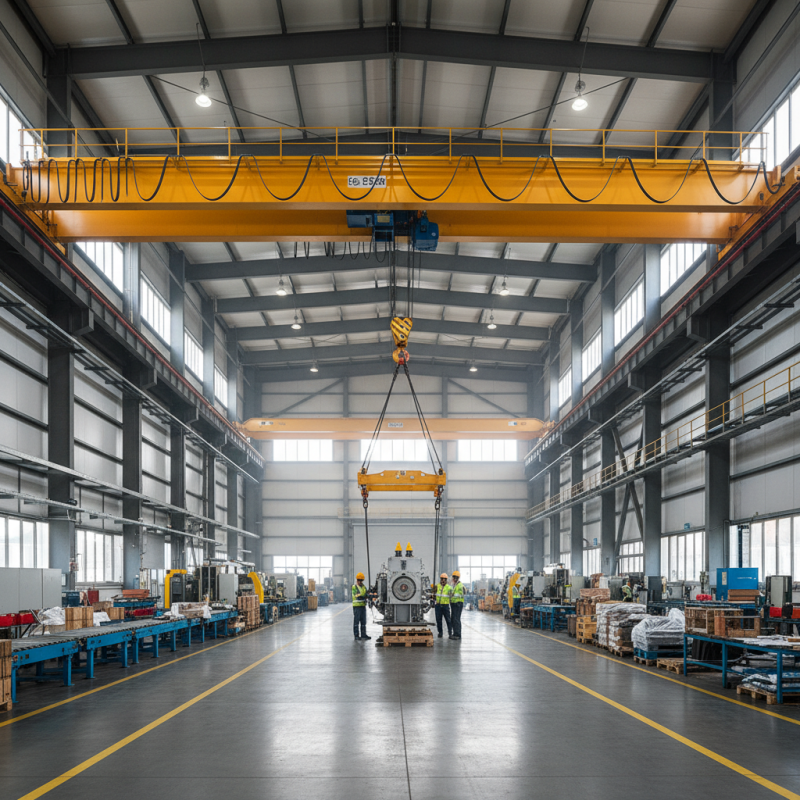
An industrial overhead crane is a vital piece of equipment in manufacturing and warehousing sectors. It consists of several key components, including the bridge, hoist, trolley, and end trucks. The bridge spans the area where the crane operates. It provides support for the hoist and trolley, allowing movement along a set path.

The hoist is responsible for lifting and lowering loads. It is typically paired with a trolley, which moves back and forth along the bridge. End trucks allow the entire structure to roll along the rails. Understanding these components helps in choosing the right crane for specific needs.

When selecting an overhead crane, consider the load capacity required. Data indicates that cranes can lift anywhere from 1 ton to over 100 tons. Also, evaluate the span length required for your workspace. Match the crane's specifications with your facility layout to ensure compatibility.

Tips: Always assess your environment for potential obstacles. Regular maintenance checks are crucial for safety and longevity. Ensure that the lifting and travel speeds meet your operation's demands. Quality selection based on needs will prevent costly mistakes.

Types of Industrial Overhead Cranes: A Comprehensive Overview

When considering overhead cranes, it’s essential to understand the different types available. Bridge cranes are some of the most common. They consist of two parallel runways supported by columns. These cranes can move heavy loads across a large area, making them ideal for warehouses and factories. Their versatility allows for both single and double girder designs, accommodating various weights and spans.

Another type is the gantry crane. This crane operates on wheels and can be moved easily across a workspace. It's particularly useful in outdoor settings, like shipyards or construction sites. However, one must consider their footprint and potential space limitations before selecting a gantry crane. In some scenarios, their mobility can also limit lifting capacity when compared to fixed cranes.

Jib cranes are another option worth exploring. These cranes feature a horizontal arm that supports a lifting device. They are excellent for providing coverage around specific workstations but may have restricted lift heights. This limitation requires careful planning and assessment of your operational needs. Evaluating these factors allows for a more informed choice that aligns with your specific requirements.

Key Factors to Consider When Choosing an Overhead Crane

When choosing an industrial overhead crane, several factors come into play. Load capacity is crucial. Understand the maximum weight your crane will lift. This ensures safety and efficiency in your operations. Another vital factor is the span of the crane. It should cover the area where you will use it, maximizing workspace and minimizing obstructions.

Consider the environment of operation too. Will it be indoors or outdoors? Different conditions affect performance. For example, cranes used outside may need weather protection. Additionally, the frequency of use could impact your choice. A crane for frequent use needs durable components.

Think about power sources. Electric cranes are common, but hydraulic options exist. Your choice should align with operational needs.

Lastly, safety features must not be overlooked. These include emergency stop buttons and load limiters. While these might seem like standard features, they can vary widely among models. Understanding these differences will help you make an informed decision.

It’s wise to consult with experts, but remember that personal experiences can also shape your choice. The balance between professional guidance and practical insights is essential for selecting the right crane.

Load Capacity and Span: Understanding Crane Specifications

Choosing an industrial overhead crane requires careful consideration of load capacity and span. These specifications directly impact the crane's effectiveness and safety. Load capacity refers to the maximum weight a crane can lift. According to the Industrial Truck Association, cranes must be rated accurately to prevent overload. An incorrect rating can lead to serious accidents and costly downtime.

Span is the distance between the crane’s supports. A wider span increases the area of operation. However, it may reduce load capacity. For instance, a crane with a 30-foot span may safely lift 10 tons. But increasing that span to 40 feet could lower the capacity to 8 tons. Understanding this relationship is key.

Selecting the right specifications involves assessing your operational needs. Consider your typical load weights and the layout of your workspace. Additionally, consult industry reports for performance data and safety standards. Carefully evaluating these metrics can minimize risks and enhance efficiency. Remember, the right crane for one operation might not suit another. Each facility has unique requirements that should guide your choice.

Maintenance and Safety Standards for Industrial Overhead Cranes

Maintaining an industrial overhead crane is critical for safety and efficiency. Regular inspections can prevent unexpected breakdowns. A routine check can reveal wear and tear. Look for frayed cables or loose connections. Each component must function well.

Safety standards are essential. Follow OSHA guidelines to ensure compliance. Training operators reduces accidents. They should understand load dynamics and crane operations. Regular safety drills help reinforce proper techniques. Remember, even small errors can lead to big consequences.

Documentation of maintenance is key. Keep a log for inspections and repairs. This can aid in spotting trends and issues over time. Not addressing minor problems may lead to serious risks later. Each step in maintenance matters, even if it seems trivial.

Industrial Overhead Crane Maintenance Frequency

Copyright 2025 Fluidra S.A. | Created by BCM Marketing Agencia Privacy Policy Legal note | Cookie policy |

Technical cookies are strictly necessary for our website to work and you can navigate through it. These types of cookies are those that, for example, allow us to identify you, give you access to certain restricted parts of the page if necessary, or remember different options or services already selected by you, such as your privacy preferences. Therefore, they are activated by default, your authorization not being necessary in this regard. Through the configuration of your browser, you can block or alert the presence of this type of cookies, although such blocking will affect the proper functioning of the different functionalities of our website.


The analysis cookies allow us to study the navigation of the users of our website in general (for example, which sections of the page are the most visited, which services are used most and if they work correctly, etc.). From the statistical information on navigation on our website, we can improve both the operation of the page itself and the different services it offers. Therefore, these cookies do not have an advertising purpose, but only serve to make our website work better, adapting to our users in general. By activating them you will contribute to this continuous improvement. You can enable or disable these cookies by checking the corresponding box, being disabled by default.


Functionality cookies allow us to remember your preferences, to personalize certain characteristics and general options of our website, every time you access it (for example, the language in which the information is presented to you, the sections marked as favorites, your browser type, etc.) Therefore, this type of cookies does not have an advertising purpose, but by activating them you will improve the functionality of the website (for example, adapting to your type of browser) and the customization of it based on your preferences (for example, by presenting the information in the language that you have chosen in previous occasions), which will contribute to the ease, usability and comfort of our page during your navigation. You can enable or disable these cookies by checking the corresponding box, being disabled by default.


Advertising cookies allow us to manage the advertising spaces included in our website based on criteria such as the content shown or the frequency in which the ads are displayed. For example, if you have been shown the same ad several times on our website, and you have not shown a personal interest by clicking on it, it will not appear again. In summary, by activating this type of cookies, the advertising shown on our website will be more useful and diverse, and less repetitive. You can enable or disable these cookies by checking the corresponding box, being disabled by default.


Behavioral advertising cookies allow us to obtain information based on the observation of your browsing habits and behaviors on the web, in order to show you advertising content that best suits your personal tastes and interests. To understand it in a very simple way, we will give you a fictitious example: if your last searches on the web were related to suspense literature, we would show you advertising about suspense books. Therefore, activating this type of cookies, the advertising that we show you on our website will not be generic, but will be oriented to your searches, tastes and interests, therefore adjusting exclusively to you. You can enable or disable these cookies by checking the corresponding box, being disabled by default.
To understand it in a very simple way, we will give you a fictitious example: if your last searches on the web were related to suspense literature, we would show you advertising about suspense books. Therefore, activating this type of cookies, the advertising that we show you on our website will not be generic, but will be oriented to your searches, tastes and interests, therefore adjusting exclusively to you. You can enable or disable these cookies by checking the corresponding box, being disabled by default.

SAVE

We use our own and third-party cookies to ensure the proper functioning of the website and to analyse our services, improve your experience on our website and show you advertisements related to your interests according to profiling based on your browsing habits (e.g. websites visited). You can accept all cookies by clicking "ACCEPT" or set or reject them by clicking here. If you would like to know more about the use of cookies, please see our COOKIE POLICY.


ACCEPT ALL
Reject no essentials