What Is an Industrial Gas Alarm and How Does It Work?
FLUID HANDLING EXPERTS

Blog, all our news

What Is an Industrial Gas Alarm and How Does It Work?

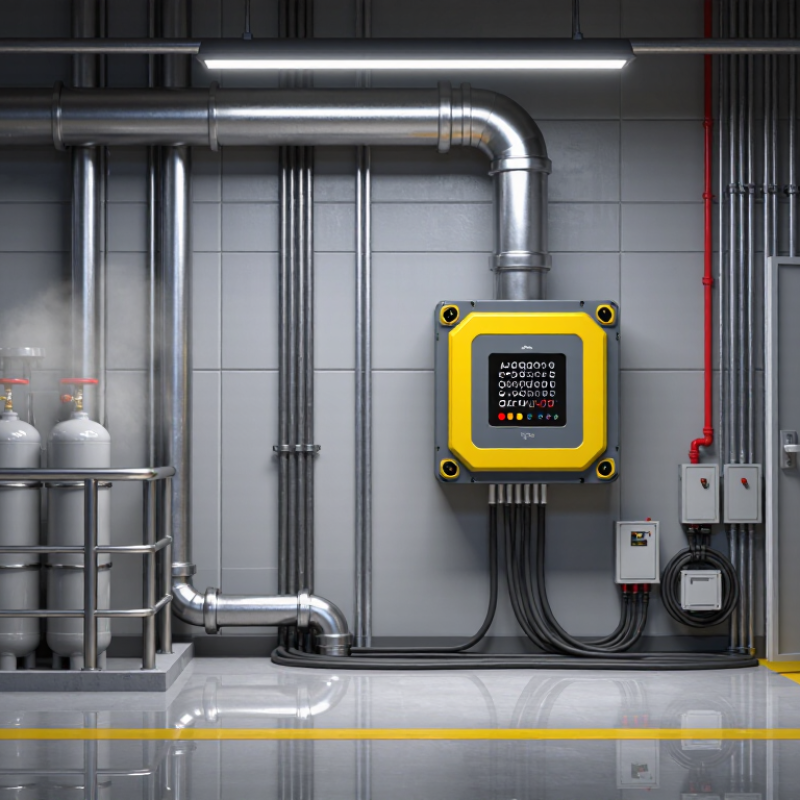
An Industrial Gas Alarm is a safety device that detects hazardous gas concentrations before workers recognize danger. It may monitor toxic, flammable, or oxygen-deficient atmospheres. Common targets include hydrogen sulfide, carbon monoxide, methane, ammonia, and volatile organic compounds. A sensor samples nearby air continuously. When readings reach a configured threshold, the system activates audible, visual, or remote alerts.

The danger can develop quietly. NIOSH’s Pocket Guide to Chemical Hazards lists 100 parts per million as the IDLH concentration for hydrogen sulfide. IDLH means immediately dangerous to life or health. OSHA also warns that hydrogen sulfide can rapidly overwhelm the senses, making smell an unreliable warning. For flammable gases, IEC 60079-29-1 defines performance requirements for gas detection equipment used in explosive atmospheres. These references show why alarm selection requires more than buying the loudest siren.

A reliable system combines the correct sensor, careful placement, regular calibration, and documented maintenance. It should connect with ventilation, emergency shutdowns, or evacuation procedures when appropriate. A fixed detector near a tank valve may see a leak earlier than a ceiling-mounted unit. Yet no alarm is infallible. Sensors can drift, become contaminated, or miss a gas outside their detection range. This is the uncomfortable part. An Industrial Gas Alarm supports risk control; it does not replace hazard assessment, worker training, or engineering protection. This article explains its components, detection methods, alarm stages, and practical limitations.

What Is an Industrial Gas Alarm and How Does It Work?

Definition and Purpose of an Industrial Gas Alarm

An industrial gas alarm is a safety device that detects dangerous changes in workplace air. It monitors oxygen levels, toxic gases, and combustible vapors. When readings reach a programmed limit, it gives an audible, visual, or vibrating warning. Fixed systems protect production areas, while portable units support inspections, maintenance, and confined-space entry.

The purpose is simple: provide time to act before exposure, fire, or an explosion occurs. OSHA defines an oxygen-deficient atmosphere as containing less than 19.5% oxygen. The ILO reported 2.93 million work-related deaths worldwide in 2023, showing why early hazard detection matters. A gas alarm usually uses electrochemical, infrared, or catalytic sensors. Its controller compares measurements with alarm thresholds and may activate ventilation or shutdown equipment. However, no detector is perfect. Dust, humidity, sensor aging, and poor placement can distort readings. Workers may also ignore repeated alarms, which is a serious human-factor problem.

Tips: Place sensors near likely leak points, not only at breathing height. Test alarms before each shift when procedures require it. Calibrate them according to the manufacturer’s instructions and site risk assessment. Keep records of bump tests, calibration, faults, and battery changes. NIOSH guidance also supports checking oxygen levels before entering hazardous spaces. A silent screen is not proof of safe air.

What Is an Industrial Gas Alarm and How Does It Work?

An industrial gas alarm continuously monitors the atmosphere for hazardous gases and activates visual, audible, or connected safety alerts when detected concentrations reach configured limits.

The lower explosive limit (LEL) is the minimum concentration of a flammable gas in air that can support combustion. Industrial gas detectors commonly measure gases as a percentage of their LEL and trigger alarms before the atmosphere reaches the explosive range. Actual alarm settings depend on site risk assessments, local regulations, ventilation, and the detector type.

Gas alarms may use catalytic bead, infrared, electrochemical, or other sensing technologies. The sensor converts gas concentration into an electrical signal, the controller compares the reading with configured alarm thresholds, and the system activates warnings or safety equipment when limits are exceeded.

Reference values: Approximate LEL values in air at normal atmospheric conditions: methane 5.0%, propane 2.1%, hydrogen 4.0%, and carbon monoxide 12.5% by volume.

Main Components and Gas Detection Methods

An industrial gas alarm is a safety instrument that detects dangerous changes in workplace air. It may identify toxic gases, flammable vapors, or oxygen deficiency. The system normally includes a gas sensor, sampling inlet, control circuit, display, alarm unit, power supply, and data storage. Each component has a specific responsibility. If one fails, the warning may become delayed or inaccurate.

Gas detection methods depend on the hazard. Electrochemical sensors measure chemical reactions caused by gases such as carbon monoxide or hydrogen sulfide. Catalytic bead sensors detect combustible gases through heat produced during oxidation. Infrared sensors measure how certain gases absorb infrared light. Photoionization detectors respond to many volatile organic compounds. No single method detects everything. That limitation matters.

When the sensor detects a concentration above its configured threshold, the processor compares the reading with alarm settings. Lights, sounders, vibration, or connected shutdown systems can then activate. Fixed systems often draw air through tubing, while personal monitors sample air near the worker’s breathing zone. Placement is critical. A sensor mounted too high may miss a heavier gas near the floor.

Regular bump tests and calibration verify whether the alarm responds correctly. Dust, humidity, temperature, and sensor aging can affect results. A common field mistake is trusting a quiet alarm without checking its maintenance record. The instrument is useful, but it is not a magic eye. It still needs proper installation, trained operators, and careful interpretation.

What Is an Industrial Gas Alarm and How Does It Work? — Main Components and Gas Detection Methods
System Element Main Function Common Detection Method Typical Target Gases How It Works Typical Outputs or Alarms Key Considerations
Gas Sensor Measures the concentration of a target gas in air. Electrochemical, catalytic bead, infrared, photoionization, or metal-oxide semiconductor sensing. Oxygen, toxic gases, combustible gases, volatile organic compounds, and carbon dioxide. The sensor converts a chemical or physical interaction with the gas into an electrical signal that represents gas concentration. Live concentration reading, warning alarm, high alarm, low oxygen alarm, or fault signal. Sensor selection must match the gas, expected concentration range, environmental conditions, and required response time.
Electrochemical Sensor Detects many toxic gases and oxygen at relatively low concentrations. Electrochemical cell. Carbon monoxide, hydrogen sulfide, chlorine, ammonia, nitrogen dioxide, and oxygen. The target gas reacts at an electrode, producing a current that is approximately proportional to the gas concentration within the sensor's operating range. Concentration display, visual alarm, audible alarm, and relay or control-system signal. Consumable components can have a limited service life. Temperature, humidity, cross-sensitivity, and sensor poisoning may affect accuracy.
Catalytic Bead Sensor Detects combustible gases and vapors that may create a fire or explosion hazard. Catalytic oxidation, also called a pellistor method. Methane, propane, hydrogen, and other combustible gases. Combustible gas oxidizes on a heated catalyst, changing the temperature and electrical resistance of the sensing bead. Readings are commonly expressed as a percentage of the lower explosive limit. Combustible-gas concentration, low alarm, high alarm, and shutdown or ventilation signal. Requires oxygen for catalytic combustion. Silicone compounds, sulfur compounds, lead, and other contaminants can reduce sensitivity or damage the sensor.
Infrared Sensor Measures combustible gases or carbon dioxide without consuming the target gas. Non-dispersive infrared absorption. Methane, propane, other hydrocarbons, and carbon dioxide. The gas absorbs infrared light at characteristic wavelengths. The reduction in transmitted light is used to calculate concentration. Continuous concentration reading, alarm relay, analog output, digital communication, or control-system input. Generally resistant to catalytic-sensor poisons and suitable for oxygen-deficient environments, but optical contamination, condensation, and gas-specific calibration can affect performance.
Photoionization Detector Detects and estimates concentrations of many volatile organic compounds. Ultraviolet photoionization. Solvents, fuels, aromatic hydrocarbons, and other ionizable volatile organic compounds. Ultraviolet photons ionize gas molecules with ionization energies below the lamp energy. The resulting electrical current is related to vapor concentration. Parts-per-million display, exposure alarm, trend data, or data-logging output. Response varies by compound. The method does not detect all gases and may require compensation for humidity and lamp condition.
Metal-Oxide Semiconductor Sensor Provides broad gas detection for selected combustible, toxic, or air-quality applications. Change in electrical resistance of a heated semiconductor material. Selected hydrocarbons, carbon monoxide, hydrogen, and other gases depending on the sensing material. Gas adsorption changes the electrical conductivity of the heated sensing surface, producing a measurable resistance change. Threshold alarm, relative concentration indication, or process-monitoring signal. Often has limited selectivity and can be affected by humidity, temperature, background gases, and sensor aging. It is usually less suitable for precise gas-specific measurement.
Sampling System Brings air from a remote or difficult-to-access location to the sensor. Diffusion, aspirated sampling, pump-assisted sampling, or tubing networks. Depends on the installed sensor and monitored area. Diffusion allows gas to reach the sensor naturally, while an aspirated system actively draws air through filters, tubing, and the sensor chamber. Concentration reading, flow failure alarm, blocked-line alarm, and gas alarm. Tube length, flow rate, leaks, condensation, filters, and transport time can influence the measurement and alarm response.
Signal Processor Interprets the sensor signal and determines gas concentration and alarm state. Analog-to-digital conversion and programmed signal processing. All gases supported by the connected sensor. The processor applies calibration data, temperature compensation, filtering, alarm thresholds, and diagnostic checks to the raw sensor signal. Normal, warning, high alarm, over-range, sensor fault, calibration due, or communication fault. Alarm logic should account for response time, sensor recovery time, time delays, latching requirements, and applicable safety procedures.
Alarm Indicators Warn personnel when gas concentration reaches a configured limit or when the instrument develops a fault. Visual, audible, and sometimes vibrating indicators. Any gas monitored by the alarm system. The system compares the measured concentration with preset thresholds and activates indicators when a threshold is exceeded. Flashing light, audible sounder, text message, vibration, beacon, or event notification. Alarm levels should be selected using the gas hazard, occupational exposure limits, flammability limits, site risk assessment, and emergency procedures.
Relay and Control Interface Connects the gas alarm to ventilation, process shutdown, emergency systems, or building controls. Relay contacts, analog current output, digital communication, or industrial network connection. All gases monitored by the system. The alarm controller sends a signal when a gas threshold, fault condition, or maintenance state occurs. Fan activation, valve closure, equipment shutdown, remote alarm, or control-room notification. Fail-safe design, power-loss behavior, wiring supervision, isolation, and periodic functional testing are important for safety-related actions.
Power Supply Provides continuous electrical power to sensors, processing circuits, indicators, and communication equipment. AC power, DC power, battery backup, or a combination. Applies to the complete gas alarm system. The power system converts and distributes electrical energy while monitoring for undervoltage, battery failure, or loss of supply. Power-on status, low-battery alarm, power-failure relay, or backup operation. Critical installations may require emergency power, backup batteries, surge protection, and a clearly defined safe state after power loss.
Calibration and Test Function Verifies that the sensor and alarm system respond correctly to a known test gas. Zero adjustment, span calibration, bump test, and alarm-function test. Target gas specified for the installed sensor. A known concentration is applied to confirm sensor response, display accuracy, alarm activation, and signal transmission. Calibration result, pass or fail status, maintenance reminder, and recorded test event. Testing frequency depends on the sensor type, application risk, manufacturer instructions, environmental exposure, and site safety program.
Environmental Compensation Reduces measurement errors caused by changing site conditions. Temperature, pressure, humidity, and sensor-diagnostic compensation. All gases, with effects varying by sensor technology. Additional measurements or correction algorithms adjust the sensor signal or identify conditions outside the operating range. Corrected concentration, environmental warning, sensor fault, or out-of-range indication. Extreme temperature, pressure changes, high humidity, dust, vibration, and corrosive atmospheres can reduce reliability or shorten sensor life.
Data Logging and Communication Records gas concentrations, alarms, faults, calibration events, and maintenance information. Local memory, wired communication, wireless communication, or supervisory control integration. All monitored gases and system events. The controller stores time-stamped measurements and transmits selected information to a display, control room, or monitoring platform. Trend charts, event history, remote alarm, reports, and maintenance records. Communication failure must not prevent local alarms from operating. Data integrity, access control, and reliable time synchronization should be considered.
Protective Enclosure Protects internal components from dust, moisture, impact, and hazardous-area conditions. Industrial enclosure with application-specific ingress and hazardous-location protection. Applies to the detector, controller, or junction box. The enclosure and cable entries limit environmental ingress and may prevent ignition of a surrounding flammable atmosphere when correctly certified and installed. Enclosure status, tamper indication, or no direct output. Protection rating, material compatibility, grounding, cable glands, installation location, and hazardous-area requirements must match the site conditions.

How an Industrial Gas Alarm Detects Dangerous Leaks

An industrial gas alarm is a safety device that monitors the air for hazardous gas concentrations. It may detect toxic, flammable, or oxygen-deficient conditions. The alarm normally uses sensors placed near equipment, storage areas, pipelines, or enclosed spaces.

Detection starts when gas reaches the sensor through natural diffusion or a sampling pump. Different sensors respond to different gas properties. Electrochemical sensors measure chemical reactions from toxic gases. Catalytic sensors detect combustible gases through heat changes. Infrared sensors identify gas by measuring absorbed light. When the reading exceeds a configured threshold, the system activates sound, flashing lights, or a control signal. Some systems also send readings to a central monitoring panel.

Placement matters greatly. A detector near a ceiling may suit lighter gases, while heavier gases can collect near the floor. Air movement, temperature, humidity, dust, and blocked inlets may affect performance. Technicians should test alarms with approved test gas and calibrate them according to the manufacturer’s instructions. A simple power check is not enough.

No detector is perfect. A clean display can create false confidence. Sensors can age, drift, or react slowly after contamination. Regular bump testing, calibration records, ventilation checks, and trained response procedures improve reliability. The alarm only reports danger; people must still investigate safely and leave the area when required. Even experienced teams can overlook a poorly positioned sensor. That weakness deserves regular review.

Alarm Signals, Thresholds, and Emergency Responses

What Is an Industrial Gas Alarm and How Does It Work?

An industrial gas alarm continuously samples air through sensors. It detects toxic gases, oxygen deficiency, or combustible vapors. The device compares readings with programmed thresholds. A low alarm may warn workers before conditions become immediately dangerous. A high alarm demands rapid evacuation and incident control. Many systems also report STEL, TWA, and sensor faults through sound, lights, and vibration. NIOSH lists hydrogen sulfide’s IDLH value at 100 ppm and carbon monoxide’s at 1,200 ppm. These values are emergency boundaries, not safe operating targets. For methane, the lower explosive limit is about 5% by volume, according to the NIOSH Pocket Guide.

Emergency action should match the alarm level and site procedure. Workers should stop nonessential tasks, warn nearby personnel, and move upwind when possible. They should not silence the alarm and continue working. A trained team must isolate the source and verify the atmosphere with calibrated instruments. OSHA’s carbon monoxide permissible exposure limit is 50 ppm over eight hours. That limit shows why a “low” alarm still deserves attention. Thresholds are useful, but they are not magic. Sensor position, humidity, blocked filters, and delayed maintenance can distort results.

Tips: Test alarms before each shift when site procedures require it. Schedule calibration and bump testing using documented records. Keep sensors near likely release points, but avoid placing them behind equipment. Review alarm settings after process changes. A detector can be technically functional yet poorly positioned, which is an uncomfortable weakness many inspections miss.

Installation, Testing, and Routine Maintenance Requirements

An industrial gas alarm detects dangerous concentrations of combustible or toxic gases. Its sensor measures the surrounding air and sends a signal to a controller. When readings reach programmed alarm levels, the system can activate sirens, warning lights, ventilation, or shutdown controls. The alarm only works reliably when installation matches the site’s actual risks.

Installation should follow a documented hazard assessment and applicable local requirements. Place sensors near likely leak points, while considering gas density, airflow, heat, dust, and moisture. Methane may collect overhead, while heavier gases can settle near floors. Keep sensors away from fresh-air outlets, unless the assessment requires another position. Qualified technicians should verify wiring, grounding, alarm settings, and emergency outputs. A poor location can delay detection.

Tips: Test every channel after installation. Use certified test gas, not a lighter or improvised source. Perform routine bump tests at the frequency required by the risk assessment, and complete a full calibration when results drift or sensors are replaced. Inspect filters, sensor covers, cables, batteries, and alarm sounders. Record each test, fault, adjustment, and technician’s name. Small details matter. In practice, maintenance schedules are sometimes too optimistic, especially in dusty areas. Review them after false alarms, ventilation changes, or nearby process modifications. Never silence a repeated alarm without finding its cause.

Copyright 2025 Fluidra S.A. | Created by BCM Marketing Agencia Privacy Policy Legal note | Cookie policy |

Technical cookies are strictly necessary for our website to work and you can navigate through it. These types of cookies are those that, for example, allow us to identify you, give you access to certain restricted parts of the page if necessary, or remember different options or services already selected by you, such as your privacy preferences. Therefore, they are activated by default, your authorization not being necessary in this regard. Through the configuration of your browser, you can block or alert the presence of this type of cookies, although such blocking will affect the proper functioning of the different functionalities of our website.


The analysis cookies allow us to study the navigation of the users of our website in general (for example, which sections of the page are the most visited, which services are used most and if they work correctly, etc.). From the statistical information on navigation on our website, we can improve both the operation of the page itself and the different services it offers. Therefore, these cookies do not have an advertising purpose, but only serve to make our website work better, adapting to our users in general. By activating them you will contribute to this continuous improvement. You can enable or disable these cookies by checking the corresponding box, being disabled by default.


Functionality cookies allow us to remember your preferences, to personalize certain characteristics and general options of our website, every time you access it (for example, the language in which the information is presented to you, the sections marked as favorites, your browser type, etc.) Therefore, this type of cookies does not have an advertising purpose, but by activating them you will improve the functionality of the website (for example, adapting to your type of browser) and the customization of it based on your preferences (for example, by presenting the information in the language that you have chosen in previous occasions), which will contribute to the ease, usability and comfort of our page during your navigation. You can enable or disable these cookies by checking the corresponding box, being disabled by default.


Advertising cookies allow us to manage the advertising spaces included in our website based on criteria such as the content shown or the frequency in which the ads are displayed. For example, if you have been shown the same ad several times on our website, and you have not shown a personal interest by clicking on it, it will not appear again. In summary, by activating this type of cookies, the advertising shown on our website will be more useful and diverse, and less repetitive. You can enable or disable these cookies by checking the corresponding box, being disabled by default.


Behavioral advertising cookies allow us to obtain information based on the observation of your browsing habits and behaviors on the web, in order to show you advertising content that best suits your personal tastes and interests. To understand it in a very simple way, we will give you a fictitious example: if your last searches on the web were related to suspense literature, we would show you advertising about suspense books. Therefore, activating this type of cookies, the advertising that we show you on our website will not be generic, but will be oriented to your searches, tastes and interests, therefore adjusting exclusively to you. You can enable or disable these cookies by checking the corresponding box, being disabled by default.
To understand it in a very simple way, we will give you a fictitious example: if your last searches on the web were related to suspense literature, we would show you advertising about suspense books. Therefore, activating this type of cookies, the advertising that we show you on our website will not be generic, but will be oriented to your searches, tastes and interests, therefore adjusting exclusively to you. You can enable or disable these cookies by checking the corresponding box, being disabled by default.

SAVE

We use our own and third-party cookies to ensure the proper functioning of the website and to analyse our services, improve your experience on our website and show you advertisements related to your interests according to profiling based on your browsing habits (e.g. websites visited). You can accept all cookies by clicking "ACCEPT" or set or reject them by clicking here. If you would like to know more about the use of cookies, please see our COOKIE POLICY.


ACCEPT ALL
Reject no essentials