
How to Choose a 360 Degree Swivel Stand?
FLUID HANDLING EXPERTS

Blog, all our news

How to Choose a 360 Degree Swivel Stand?

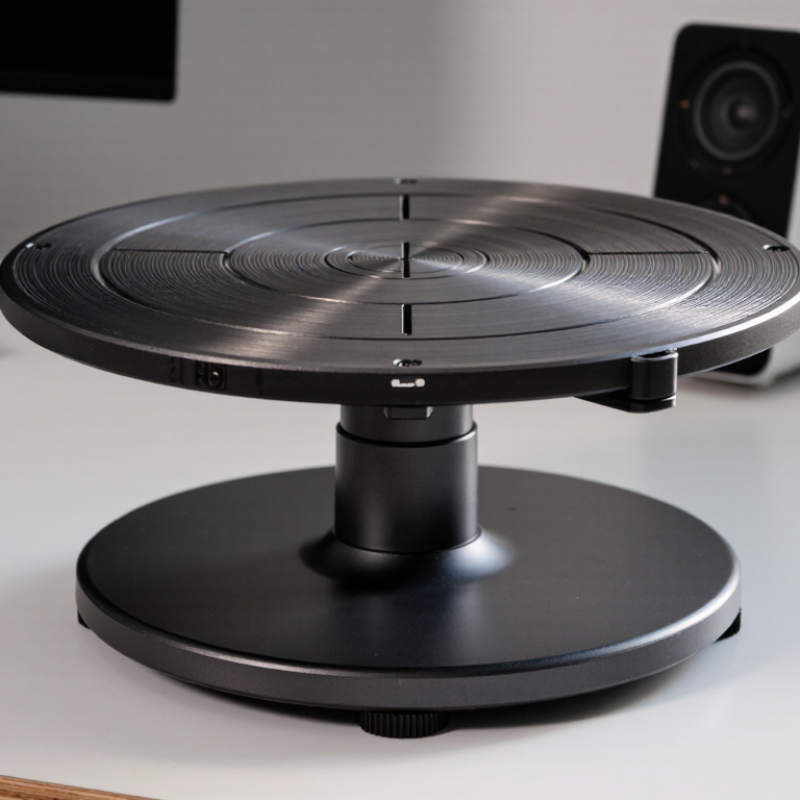
Choosing a 360 degree swivel stand is not simply a matter of finding the smoothest rotation. The stand must suit the object, workspace, and daily handling conditions. A display stand for a lightweight model needs different support than a monitor, camera, speaker, or industrial component.

Industrial design authority Dieter Rams said, “Good design is as little design as possible.” That principle fits this decision well. A reliable stand should rotate easily without looking complicated. Its base should remain stable when the platform turns. The rotating joint should feel controlled, not loose or noisy. Small details matter, including rubber feet, locking positions, cable clearance, and the platform’s surface grip.

Start with the load rating. Check the product’s actual weight, not only its advertised size. A tall object can create more leverage than a compact one. Measure the base diameter and available table space, too. Then consider rotation frequency. Occasional adjustment may need a simple bearing, while constant movement requires stronger materials and better wear resistance.

There is no perfect choice.

I have seen attractive stands wobble because their bases were too light. I have also seen heavy models become frustrating during everyday use. That is why this guide compares stability, rotation quality, construction, capacity, and maintenance needs. Some recommendations may seem overly cautious. They probably are. Yet a few extra checks can prevent scratched furniture, uneven viewing angles, and premature joint failure. The right 360 degree swivel stand should disappear into the experience, supporting movement without demanding attention.
How to Choose a 360 Degree Swivel Stand?

Define Load, Stability, and Rotation Needs for a 360° Swivel Stand

How to Choose a 360 Degree Swivel Stand?

Define load, stability, and rotation needs before choosing a 360° swivel stand. Start with the complete working load, not the product alone. Include the display, tools, cables, fixtures, and any force applied during adjustment. A practical engineering margin is 25% to 50% above the calculated load. It is not excessive. Real users rarely handle equipment gently every time.

Stability depends on the center of gravity, base width, friction, and mounting height. ISO 12100 recommends identifying foreseeable misuse during risk assessment. That matters when a tall object rotates near its top edge. The U.S. Consumer Product Safety Commission reported an estimated annual average of 71,300 emergency-department-treated furniture tip-over injuries from 2018 to 2022. A swivel stand is not identical to furniture, but the warning is relevant: rotation can shift the load path quickly. Test the stand on the actual floor surface, including carpet and slightly uneven workbenches.

Rotation needs should be measured, not guessed. Decide whether you need continuous rotation, fixed positions, or controlled resistance. Check the required turning force with the heaviest load installed. Then inspect backlash, locking accuracy, cable twisting, and cycle life. A smooth empty stand proves little. It may wobble under load. ASME BTH-1 also emphasizes rated load, structural design, and service conditions for lifting-related equipment. Use those principles carefully, even for lighter applications. A perfect calculation can still miss a real-world vibration. That deserves another test.

Compare Bearing Designs by Rated Life, from 5,000 to 50,000 Cycles

Choosing a 360-degree swivel stand starts with defining one cycle. In most applications, one cycle means a complete rotation under a stated load. Do not compare 5,000 and 50,000 cycles without checking test conditions. A 5,000-cycle bearing may suit a display adjusted weekly. A 50,000-cycle design fits equipment repositioned many times each day. Rated life is not a promise for every installation. Load matters. So does speed. A heavy platform can shorten bearing life sharply, even when rotation feels smooth during inspection. In practical testing, uneven loading often causes more trouble than occasional use. That detail is easy to miss.

Compare bearing designs by contact surfaces, sealing, and load direction. Ball bearings often reduce starting torque, while plain bushings can handle slow movement with less complexity. Neither option wins universally. Request cycle-test data, applied load, rotation angle, and failure criteria. “One cycle” should be clearly defined. Check whether testing included dust, moisture, temperature changes, or side loading. A clean laboratory result may not match a workshop floor. For stands near people, examine wobble, pinch points, retention, and noise alongside rated life. Add a realistic safety margin instead of selecting the smallest acceptable number. If expected use reaches 5,000 cycles, a 5,000-cycle bearing leaves no room for misalignment or neglected maintenance. I would also record actual usage after installation. Real data may challenge the original estimate.

Verify Safety Factors, Including a Supplier-Declared 1.5× Load Margin

How to Choose a 360 Degree Swivel Stand?

A 360-degree swivel stand should rotate smoothly without shifting its base. Begin with the actual equipment weight, including cables, adapters, and removable accessories. If the load is 40 kilograms, a supplier-declared 1.5× margin implies testing at 60 kilograms. Confirm what that figure means. Some suppliers describe a design factor, not a completed physical test.

Ask for test conditions, duration, failure criteria, and the stand’s weakest position during rotation. A wide base may resist tipping, while a narrow top plate can still deform. ISO 7173 furniture testing evaluates strength and durability through repeated loading, but it does not automatically certify every swivel mechanism. The standard is useful evidence, not a shortcut.

Look for a signed test report from an independent laboratory. It should identify the sample, applied load, tilt angle, rotation cycles, and permanent deformation.

CPSC injury surveillance has repeatedly linked unstable furniture and television units with serious tip-over injuries, showing why static weight ratings are insufficient. A stand holding 60 kilograms upright may fail when the load sits off-center during a turn.

Try a practical check. Place the intended device on the stand, rotate it slowly, and measure base movement with a ruler. Any sudden scrape, rocking, or visible flex deserves attention.

My own cautious preference is clear: treat 1.5× as a minimum supplier claim, not proof of safety. I would still question it.

Match Materials and Protection Levels with IEC 60529 IP Ratings

When choosing a 360-degree swivel stand, inspect its exposure before comparing finishes. IEC 60529 IP ratings describe protection against solids and water. The first digit covers dust and particles. The second addresses water resistance. An IP65 stand is dust-tight and tolerates water jets. An IP67 model also withstands temporary immersion, but IP67 does not automatically guarantee strong jet protection.

Material selection should support the required protection level. Stainless steel suits damp rooms, washdown areas, and frequent cleaning. Coated aluminum reduces weight, but scratches may expose vulnerable areas. Engineering polymers resist some chemicals and remain comfortable to handle. However, plastic performance can change under ultraviolet light or heat. Check the complete assembly, not only the housing.

Small gaps matter. Examine swivel joints, fasteners, cable entries, and drainage paths. These details often determine real-world reliability. The IP rating belongs to the tested configuration. Adding a different cable gland or drilling a mounting hole can reduce protection. In practical inspections, seals may look intact while losing pressure after repeated movement. That detail is easy to miss. Select a stand with a verified rating matching the actual installation, then confirm cleaning methods, temperature, and movement cycles with the supplier’s technical documentation.

How to Choose a 360 Degree Swivel Stand?

Match Materials and Protection Levels with IEC 60529 IP Ratings

IEC 60529 IP codes use the first digit to describe protection against solid objects and dust, and the second digit to describe protection against water. Higher values generally indicate stronger ingress protection. Select swivel-stand materials, seals, bearings, and fasteners according to the installation environment, while confirming the exact test conditions for IP67 and IP68 applications.

Evaluate Fit, Installation, Maintenance, and Total Cost per Service Year

How to Choose a 360 Degree Swivel Stand?

A 360 degree swivel stand should fit the equipment, workspace, and expected load. Measure the base diameter, mounting holes, height, and available turning clearance. A stand that rotates smoothly in a showroom may bind in a crowded workshop. Check the rated load with a safety margin, not at its maximum limit. Installation also matters. Confirm the floor is level and strong enough for the anchor points. Record the required tools, labor time, and adjustment steps before purchasing. My early estimates were too optimistic because small alignment problems added hours.

Maintenance affects the real cost per service year. Inspect bearings, fasteners, locking parts, and cable paths on a scheduled basis. Remove dust before it reaches moving joints. In humid areas, check for corrosion and apply only suitable protective products. Calculate total cost per service year by adding purchase price, installation, planned maintenance, replacement parts, and downtime. Then divide that amount by the expected service life. A cheaper stand may cost more if it needs frequent repairs. Still, service-life estimates are never perfect. Actual usage can change them.

Tips: Test the rotation under realistic load. Leave hand clearance around the platform. Ask for maintenance instructions and replacement-part availability. Keep an inspection log with dates, symptoms, and corrective work. Small records prevent repeated mistakes.

Copyright 2025 Fluidra S.A. | Created by BCM Marketing Agencia Privacy Policy Legal note | Cookie policy |

Technical cookies are strictly necessary for our website to work and you can navigate through it. These types of cookies are those that, for example, allow us to identify you, give you access to certain restricted parts of the page if necessary, or remember different options or services already selected by you, such as your privacy preferences. Therefore, they are activated by default, your authorization not being necessary in this regard. Through the configuration of your browser, you can block or alert the presence of this type of cookies, although such blocking will affect the proper functioning of the different functionalities of our website.


The analysis cookies allow us to study the navigation of the users of our website in general (for example, which sections of the page are the most visited, which services are used most and if they work correctly, etc.). From the statistical information on navigation on our website, we can improve both the operation of the page itself and the different services it offers. Therefore, these cookies do not have an advertising purpose, but only serve to make our website work better, adapting to our users in general. By activating them you will contribute to this continuous improvement. You can enable or disable these cookies by checking the corresponding box, being disabled by default.


Functionality cookies allow us to remember your preferences, to personalize certain characteristics and general options of our website, every time you access it (for example, the language in which the information is presented to you, the sections marked as favorites, your browser type, etc.) Therefore, this type of cookies does not have an advertising purpose, but by activating them you will improve the functionality of the website (for example, adapting to your type of browser) and the customization of it based on your preferences (for example, by presenting the information in the language that you have chosen in previous occasions), which will contribute to the ease, usability and comfort of our page during your navigation. You can enable or disable these cookies by checking the corresponding box, being disabled by default.


Advertising cookies allow us to manage the advertising spaces included in our website based on criteria such as the content shown or the frequency in which the ads are displayed. For example, if you have been shown the same ad several times on our website, and you have not shown a personal interest by clicking on it, it will not appear again. In summary, by activating this type of cookies, the advertising shown on our website will be more useful and diverse, and less repetitive. You can enable or disable these cookies by checking the corresponding box, being disabled by default.


Behavioral advertising cookies allow us to obtain information based on the observation of your browsing habits and behaviors on the web, in order to show you advertising content that best suits your personal tastes and interests. To understand it in a very simple way, we will give you a fictitious example: if your last searches on the web were related to suspense literature, we would show you advertising about suspense books. Therefore, activating this type of cookies, the advertising that we show you on our website will not be generic, but will be oriented to your searches, tastes and interests, therefore adjusting exclusively to you. You can enable or disable these cookies by checking the corresponding box, being disabled by default.
To understand it in a very simple way, we will give you a fictitious example: if your last searches on the web were related to suspense literature, we would show you advertising about suspense books. Therefore, activating this type of cookies, the advertising that we show you on our website will not be generic, but will be oriented to your searches, tastes and interests, therefore adjusting exclusively to you. You can enable or disable these cookies by checking the corresponding box, being disabled by default.

SAVE

We use our own and third-party cookies to ensure the proper functioning of the website and to analyse our services, improve your experience on our website and show you advertisements related to your interests according to profiling based on your browsing habits (e.g. websites visited). You can accept all cookies by clicking "ACCEPT" or set or reject them by clicking here. If you would like to know more about the use of cookies, please see our COOKIE POLICY.


ACCEPT ALL
Reject no essentials


