
How to Choose an Alkaline Hydrogen Generator
FLUID HANDLING EXPERTS

Blog, all our news

How to Choose an Alkaline Hydrogen Generator

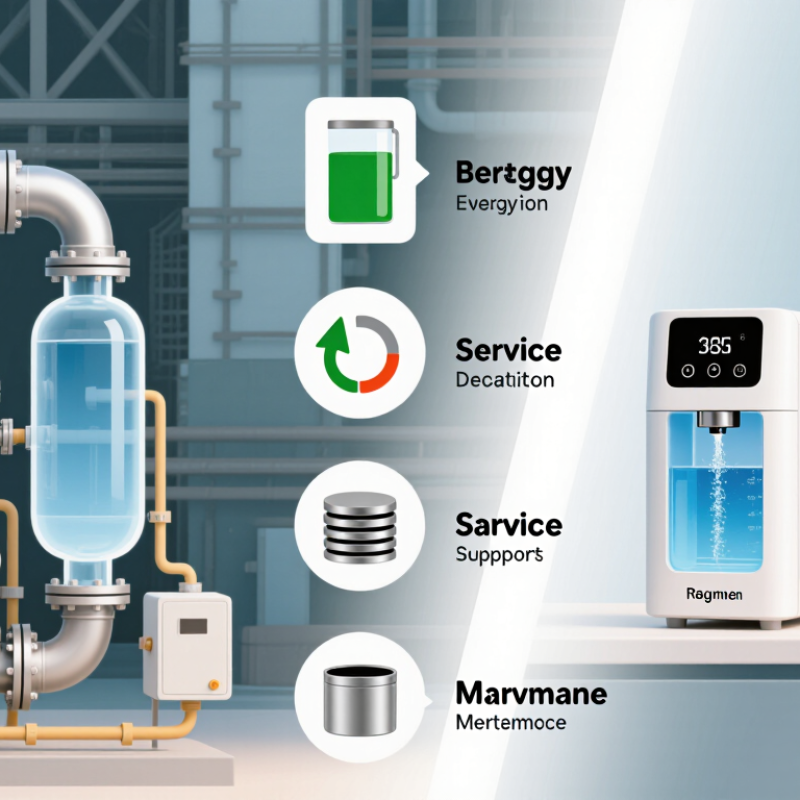
An Alkaline Hydrogen Generator should be chosen for its intended use, not its headline output. For industrial electrolysis, compare rated capacity, energy consumption, operating pressure, stack life, and service support. For household hydrogen-water devices, check measurement methods, water requirements, materials, and independent test records. These are different product classes. Buyers should not treat them as interchangeable.

Scale matters. The International Energy Agency’s Global Hydrogen Review 2024 reports that worldwide hydrogen demand reached about 97 million tonnes in 2023. That market figure does not prove that any particular generator is efficient or suitable. Examine the test conditions behind performance claims, including water quality, temperature, operating duration, and measurement method. Ask about maintenance intervals and replacement-part costs, too. A polished brochure can hide inconvenient details.

IEA Executive Director Fatih Birol said, “Hydrogen is enjoying unprecedented momentum around the world, and this is clearly a positive development.” His statement signals opportunity, not a product endorsement. When evaluating an Alkaline Hydrogen Generator, request a complete datasheet, independent test results, and clear warranty terms. Confirm that installation-specific safeguards address ventilation, leak detection, and electrical protection. Small details matter. If a supplier cannot explain how output was measured, pause. That may be a warning sign, though not proof of poor quality. A sound shortlist starts with transparent evidence, realistic operating needs, and a willingness to revisit assumptions.
How to Choose an Alkaline Hydrogen Generator

Understand How Alkaline Hydrogen Generators Work

An alkaline hydrogen generator uses electricity to split water through electrolysis. Inside the cell, an alkaline solution helps ions move between two electrodes. At the cathode, water molecules gain electrons and form hydrogen gas. At the anode, oxygen forms. A separator keeps the gases apart while allowing ions to pass.

That is the core. Cell design affects how efficiently the unit operates, but efficiency claims need context. Check the stated hydrogen output, operating pressure, power draw, and water requirements together. A figure in liters per hour means little without its test conditions. Water quality matters, too: minerals or contaminants can affect performance and maintenance intervals. The electrolyte also needs careful handling, so follow the equipment manual and use suitable protective measures. Keep the unit in a ventilated space, and inspect hoses and connections for leaks. Small details matter. One overlooked fitting can disrupt operation. It is tempting to treat a generator as a simple appliance, but its electrical and gas systems deserve regular checks. I would also compare maintenance instructions before choosing; they are easy to skim, and that can be a mistake.

Define Your Intended Use and Required Hydrogen Output

Start by describing what the generator must do during a normal work session. A small analytical setup may need a steady, modest flow, while a process pilot may require more gas for longer periods. Estimate the required hydrogen output in the units used on the equipment specification, such as milliliters per minute. Check whether that figure applies at your intended pressure and operating conditions. Specifications can be easy to misread. Small details matter.

Allow for actual demand, not a best-case estimate. If several instruments draw hydrogen at once, add their flow requirements and include a sensible operating margin. Avoid choosing a unit far larger than needed; low-demand operation may not match the conditions behind its rated output. Ask how output was measured, how stable it remains over time, and what water quality and maintenance it requires. Do not guess.

For any setup that produces or uses hydrogen, consider ventilation, ignition sources, and the manufacturer’s operating instructions before installation. I would rather spend time confirming a realistic demand than rely on a generous number in a brochure. The estimate may still be imperfect, so record actual flow during commissioning and revise the selection if the workload changes.

Compare Electrolysis Methods, Water Needs, and Safety Features

How to Choose an Alkaline Hydrogen Generator

Electrolysis method affects water quality, response speed, maintenance, and safety. Alkaline systems use a liquid potassium hydroxide or sodium hydroxide electrolyte. They are mature and generally tolerate variable operating conditions. However, the electrolyte is caustic and requires careful handling. PEM systems use a solid membrane and deionized water. They respond faster to changing electricity, but their water-quality requirements are stricter. Anion exchange membrane systems are developing quickly, yet their long-term field data remains limited.

Water demand is often underestimated. The International Energy Agency’s Global Hydrogen Review 2024 identifies about 9 liters of water per kilogram of hydrogen as the theoretical requirement for electrolysis. Real installations usually need more. Purification, cooling, and rejected water can raise consumption to roughly 10–15 liters per kilogram, depending on design. Check conductivity, hardness, and maintenance records before choosing a unit. Tap water may look clean, but dissolved minerals can quietly damage equipment.

Safety deserves equal attention. ISO 22734:2019 addresses hydrogen generators using water electrolysis, including controls, ventilation, leak detection, and pressure protection. Look for automatic shutdowns, hydrogen sensors, non-return valves, and clear separation from ignition sources. A useful practical test is simple: ask what happens after a sensor fails. If the answer depends only on an operator noticing a warning, the design is incomplete. IRENA’s Green Hydrogen Cost Reduction report also notes that electricity use strongly affects operating cost, often around 50–55 kWh per kilogram of hydrogen. That figure is useful, but real performance can be worse under partial load.

Assess Maintenance, Durability, and Ongoing Costs

How to Choose an Alkaline Hydrogen Generator

Assess maintenance before comparing purchase prices. Alkaline systems use a liquid electrolyte, so check how often it needs testing or replacement. Ask about water-quality requirements, filter changes, seals, and access to service parts. A small leak or clogged filter can interrupt production. The U.S. Department of Energy’s technical targets list 60,000 hours as the current-status lifetime for liquid alkaline electrolyzers, with 80,000 hours as a target. These figures are benchmarks, not guarantees for a specific unit. Real operating conditions matter.

Estimate ongoing costs using your expected operating hours, electricity price, water use, and scheduled maintenance. The IEA’s Global Hydrogen Review 2024 notes that electricity costs are a major factor in renewable hydrogen production costs. That makes efficiency and local power rates important when comparing models. Request a written estimate for routine service and stack replacement, and confirm what the warranty excludes. A spreadsheet helps, but it may still miss downtime costs.

Tips: Ask for maintenance intervals and documented operating-life assumptions. Check whether replacement parts are readily available. Leave room in your budget for unplanned service; real equipment is rarely as tidy as a brochure.

Verify Certifications, Warranty Coverage, and Supplier Support

How to Choose an Alkaline Hydrogen Generator

Certification claims deserve careful checking. Ask for certificates that match the exact model and production site. A generic laboratory report proves very little. Confirm electrical safety, electromagnetic compatibility, and pressure-related testing where applicable. Check the certificate number, issuing laboratory, test date, and covered configuration. Compare the serial label with the submitted documents. Small differences can matter.

Warranty language often hides practical limits. Review coverage for the electrolyzer stack, power supply, sensors, valves, and seals separately. Ask whether labor, shipping, and replacement parts are included. Confirm the warranty period after installation, not only after purchase. Request written procedures for leaks, abnormal temperature, or declining gas output. I once overlooked a service response clause because the product specification looked impressive. That was a poor reading habit.

Supplier support should be tested before payment. Send technical questions and measure the response quality, not just speed. Reliable suppliers provide installation drawings, maintenance intervals, safety training, and readable fault codes. Ask whether trained technicians can support remote diagnosis. Spare parts should have clear part numbers and expected delivery times. Request a sample service record or commissioning checklist. If answers remain vague, pause the purchase. A polished brochure cannot replace traceable documents and dependable assistance.

How to Choose an Alkaline Hydrogen Generator

Use this buyer-focused checklist to compare certification evidence, warranty coverage, and supplier support before purchasing an alkaline hydrogen generator.

The five-point scale represents the recommended verification priority for procurement review, not a supplier or market ranking. Confirm applicable documentation such as ISO 22734 conformity, electrical and machinery safety evidence, written warranty terms, spare-parts availability, and defined technical support response times.

Copyright 2025 Fluidra S.A. | Created by BCM Marketing Agencia Privacy Policy Legal note | Cookie policy |

Technical cookies are strictly necessary for our website to work and you can navigate through it. These types of cookies are those that, for example, allow us to identify you, give you access to certain restricted parts of the page if necessary, or remember different options or services already selected by you, such as your privacy preferences. Therefore, they are activated by default, your authorization not being necessary in this regard. Through the configuration of your browser, you can block or alert the presence of this type of cookies, although such blocking will affect the proper functioning of the different functionalities of our website.


The analysis cookies allow us to study the navigation of the users of our website in general (for example, which sections of the page are the most visited, which services are used most and if they work correctly, etc.). From the statistical information on navigation on our website, we can improve both the operation of the page itself and the different services it offers. Therefore, these cookies do not have an advertising purpose, but only serve to make our website work better, adapting to our users in general. By activating them you will contribute to this continuous improvement. You can enable or disable these cookies by checking the corresponding box, being disabled by default.


Functionality cookies allow us to remember your preferences, to personalize certain characteristics and general options of our website, every time you access it (for example, the language in which the information is presented to you, the sections marked as favorites, your browser type, etc.) Therefore, this type of cookies does not have an advertising purpose, but by activating them you will improve the functionality of the website (for example, adapting to your type of browser) and the customization of it based on your preferences (for example, by presenting the information in the language that you have chosen in previous occasions), which will contribute to the ease, usability and comfort of our page during your navigation. You can enable or disable these cookies by checking the corresponding box, being disabled by default.


Advertising cookies allow us to manage the advertising spaces included in our website based on criteria such as the content shown or the frequency in which the ads are displayed. For example, if you have been shown the same ad several times on our website, and you have not shown a personal interest by clicking on it, it will not appear again. In summary, by activating this type of cookies, the advertising shown on our website will be more useful and diverse, and less repetitive. You can enable or disable these cookies by checking the corresponding box, being disabled by default.


Behavioral advertising cookies allow us to obtain information based on the observation of your browsing habits and behaviors on the web, in order to show you advertising content that best suits your personal tastes and interests. To understand it in a very simple way, we will give you a fictitious example: if your last searches on the web were related to suspense literature, we would show you advertising about suspense books. Therefore, activating this type of cookies, the advertising that we show you on our website will not be generic, but will be oriented to your searches, tastes and interests, therefore adjusting exclusively to you. You can enable or disable these cookies by checking the corresponding box, being disabled by default.
To understand it in a very simple way, we will give you a fictitious example: if your last searches on the web were related to suspense literature, we would show you advertising about suspense books. Therefore, activating this type of cookies, the advertising that we show you on our website will not be generic, but will be oriented to your searches, tastes and interests, therefore adjusting exclusively to you. You can enable or disable these cookies by checking the corresponding box, being disabled by default.

SAVE

We use our own and third-party cookies to ensure the proper functioning of the website and to analyse our services, improve your experience on our website and show you advertisements related to your interests according to profiling based on your browsing habits (e.g. websites visited). You can accept all cookies by clicking "ACCEPT" or set or reject them by clicking here. If you would like to know more about the use of cookies, please see our COOKIE POLICY.


ACCEPT ALL
Reject no essentials


