
2026 How to Choose a Phase Lack Chrome Rectifier?
FLUID HANDLING EXPERTS

Blog, all our news

2026 How to Choose a Phase Lack Chrome Rectifier?

Choosing a Phase Lack Chrome Rectifier in 2026 requires more than comparing current ratings and prices. The right unit must match the chrome plating bath, production schedule, electrical supply, and required coating quality. In practical plating rooms, unstable output can appear as dull deposits, burned edges, or uneven thickness near sharp corners. These defects often begin with poor sizing or weak phase-loss protection.

Start by checking the required DC voltage and current under real operating conditions. Do not rely only on the maximum number shown on a catalog page. Review continuous-duty capacity, ripple percentage, current regulation, and response during load changes. A three-phase input can improve efficiency, but only when the rectifier detects phase failure and protects its transformers, diodes, and control boards. Ask for tested alarm functions, temperature protection, short-circuit behavior, and emergency shutdown details.

Cooling deserves close attention. Dust, heat, and chemical mist can shorten component life, especially near open plating tanks. Choose suitable air or water cooling, sealed cabinets, accessible filters, and corrosion-resistant connections. Confirm the enclosure rating, cable size, busbar design, and local service support. Digital displays and remote monitoring are useful, but they cannot replace accurate meters and regular inspection.

Supplier documentation should include efficiency data, factory test results, spare-parts availability, and installation requirements. Certification claims must be verified for your region and application. The phrase Phase Lack Chrome Rectifier may describe different designs between manufacturers, so define every specification in writing. A lower purchase price can become expensive after repeated downtime. I would still question every optimistic promise. Field conditions are rarely as clean as the brochure suggests.
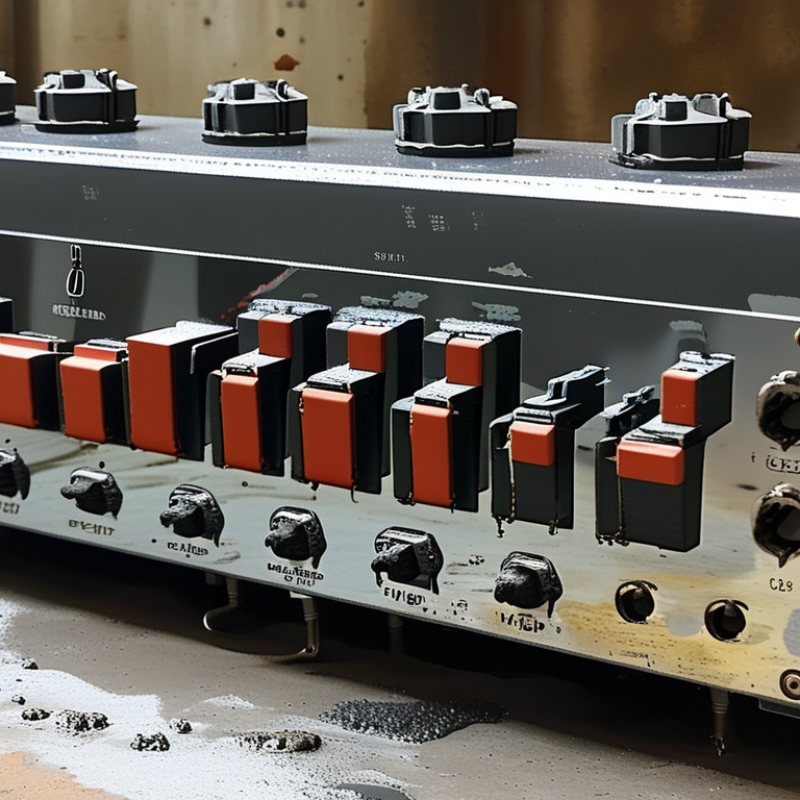
2026 How to Choose a Phase Lack Chrome Rectifier?

Define Phase-Loss Risks in Three-Phase Chrome Plating Rectifiers

A three-phase chrome plating rectifier can continue operating after one input phase disappears. That makes phase loss difficult to notice. The bath may still show output current, while the rectifier works with severe electrical imbalance. Output ripple increases, current regulation becomes unstable, and internal components receive uneven thermal stress.

In practical maintenance, technicians should measure all three line-to-line voltages under load. A no-load test can hide a weak connection. Check input terminals, fuses, contactors, and cable lugs for discoloration or heat marks.

A thermal camera can reveal one overloaded connection within minutes. Also compare rectifier phase currents, DC output ripple, and transformer temperature. Small differences matter.

Coating defects may appear as dull areas, uneven thickness, rough deposits, or poor coverage near part edges. These symptoms can come from chemistry or surface preparation, but phase loss must be excluded before changing the bath.

A current display alone can mislead. I have seen operators adjust voltage repeatedly, while a loose terminal caused the real problem. That assumption is unsafe.

Choose a rectifier with phase-loss detection, over-temperature protection, controlled shutdown, and clear alarm records. Verify the protection settings during commissioning, not only after failure. Keep inspection results with load measurements and photographs. Some systems pass basic checks yet fail during long production cycles. That limitation deserves attention.

Calculate DC Demand: 20–60 A/dm² at 6–12 V for Hard Chrome Baths

2026 How to Choose a Phase Lack Chrome Rectifier?

Calculate the cathode area before selecting a rectifier. Hard chrome baths commonly operate at 20–60 A/dm² and 6–12 V, according to ASM Handbook, Volume 5A: Surface Engineering. An 8 dm² workpiece at 40 A/dm² requires 320 A of direct current. Allow practical headroom, so a 400–450 A rectifier may be more suitable. This margin supports startup demand, contact losses, and bath temperature changes. Voltage should not be guessed. Cable length, busbar resistance, anode spacing, and solution conductivity all affect the required output. The U.S. EPA’s hard chromium electroplating guidance also identifies current control as a critical process factor.

Phase-loss protection matters in three-phase equipment. If one input phase fails, output ripple and heating can rise quickly. The operator may see rough deposits, burning at edges, or uneven thickness. Select a unit with phase-failure alarms, over-temperature protection, adjustable current control, and a readable DC meter. Six-pulse designs can reduce ripple, but actual performance depends on filtering and load conditions. A clean calculation is not enough.

Tips: Measure the largest real cathode area, not an estimated average. Test voltage under load. Keep a written record of current, voltage, bath temperature, and coating thickness. The 20–60 A/dm² range is useful, but every bath needs confirmation. A perfect number on paper can still fail in practice.

2026: How to Choose a Phase-Loss Chrome Rectifier

DC demand for a hard chrome bath is estimated from cathode area and operating current density. Typical operating conditions are 20–60 A/dm² at 6–12 V.

Calculation: DC current = plating area × current density. For example, a 3 dm² cathode area requires approximately 60–180 A at 20–60 A/dm². Select a rectifier with sufficient continuous capacity above the maximum calculated demand, and include phase-loss protection, output-current regulation, and voltage adjustment within the 6–12 V operating range.

Select Input Rating: 380–480 V, 50/60 Hz, and ≥90% Efficiency

2026 How to Choose a Phase Lack Chrome Rectifier?

When choosing a phase lack chrome rectifier, check the incoming supply before studying output current. The practical target is 380–480 V, 50/60 Hz, with three-phase compatibility. Measure the voltage at the installation point, not only from old drawings. Cable length, transformer loading, and production demand can create noticeable variation. A rectifier rated only for 380 V may operate poorly on a 460 V line. That mistake is expensive.

Efficiency should reach at least 90% at the expected working load. Ask for test data at several load levels, because peak efficiency may occur far above normal production. Check the input current, power factor, cooling method, and heat loss. A unit producing 10 kW at 90% efficiency releases about 1.1 kW as heat. The cabinet will feel it. Ventilation matters.

Phase-loss protection deserves direct testing during commissioning. A reliable controller should detect missing phases and reduce risk to power components. Request clear alarm records and reset procedures. Confirm insulation, grounding, overload, and short-circuit protection against applicable electrical requirements. Specifications can look complete yet omit operating temperature or derating details. I have seen selections based on nominal voltage alone, followed by unstable output during busy shifts. Recheck the supply under real production conditions. Leave margin, but do not oversize blindly; an oversized rectifier may run inefficiently at light load.

Compare SCR and IGBT Control with a ≤5% Ripple Target

2026 How to Choose a Phase Lack Chrome Rectifier?

A chrome plating rectifier must maintain stable current through changing bath resistance. A practical selection starts with the ripple target: no more than 5% under the actual working load. Measure ripple at the rectifier output, not only through software. Record voltage, current, bath temperature, and cable length. These details expose problems that catalog figures often miss.

Ask for ripple data at 25%, 50%, and 100% load. A unit showing 3% ripple at full load may exceed 5% during light-load operation. That mistake is common.

SCR Control

SCR control is proven for high-power systems and usually offers a simpler, rugged structure. It adjusts the AC phase angle, but its output can show deeper waveform distortion and slower response. A large transformer and smoothing reactor may be necessary.

IGBT Control

IGBT control switches at higher frequency, allowing faster regulation and smaller filtering components. It can respond better when plating current changes suddenly. However, switching losses, cooling design, and electromagnetic noise need careful evaluation.

Check the measurement bandwidth and sensor position, too. In field testing, long DC cables and loose connections have increased ripple beyond the rectifier’s stated value.

IGBT may suit precision layers and frequent current changes, while SCR can remain practical for steady, heavy-duty production. The correct choice depends on verified test conditions, maintenance skill, and the plating process itself.

Verify Cooling, IP54 Protection, and IEC 60146 Compliance Before Purchase

How to Choose a Phase Lack Chrome Rectifier in 2026

A phase lack chrome rectifier must remain stable when one incoming phase disappears. Ask for measured protection data, not only a sales description. During inspection, check phase-loss detection, alarm response, and shutdown timing. A practical test should use a controlled fault, with current and voltage recorded. This reveals whether protection works under load.

Cooling deserves equal attention. Inspect fan capacity, airflow direction, heat-sink size, and cabinet ventilation. Dusty plating rooms can restrict filters quickly. IP54 protection helps block limited dust entry and water splashes, but it is not waterproof. Check the enclosure certificate and test conditions. IP54 may protect the cabinet while exposed terminals remain vulnerable. That detail is easy to miss.

IEC 60146 compliance should be verified through a declaration, test report, and traceable technical file. Confirm the report matches the exact rectifier model, output range, and cooling method. Ask about ripple, overload behavior, insulation, and emergency stopping. Experienced operators also review service access. A rectifier that needs frequent disassembly wastes production time. I would request a factory acceptance test before purchase. It should record output stability, temperature rise, alarm functions, and phase-loss response. Documentation can look complete yet omit the installed configuration. Check it carefully.

Copyright 2025 Fluidra S.A. | Created by BCM Marketing Agencia Privacy Policy Legal note | Cookie policy |

Technical cookies are strictly necessary for our website to work and you can navigate through it. These types of cookies are those that, for example, allow us to identify you, give you access to certain restricted parts of the page if necessary, or remember different options or services already selected by you, such as your privacy preferences. Therefore, they are activated by default, your authorization not being necessary in this regard. Through the configuration of your browser, you can block or alert the presence of this type of cookies, although such blocking will affect the proper functioning of the different functionalities of our website.


The analysis cookies allow us to study the navigation of the users of our website in general (for example, which sections of the page are the most visited, which services are used most and if they work correctly, etc.). From the statistical information on navigation on our website, we can improve both the operation of the page itself and the different services it offers. Therefore, these cookies do not have an advertising purpose, but only serve to make our website work better, adapting to our users in general. By activating them you will contribute to this continuous improvement. You can enable or disable these cookies by checking the corresponding box, being disabled by default.


Functionality cookies allow us to remember your preferences, to personalize certain characteristics and general options of our website, every time you access it (for example, the language in which the information is presented to you, the sections marked as favorites, your browser type, etc.) Therefore, this type of cookies does not have an advertising purpose, but by activating them you will improve the functionality of the website (for example, adapting to your type of browser) and the customization of it based on your preferences (for example, by presenting the information in the language that you have chosen in previous occasions), which will contribute to the ease, usability and comfort of our page during your navigation. You can enable or disable these cookies by checking the corresponding box, being disabled by default.


Advertising cookies allow us to manage the advertising spaces included in our website based on criteria such as the content shown or the frequency in which the ads are displayed. For example, if you have been shown the same ad several times on our website, and you have not shown a personal interest by clicking on it, it will not appear again. In summary, by activating this type of cookies, the advertising shown on our website will be more useful and diverse, and less repetitive. You can enable or disable these cookies by checking the corresponding box, being disabled by default.


Behavioral advertising cookies allow us to obtain information based on the observation of your browsing habits and behaviors on the web, in order to show you advertising content that best suits your personal tastes and interests. To understand it in a very simple way, we will give you a fictitious example: if your last searches on the web were related to suspense literature, we would show you advertising about suspense books. Therefore, activating this type of cookies, the advertising that we show you on our website will not be generic, but will be oriented to your searches, tastes and interests, therefore adjusting exclusively to you. You can enable or disable these cookies by checking the corresponding box, being disabled by default.
To understand it in a very simple way, we will give you a fictitious example: if your last searches on the web were related to suspense literature, we would show you advertising about suspense books. Therefore, activating this type of cookies, the advertising that we show you on our website will not be generic, but will be oriented to your searches, tastes and interests, therefore adjusting exclusively to you. You can enable or disable these cookies by checking the corresponding box, being disabled by default.

SAVE

We use our own and third-party cookies to ensure the proper functioning of the website and to analyse our services, improve your experience on our website and show you advertisements related to your interests according to profiling based on your browsing habits (e.g. websites visited). You can accept all cookies by clicking "ACCEPT" or set or reject them by clicking here. If you would like to know more about the use of cookies, please see our COOKIE POLICY.


ACCEPT ALL
Reject no essentials


