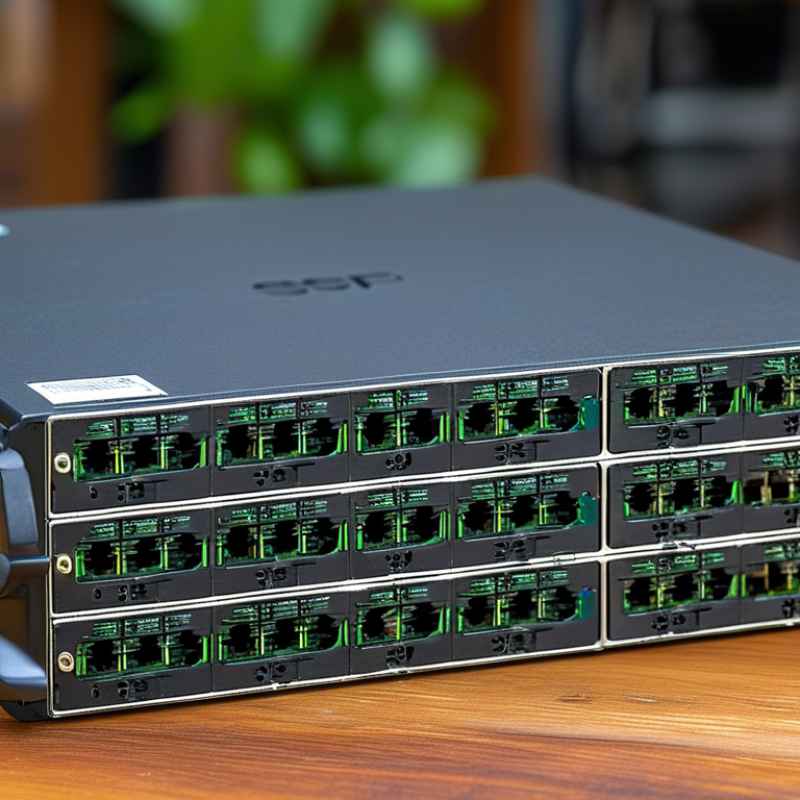
10 Essential Tips for Choosing SFP Optical Transceivers?
Choosing the right SFP Optical Transceivers is crucial for optimal network performance. With numerous options available, it can feel overwhelming. The right choice ensures faster data transfer and reliable connectivity.
Understanding the specific needs of your network is essential. Factors such as distance, bandwidth, and compatibility play significant roles. Many buyers overlook these key aspects, leading to poor decisions.
Additionally, it's vital to consider the quality of the transceivers. Not all products are created equal. Some may fall short in performance or reliability. Investing time in research can help avoid pitfalls. Let’s explore ten essential tips that will guide you in selecting the right SFP Optical Transceivers for your needs.
Understanding SFP Optical Transceivers and Their Importance
SFP optical transceivers play a crucial role in networking. They enable data transmission over various distances and speeds. Understanding their importance can enhance your network's performance and reliability. SFP stands for Small Form-factor Pluggable, and these transceivers are used in various applications, from data centers to enterprise networks.
When choosing SFP optical transceivers, consider the range and speed essential for your setup. A mismatch can lead to bottlenecks or connection issues. Compatibility with existing hardware is another critical factor. Check specifications carefully, as some models may not work seamlessly with all equipment.
Remember to evaluate the type of fiber optic cable you plan to use. Different transceivers are optimized for single-mode or multi-mode fiber. Selecting the right type helps avoid signal loss and ensures data integrity. Pay attention to connector types, as they also impact performance. Adopting these guidelines will not only improve reliability but also enhance your network’s overall efficiency.
10 Essential Tips for Choosing SFP Optical Transceivers
Understanding the importance of SFP Optical Transceivers can help you make informed decisions when selecting components for your networking needs. Below is a comparison chart that outlines key features and their impact on performance and compatibility.
Key Specifications to Consider When Selecting SFP Transceivers
When selecting SFP optical transceivers, you must consider key specifications carefully. The data rate is one crucial aspect. Transceivers often operate at varying speeds, typically from 1 Gbps up to 100 Gbps. Matching the transceiver's data rate with your network’s needs is essential.
Another important specification is the operating distance. SFP transceivers are rated for different distances, from a few hundred meters to over 80 kilometers. It’s vital to assess your network's layout. A common error is choosing a transceiver with insufficient range for your application.
Additionally, consider the type of fiber optic cable being used. Single-mode and multi-mode fibers have different properties and applications. They can significantly impact network performance.
Finally, the form factor and compatibility with existing hardware can’t be overlooked. Not all SFPs fit every device, and interoperability issues can arise. This complexity demands careful evaluation, highlighting the importance of detailed specifications in your decision-making process.
Compatibility with Networking Equipment: Ensuring Seamless Integration
Choosing SFP optical transceivers requires careful consideration, especially regarding compatibility with networking equipment. It’s crucial to ensure that the transceivers you select can seamlessly integrate with your existing infrastructure. Not all transceivers are created equal. Variations in specifications can lead to connectivity issues, downtime, or reduced performance.
Incompatibility often stems from differences in data rates, wavelengths, or connector types. It’s vital to verify that the SFP transceiver matches the requirements of your network devices. Consulting technical documentation can provide insights into supported modules. Additionally, consider the maximum distance and transmission speeds necessary for your operations.
Imagine the frustration of deploying new hardware only to discover it doesn't work properly with your switches. Such situations highlight the importance of thorough research. Seek out community forums and expert reviews to gauge experiences from other users. The right choice can enhance network reliability and efficiency, while poor decisions can affect productivity. Always prioritize compatibility to ensure a smooth network experience.
Evaluating Performance Metrics for SFP Optical Transceivers
When evaluating performance metrics for SFP optical transceivers, several key factors come into play. The data transfer rate is crucial, typically ranging from 100 Mbps to 10 Gbps. This range accommodates various applications, from simple networking to high-bandwidth data centers. According to industry reports, transceivers with higher rates can enhance throughput significantly, impacting overall system performance.
Another essential metric is reach, which defines how far data can travel without degradation. For instance, SFP transceivers designed for short-range applications can reach up to 300 meters using multimode fiber. In contrast, single-mode fiber transceivers can extend beyond 80 kilometers or more. Understanding these specifications helps ensure that the chosen transceiver meets distance requirements effectively.
Temperature ranges also play a critical role. Most SFP optical transceivers operate efficiently within 0 to 70 degrees Celsius. However, specialized models can withstand more extreme conditions. Reliability factors, such as MTBF (Mean Time Between Failures), provide insights into the longevity of the transceiver. A typical MTBF for quality SFPs can exceed 100,000 hours. This data encourages careful consideration of operational environments to prevent premature failures.
Cost Analysis: Balancing Quality and Affordability in Your Choice
When selecting SFP optical transceivers, cost analysis is crucial. A recent industry report shows that companies can save up to 30% by choosing the right combination of quality and price. However, balancing these factors often leads to uncertainty. It is essential to ensure that cost-cutting does not compromise performance.
Consider the specifications carefully. Low-cost options may lack the necessary range or compatibility needed for your setup. According to a survey, 40% of network failures stem from using substandard transceivers. Thus, investing in reliable products is non-negotiable, even if it appears expensive upfront.
Another tip is to evaluate long-term costs. Cheaper devices might require frequent replacements, driving up overall expenses. In the end, quality may provide better value. Ensure your choice enhances the overall reliability and performance of your network. The goal should be to achieve a sustainable and efficient setup that meets your organization’s needs without unnecessary financial strain.
Cepex is the brand for the fluid handling market belonging to the Fluidra group. One of the leading european manufacturer of valves and fittings in thermoplastic materials.
Dedicated to the swimming pool, irrigation and industrial markets, we distribute our products worldwide with the Fluidra commercial network and presence in 46 countries with 136 sales branches.
Your data will be processed by CEPEX S.A., with address at C. Lluís Companys, 51-53, 08400, Granollers (Barcelona), and C.I.F. nº A-08928707, to send you communications about our products based on your interests. You can consult more information about the processing of your data and how to exercise your rights as described in the Privacy Policy.
Technical cookies are strictly necessary for our website to work and you can navigate through it. These types of cookies are those that, for example, allow us to identify you, give you access to certain restricted parts of the page if necessary, or remember different options or services already selected by you, such as your privacy preferences. Therefore, they are activated by default, your authorization not being necessary in this regard. Through the configuration of your browser, you can block or alert the presence of this type of cookies, although such blocking will affect the proper functioning of the different functionalities of our website.
The analysis cookies allow us to study the navigation of the users of our website in general (for example, which sections of the page are the most visited, which services are used most and if they work correctly, etc.). From the statistical information on navigation on our website, we can improve both the operation of the page itself and the different services it offers. Therefore, these cookies do not have an advertising purpose, but only serve to make our website work better, adapting to our users in general. By activating them you will contribute to this continuous improvement. You can enable or disable these cookies by checking the corresponding box, being disabled by default.
Functionality cookies allow us to remember your preferences, to personalize certain characteristics and general options of our website, every time you access it (for example, the language in which the information is presented to you, the sections marked as favorites, your browser type, etc.) Therefore, this type of cookies does not have an advertising purpose, but by activating them you will improve the functionality of the website (for example, adapting to your type of browser) and the customization of it based on your preferences (for example, by presenting the information in the language that you have chosen in previous occasions), which will contribute to the ease, usability and comfort of our page during your navigation. You can enable or disable these cookies by checking the corresponding box, being disabled by default.
Advertising cookies allow us to manage the advertising spaces included in our website based on criteria such as the content shown or the frequency in which the ads are displayed. For example, if you have been shown the same ad several times on our website, and you have not shown a personal interest by clicking on it, it will not appear again. In summary, by activating this type of cookies, the advertising shown on our website will be more useful and diverse, and less repetitive. You can enable or disable these cookies by checking the corresponding box, being disabled by default.
Behavioral advertising cookies allow us to obtain information based on the observation of your browsing habits and behaviors on the web, in order to show you advertising content that best suits your personal tastes and interests. To understand it in a very simple way, we will give you a fictitious example: if your last searches on the web were related to suspense literature, we would show you advertising about suspense books. Therefore, activating this type of cookies, the advertising that we show you on our website will not be generic, but will be oriented to your searches, tastes and interests, therefore adjusting exclusively to you. You can enable or disable these cookies by checking the corresponding box, being disabled by default. To understand it in a very simple way, we will give you a fictitious example: if your last searches on the web were related to suspense literature, we would show you advertising about suspense books. Therefore, activating this type of cookies, the advertising that we show you on our website will not be generic, but will be oriented to your searches, tastes and interests, therefore adjusting exclusively to you. You can enable or disable these cookies by checking the corresponding box, being disabled by default.
We use our own and third-party cookies to ensure the proper functioning of the website and to analyse our services, improve your experience on our website and show you advertisements related to your interests according to profiling based on your browsing habits (e.g. websites visited). You can accept all cookies by clicking "ACCEPT" or set or reject them by clicking here. If you would like to know more about the use of cookies, please see our COOKIE POLICY.