
What Is an Electric Damper Actuator and How Does It Work?
FLUID HANDLING EXPERTS

Blog, all our news

What Is an Electric Damper Actuator and How Does It Work?

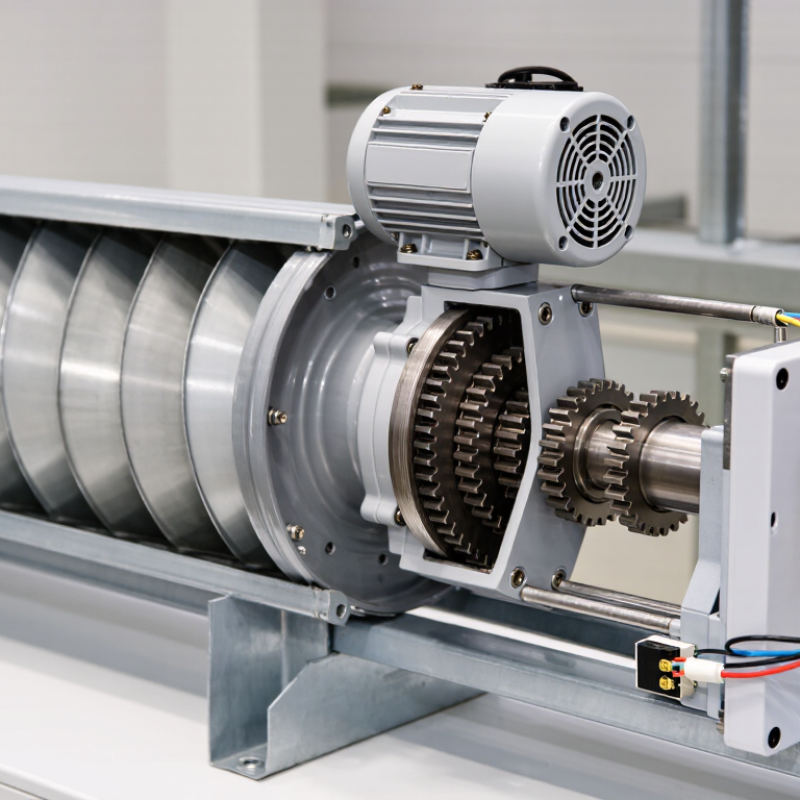
An Electric Damper Actuator converts electrical energy into controlled mechanical movement. It opens, closes, or positions a damper inside an HVAC duct or ventilation system. Picture a small motor turning gears behind a metal access panel. The connected shaft then rotates the damper blades. This movement regulates airflow, pressure, temperature, or room ventilation.

This guide explains how an Electric Damper Actuator works, from the control signal to the final blade position. It examines motors, gear trains, linkages, feedback sensors, and spring-return mechanisms. Some actuators use simple open-and-close commands. Others respond to proportional signals, such as 0–10 volts. These differences affect comfort, energy use, safety, and system response. A practical installation also depends on torque, voltage, shaft size, operating time, and environmental protection.

Real systems are rarely perfect. Dust can increase resistance. Misaligned blades can overload the actuator. A wiring diagram may appear clear, yet field labels can cause mistakes. This is why reliable selection requires the manufacturer’s datasheet, measured damper torque, and careful commissioning. Technicians should confirm full travel, correct rotation, control compatibility, and fail-safe behavior before regular operation. Testing with the actual air-handling equipment often reveals problems that calculations miss.

The sections ahead build a clear technical foundation. They also consider common faults, maintenance needs, and selection decisions. Understanding these details helps engineers, installers, and facility managers choose equipment with greater confidence. Safety-related applications demand additional verification and qualified professional review.
What Is an Electric Damper Actuator and How Does It Work?

What Is an Electric Damper Actuator?

An electric damper actuator is a motorized device that adjusts an air damper inside a ventilation or air-conditioning system. It converts electrical energy into controlled rotary movement. The damper then opens, closes, or holds a selected position. This process regulates airflow through ducts, rooms, or equipment.

A control signal, such as 24 volts or a digital command, tells the actuator how to move. Internal gears increase torque, allowing a small motor to turn a heavy damper blade. Some models use position feedback, so the controller can confirm the blade’s actual angle. For example, a 50% command should produce roughly half-open airflow. The result is not always exact.

Small details matter.

During field inspections, technicians often check shaft alignment, wiring, rotation direction, and mounting strength. A loose bracket can waste motor energy and create a faint rattling sound. Incorrect wiring may drive the damper opposite to the intended direction. This mistake is easy to overlook during quick commissioning. A reliable installation also considers spring-return behavior, operating temperature, required torque, and maintenance access. However, selecting an actuator from airflow alone is incomplete. Damper size, seal friction, pressure difference, and future fouling can change the real load. The specification may look correct on paper, yet perform poorly in a dusty duct. Regular functional testing remains important, even when the actuator appears quiet and responsive.

Key Components and Their Functions

What Is an Electric Damper Actuator and How Does It Work?

An electric damper actuator opens, closes, or modulates an HVAC damper. It converts electrical signals into controlled shaft movement. Its motor supplies torque, while a gear train reduces speed and increases force. This allows precise airflow adjustment inside ducts. A controller sends a command, such as 30% open. The actuator then moves the damper blade toward that position.

Key components determine performance. The housing protects internal parts from dust and vibration. The motor provides rotational power. The gear train transfers that power to the damper shaft. A position sensor confirms the blade angle and supports accurate feedback. Some models include spring return, which drives the damper closed during power loss. Linkages connect the actuator to the blade assembly, but poor alignment can create friction and uneven movement. That detail is easy to underestimate.

The energy impact is practical. The IEA’s Buildings 2023 report states that buildings consume about 30% of global final energy. The U.S. Energy Information Administration’s 2018 CBECS identifies space heating as 32% of commercial building site energy use. A responsive damper system can reduce unnecessary heating and cooling airflow, although savings depend on commissioning.

Tips: Check shaft alignment, torque requirements, and feedback calibration. Listen for gear noise. A quiet actuator is not always a correctly adjusted actuator. Recheck settings after seasonal control changes.

How an Electric Damper Actuator Works Step by Step

An electric damper actuator controls airflow by rotating a damper blade inside a ventilation duct. It receives an electrical command from a thermostat, controller, or building automation system. The signal may be simple on/off power or a variable voltage signal.

The working process happens in clear stages. The controller sends a position command to the actuator. Its internal circuit interprets the signal and powers a small electric motor. The motor turns a set of gears, which increases torque and moves the actuator shaft. This shaft rotates the damper blade, opening or closing the airflow passage. Some models use a spring return when power is removed.

Position feedback then reports the blade angle to the controller. A sensor inside the actuator may measure shaft movement continuously. The controller compares the actual position with the requested position and corrects small errors. This is the closed-loop step. It matters.

During commissioning, a technician checks rotation direction, shaft coupling, travel limits, and wiring polarity. A loose clamp can make the motor run while the damper barely moves. That mistake is easy to miss. Air pressure also changes performance, especially in large ducts. The actuator may reach its limit before the blade seals properly. For reliable operation, testing should include power failure behavior, manual override, and several command positions. A clean installation helps, but it does not replace real airflow checks.

Common Applications in HVAC and Airflow Control

What Is an Electric Damper Actuator and How Does It Work?

An electric damper actuator moves an HVAC damper through a small motor and gear assembly. A controller sends a signal, often 24 volts or 0–10 volts. The actuator then rotates the damper shaft to regulate airflow. Some models provide position feedback, allowing the building management system to confirm actual movement. In practice, this matters when a damper must hold a precise position beside a noisy air-handling unit. The actuator should match the damper’s torque, stroke, voltage, and control method.

Common applications include supply-air balancing, return-air regulation, outdoor-air intake, and variable-air-volume terminals. In economizer systems, actuators adjust outdoor and return dampers as temperature conditions change. They can also support pressure control in laboratories, hospitals, offices, and production spaces. The International Energy Agency reported that building operations represented about 30% of global final energy use and 26% of energy-related emissions in 2022. Better airflow control can reduce unnecessary fan and heating loads, although savings depend on commissioning quality.

The U.S. Department of Energy identifies HVAC as a major share of commercial building energy consumption. A practical installation still needs careful inspection. Loose linkages, incorrect rotation, and blocked blades can defeat an efficient control sequence. Field technicians often discover that the actuator works, but the damper does not fully close. That weakness is easy to overlook. Noise, slow response, and poor sensor placement also affect comfort. No actuator is perfectly quiet, and a design that looks correct on paper may disappoint in operation.

Types, Selection Criteria, and Maintenance Considerations

What Is an Electric Damper Actuator and How Does It Work?

An electric damper actuator moves an HVAC damper with a motor and control signal. It regulates airflow through ducts, fresh-air inlets, and smoke-control systems. The actuator may receive a two-position, floating, or proportional signal. A proportional model can adjust the blade gradually, rather than simply opening or closing it. Common designs include spring-return, non-spring-return, rotary, and linear actuators. Spring-return units drive the damper to a safer position after power loss. That detail matters in ventilation and fire-control applications.

Selection should begin with damper torque, not actuator size alone. Dirt, blade friction, duct pressure, and linkage geometry can increase the required force. Engineers should also check voltage, signal type, stroke angle, operating speed, feedback options, enclosure rating, and ambient temperature. The IEA’s Energy Efficiency 2023 report states that buildings use about 30% of global final energy. Poor damper control can waste a small amount repeatedly, across thousands of operating hours. Small losses become expensive.

Maintenance is practical but often neglected. Inspect the linkage for looseness, listen for abnormal motor noise, and verify full blade movement. Check calibration against the building control display. A clean actuator can still fail when the damper shaft binds. This is the uncomfortable part. Many faults blamed on controls begin with mechanical resistance. ASHRAE guidance supports regular inspection of air-system components, yet maintenance intervals should reflect dust, humidity, cycling frequency, and site experience. When conditions change, the original schedule may need revision.

Copyright 2025 Fluidra S.A. | Created by BCM Marketing Agencia Privacy Policy Legal note | Cookie policy |

Technical cookies are strictly necessary for our website to work and you can navigate through it. These types of cookies are those that, for example, allow us to identify you, give you access to certain restricted parts of the page if necessary, or remember different options or services already selected by you, such as your privacy preferences. Therefore, they are activated by default, your authorization not being necessary in this regard. Through the configuration of your browser, you can block or alert the presence of this type of cookies, although such blocking will affect the proper functioning of the different functionalities of our website.


The analysis cookies allow us to study the navigation of the users of our website in general (for example, which sections of the page are the most visited, which services are used most and if they work correctly, etc.). From the statistical information on navigation on our website, we can improve both the operation of the page itself and the different services it offers. Therefore, these cookies do not have an advertising purpose, but only serve to make our website work better, adapting to our users in general. By activating them you will contribute to this continuous improvement. You can enable or disable these cookies by checking the corresponding box, being disabled by default.


Functionality cookies allow us to remember your preferences, to personalize certain characteristics and general options of our website, every time you access it (for example, the language in which the information is presented to you, the sections marked as favorites, your browser type, etc.) Therefore, this type of cookies does not have an advertising purpose, but by activating them you will improve the functionality of the website (for example, adapting to your type of browser) and the customization of it based on your preferences (for example, by presenting the information in the language that you have chosen in previous occasions), which will contribute to the ease, usability and comfort of our page during your navigation. You can enable or disable these cookies by checking the corresponding box, being disabled by default.


Advertising cookies allow us to manage the advertising spaces included in our website based on criteria such as the content shown or the frequency in which the ads are displayed. For example, if you have been shown the same ad several times on our website, and you have not shown a personal interest by clicking on it, it will not appear again. In summary, by activating this type of cookies, the advertising shown on our website will be more useful and diverse, and less repetitive. You can enable or disable these cookies by checking the corresponding box, being disabled by default.


Behavioral advertising cookies allow us to obtain information based on the observation of your browsing habits and behaviors on the web, in order to show you advertising content that best suits your personal tastes and interests. To understand it in a very simple way, we will give you a fictitious example: if your last searches on the web were related to suspense literature, we would show you advertising about suspense books. Therefore, activating this type of cookies, the advertising that we show you on our website will not be generic, but will be oriented to your searches, tastes and interests, therefore adjusting exclusively to you. You can enable or disable these cookies by checking the corresponding box, being disabled by default.
To understand it in a very simple way, we will give you a fictitious example: if your last searches on the web were related to suspense literature, we would show you advertising about suspense books. Therefore, activating this type of cookies, the advertising that we show you on our website will not be generic, but will be oriented to your searches, tastes and interests, therefore adjusting exclusively to you. You can enable or disable these cookies by checking the corresponding box, being disabled by default.

SAVE

We use our own and third-party cookies to ensure the proper functioning of the website and to analyse our services, improve your experience on our website and show you advertisements related to your interests according to profiling based on your browsing habits (e.g. websites visited). You can accept all cookies by clicking "ACCEPT" or set or reject them by clicking here. If you would like to know more about the use of cookies, please see our COOKIE POLICY.


ACCEPT ALL
Reject no essentials


