What are the Different Types of Valves and Their Uses?
FLUID HANDLING EXPERTS

Blog, all our news

What are the Different Types of Valves and Their Uses?

Valves play a crucial role in various industries, controlling the flow of fluids and gases. Understanding the different types of valves can enhance operational efficiency and safety. There are several types of valves, each designed for specific applications. For instance, gate valves are ideal for fully opening or closing flow. However, they may not provide precise flow control.

Ball valves, known for their durability, offer quick shut-off but can be expensive. Other types of valves, like check valves, prevent backflow and protect equipment from damage. Each type has unique features, making it essential to choose wisely based on the application.

When selecting a valve, consider factors like pressure, temperature, and the medium being handled. Rushing into a decision can lead to inefficiencies and costly mistakes. Understanding the types of valves is key to optimizing system performance and ensuring reliability.
What are the Different Types of Valves and Their Uses?

Types of Valves Based on Operation Mechanism and Function

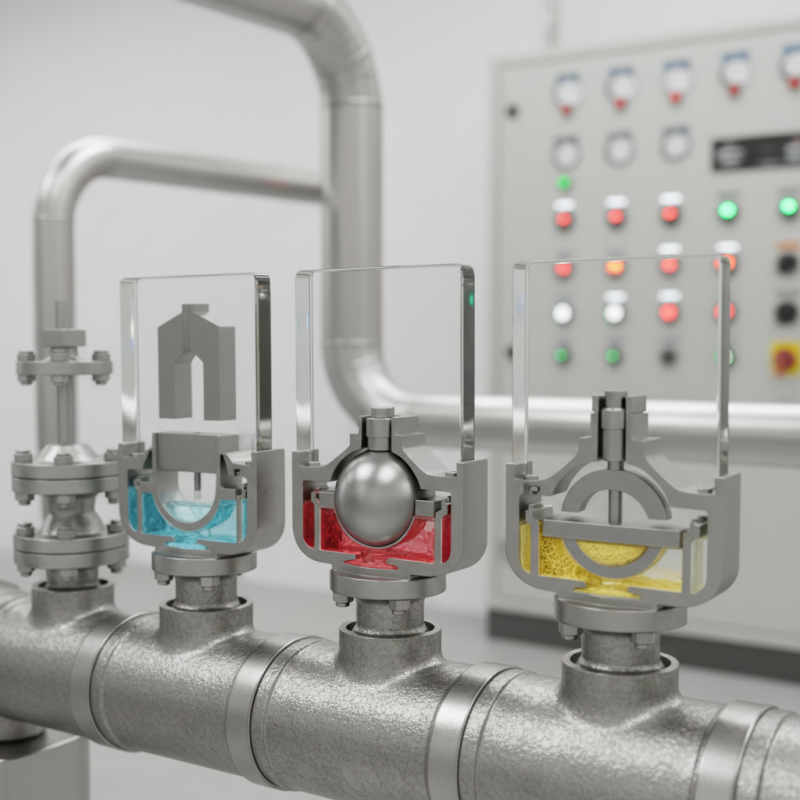
Valves are essential components in various systems. Their operation mechanisms and functions vary significantly. Common types include gate, globe, ball, and check valves. Each type serves a unique purpose in controlling fluid flow.

Gate valves operate by sliding a disk in and out of the flow path. They are ideal for on-off applications. Globe valves regulate flow with a movable disk. They provide fine control over flow rates. Ball valves offer quick shut-off and are robust against pressure fluctuations. Check valves, on the other hand, allow fluid to flow in one direction, preventing backflow.

When selecting a valve, consider application specifics. Temperature and pressure ratings are crucial. Misjudging these can lead to failures. Research from the Global Industrial Valves Market report indicates that the industry is projected to grow at a CAGR of 5.1% from 2021 to 2026. This highlights the need for reliable valve selection to meet future demands.

Tips: Regular maintenance of valves can prolong their lifespan. Inspect seals and connections for wear. Consider environmental conditions; corrosion can compromise performance. Always refer to technical specifications when choosing valves to ensure they align with operational needs. Understanding valve types helps prevent costly mistakes.
Overview of Gate Valves and Their Industrial Applications

What are the Different Types of Valves and Their Uses?

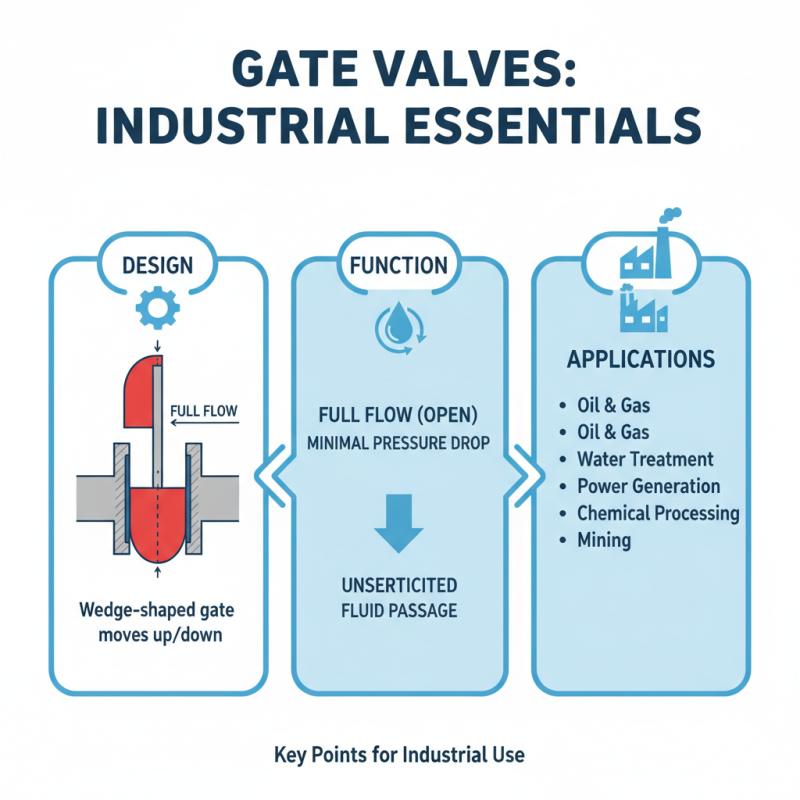
Gate valves are essential components in various industrial applications. They are designed to provide full flow and minimal pressure drop when fully open. The mechanism consists of a wedge-shaped gate that moves up and down. When the valve is opened, it allows fluid to pass through unrestricted.

These valves are commonly used in power plants, water supply systems, and oil refining. In each of these settings, gate valves ensure that fluids are efficiently controlled. For instance, in a water treatment plant, they help manage water flow, which can impact purification processes. Environments may sometimes challenge these valves. They can corrode or wear over time, leading to leaks that require significant maintenance.

Despite their popularity, gate valves have limitations. They are not ideal for throttling applications due to pressure loss. Moreover, the opening and closing actions require considerable time and space. Users should regularly inspect gate valves to maintain optimal functionality. Awareness of these details is crucial for effective valve management in industrial settings.

Understanding Globe Valves: Features and Typical Uses

Globe valves are crucial in various piping systems. They control flow effectively, offering high precision. The unique design features a movable disk and stationary seat. This arrangement allows globe valves to be highly versatile. They are ideal for both throttling and shut-off applications.

Tips: Check the valve material to match your fluid type. This ensures optimal performance and longevity.

Globe valves excel in thermal and physical regulation. They handle high pressure and temperature variations well. However, excessive flow can create turbulence and affect efficiency. It’s important to monitor usage closely. Consider regular maintenance to avoid potential issues.

Tips: Inspect seals and seats regularly. Signs of wear can lead to leaks and reduced performance.

What are the Different Types of Valves and Their Uses? - Understanding Globe Valves: Features and Typical Uses

Type of Valve Features Typical Uses
Globe Valve Good throttling capability, flow regulation Water supply, oil and gas pipelines
Gate Valve Minimal flow resistance, on/off control Pipeline isolating applications
Ball Valve Quick shut off, low resistance Liquid and gas services
Check Valve Prevents backflow, automatic operation Pumping systems, drainage
Butterfly Valve Compact design, quick operation HVAC systems, water treatment

Exploring Check Valves: Types and Their Importance in Fluid Systems

Check valves are crucial components in fluid systems. They ensure that fluids flow in one direction, preventing backflow. This function is vital in preventing damage to pumps and maintaining system efficiency. Check valves play significant roles in various applications, from wastewater management to water supply systems.

There are several types of check valves. Swing check valves use a hinged disc that swings open with forward flow. They are simple yet effective. Lift check valves, on the other hand, use a disc that rises and falls, providing a tighter seal. These are often used in high-pressure applications. At times, selecting the right type can be challenging, demanding thorough understanding and expertise in fluid dynamics.

Understanding the specifications of check valves is essential. Factors like pressure rating and material compatibility matter. A poorly chosen valve can lead to leaks or system failure. Engineers must carefully evaluate their options and consider the long-term implications. Misinformation can result in costly repairs or inefficiencies. Continuous learning in this field is necessary for optimal system performance.

Different Types of Valves and Their Uses

This bar chart illustrates the various types of valves used in fluid systems and their distribution based on common applications. The data represents percentages of usage across several categories.

Diving into Control Valves: Types and Their Role in Process Automation

Control valves play a crucial role in process automation. These valves manage the flow of fluids in various systems. Their function ensures safety, efficiency, and precision in operations. The demands of modern industries require robust and reliable control valves. This necessity drives innovation in their design and functionality.

Different types of control valves exist, each suited for specific tasks. For instance, globe valves are notable for throttling flow effectively. Ball valves, on the other hand, excel in quick shut-off. Butterfly valves offer lightweight options for large volume control. Each type carries its unique pros and cons. Understanding their differences is essential for optimal performance.

While evaluating control valves, it’s vital to consider factors like pressure, temperature, and fluid type. Not all valves will perform well under every condition. Flaws in selection may lead to inefficiencies. Continuous improvement in valve technology is necessary. The industry must reflect on past choices to enhance future designs.

Copyright 2025 Fluidra S.A. | Created by BCM Marketing Agencia Privacy Policy Legal note | Cookie policy |

Technical cookies are strictly necessary for our website to work and you can navigate through it. These types of cookies are those that, for example, allow us to identify you, give you access to certain restricted parts of the page if necessary, or remember different options or services already selected by you, such as your privacy preferences. Therefore, they are activated by default, your authorization not being necessary in this regard. Through the configuration of your browser, you can block or alert the presence of this type of cookies, although such blocking will affect the proper functioning of the different functionalities of our website.


The analysis cookies allow us to study the navigation of the users of our website in general (for example, which sections of the page are the most visited, which services are used most and if they work correctly, etc.). From the statistical information on navigation on our website, we can improve both the operation of the page itself and the different services it offers. Therefore, these cookies do not have an advertising purpose, but only serve to make our website work better, adapting to our users in general. By activating them you will contribute to this continuous improvement. You can enable or disable these cookies by checking the corresponding box, being disabled by default.


Functionality cookies allow us to remember your preferences, to personalize certain characteristics and general options of our website, every time you access it (for example, the language in which the information is presented to you, the sections marked as favorites, your browser type, etc.) Therefore, this type of cookies does not have an advertising purpose, but by activating them you will improve the functionality of the website (for example, adapting to your type of browser) and the customization of it based on your preferences (for example, by presenting the information in the language that you have chosen in previous occasions), which will contribute to the ease, usability and comfort of our page during your navigation. You can enable or disable these cookies by checking the corresponding box, being disabled by default.


Advertising cookies allow us to manage the advertising spaces included in our website based on criteria such as the content shown or the frequency in which the ads are displayed. For example, if you have been shown the same ad several times on our website, and you have not shown a personal interest by clicking on it, it will not appear again. In summary, by activating this type of cookies, the advertising shown on our website will be more useful and diverse, and less repetitive. You can enable or disable these cookies by checking the corresponding box, being disabled by default.


Behavioral advertising cookies allow us to obtain information based on the observation of your browsing habits and behaviors on the web, in order to show you advertising content that best suits your personal tastes and interests. To understand it in a very simple way, we will give you a fictitious example: if your last searches on the web were related to suspense literature, we would show you advertising about suspense books. Therefore, activating this type of cookies, the advertising that we show you on our website will not be generic, but will be oriented to your searches, tastes and interests, therefore adjusting exclusively to you. You can enable or disable these cookies by checking the corresponding box, being disabled by default.
To understand it in a very simple way, we will give you a fictitious example: if your last searches on the web were related to suspense literature, we would show you advertising about suspense books. Therefore, activating this type of cookies, the advertising that we show you on our website will not be generic, but will be oriented to your searches, tastes and interests, therefore adjusting exclusively to you. You can enable or disable these cookies by checking the corresponding box, being disabled by default.

SAVE

We use our own and third-party cookies to ensure the proper functioning of the website and to analyse our services, improve your experience on our website and show you advertisements related to your interests according to profiling based on your browsing habits (e.g. websites visited). You can accept all cookies by clicking "ACCEPT" or set or reject them by clicking here. If you would like to know more about the use of cookies, please see our COOKIE POLICY.


ACCEPT ALL
Reject no essentials