
What is a Cooling Water Pump and How Does It Work?
FLUID HANDLING EXPERTS

Blog, all our news

What is a Cooling Water Pump and How Does It Work?

A Cooling Water Pump is a vital component in many industrial and commercial systems. It plays a crucial role in maintaining equipment temperatures and ensuring optimal performance. Without it, machinery may overheat, leading to failures and costly downtimes. Understanding how a Cooling Water Pump operates is essential for anyone involved in maintenance or engineering.

These pumps circulate water to absorb heat from machines. They push the heated water away and draw in cooler water. This process helps maintain a consistent temperature, promoting efficiency. However, not all Cooling Water Pumps are the same. Their design and functionality can vary significantly between applications. Identifying the right type for specific needs is often overlooked, leading to potential issues.

Regular maintenance of Cooling Water Pumps is critical. Neglect can lead to malfunctions, which may compromise the system. Many users might assume that pumps are self-sufficient, which is a misconception. Understanding their working mechanism can prevent substantial problems. Overall, recognizing the importance and functionality of the Cooling Water Pump is vital in ensuring the longevity and reliability of industrial systems.
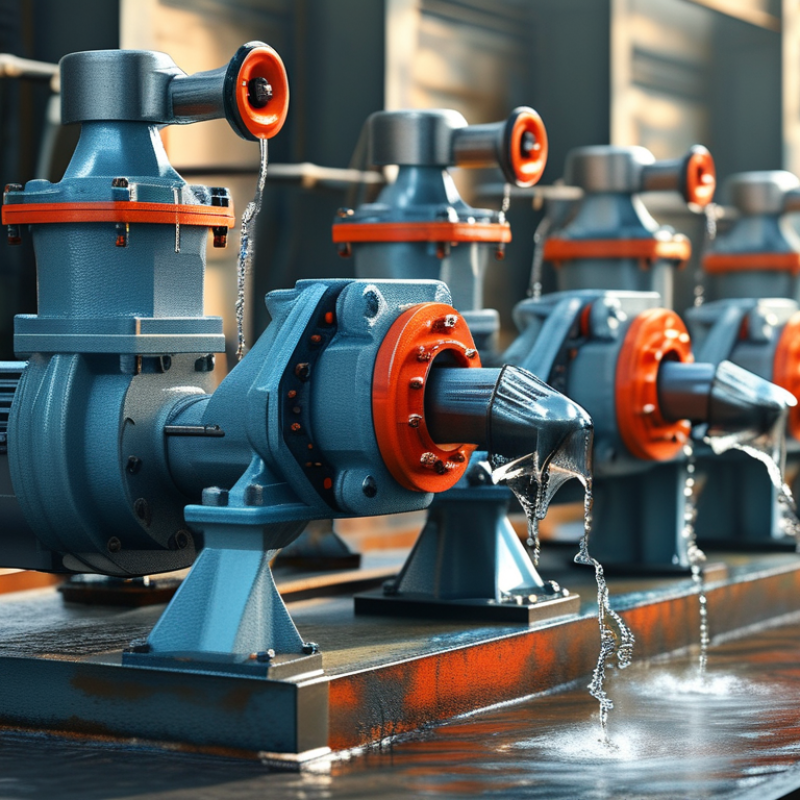
What is a Cooling Water Pump and How Does It Work?

What is a Cooling Water Pump? Definition and Purpose Explained

A cooling water pump is essential in various industries. Its primary function is to circulate water to dissipate heat from equipment. This process prevents overheating, ensuring machinery operates efficiently. The pump helps maintain an optimal temperature for engines, turbines, and other mechanical systems.


Understanding the pump's design is crucial. Typically, it includes an impeller that creates flow and a motor that powers this movement. By drawing water from a source, it transports the fluid through heat exchangers. This setup allows the heat to transfer from the machinery to the water, cooling the system effectively.


While cooling water pumps are reliable, they require regular maintenance to function properly.


Common issues include wear and tear, which can lead to inefficiencies. Proper inspection can detect problems early. However, operators sometimes overlook these checks, which can result in costly downtimes. Addressing these issues ensures longevity and performance. Regular monitoring of pump performance allows for timely interventions. An approach that emphasizes proactive maintenance can enhance reliability over time.

Key Components of Cooling Water Pumps: Parts and Their Functions

Cooling water pumps are essential for many industrial systems. They help circulate water for cooling machinery and equipment. The pump's efficiency directly impacts the operation of these systems. Understanding the key components of cooling water pumps can improve maintenance and performance.

One important part is the impeller. This rotating component moves water through the pump. Its design affects the flow rate and pressure. Another critical component is the motor, which powers the impeller.
Regular checks on these parts can prevent unexpected failures. Seals and bearings play vital roles as well. They ensure the pump operates smoothly and without leaks.

Regular maintenance is crucial but often overlooked. Many operators might not realize the importance of keeping these components in good condition. Neglecting small issues can lead to bigger problems. Over time, the pump's efficiency can decline. Monitoring these parts allows for timely actions, ensuring optimal cooling performance.

How Cooling Water Pumps Operate: Basic Mechanics and Fluid Dynamics

Cooling water pumps play a vital role in industrial systems, ensuring temperature regulation. Understanding their operation reveals the intricate mechanics at play. These pumps typically use centrifugal force to move water efficiently. As the impeller spins, centrifugal force propels water outward, creating suction. This draws in more water and maintains constant flow.


Fluid dynamics is critical in this process. The viscosity and density of the fluid affect pump efficiency. According to the Hydraulic Institute, improper fluid management can reduce pump efficiency by up to 30%. As flow rates increase, turbulence can also escalate. This turbulence can lead to cavitation, damaging the pump. Engineers must consider these factors in design and maintenance.


Regular assessments and recalibrations are essential for optimal operation. Data shows that 60% of cooling systems suffer performance losses due to inadequate maintenance. Industry standards advocate for routine inspections and predictive maintenance. By addressing these issues proactively, operators can enhance efficiency and reliability. Continuous learning from operational data is crucial for improvements. A commitment to understanding these dynamics leads to better performance outcomes.

Applications of Cooling Water Pumps in Various Industries

Cooling water pumps play a vital role across numerous industries. In power generation, these pumps help in dissipating heat from steam systems. According to a report by the International Energy Agency, around 42% of the world's electricity is produced using thermal power plants, making effective cooling essential.

In the manufacturing sector, cooling water pumps are critical for maintaining optimal temperatures during production processes. For example, metalworking requires precise cooling to ensure product quality and prevent warping. The American Society of Mechanical Engineers states that efficient cooling can reduce material waste by up to 15%.

Tip: Regular maintenance of cooling water pumps can extend their lifespan and improve efficiency. Addressing small leaks early can prevent larger issues.

In chemical processing, these pumps support temperature control, which is crucial for reaction efficiency. The Chemical Engineering magazine highlights that systems incorporating advanced cooling technology can increase output by 20%. However, reliance on outdated cooling systems can lead to inefficiencies, increasing costs and downtime.

Tip: Periodic assessments of cooling systems can identify potential upgrades. Investing in newer technologies often pays off through reduced operational costs.

Common Issues and Maintenance Practices for Cooling Water Pumps

Cooling water pumps are essential in many industrial applications, particularly in power plants and chemical processes. However, they are not immune to common issues. One prevalent problem is cavitation, which occurs when vapor bubbles form and collapse, leading to damage. A study indicated that over 30% of pump failures result from cavitation-related issues. Inspecting pump inlet conditions is crucial to prevent this.

Another common issue is wear and tear due to continuous operation. Bearings and seals require regular monitoring. According to industry reports, proper lubrication can extend the pump lifespan by 20-30%. Furthermore, monitoring vibration can detect misalignment or imbalance. Implementing a predictive maintenance strategy can reduce unplanned downtime significantly.

Operators should engage in routine maintenance practices. Regular inspections and cleanings should be scheduled. Ignoring this can lead to buildup and inefficiencies. It's vital to train personnel on troubleshooting techniques. Documenting issues and repairs can improve future maintenance efforts. Each pump system is unique and may have its own quirks. Understanding these can enhance reliability.

Copyright 2025 Fluidra S.A. | Created by BCM Marketing Agencia Privacy Policy Legal note | Cookie policy |

Technical cookies are strictly necessary for our website to work and you can navigate through it. These types of cookies are those that, for example, allow us to identify you, give you access to certain restricted parts of the page if necessary, or remember different options or services already selected by you, such as your privacy preferences. Therefore, they are activated by default, your authorization not being necessary in this regard. Through the configuration of your browser, you can block or alert the presence of this type of cookies, although such blocking will affect the proper functioning of the different functionalities of our website.


The analysis cookies allow us to study the navigation of the users of our website in general (for example, which sections of the page are the most visited, which services are used most and if they work correctly, etc.). From the statistical information on navigation on our website, we can improve both the operation of the page itself and the different services it offers. Therefore, these cookies do not have an advertising purpose, but only serve to make our website work better, adapting to our users in general. By activating them you will contribute to this continuous improvement. You can enable or disable these cookies by checking the corresponding box, being disabled by default.


Functionality cookies allow us to remember your preferences, to personalize certain characteristics and general options of our website, every time you access it (for example, the language in which the information is presented to you, the sections marked as favorites, your browser type, etc.) Therefore, this type of cookies does not have an advertising purpose, but by activating them you will improve the functionality of the website (for example, adapting to your type of browser) and the customization of it based on your preferences (for example, by presenting the information in the language that you have chosen in previous occasions), which will contribute to the ease, usability and comfort of our page during your navigation. You can enable or disable these cookies by checking the corresponding box, being disabled by default.


Advertising cookies allow us to manage the advertising spaces included in our website based on criteria such as the content shown or the frequency in which the ads are displayed. For example, if you have been shown the same ad several times on our website, and you have not shown a personal interest by clicking on it, it will not appear again. In summary, by activating this type of cookies, the advertising shown on our website will be more useful and diverse, and less repetitive. You can enable or disable these cookies by checking the corresponding box, being disabled by default.


Behavioral advertising cookies allow us to obtain information based on the observation of your browsing habits and behaviors on the web, in order to show you advertising content that best suits your personal tastes and interests. To understand it in a very simple way, we will give you a fictitious example: if your last searches on the web were related to suspense literature, we would show you advertising about suspense books. Therefore, activating this type of cookies, the advertising that we show you on our website will not be generic, but will be oriented to your searches, tastes and interests, therefore adjusting exclusively to you. You can enable or disable these cookies by checking the corresponding box, being disabled by default.
To understand it in a very simple way, we will give you a fictitious example: if your last searches on the web were related to suspense literature, we would show you advertising about suspense books. Therefore, activating this type of cookies, the advertising that we show you on our website will not be generic, but will be oriented to your searches, tastes and interests, therefore adjusting exclusively to you. You can enable or disable these cookies by checking the corresponding box, being disabled by default.

SAVE

We use our own and third-party cookies to ensure the proper functioning of the website and to analyse our services, improve your experience on our website and show you advertisements related to your interests according to profiling based on your browsing habits (e.g. websites visited). You can accept all cookies by clicking "ACCEPT" or set or reject them by clicking here. If you would like to know more about the use of cookies, please see our COOKIE POLICY.


ACCEPT ALL
Reject no essentials


