
What Is Stainless Steel Pipe Used For?
FLUID HANDLING EXPERTS

Blog, all our news

What Is Stainless Steel Pipe Used For?

Stainless Steel Pipe supports modern infrastructure in places where strength, cleanliness, and corrosion resistance matter. You can find it in food-processing lines, hospital systems, chemical plants, and building services. It may carry water, steam, gases, or carefully controlled fluids. Its smooth internal surface can reduce contamination risks and simplify routine cleaning. Yet stainless steel is not automatically suitable for every application. The correct grade, wall thickness, connection method, and finish must match the service conditions.

In practical projects, engineers often compare grades such as 304 and 316. Grade 304 performs well in many indoor and general industrial environments. Grade 316 offers stronger resistance to chlorides, salt spray, and several chemical exposures. A coastal installation may therefore need more than a polished appearance. Temperature, pressure, fluid chemistry, and welding quality also influence performance. Small details matter. A poor weld can become the weak point.

This guide examines what Stainless Steel Pipe is used for and why professionals select it. It considers plumbing, construction, energy, manufacturing, and sanitary applications. Reliable decisions depend on verified specifications, recognized standards, and qualified fabrication practices. Product markings and certificates should be checked before installation. That step is easy to overlook. It should not be. In my experience, many failures begin with an assumption that “stainless” means maintenance-free. Regular inspection still helps detect scaling, mechanical damage, or contamination before problems grow. The material is durable, but the system around it deserves equal attention.
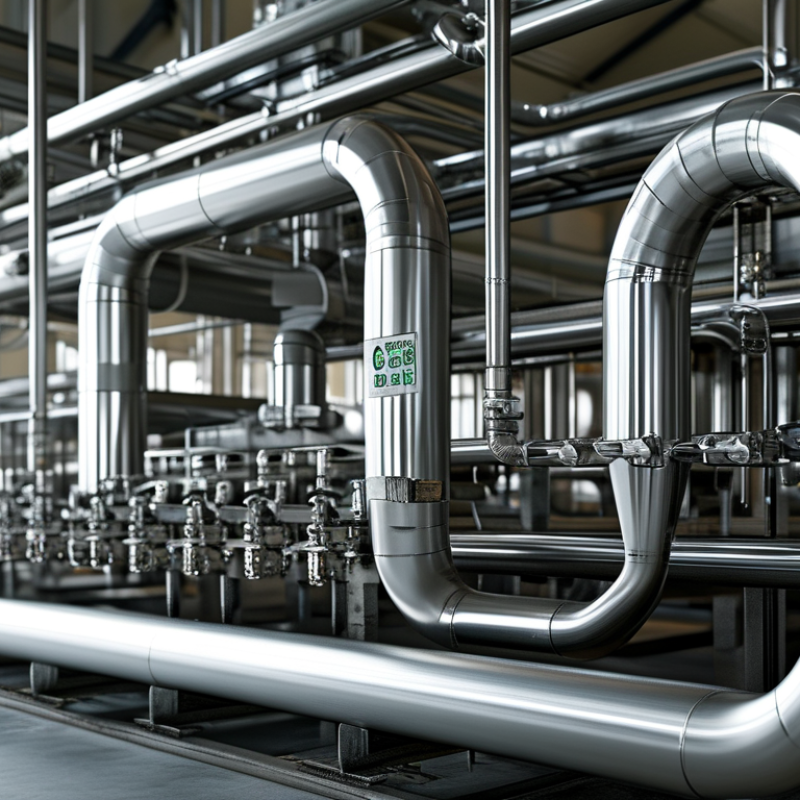
What Is Stainless Steel Pipe Used For?

What Is Stainless Steel Pipe?

Stainless steel pipe is a hollow, cylindrical product made from corrosion-resistant steel. It commonly contains at least 10.5% chromium, which forms a thin protective oxide layer on the surface. Nickel, molybdenum, and controlled carbon levels may improve toughness, chemical resistance, or weldability.

It resists rust. Not completely rust-proof. Salt, stagnant water, surface contamination, and poor cleaning can still cause staining or localized corrosion. That distinction matters when selecting material for a real installation.

Manufacturers produce pipe by forming steel into a round shape and joining the seam, or by shaping it without a welded seam. Welded pipe often suits general systems, while seamless pipe can support demanding pressure conditions when its specification requires it. Wall thickness, outside diameter, pressure rating, temperature, and fluid compatibility should be checked together. A polished surface may help in hygienic areas, but appearance alone does not prove performance. The details matter.

Stainless steel pipe carries water, air, steam, chemicals, food liquids, and process fluids. It appears in plumbing, food processing, hospitals, building structures, marine equipment, and energy facilities. On-site, installers must prevent carbon-steel dust from settling on the surface. Compatible fittings and proper welding procedures also matter. I have seen “corrosion-resistant” treated as “maintenance-free,” which is an unsafe assumption. Inspection remains important near welds, supports, and joints. Choosing the right grade requires service data, not habit or a shiny finish.

How Stainless Steel Pipe Is Made and Classified

Stainless steel pipe is made from carefully controlled alloys containing iron, chromium, and often nickel or molybdenum. Chromium forms a thin passive layer that helps resist rust when the surface has enough oxygen. The process begins with steel strip, plate, or a solid billet. Welded pipe is shaped from flat strip, then joined along its seam with controlled heat or electrical energy. Seamless pipe starts as a heated billet pierced through the center and rolled into a tube. Both routes require sizing, cooling, straightening, and inspection.

Classification depends on manufacturing method, alloy structure, dimensions, and surface condition. Welded pipe usually suits water systems, food processing, and architectural applications where consistent wall thickness matters. Seamless pipe is often selected for higher-pressure or higher-temperature service. Common metallurgical groups include austenitic, ferritic, martensitic, and duplex stainless steels. Their strength, corrosion resistance, magnetic response, and weldability can differ sharply. Not all stainless steel performs equally.

Pipe is also classified by outside diameter, wall thickness, pressure rating, and applicable specifications. A bright finish may look clean, but appearance alone proves little. Internal weld quality, heat treatment, and traceable testing matter more. In practical inspection, technicians check dimensions, surface defects, chemical composition, and sometimes hydrostatic performance. Small scratches can become trouble in chloride-rich environments. That detail is easy to underestimate. Selecting the correct pipe requires matching the alloy and manufacturing route to the actual fluid, temperature, pressure, and installation conditions. Even experienced buyers can oversimplify this decision.

What Is Stainless Steel Pipe Used For? - How Stainless Steel Pipe Is Made and Classified

Classification Dimension Common Category or Grade Typical Characteristics Common Applications
Metallurgical family Austenitic stainless steel Excellent corrosion resistance, good formability and weldability; generally non-magnetic in the annealed condition. Food and beverage lines, architectural features, chemical processing, water systems and heat exchangers.
Metallurgical family Ferritic stainless steel Magnetic, resistant to oxidation and many mildly corrosive environments, with limited hardening by heat treatment. Automotive exhaust components, architectural trim, appliances and general-purpose tubing.
Metallurgical family Martensitic stainless steel Can be hardened by heat treatment; offers higher strength and wear resistance, but usually lower corrosion resistance than austenitic grades. High-strength mechanical parts, pump components, valves and wear-resistant equipment.
Metallurgical family Duplex stainless steel Austenitic-ferritic structure combining high strength with strong resistance to chloride stress-corrosion cracking. Offshore equipment, desalination, chemical processing and industrial piping exposed to chlorides.
Manufacturing method Seamless pipe Made from a solid billet that is pierced and formed; has no longitudinal weld seam. High-pressure service, high-temperature systems, boilers, process piping and critical mechanical applications.
Manufacturing method Welded pipe Produced by forming stainless steel strip or plate into a cylindrical shape and joining the seam by welding. Water distribution, sanitary piping, construction, heat exchangers and general industrial service.
Surface finish Mill finish Basic finish retained from manufacturing, with appearance depending on the forming and heat-treatment process. Utility piping, concealed installations and applications where appearance is not the primary requirement.
Surface finish Polished finish Mechanically processed surface with reduced roughness and improved visual appearance. Decorative railings, visible architectural piping, sanitary equipment and selected food-processing installations.
Service environment Atmospheric and potable-water service Benefits from the chromium-rich passive oxide film that protects the steel from many everyday corrosive conditions. Drinking-water systems, building services, handrails, drainage and outdoor structures.
Service environment Chemical and chloride exposure Requires grade selection based on concentration, temperature, pH and chloride level; higher-alloy or duplex grades may be appropriate. Chemical transfer, seawater-related equipment, process plants and wastewater treatment systems.
Production sequence Typical stainless steel pipe process Steelmaking, casting, forming, welding or piercing, heat treatment, sizing, surface finishing, inspection and cutting. The sequence is adapted to the required grade, dimensions, pressure rating, surface condition and end use.
Key selection factors Grade, size and specification Selection depends on corrosion conditions, operating temperature, pressure, weldability, dimensional requirements and applicable standards. Helps ensure safe performance in plumbing, construction, energy, food processing and industrial piping systems.

Note: Actual material selection should be verified against the fluid composition, temperature, pressure, fabrication method and applicable engineering standard.

What Properties Make Stainless Steel Pipe Useful?

What Is Stainless Steel Pipe Used For?

Stainless steel pipe is used in water systems, food processing lines, chemical equipment, and structural projects. Its value comes from several practical properties, not appearance alone. Chromium-rich steel forms a thin protective oxide layer when exposed to air. This layer helps resist rust and surface staining. If scratched, it can often repair itself naturally in clean, oxygen-rich conditions.

The material also handles heat, pressure, and repeated cleaning better than many ordinary steels. A smooth internal surface leaves fewer places for residue and bacteria to collect. This matters in beverage facilities and sanitary processing areas. Stainless steel also tolerates steam, detergents, and frequent temperature changes. However, corrosion resistance depends on the alloy, weld quality, and surrounding chemicals. It is not automatically immune to damage.

During site inspections, I have seen pipes remain bright after years of warm-water service. I have also seen staining around poorly cleaned welds. Small details matter. Chloride-rich water can cause pitting, especially in narrow gaps or stagnant sections. Correct material selection and proper drainage are essential. The pipe’s strength supports long spans and demanding pressure conditions, but thin walls can still deform under impact. Engineers should check operating temperature, fluid chemistry, wall thickness, and joining methods before installation. Stainless steel is reliable, though treating it as maintenance-free is a mistake.

Where Is Stainless Steel Pipe Commonly Used?

Stainless steel pipe is commonly used where cleanliness, strength, and corrosion resistance matter. In food-processing plants, it carries milk, water, sauces, and cleaning fluids through smooth, washable lines. Operators often inspect welded joints because small surface defects can trap residue. That detail matters.

Hospitals and pharmaceutical facilities use stainless steel pipe for purified water, compressed air, and controlled process systems. Its nonporous surface supports strict hygiene routines when the pipe is correctly finished and maintained. Water-treatment plants also rely on it for filtration equipment, pump connections, and chemical dosing lines. In coastal areas, marine systems use corrosion-resistant grades for seawater exposure, although material selection still requires careful testing.

Construction projects commonly place stainless steel pipe in handrails, fire-sprinkler systems, heating equipment, and visible architectural structures. Engineers may choose different grades, wall thicknesses, and surface finishes for each location. A low-cost choice can become expensive when chlorides, heat, or vibration cause early damage. Stainless steel is not a universal answer. Poor installation can still create leaks, discoloration, or galvanic corrosion near dissimilar metals. Field experience shows that support spacing, welding quality, and regular inspection often matter as much as the pipe itself. iluani

How to Choose the Right Stainless Steel Pipe for Each Application

Stainless steel pipe serves water systems, food processing lines, chemical plants, hospitals, and high-temperature equipment. Its strength and corrosion resistance make it useful where ordinary steel may rust quickly. Yet stainless steel is not one universal material. Choosing the right pipe requires careful attention to the service environment.

Start with the medium.

Identify whether the pipe will carry clean water, saltwater, acidic chemicals, gas, or abrasive liquid. Chlorides can cause localized corrosion, even when the surface looks bright.

Select a suitable stainless steel grade after reviewing chemical concentration, temperature, pressure, and exposure time. Pipe size also matters. A narrow pipe may restrict flow, while an oversized pipe can increase cost and cleaning difficulty.

Check wall thickness and pressure ratings against recognized engineering standards. Welded joints deserve inspection, especially in vibrating or high-pressure systems. Surface finish affects hygiene and maintenance in food or pharmaceutical facilities.

Tips: Ask for material test reports and confirm the actual grade before installation. Inspect threads, welds, and end caps for damage. Consider thermal expansion in long runs. Details matter. A polished surface cannot fix an unsuitable grade. In practice, selection is sometimes less clear than a chart suggests. Real fluids contain impurities, temperatures fluctuate, and maintenance may be imperfect. Consult a qualified materials engineer when conditions change or failure would create serious safety risks.

Copyright 2025 Fluidra S.A. | Created by BCM Marketing Agencia Privacy Policy Legal note | Cookie policy |

Technical cookies are strictly necessary for our website to work and you can navigate through it. These types of cookies are those that, for example, allow us to identify you, give you access to certain restricted parts of the page if necessary, or remember different options or services already selected by you, such as your privacy preferences. Therefore, they are activated by default, your authorization not being necessary in this regard. Through the configuration of your browser, you can block or alert the presence of this type of cookies, although such blocking will affect the proper functioning of the different functionalities of our website.


The analysis cookies allow us to study the navigation of the users of our website in general (for example, which sections of the page are the most visited, which services are used most and if they work correctly, etc.). From the statistical information on navigation on our website, we can improve both the operation of the page itself and the different services it offers. Therefore, these cookies do not have an advertising purpose, but only serve to make our website work better, adapting to our users in general. By activating them you will contribute to this continuous improvement. You can enable or disable these cookies by checking the corresponding box, being disabled by default.


Functionality cookies allow us to remember your preferences, to personalize certain characteristics and general options of our website, every time you access it (for example, the language in which the information is presented to you, the sections marked as favorites, your browser type, etc.) Therefore, this type of cookies does not have an advertising purpose, but by activating them you will improve the functionality of the website (for example, adapting to your type of browser) and the customization of it based on your preferences (for example, by presenting the information in the language that you have chosen in previous occasions), which will contribute to the ease, usability and comfort of our page during your navigation. You can enable or disable these cookies by checking the corresponding box, being disabled by default.


Advertising cookies allow us to manage the advertising spaces included in our website based on criteria such as the content shown or the frequency in which the ads are displayed. For example, if you have been shown the same ad several times on our website, and you have not shown a personal interest by clicking on it, it will not appear again. In summary, by activating this type of cookies, the advertising shown on our website will be more useful and diverse, and less repetitive. You can enable or disable these cookies by checking the corresponding box, being disabled by default.


Behavioral advertising cookies allow us to obtain information based on the observation of your browsing habits and behaviors on the web, in order to show you advertising content that best suits your personal tastes and interests. To understand it in a very simple way, we will give you a fictitious example: if your last searches on the web were related to suspense literature, we would show you advertising about suspense books. Therefore, activating this type of cookies, the advertising that we show you on our website will not be generic, but will be oriented to your searches, tastes and interests, therefore adjusting exclusively to you. You can enable or disable these cookies by checking the corresponding box, being disabled by default.
To understand it in a very simple way, we will give you a fictitious example: if your last searches on the web were related to suspense literature, we would show you advertising about suspense books. Therefore, activating this type of cookies, the advertising that we show you on our website will not be generic, but will be oriented to your searches, tastes and interests, therefore adjusting exclusively to you. You can enable or disable these cookies by checking the corresponding box, being disabled by default.

SAVE

We use our own and third-party cookies to ensure the proper functioning of the website and to analyse our services, improve your experience on our website and show you advertisements related to your interests according to profiling based on your browsing habits (e.g. websites visited). You can accept all cookies by clicking "ACCEPT" or set or reject them by clicking here. If you would like to know more about the use of cookies, please see our COOKIE POLICY.


ACCEPT ALL
Reject no essentials


