
What is a Cold Rolling Machine and How Does It Work?
FLUID HANDLING EXPERTS

Blog, all our news

What is a Cold Rolling Machine and How Does It Work?

A Cold Rolling Machine is a vital piece of equipment in metalworking. It reshapes metal at room temperature, enhancing its strength and surface finish. Understanding how this machine operates is essential for industries that rely on precision metal products.

The process begins with large metal sheets. These sheets are fed into the Cold Rolling Machine, where rollers apply pressure. This pressure reduces the thickness of the sheets while improving their mechanical properties. As a result, the finished product often exhibits increased durability and a smoother finish.

Cold rolling is not without its challenges. Operators must closely monitor the machine's settings. Inaccuracies can lead to defects in the final product. The need for skilled personnel cannot be overstated. Mismanagement could result in costly waste, impacting production efficiency. Learning and refining the operation are ongoing processes in this field.
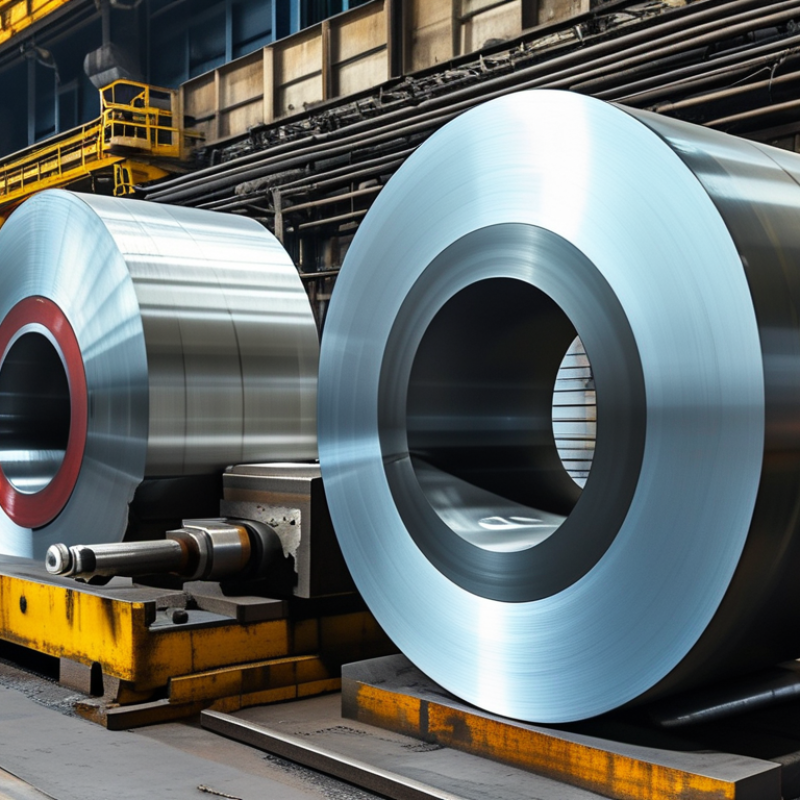
What is a Cold Rolling Machine and How Does It Work?

What is a Cold Rolling Machine? Definition and Overview

A cold rolling machine is crucial in metals processing. It reshapes metal materials at room temperature, improving their strength and surface finish. This process occurs after the initial hot rolling, creating thinner gauge strips or sheets. Cold rolled products often exhibit enhanced mechanical properties. According to industry reports, the global cold rolling market reached USD 27.8 billion in 2021. This growth indicates the rising demand for high-quality, uniform materials.

Cold rolling works by passing metal through paired rollers. The reduction in thickness occurs as the metal deforms without significant heat. This process alters the crystal structure of the metal, making it denser and stronger. Cold rolling also results in a smoother and more polished surface. Interestingly, some manufacturers report a 5-15% increase in yield compared to hot rolled alternatives.

Tip: Regular maintenance of rolling equipment is vital. It helps avoid breakdowns. Keeping machinery in good condition increases productivity and safety as well.

The cold rolling process, while effective, has its challenges. Issues like surface defects and material warping can occur. A thorough understanding of material properties is crucial to mitigate these risks. Operators must continuously monitor their processes to maintain quality standards. An informed approach ensures better outcomes for manufacturers in this highly competitive industry.

Key Components of a Cold Rolling Machine and Their Functions

A cold rolling machine is essential in the metal fabrication industry. These machines convert material into thin sheets or coils through deformation at room temperature. Understanding the key components is important for maximizing efficiency.

The primary part of a cold rolling machine is the rollers. They compress metal to desired thickness. Rollers can be flat or shaped, depending on the end product. Another crucial component is the entry and exit guides. These tools help align the material as it moves through the machine. Proper alignment is critical for uniform thickness throughout the roll.

Additionally, the drive system provides the necessary power for the rollers. It usually consists of motors and gears, ensuring smooth operation. Cooling systems are also significant, preventing overheating during operation. However, managing these systems can be complex. Operators must frequently inspect and adjust coolant flow. Such challenges require careful planning and skilled personnel to ensure consistent quality. Regular maintenance of all components is vital for optimal performance.

Process of Cold Rolling: Step-by-Step Explanation with Industry Stats

The cold rolling process involves several crucial steps. Initially, metal sheets are prepared and cleaned to remove any surface contaminants. This ensures a smooth surface for rolling. The sheets enter the cold rolling mill, where they are passed through a series of rollers. Each pass compresses the metal, reducing its thickness and increasing its strength.

As the cold rolling continues, temperature remains low. This is key to maintaining the desired properties of the metal. The rollers can vary in size and configuration, depending on the specific requirements of the final product. Industry statistics indicate a significant increase in the use of cold-rolled products in sectors such as automotive and construction. However, the process does not come without challenges. Maintaining consistent quality and preventing defects are constant concerns for manufacturers.

Operators must closely monitor the parameters of the rolling process. Factors like speed, tension, and thickness play a vital role. Even minor adjustments can result in noticeable differences. Companies often face difficulties in achieving uniformity in thickness and surface quality. This reflection on potential issues highlights the need for ongoing refinement in cold rolling techniques.

Applications of Cold Rolling in Various Industries and Products

Cold rolling is a key process used in metalworking that produces thinner and stronger sheets of metal. It applies pressure to the material at room temperature, enhancing its properties. This method is essential in various industries, including automotive, aerospace, and construction.

In the automotive industry, cold rolling is critical for creating parts such as body panels and structural components. These parts require high strength and durability. The cold rolling process can improve surface finish and tolerances, which are crucial for vehicle performance. In construction, cold-rolled steel is fundamental for producing beams and columns that support structures. It offers a blend of strength and reduced weight, making it an ideal choice.

However, the cold rolling process is not without challenges. Managing heat during rolling is vital. If not controlled, it can lead to defects in the metal. Additionally, equipment maintenance is crucial for ensuring consistency in production quality. Optimizing the cold rolling process remains an area that manufacturers continuously strive to improve. Experimentation and adaptation are essential to meeting evolving industry demands.

Benefits of Cold Rolling Compared to Hot Rolling: Efficiency and Quality

Cold rolling machines are essential in metal processing, enhancing material properties like strength and surface finish. The cold rolling process operates at room temperature, leading to different advantages compared to hot rolling. One notable benefit is higher dimensional accuracy. Cold rolled products have tighter tolerances, often within ±0.5% of the specified thickness, making them suitable for critical applications.

Efficiency is another major factor. According to industry reports, cold rolling can achieve up to 30% higher yield strength compared to hot rolled materials. This strength improvement is vital for applications in automotive and construction industries, where material performance is paramount. Additionally, cold rolling enhances the surface finish, yielding a smoother product that often requires less machining.

However, the cold rolling process is not without challenges. The increased strength comes with increased brittleness. This aspect can complicate subsequent processing steps, such as forming or welding. Operators must carefully monitor strain and temperature to prevent cracking. Despite these drawbacks, the efficiency and quality benefits often outweigh the negatives, making cold rolling a valuable technique in modern manufacturing.

Copyright 2025 Fluidra S.A. | Created by BCM Marketing Agencia Privacy Policy Legal note | Cookie policy |

Technical cookies are strictly necessary for our website to work and you can navigate through it. These types of cookies are those that, for example, allow us to identify you, give you access to certain restricted parts of the page if necessary, or remember different options or services already selected by you, such as your privacy preferences. Therefore, they are activated by default, your authorization not being necessary in this regard. Through the configuration of your browser, you can block or alert the presence of this type of cookies, although such blocking will affect the proper functioning of the different functionalities of our website.


The analysis cookies allow us to study the navigation of the users of our website in general (for example, which sections of the page are the most visited, which services are used most and if they work correctly, etc.). From the statistical information on navigation on our website, we can improve both the operation of the page itself and the different services it offers. Therefore, these cookies do not have an advertising purpose, but only serve to make our website work better, adapting to our users in general. By activating them you will contribute to this continuous improvement. You can enable or disable these cookies by checking the corresponding box, being disabled by default.


Functionality cookies allow us to remember your preferences, to personalize certain characteristics and general options of our website, every time you access it (for example, the language in which the information is presented to you, the sections marked as favorites, your browser type, etc.) Therefore, this type of cookies does not have an advertising purpose, but by activating them you will improve the functionality of the website (for example, adapting to your type of browser) and the customization of it based on your preferences (for example, by presenting the information in the language that you have chosen in previous occasions), which will contribute to the ease, usability and comfort of our page during your navigation. You can enable or disable these cookies by checking the corresponding box, being disabled by default.


Advertising cookies allow us to manage the advertising spaces included in our website based on criteria such as the content shown or the frequency in which the ads are displayed. For example, if you have been shown the same ad several times on our website, and you have not shown a personal interest by clicking on it, it will not appear again. In summary, by activating this type of cookies, the advertising shown on our website will be more useful and diverse, and less repetitive. You can enable or disable these cookies by checking the corresponding box, being disabled by default.


Behavioral advertising cookies allow us to obtain information based on the observation of your browsing habits and behaviors on the web, in order to show you advertising content that best suits your personal tastes and interests. To understand it in a very simple way, we will give you a fictitious example: if your last searches on the web were related to suspense literature, we would show you advertising about suspense books. Therefore, activating this type of cookies, the advertising that we show you on our website will not be generic, but will be oriented to your searches, tastes and interests, therefore adjusting exclusively to you. You can enable or disable these cookies by checking the corresponding box, being disabled by default.
To understand it in a very simple way, we will give you a fictitious example: if your last searches on the web were related to suspense literature, we would show you advertising about suspense books. Therefore, activating this type of cookies, the advertising that we show you on our website will not be generic, but will be oriented to your searches, tastes and interests, therefore adjusting exclusively to you. You can enable or disable these cookies by checking the corresponding box, being disabled by default.

SAVE

We use our own and third-party cookies to ensure the proper functioning of the website and to analyse our services, improve your experience on our website and show you advertisements related to your interests according to profiling based on your browsing habits (e.g. websites visited). You can accept all cookies by clicking "ACCEPT" or set or reject them by clicking here. If you would like to know more about the use of cookies, please see our COOKIE POLICY.


ACCEPT ALL
Reject no essentials


