
How to Choose the Right Water Hose Connector?
FLUID HANDLING EXPERTS

Blog, all our news

How to Choose the Right Water Hose Connector?

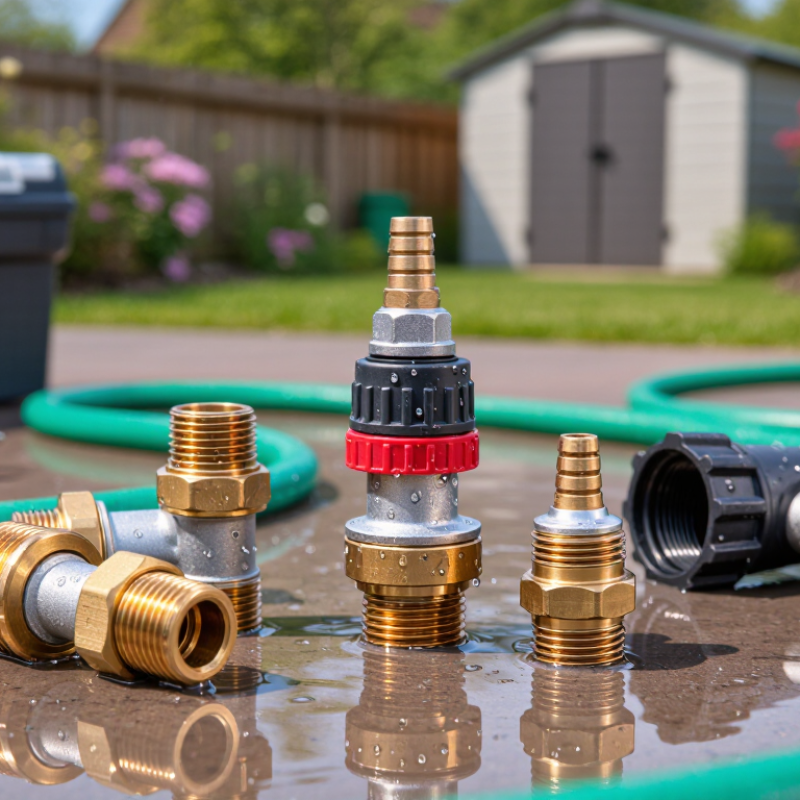
Choosing the right Water Hose Connector is a small decision with significant practical consequences. A connector controls water flow, prevents leakage, and affects how long a hose system remains reliable. In real garden and maintenance work, failures often begin at the connection point. A loose thread, cracked washer, or poorly matched fitting can waste water within minutes.

The U.S. Environmental Protection Agency’s WaterSense leak information reports that household leaks can waste nearly 10,000 gallons of water annually. That figure includes many small, repeated losses. A dripping hose connector may seem harmless. It is not always harmless. Material selection also matters. For drinking-water applications, NSF/ANSI/CAN 61 certification helps verify that components meet health-effect requirements. For outdoor irrigation, temperature, pressure, sunlight, and chemical exposure deserve equal attention.

Size is only part of the answer. Garden hoses commonly use different thread profiles, while quick-connect systems depend on matching plugs, sockets, washers, and seals. Brass offers strength, but some users prefer reinforced plastic because it weighs less. That choice can be reasonable, though impact resistance may suffer. A connector that fits today may still fail after winter storage or repeated twisting. Research summaries from Grand View Research and other market analysts show continuing demand for residential irrigation and garden equipment, but broad market data rarely explains connector failures in detail. This is a limitation worth admitting. The better approach combines manufacturer specifications, recognized standards, hands-on inspection, and the actual working environment. Small details matter.
How to Choose the Right Water Hose Connector?

Define Hose Sizes: 1/2, 5/8, and 3/4 Inch Inside Diameters

How to Choose the Right Water Hose Connector?

Define Hose Sizes: 1/2, 5/8, and 3/4 Inch Inside Diameters

Hose size refers to the inside diameter, not the outer wall. A 1/2-inch hose has a narrower water passage. It suits light watering, small containers, and compact garden tools. Its lower flow can feel gentle, but filling large buckets takes longer. Measure the opening with a ruler before buying a connector. Do not rely on appearance alone.

A 5/8-inch hose is a practical middle choice for many household tasks. It balances flexibility, manageable weight, and useful water flow. A 3/4-inch hose moves more water and works better with longer runs or high-demand sprinklers. However, a larger connector does not automatically improve performance. The faucet, washer, valve, and nozzle must support the same connection standard. Even a small mismatch may cause leaks.

Check the hose’s inside diameter, thread type, and connector insertion depth. Push-fit parts need a firm, even cut. Threaded parts need a correctly seated washer, not excessive force. I have seen people tighten fittings until the plastic deformed. That usually makes the problem worse. Test the connection at low pressure first. Watch for a thin spray around the joint. If flow seems weak, inspect the washer and faucet before blaming the hose size. A 3/4-inch hose can still underperform when its passage narrows at the connector. Measurement is simple, but it is often skipped.

How to Choose the Right Water Hose Connector? - Define Hose Sizes: 1/2, 5/8, and 3/4 Inch Inside Diameters

Hose Inside Diameter Metric Equivalent Approximate Flow Area Typical Applications Connector Selection Guidance Important Sizing Check
1/2 inch 12.7 mm inside diameter Approximately 127 mm² Light-duty watering, compact gardens, plant containers, and short hose runs Choose a connector specifically rated for 1/2-inch inside-diameter hose. For barbed fittings, the barb should be designed for this hose size and secured with an appropriate clamp. Measure the hose opening; outside diameter varies with wall thickness and should not be used as the hose-size reference.
5/8 inch 15.875 mm inside diameter Approximately 198 mm² General-purpose garden watering, spray nozzles, hose reels, and medium-length runs Use a 5/8-inch hose connector or an adapter clearly specified for 5/8-inch inside diameter. Match any threaded end to the mating thread standard and size. A 5/8-inch hose is not automatically compatible with a 1/2-inch connector; a mismatch can restrict flow or cause leakage.
3/4 inch 19.05 mm inside diameter Approximately 285 mm² Higher-volume watering, long hose runs, irrigation supply, and applications where pressure loss should be reduced Select a connector rated for 3/4-inch inside-diameter hose. Use a full-flow connector when maintaining water volume is important. Confirm that the faucet, valve, splitter, and connector all have compatible thread sizes; hose diameter and thread diameter describe different dimensions.
Selection tip: Hose size refers to the inside diameter, while a threaded connector is identified by its thread size and standard. For a reliable connection, match the hose inside diameter, connector type, thread specification, pressure rating, and sealing method.

Match Thread Standards: 3/4-Inch GHT, NPT, and BSP Connections

How to Choose the Right Water Hose Connector?

Match Thread Standards: 3/4-Inch GHT, NPT, and BSP Connections

A 3/4-inch label alone does not guarantee compatibility. It describes size, not thread design. GHT, or Garden Hose Thread, commonly uses 3/4-11.5 threads. It seals with a flat washer inside the female connector. The threads mainly provide clamping force. Do not expect thread sealant to fix a missing washer.

NPT is a tapered pipe thread used on many plumbing fittings. A 3/4-inch NPT connection has a different pitch and sealing method from GHT. Its tapered threads tighten gradually and usually need an approved thread sealant. BSP connections can be parallel, called BSPP, or tapered, called BSPT. A 3/4-inch BSP thread may look close to NPT, but the angle and pitch can differ. They should not be forced together.

I once inspected a leaking outdoor assembly that appeared correctly sized. The problem was a 3/4-inch NPT adapter connected to a GHT hose fitting. Not a perfect assumption. Measure the outside diameter, count the thread pitch, and identify whether the thread is straight or tapered. A thread gauge is helpful, while a product drawing offers stronger evidence. Check the sealing face, too. A gasket, O-ring, or tapered thread requires a matching connector design. Hand tightening should feel smooth; cross-threading often starts with unnecessary force. 马会

Compare Materials: Brass, Stainless Steel, Plastic, and EPDM Seals

How to Choose the Right Water Hose Connector?

Material choice affects leakage, corrosion, weight, and service life.

Brass feels solid and handles repeated threading well. However, untreated brass may release lead into drinking water. For potable applications, check NSF/ANSI/CAN 61 certification and the connector’s stated lead content.

Stainless steel usually offers stronger corrosion resistance, especially near salt air.

The NACE IMPACT study estimated global corrosion costs at about 3.4% of worldwide GDP. That makes corrosion resistance more than a cosmetic concern.

Plastic connectors are light, affordable, and comfortable in cold weather. They can crack under impact, excessive tightening, or long ultraviolet exposure. A shaded connector may last longer, but this is not guaranteed.

EPDM seals perform well against water, ozone, and outdoor weather. They are less suitable for petroleum-based oils.

EPA WaterSense reports that outdoor residential water use can reach nearly 9 billion gallons daily in the United States. Small leaks deserve attention.

Tips: Match the connector to hose diameter and working pressure. Avoid forcing mismatched threads. Tighten by hand, then add a small turn with pliers. Inspect the EPDM seal for flattening or cuts. Replace it when necessary. Stainless steel is often the safer coastal choice, while plastic suits light garden use. Brass remains practical for frequent connection and disconnection, but material certification matters. I still recheck the seal after the first hour. Tiny leaks can appear later.

Check Pressure Ratings Against Working and Burst-Pressure Specifications

Choosing a water hose connector starts with pressure, not thread style or appearance. Check the connector’s working-pressure rating against the system’s normal operating pressure. Then compare its burst-pressure rating with possible surges, not just the gauge reading. Working pressure is the limit for continuous, repeated use. Burst pressure describes failure under extreme force, usually during testing. It is not a safe operating target. A connector rated for 150 psi working pressure may still fail if a pump starts abruptly or a valve closes suddenly. Pressure can rise faster than a dashboard gauge shows. I learned this during irrigation maintenance, when a short connector section leaked after repeated pump cycling. The static reading looked acceptable. The pressure spikes were not.

Read the specification under its stated conditions. Temperature, water quality, hose material, connection method, and sealing condition can change performance. Heat often reduces pressure capacity, while damaged threads can create a weak point. Select a connector whose working rating exceeds the highest expected operating pressure, including startup and shutdown changes. Treat the lowest-rated component as the practical limit. The hose, clamp, adapter, and connector must work together. Check whether the listed burst pressure was measured with water, at a particular temperature, and with a new part. Those details matter. A worn gasket may need replacement before installation. Keep it simple. Avoid guessing. If pressure data is uncertain, measure it with a suitable gauge and choose a more conservative rating. I still revisit these choices after installation, because real systems rarely behave exactly like test setups. That hesitation is useful; confidence without verification can damage equipment.

Select Connector Types for Irrigation, Pressure Washers, and Garden Hoses

Choosing a water hose connector starts with the job, not appearance. For irrigation, use quick-connect fittings with a shutoff valve and backflow protection. Drip systems need smaller barbed connectors, while sprinklers usually need 3/4-inch threaded adapters. The U.S. EPA WaterSense program reports that landscape irrigation represents nearly one-third of residential water use, or almost 9 billion gallons daily. A loose connector can waste water silently. Check it after installation.

Pressure washers require stricter matching. Select a connector rated above the machine’s maximum pressure and flow rate. Confirm the thread pattern, such as M22, before buying an adapter. A fitting may lock firmly but still leak through a mismatched seal. Inspect the O-ring for flattening, cuts, or grit. The U.S. Department of Energy notes that outdoor water equipment can consume substantial water during repeated use, so flow control matters. Do not rely on pressure alone. GPM matters too.

Garden hoses commonly use 3/4-inch hose-thread connections. Choose a swivel connector for faucets and a quick-connect pair for frequent tool changes. Brass offers durability, while reinforced polymers are lighter and easier on delicate tap threads. ASME B1.20.7 guidance helps distinguish hose coupling threads from ordinary pipe threads. I once tightened a connector too hard and damaged the washer. That mistake was avoidable. Hand-tighten first, then add a small adjustment with pliers. Recheck after the hose warms in sunlight. Water expands into small gaps, and fittings that looked perfect may begin to drip.

How to Choose the Right Water Hose Connector?

This practical fit score compares common connector types for irrigation, pressure washers, and garden hoses. Threaded connectors provide secure fixed connections, quick-connect couplings support frequent tool changes, barbed fittings are commonly used with flexible irrigation tubing and clamps, while cam-and-groove couplings are better suited to larger-volume water transfer systems. Always confirm hose diameter, thread standard, seal type, and maximum working pressure before installation.

Copyright 2025 Fluidra S.A. | Created by BCM Marketing Agencia Privacy Policy Legal note | Cookie policy |

Technical cookies are strictly necessary for our website to work and you can navigate through it. These types of cookies are those that, for example, allow us to identify you, give you access to certain restricted parts of the page if necessary, or remember different options or services already selected by you, such as your privacy preferences. Therefore, they are activated by default, your authorization not being necessary in this regard. Through the configuration of your browser, you can block or alert the presence of this type of cookies, although such blocking will affect the proper functioning of the different functionalities of our website.


The analysis cookies allow us to study the navigation of the users of our website in general (for example, which sections of the page are the most visited, which services are used most and if they work correctly, etc.). From the statistical information on navigation on our website, we can improve both the operation of the page itself and the different services it offers. Therefore, these cookies do not have an advertising purpose, but only serve to make our website work better, adapting to our users in general. By activating them you will contribute to this continuous improvement. You can enable or disable these cookies by checking the corresponding box, being disabled by default.


Functionality cookies allow us to remember your preferences, to personalize certain characteristics and general options of our website, every time you access it (for example, the language in which the information is presented to you, the sections marked as favorites, your browser type, etc.) Therefore, this type of cookies does not have an advertising purpose, but by activating them you will improve the functionality of the website (for example, adapting to your type of browser) and the customization of it based on your preferences (for example, by presenting the information in the language that you have chosen in previous occasions), which will contribute to the ease, usability and comfort of our page during your navigation. You can enable or disable these cookies by checking the corresponding box, being disabled by default.


Advertising cookies allow us to manage the advertising spaces included in our website based on criteria such as the content shown or the frequency in which the ads are displayed. For example, if you have been shown the same ad several times on our website, and you have not shown a personal interest by clicking on it, it will not appear again. In summary, by activating this type of cookies, the advertising shown on our website will be more useful and diverse, and less repetitive. You can enable or disable these cookies by checking the corresponding box, being disabled by default.


Behavioral advertising cookies allow us to obtain information based on the observation of your browsing habits and behaviors on the web, in order to show you advertising content that best suits your personal tastes and interests. To understand it in a very simple way, we will give you a fictitious example: if your last searches on the web were related to suspense literature, we would show you advertising about suspense books. Therefore, activating this type of cookies, the advertising that we show you on our website will not be generic, but will be oriented to your searches, tastes and interests, therefore adjusting exclusively to you. You can enable or disable these cookies by checking the corresponding box, being disabled by default.
To understand it in a very simple way, we will give you a fictitious example: if your last searches on the web were related to suspense literature, we would show you advertising about suspense books. Therefore, activating this type of cookies, the advertising that we show you on our website will not be generic, but will be oriented to your searches, tastes and interests, therefore adjusting exclusively to you. You can enable or disable these cookies by checking the corresponding box, being disabled by default.

SAVE

We use our own and third-party cookies to ensure the proper functioning of the website and to analyse our services, improve your experience on our website and show you advertisements related to your interests according to profiling based on your browsing habits (e.g. websites visited). You can accept all cookies by clicking "ACCEPT" or set or reject them by clicking here. If you would like to know more about the use of cookies, please see our COOKIE POLICY.


ACCEPT ALL
Reject no essentials



