How to Choose the Right Medium Voltage Drive?
FLUID HANDLING EXPERTS

Blog, all our news

How to Choose the Right Medium Voltage Drive?

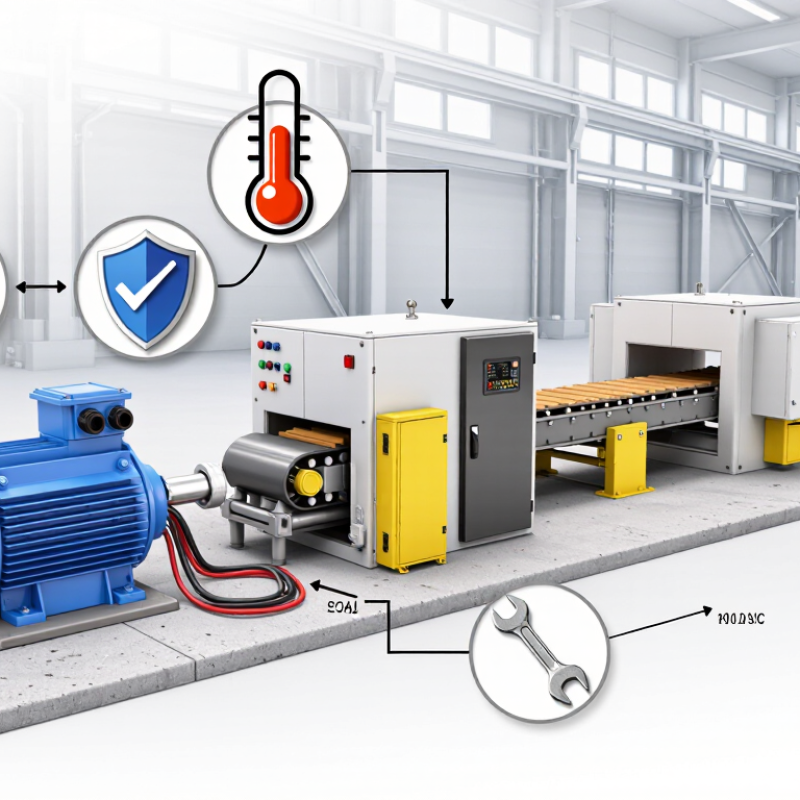
Choosing the right medium voltage drive is not a simple matter of matching voltage ratings. It is a system decision involving the motor, load, process, installation, and maintenance plan. A drive that looks efficient on paper may perform poorly beside a dusty conveyor or a pump with frequent starts.

Dr. Peter Vas, a respected motor-drive researcher, offered a useful principle: “A drive should be selected for the complete system, not for the motor alone.” That idea remains practical. Engineers should examine motor power, starting torque, speed range, overload demand, harmonic limits, cooling conditions, and available space. They should also check whether the drive supports the motor’s insulation system and existing protection equipment.

The load tells the real story. A centrifugal pump may need steady speed control, while a crusher can demand sudden torque. These applications cannot share the same selection logic. Site temperature matters. So do cable length, altitude, dust, moisture, and access for service technicians.

Do not ignore failure scenarios. What happens during a bypass transfer? Can the process stop safely? Is a spare power cell available? These questions are less attractive than efficiency claims, yet they often protect production.

There is no perfect choice.

A reliable medium voltage drive should deliver suitable control, manageable maintenance, and predictable lifecycle costs. However, early specifications are sometimes incomplete. That weakness deserves attention, not concealment. A careful comparison of technical data, field experience, supplier support, and total ownership cost can turn uncertainty into a defensible engineering decision.

How to Choose the Right Medium Voltage Drive?

Define the Role and Operating Conditions of a Medium Voltage Drive

Choosing the right medium voltage drive starts with defining its role. A drive may control speed, limit starting current, or protect a production process. These functions require different control strategies and protection settings.

Before selecting equipment, study the driven machine and its duty cycle. Record motor voltage, rated power, starting torque, load inertia, and expected speed range. Check whether the load runs continuously, cycles frequently, or operates under sudden changes. A pump may need smooth acceleration, while a crusher demands strong low-speed torque. I have seen projects fail because the motor rating was checked, but the actual load profile was ignored. The nameplate is only one piece of evidence.

Operating conditions also shape the design. Measure ambient temperature, altitude, humidity, dust, and available ventilation. Confirm the incoming fault level and the cable length to the motor. Long cables can increase insulation stress and reflected-wave effects. Harmonic limits may affect upstream transformers and power-quality equipment. Maintenance access matters too. A technically suitable drive becomes impractical if filters, cooling paths, or isolation points are difficult to reach. Keep it serviceable.

Ask what happens during a power interruption. The drive may need controlled restart, ride-through capability, or a safe shutdown sequence. Review bypass requirements and emergency operating procedures with plant personnel. Do not assume laboratory performance matches field conditions. Site measurements can reveal heat, vibration, or unstable supply conditions that calculations miss. A neat spreadsheet is not enough. The final specification should reflect real operation, not an ideal one.

Compare Motor, Load, and System Compatibility Requirements

Choosing the right medium voltage drive starts with compatibility, not catalog power. The motor sets the electrical boundaries. Record rated voltage, current, frequency, insulation class, and permissible speed range. A motor may accept variable-speed operation, yet its insulation can struggle with steep voltage pulses. Ask for documented pulse withstand data, not a verbal assurance. Check cooling, because a self-cooled motor may overheat at low speed. This detail is often missed. Check it twice.

The load defines how the drive behaves in practice. A pump, fan, compressor, and conveyor demand different torque patterns. Plot starting torque, continuous torque, overload duration, and stopping requirements across the full speed range. For a high-inertia fan, deceleration may require braking analysis or a longer coast-down period. For a conveyor, sudden torque changes can expose weak control settings. Do not size from horsepower alone. I have seen an apparently generous rating fail because the load cycle was misunderstood. Maybe the operating data was incomplete.

System compatibility includes incoming power quality, transformer impedance, grounding, harmonics, protection, and control interfaces. Review short-circuit levels and motor cable length before selection. Long cables can increase reflected-wave stress and leakage current. Confirm bypass arrangements, emergency stopping behavior, and communication with the process controller. Maintenance teams also need safe isolation points and clear diagnostic access. A technically suitable drive can still disrupt production if enclosure cooling or room ventilation is inadequate. Leave room for measurements after installation. Field conditions rarely match the spreadsheet perfectly.

How to Choose the Right Medium Voltage Drive?

Compare Motor, Load, and System Compatibility Requirements

The chart compares idealized torque requirements at 25, 37.5, and 50 Hz, using rated motor torque as 1.0 per unit. Variable-torque loads such as centrifugal pumps and fans follow the affinity law, where torque is proportional to speed squared. Constant-torque loads maintain approximately the same torque across the operating range, while constant-power loads require higher torque at lower speed.

Motor Compatibility

Match the drive with the motor nameplate voltage, rated frequency, full-load current, insulation level, speed range, and cooling method.

Load Compatibility

Confirm starting torque, operating torque, acceleration time, overload capability, braking requirements, and the required constant-torque or variable-torque profile.

System Compatibility

Check supply voltage, available short-circuit current, harmonic limits, grounding arrangement, bypass requirements, protection coordination, and installation altitude.

Evaluate Drive Topologies, Control Methods, and Energy Performance

How to Choose the Right Medium Voltage Drive?

Evaluate Drive Topologies, Control Methods, and Energy Performance

Start with the load, not the drive brochure. A pump, fan, compressor, and conveyor demand different torque profiles. Record starting torque, speed range, overload duration, and daily operating hours. Measure the motor current during real production. Estimates can hide costly peaks.

Topology affects reliability, waveform quality, and maintenance effort. Multilevel designs can reduce output distortion and motor stress. Current-source designs may suit specific regeneration or fault requirements. Check the number of power cells, cooling method, bypass arrangement, and isolation points. Details matter. A simpler cabinet can be easier to service, but it may offer fewer control options.

Control performance should match the process. Sensorless vector control may handle ordinary speed regulation effectively. Feedback control can improve low-speed torque and dynamic response. Ask how the drive reacts to a jam, voltage dip, or sudden load change. Review fault logs from comparable installations when possible. I have seen teams choose excellent hardware, then overlook tuning and commissioning time. That mistake weakens the whole investment.

Energy performance requires more than peak efficiency. Compare losses across the actual speed cycle, including standby operation and partial loads. Variable-speed control can reduce throttling losses, especially in centrifugal applications. Yet savings disappear when the motor runs near full speed continuously. Check input harmonics, power factor, cooling energy, and annual operating hours. A lifecycle model is useful, but never perfect. Validate it against measured plant data.

How to Choose the Right Medium Voltage Drive? — Evaluate Drive Topologies, Control Methods, and Energy Performance
Evaluation Dimension Option or Parameter Typical Characteristics Energy and Performance Implications Best-Fit Applications
Drive topology Multilevel voltage-source inverter (VSI) Uses multiple switching levels to synthesize a stepped motor-voltage waveform. Common implementations include neutral-point-clamped and cascaded-cell arrangements. Lower voltage step size reduces motor insulation stress, common-mode voltage, and output-filter requirements. Typical drive efficiency is approximately 97–99%, depending on voltage, power, switching frequency, and transformer losses. General-purpose medium-voltage motors, pumps, fans, compressors, conveyors, and process equipment.
Drive topology Neutral-point-clamped multilevel VSI Uses a shared DC link and clamping devices to create multiple output-voltage levels. It can provide good waveform quality with a relatively compact power stage. Provides low output-voltage distortion when properly modulated. Capacitor-voltage balancing and semiconductor switching losses must be managed carefully. Large industrial drives where a common DC-link architecture and centralized power conversion are preferred.
Drive topology Cascaded H-bridge multilevel VSI Builds the motor voltage from series-connected power cells. The modular structure supports serviceability and scalability across different voltage classes. Usually offers excellent output waveform quality and low motor-current distortion. Input phase-shifting transformers and multiple power cells can add size, cost, and standby losses. High-power pumps, fans, mills, compressors, and installations requiring modular maintenance or high output-voltage quality.
Drive topology Current-source inverter (CSI) Uses a controlled DC-link current and an input-side converter. It is inherently suited to applications with high motor power and can provide robust short-circuit behavior. Can support regenerative operation without a separate braking resistor, but motor suitability, minimum-speed operation, input power factor, and filtering requirements must be checked. Very high-power applications, long motor cables, and processes where regeneration or robust current control is important.
Input arrangement Diode or passive-front-end rectifier Simple and robust input conversion with limited control of input current. A braking resistor or separate regenerative unit is normally required for sustained energy return. Typically provides high reliability and low maintenance. It can produce line-current harmonics and cannot normally return braking energy to the supply. Loads with predominantly motoring operation, such as pumps, fans, and conveyors without frequent braking.
Input arrangement Active-front-end rectifier Uses actively switched devices to control the input current and DC-link voltage. It can provide near-unity displacement power factor over a broad operating range. Can achieve low input-current distortion with suitable filtering and control, and can return regenerative energy to the grid. Additional switching devices may increase capital cost and losses. Four-quadrant drives, test stands, hoists, elevators, centrifuges, winders, and applications with frequent deceleration.
Control method Scalar volts-per-hertz (V/f) control Maintains an approximate relationship between motor voltage and frequency. It is relatively simple and does not require detailed motor-parameter estimation. Usually provides lower dynamic accuracy and torque response than vector-based methods. It can be energy-effective for stable-speed variable-torque loads when correctly tuned. Fans, pumps, and other loads with modest acceleration, speed-regulation, and torque-response requirements.
Control method Sensorless vector control Separately regulates flux-producing and torque-producing current components using a motor model rather than a physical speed sensor. Improves speed regulation, low-speed torque, and transient response compared with basic V/f control. Performance depends on motor data, parameter identification, and operating conditions. Most general industrial applications where good dynamic performance is required without installing a shaft encoder.
Control method Closed-loop vector control Uses a speed or position feedback device to regulate motor torque and speed precisely, particularly at low speed. Provides excellent torque control and repeatability but adds sensor installation, wiring, commissioning, and maintenance requirements. Hoists, elevators, winders, extruders, high-performance conveyors, and applications requiring accurate low-speed operation.
Control method Direct torque control (DTC) Controls motor torque and flux directly using rapid switching decisions and estimated motor states. Can provide fast torque response and strong disturbance rejection. Torque ripple, acoustic noise, and switching-frequency variation depend on the implementation. Applications requiring rapid torque response, including compressors, test systems, mills, and demanding process lines.
Load profile Variable-torque load Torque generally falls as speed decreases; fan and centrifugal-pump power approximately follows the cube of speed under comparable system conditions. Speed reduction can produce substantial energy savings compared with throttling or mechanical control. Actual savings depend on static head, system curve, efficiency, and operating hours. Fans, cooling-water pumps, boiler-feed pumps, ventilation systems, and chilled-water systems.
Load profile Constant-torque load Requires approximately constant torque over the normal speed range, although acceleration and overload requirements may vary. Energy savings primarily result from eliminating mechanical losses and matching speed to production demand. The drive must be sized for continuous torque and overload duty. Conveyors, positive-displacement pumps, mixers, extruders, and compressors with substantially constant torque.
Energy performance Motor and drive efficiency at rated load Efficiency varies with motor design, drive topology, switching frequency, cooling system, transformer, cable length, and operating point. For a complete medium-voltage drive system, evaluate motor, converter, input transformer, auxiliary cooling, and harmonic-filter losses together. Do not compare converter efficiency alone. All applications, especially continuous-duty processes where small efficiency differences accumulate over many operating hours.
Energy performance Part-load efficiency Drive and motor losses do not decrease in direct proportion to load. Fixed control, magnetic, cooling, and auxiliary losses become more significant at light load. Request efficiency curves at the actual operating points rather than relying only on rated-load efficiency. A correctly sized drive can avoid unnecessary oversizing losses. Processes that operate for long periods below rated capacity or across a wide speed range.
Power quality Input harmonics and power factor Rectifier type, pulse arrangement, phase-shifting transformers, active-front-end control, and line impedance influence current distortion and displacement power factor. Lower harmonic current can reduce transformer and cable heating and may help meet facility power-quality limits. Harmonic compliance should be verified at the point of common coupling. Facilities with weak grids, large numbers of converters, sensitive electrical loads, or strict power-quality requirements.
Motor interface Output waveform and cable distance Fast voltage transitions can increase motor insulation stress, reflected-wave effects, bearing currents, and electromagnetic interference, especially with long motor cables. Multilevel output waveforms, suitable cable design, common-mode mitigation, shaft-grounding practices, and output filters can improve motor reliability and reduce losses. Remote motors, existing motors, submersible installations, and plants with long cable runs.
Regenerative capability Two-quadrant operation Provides motoring in one direction and normally dissipates braking energy through a braking resistor or mechanical system. Suitable when deceleration is infrequent or short. Resistor capacity must be checked against braking power, duty cycle, enclosure temperature, and fault requirements. Fans, pumps, conveyors, and other loads with limited regenerative energy.
Regenerative capability Four-quadrant operation Supports motoring and regenerative braking in both directions of rotation when the complete converter and control system are designed for it. Can recover braking energy and reduce resistor losses. The application must account for regenerated power, grid acceptance, DC-link control, and protective coordination. Hoists, elevators, test benches, centrifuges, winders, downhill conveyors, and rapidly cycling machinery.
Selection criterion Voltage and power rating Confirm motor rated voltage, rated current, service factor, starting torque, overload duration, short-circuit level, and available medium-voltage supply. Correct current and overload sizing prevents excessive thermal stress and avoids selecting a drive that is unnecessarily large and inefficient at the normal operating point. Every project; sizing should be based on the motor nameplate, load torque curve, acceleration profile, and site electrical study.
Selection criterion Reliability and maintainability Assess semiconductor redundancy, modular power cells, bypass arrangements, cooling design, diagnostic functions, spare-parts strategy, and safe access requirements. Higher availability can reduce production losses, while modular replacement can shorten maintenance time. Reliability claims should be supported by operating conditions and maintenance assumptions. Continuous-process plants, remote installations, critical pumping systems, and applications with high cost of downtime.
Practical selection rule: Begin with the motor and load profile, then compare topology, control method, regenerative requirement, harmonic performance, efficiency curves, environmental rating, maintainability, and total lifecycle cost. The numerical ranges shown are typical engineering values, not guaranteed specifications; final performance must be confirmed from project-specific test data and applicable electrical standards.

Review Safety, Harmonics, Cooling, and Maintenance Considerations

How to Choose the Right Medium Voltage Drive?

Selecting a medium voltage drive requires more than comparing power ratings. In commissioning work, I have seen small safety gaps create major delays. Confirm isolation points, grounding methods, arc-flash boundaries, and emergency access before approving the design. The enclosure should match the site environment, including dust, moisture, heat, and restricted ventilation.

Harmonics can disturb transformers, protection systems, and nearby instrumentation. Request a harmonic study under realistic load conditions, not only at full speed. Check input filters, power factor, and compliance with applicable electrical standards.

Cooling also deserves close attention. A drive room may feel comfortable while internal components run hot. Review heat loss, airflow paths, fan redundancy, and filter replacement access. Temperature sensors should support trend monitoring. They are not a substitute for inspection.

Tips: Keep service clearances visible. Label every isolation device. Record filter pressure changes. Test alarms during planned outages.

Maintenance planning often exposes weak assumptions. A drive can operate well for years, yet one blocked air path may change that quickly. Do not treat the maintenance schedule as permanent. Dust levels, load cycles, and ambient temperatures can change after installation.

I would also leave room for disagreement during design reviews. A technically correct choice may still be difficult to inspect or repair. Practical access matters.

Select the Drive Based on Lifecycle Cost and Application Support

How to Choose the Right Medium Voltage Drive?

A medium voltage drive should be selected by lifecycle cost, not purchase price alone. In plant assessments, energy losses and unplanned downtime often exceed the original equipment cost. Calculate expected electricity use across normal, peak, and standby conditions. Include installation, cooling, spare parts, inspections, and technician training. A drive with higher efficiency may repay its premium through reduced operating costs.

It must also match the motor’s voltage, power, load profile, and starting requirements. Small mismatches can create heat, vibration, or unstable production. These details are easy to overlook.

Tips: Ask for a five-year cost model. Check local service coverage. Request spare-part lead times. Review harmonic performance. Test the support process before purchase.

Application support has equal importance.

Experienced engineers can verify cable distances, enclosure cooling, bypass arrangements, and protection settings. They should explain commissioning steps in practical language, not only provide technical sheets. During startup, record motor current, cabinet temperature, and fault history. This creates a useful baseline for future maintenance.

Remote assistance can reduce response time, but it should not replace trained local personnel. Confirm who handles urgent failures, how quickly specialists can arrive, and whether software updates affect existing settings. I have seen projects focus heavily on specifications, then struggle because operators received little hands-on training. A careful review with the maintenance team may reveal an inconvenient truth: the lowest lifecycle cost is not always the lowest quoted price.

Article Source:

Copyright 2025 Fluidra S.A. | Created by BCM Marketing Agencia Privacy Policy Legal note | Cookie policy |

Technical cookies are strictly necessary for our website to work and you can navigate through it. These types of cookies are those that, for example, allow us to identify you, give you access to certain restricted parts of the page if necessary, or remember different options or services already selected by you, such as your privacy preferences. Therefore, they are activated by default, your authorization not being necessary in this regard. Through the configuration of your browser, you can block or alert the presence of this type of cookies, although such blocking will affect the proper functioning of the different functionalities of our website.


The analysis cookies allow us to study the navigation of the users of our website in general (for example, which sections of the page are the most visited, which services are used most and if they work correctly, etc.). From the statistical information on navigation on our website, we can improve both the operation of the page itself and the different services it offers. Therefore, these cookies do not have an advertising purpose, but only serve to make our website work better, adapting to our users in general. By activating them you will contribute to this continuous improvement. You can enable or disable these cookies by checking the corresponding box, being disabled by default.


Functionality cookies allow us to remember your preferences, to personalize certain characteristics and general options of our website, every time you access it (for example, the language in which the information is presented to you, the sections marked as favorites, your browser type, etc.) Therefore, this type of cookies does not have an advertising purpose, but by activating them you will improve the functionality of the website (for example, adapting to your type of browser) and the customization of it based on your preferences (for example, by presenting the information in the language that you have chosen in previous occasions), which will contribute to the ease, usability and comfort of our page during your navigation. You can enable or disable these cookies by checking the corresponding box, being disabled by default.


Advertising cookies allow us to manage the advertising spaces included in our website based on criteria such as the content shown or the frequency in which the ads are displayed. For example, if you have been shown the same ad several times on our website, and you have not shown a personal interest by clicking on it, it will not appear again. In summary, by activating this type of cookies, the advertising shown on our website will be more useful and diverse, and less repetitive. You can enable or disable these cookies by checking the corresponding box, being disabled by default.


Behavioral advertising cookies allow us to obtain information based on the observation of your browsing habits and behaviors on the web, in order to show you advertising content that best suits your personal tastes and interests. To understand it in a very simple way, we will give you a fictitious example: if your last searches on the web were related to suspense literature, we would show you advertising about suspense books. Therefore, activating this type of cookies, the advertising that we show you on our website will not be generic, but will be oriented to your searches, tastes and interests, therefore adjusting exclusively to you. You can enable or disable these cookies by checking the corresponding box, being disabled by default.
To understand it in a very simple way, we will give you a fictitious example: if your last searches on the web were related to suspense literature, we would show you advertising about suspense books. Therefore, activating this type of cookies, the advertising that we show you on our website will not be generic, but will be oriented to your searches, tastes and interests, therefore adjusting exclusively to you. You can enable or disable these cookies by checking the corresponding box, being disabled by default.

SAVE

We use our own and third-party cookies to ensure the proper functioning of the website and to analyse our services, improve your experience on our website and show you advertisements related to your interests according to profiling based on your browsing habits (e.g. websites visited). You can accept all cookies by clicking "ACCEPT" or set or reject them by clicking here. If you would like to know more about the use of cookies, please see our COOKIE POLICY.


ACCEPT ALL
Reject no essentials