
How to Choose the Right Junction Box Cabinet?
FLUID HANDLING EXPERTS

Blog, all our news

How to Choose the Right Junction Box Cabinet?

Choosing the right Junction Box Cabinet is not merely a matter of selecting a metal enclosure. It is a practical decision involving safety, accessibility, environmental protection, and long-term maintenance. A cabinet installed beside a dusty production line faces different demands from one placed in a clean indoor control room. Moisture, heat, vibration, chemicals, cable quantity, and available wall space can all influence the final choice. Small details matter.

Experienced engineers usually begin by studying the installation environment and the equipment inside. They check the required enclosure rating, construction material, door arrangement, mounting method, and cable entry positions. Stainless steel may suit corrosive areas, while coated steel can provide economical protection in many industrial applications. Clear internal dimensions are also important. A crowded cabinet can complicate inspection, increase wiring stress, and create unnecessary heat. Leave room for future changes.

Reliable selection should follow recognized engineering practices and the manufacturer’s technical documentation. However, specifications alone do not guarantee a successful installation. Field measurements, cable bending space, drainage conditions, and technician access deserve equal attention. This is where mistakes often happen. A cabinet may look suitable on paper but become awkward beside a machine or difficult to open safely. Reviewing drawings with installers can reveal these problems early. It is not a perfect process.

This guide explains how to compare Junction Box Cabinet options with practical judgment. It covers materials, protection ratings, sizing, cable management, installation conditions, and maintenance needs. The goal is simple: choose a cabinet that protects connections today and remains serviceable tomorrow. Reliability begins with careful questions, not attractive appearance.
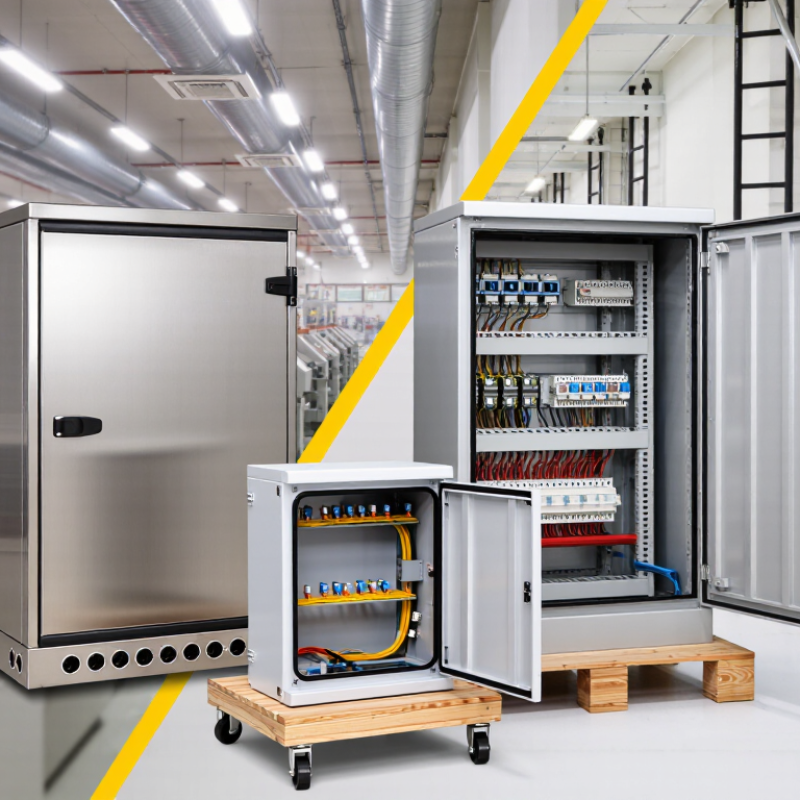
How to Choose the Right Junction Box Cabinet?

Define the Purpose and Operating Conditions of the Junction Box Cabinet

How to Choose the Right Junction Box Cabinet?

Define the Purpose and Operating Conditions of the Junction Box Cabinet

Start by identifying what the cabinet must protect and control. A junction box cabinet may house terminal blocks, relays, fuses, or communication devices. Its internal layout should support safe wiring, quick inspection, and future maintenance. Count incoming and outgoing cables carefully. Leave spare space for expansion, because crowded terminals create heat and troubleshooting errors.

Operating conditions determine the enclosure design. Check indoor or outdoor installation, ambient temperature, humidity, dust, water, vibration, and corrosive chemicals. Select suitable materials, sealing methods, and ingress protection based on these conditions. In coastal or chemical areas, ordinary metal may deteriorate sooner than expected. Cable glands must match the cable diameter and preserve the enclosure seal. Earthing arrangements also require verification by a qualified professional.

Tips: Record the actual site conditions. Do not rely only on drawings. Test door clearance, cable bending space, and access for tools before approval. I have seen cabinets fit the equipment but fail during installation because the cable route was overlooked. That mistake is avoidable. Review heat buildup, unused entries, and labeling visibility during the design check. Small details matter.

How to Choose the Right Junction Box Cabinet? - Define the Purpose and Operating Conditions of the Junction Box Cabinet

Selection Dimension Operating Condition or Requirement Suitable Cabinet Specification Practical Selection Guidance
Primary purpose Cable joining, terminal distribution, signal isolation, or equipment protection Choose a junction box designed specifically for the intended function, wiring method, and installed components Define the purpose before selecting enclosure size, terminals, cable entries, and accessories
Indoor, outdoor, or sheltered location Exposure to rain, snow, sunlight, condensation, dust, or washdown Indoor cabinet for controlled areas; weather-resistant cabinet for outdoor or exposed installations Use the enclosure protection rating required by the installation standard and actual site conditions
Ingress protection Solid particles, dust, water jets, temporary immersion, or frequent cleaning Select an enclosure with an appropriate IP code or NEMA enclosure type based on the governing specification IP ratings and NEMA types use different test systems; do not treat them as exact one-to-one equivalents
Dusty environment Fine dust, powder, fibers, or airborne particles may enter the cabinet Sealed enclosure with suitable gasket, secure cover, and correctly rated cable glands The enclosure rating can be reduced by poorly fitted cable glands, unused openings, or damaged seals
Water exposure Rain, hose-directed water, water spray, or temporary flooding Weatherproof enclosure with a continuous gasket, suitable cover fasteners, and downward-facing or protected entries Confirm the required protection level after all cable glands, conduit fittings, and drain devices are installed
Ambient temperature Normal operating temperature, low-temperature startup, or high-temperature surroundings Enclosure materials, gaskets, terminals, and cable glands rated for the complete temperature range Account for internal heat from terminals, fuses, relays, and other components in addition to ambient temperature
Corrosive atmosphere Salt spray, coastal air, chemicals, fertilizer, wastewater, or industrial fumes Corrosion-resistant material or protective coating, compatible hardware, and chemical-resistant seals Check compatibility with the specific chemicals, concentration, temperature, and cleaning agents at the site
Enclosure material Need for impact resistance, low weight, electrical insulation, or corrosion resistance Powder-coated metal, stainless steel, polycarbonate, or glass-reinforced polyester as appropriate Metal may provide strength and shielding; non-metallic materials may reduce corrosion and electrical conductivity
Electrical voltage and current Power circuits, control circuits, instrumentation, or mixed-voltage wiring Terminals, insulation, spacings, and components rated for the circuit voltage and current Separate power and signal wiring when required, and verify temperature rise and short-circuit requirements
Hazardous location Potentially explosive gas, vapor, dust, or combustible fiber environment Certified equipment suitable for the area classification, protection method, gas or dust group, and temperature class Ordinary weatherproof construction is not sufficient; use the certification and installation method required by local regulations
Available internal space Number and size of terminals, cable bending radius, splices, and future additions Cabinet dimensions that provide clearances, wiring space, and room for maintenance Do not fill the enclosure to its physical limit; reserve space for cable routing, identification, and expansion
Cable entry arrangement Top, bottom, side, conduit, armored cable, or multiple cable diameters Correct entry plates, cable glands, conduit hubs, strain relief, and sealing accessories Confirm cable outer diameters and bending radii before drilling or ordering entry components
Mechanical impact and vibration Mobile machinery, production lines, transport equipment, or areas with frequent impacts Impact-rated enclosure with secure mounting, robust hinges or fasteners, and vibration-resistant terminals Use flexible cable support and strain relief so vibration is not transferred directly to terminals
Maintenance access Frequent inspection, testing, fuse replacement, or fault tracing Accessible cover, clear terminal labeling, adequate working space, and removable mounting plate where needed Position the cabinet where technicians can open and service it without unsafe access or cable strain
Grounding and bonding Metal enclosure, protective earth, shielded cables, or equipotential bonding requirements Dedicated grounding points, bonding hardware, and compatible cable shields or gland components Follow the applicable electrical code and verify continuity after installation and maintenance
Compliance and documentation Project specifications, inspection requirements, or regulated industrial installation Documented enclosure rating, material data, temperature range, certifications, and installation instructions Verify requirements against the applicable IEC, NEMA, NEC, or local authority standards before purchase

Evaluate Material, Protection Rating, and Environmental Resistance

How to Choose the Right Junction Box Cabinet?

Material selection affects service life, safety, and maintenance. Stainless steel suits wet areas and resists corrosion from humidity. Powder-coated steel works well indoors, but damaged coatings can expose bare metal. Polycarbonate cabinets are lighter and resist many chemicals. They may become brittle under severe cold or prolonged sunlight. In field inspections, I have seen strong cabinets fail because their mounting hardware rusted first. Small details matter.

Protection ratings deserve careful checking. An IP rating should match the actual installation, not just the product label. IP65 can resist dust and water jets, while IP66 offers stronger water protection. Neither rating guarantees resistance to condensation inside the cabinet. Use suitable cable glands, sealed covers, and correctly tightened fasteners. Test the gasket after installation. It is often overlooked.

Environmental resistance includes temperature, ultraviolet exposure, vibration, salt spray, and chemical contact. A cabinet near coastal equipment needs better corrosion resistance than one inside a dry workshop. Check the manufacturer’s test data and applicable standards, such as IEC 60529 for ingress protection. Do not rely on appearance alone. I once accepted a cabinet that looked excellent, yet its door seal compressed unevenly. That mistake required rework. Leave enough space for heat dissipation, cable bends, and future inspection. Practical access is part of reliable protection.

Calculate Space, Capacity, and Cable Entry Requirements

How to Choose the Right Junction Box Cabinet?

Calculate Space, Capacity, and Cable Entry Requirements

Choosing a junction box cabinet starts with realistic measurements, not guesswork. Measure terminal blocks, relays, barriers, and power components before selecting the enclosure. Record each component’s width, height, and required clearance. A cabinet that looks spacious may become crowded after wiring.

Allow space for cable bending and maintenance access. Check the manufacturer’s minimum bend radius for every cable type. Then calculate entry points, including incoming, outgoing, spare, and grounding cables. Leave room between glands so cables do not press against each other. A practical design often reserves 20–30% spare internal space for future changes. Heat also matters. Dense components can raise internal temperature and reduce reliability.

Tips: Sketch the cabinet at scale. Count every cable entry. Mark unused openings. Separate power and signal wiring where possible. Confirm the gland plate size before ordering. Small errors become expensive later.

Capacity is more than terminal count. Check the current rating, voltage, insulation distance, and available mounting rail length. Consider cable labels, bend direction, and tools needed for tightening terminals. In field reviews, installers often find that the enclosure technically fits, but hands cannot reach the rear terminals. That detail is easy to miss. A precise calculation can still be wrong when installation space is ignored. Recheck the layout with the actual cable diameters, not catalogue estimates. Oversizing may cost more, but undersizing can create heat, stress, and difficult maintenance.

Compare Mounting Methods, Accessibility, and Maintenance Needs

How to Choose the Right Junction Box Cabinet?

Choosing a junction box cabinet starts with its mounting method. Wall-mounted cabinets save floor space and suit clean, open service areas. Freestanding cabinets offer better flexibility when cable routes change. Pole or frame mounting can help in narrow industrial zones, but vibration must be checked carefully. A cabinet that looks stable may still loosen over time.

Accessibility affects daily work more than many buyers expect. Front-opening doors allow quick testing and inspection. Removable panels can improve access to rear terminals, although they may require extra clearance. Check door swing, handle height, and the space needed for tools. I once underestimated this detail, and a cabinet near a walkway became difficult to service safely. Transparent sections may help technicians locate faults faster, but they can scratch or cloud in harsh environments.

Tips: Leave enough working space around the cabinet. Label terminals clearly. Use removable cable glands where future changes are likely. Choose corrosion-resistant materials for damp locations, and inspect seals after installation. Maintenance schedules should match dust, heat, moisture, and vibration levels. Monthly checks may suit demanding areas, while cleaner indoor spaces need less frequent attention. Do not rely only on appearance. Loose connections can hide behind a tidy panel. Test accessibility with the actual gloves, meters, and tools used by technicians.

Verify Safety Standards, Compatibility, and Long-Term Value

Choosing a junction box cabinet starts with safety, not appearance. Check IEC 62208 for enclosure construction and IEC 60529 for ingress protection. The IP rating must match dust, water, and cleaning conditions. A wet processing area may need IP66, while a dry indoor panel may require less. Confirm temperature limits, impact resistance, grounding, and cable-entry protection. Certification documents should match the exact cabinet configuration, not only a similar model.

Compatibility affects performance. Measure conductor space, bend radius, gland sizes, terminal spacing, and heat dissipation. Leave spare capacity for future circuits. The 2024 Risk Barometer survey, covering more than 3,000 businesses, identified business interruption as a major concern for 31% of respondents. A failed enclosure can create that interruption through moisture, loose connections, or difficult maintenance. Long-term value also depends on corrosion resistance and accessible fasteners. Cheap metal may look efficient today. It can become expensive after repeated repairs.

Tips: Request test reports, material specifications, and installation limits. Inspect the sealing surface before fitting. Keep a few spare cable-entry positions. Do not rely on the label alone. I would also question optimistic service-life claims, because site chemicals, sunlight, and heat rarely behave perfectly. A technically compliant cabinet can still be a poor choice if technicians cannot inspect it safely. Review the installation drawings with the person who will maintain the cabinet; that practical step is often missed.

Copyright 2025 Fluidra S.A. | Created by BCM Marketing Agencia Privacy Policy Legal note | Cookie policy |

Technical cookies are strictly necessary for our website to work and you can navigate through it. These types of cookies are those that, for example, allow us to identify you, give you access to certain restricted parts of the page if necessary, or remember different options or services already selected by you, such as your privacy preferences. Therefore, they are activated by default, your authorization not being necessary in this regard. Through the configuration of your browser, you can block or alert the presence of this type of cookies, although such blocking will affect the proper functioning of the different functionalities of our website.


The analysis cookies allow us to study the navigation of the users of our website in general (for example, which sections of the page are the most visited, which services are used most and if they work correctly, etc.). From the statistical information on navigation on our website, we can improve both the operation of the page itself and the different services it offers. Therefore, these cookies do not have an advertising purpose, but only serve to make our website work better, adapting to our users in general. By activating them you will contribute to this continuous improvement. You can enable or disable these cookies by checking the corresponding box, being disabled by default.


Functionality cookies allow us to remember your preferences, to personalize certain characteristics and general options of our website, every time you access it (for example, the language in which the information is presented to you, the sections marked as favorites, your browser type, etc.) Therefore, this type of cookies does not have an advertising purpose, but by activating them you will improve the functionality of the website (for example, adapting to your type of browser) and the customization of it based on your preferences (for example, by presenting the information in the language that you have chosen in previous occasions), which will contribute to the ease, usability and comfort of our page during your navigation. You can enable or disable these cookies by checking the corresponding box, being disabled by default.


Advertising cookies allow us to manage the advertising spaces included in our website based on criteria such as the content shown or the frequency in which the ads are displayed. For example, if you have been shown the same ad several times on our website, and you have not shown a personal interest by clicking on it, it will not appear again. In summary, by activating this type of cookies, the advertising shown on our website will be more useful and diverse, and less repetitive. You can enable or disable these cookies by checking the corresponding box, being disabled by default.


Behavioral advertising cookies allow us to obtain information based on the observation of your browsing habits and behaviors on the web, in order to show you advertising content that best suits your personal tastes and interests. To understand it in a very simple way, we will give you a fictitious example: if your last searches on the web were related to suspense literature, we would show you advertising about suspense books. Therefore, activating this type of cookies, the advertising that we show you on our website will not be generic, but will be oriented to your searches, tastes and interests, therefore adjusting exclusively to you. You can enable or disable these cookies by checking the corresponding box, being disabled by default.
To understand it in a very simple way, we will give you a fictitious example: if your last searches on the web were related to suspense literature, we would show you advertising about suspense books. Therefore, activating this type of cookies, the advertising that we show you on our website will not be generic, but will be oriented to your searches, tastes and interests, therefore adjusting exclusively to you. You can enable or disable these cookies by checking the corresponding box, being disabled by default.

SAVE

We use our own and third-party cookies to ensure the proper functioning of the website and to analyse our services, improve your experience on our website and show you advertisements related to your interests according to profiling based on your browsing habits (e.g. websites visited). You can accept all cookies by clicking "ACCEPT" or set or reject them by clicking here. If you would like to know more about the use of cookies, please see our COOKIE POLICY.


ACCEPT ALL
Reject no essentials



