
How to Choose the Right Hydraulic Cylinder for Your Needs?
FLUID HANDLING EXPERTS

Blog, all our news

How to Choose the Right Hydraulic Cylinder for Your Needs?

Choosing the right Hydraulic Cylinder for your needs is crucial. According to John Anderson, an industry expert with over 30 years of experience, "The right hydraulic cylinder can significantly impact your machinery's performance." His statement emphasizes how essential it is to make informed decisions.

Hydraulic cylinders are versatile and widely used in many applications. Selecting the wrong type can lead to inefficiency or equipment failure. It's not just about cost; focus on specifications, design, and compatibility with your system. Each project has unique requirements. Understanding these needs can prevent costly mistakes.

In this process, consulting with professionals can provide valuable insights. Relying solely on assumptions might not yield the best results. Pay attention to detail, as small differences in size or function can cause issues. Ultimately, maximizing the efficiency of your hydraulic system hinges on making the right choice.
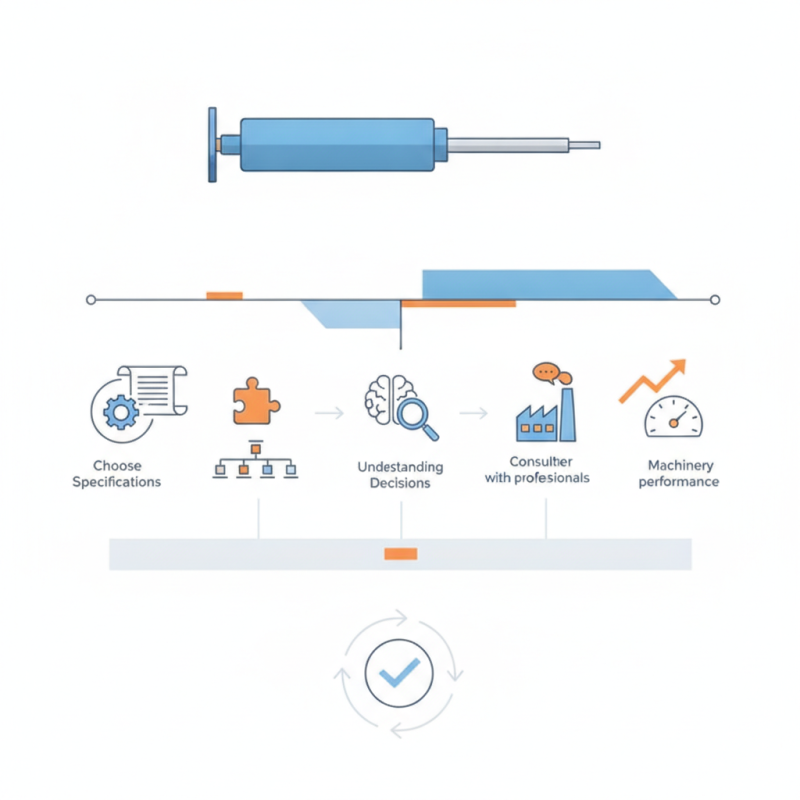
How to Choose the Right Hydraulic Cylinder for Your Needs?

Understanding Hydraulic Cylinders: Types and Functions

Hydraulic cylinders play a crucial role in various industrial applications, providing the force needed to lift and move heavy loads. Understanding the main types of hydraulic cylinders can help you make informed choices. There are several categories to consider: single-acting cylinders, double-acting cylinders, and telescopic cylinders. Each type serves different functions, depending on the application's demands. A report by the International Journal of Hydraulic Engineering states that the demand for hydraulic cylinders is projected to grow by 4.5% annually until 2027.

Single-acting cylinders extend under pressure and retract via a spring. They are suitable for lifting applications where gravity assists the return. On the other hand, double-acting cylinders offer power in both directions, making them ideal for tasks requiring more control. For operations with space limitations or needing extended reach, telescopic cylinders come into play. They can deliver impressive stroke lengths without needing extensive installation space.

Many engineers grapple with choosing the right configuration. A lack of accurate sizing or understanding specifications can lead to inefficiency. According to industry experts, improper cylinder selection may cause reduced performance or premature failure. It's essential to evaluate load requirements, speed, and environmental factors. This thorough assessment ensures your hydraulic system operates at peak efficiency, ultimately saving time and resources.

Hydraulic Cylinder Types and Their Applications

This chart represents the different types of hydraulic cylinders and their common applications in various industries. Understanding the applications can help you choose the right hydraulic cylinder for your specific needs.

Key Factors to Consider When Selecting a Hydraulic Cylinder

When selecting a hydraulic cylinder, several key factors play a critical role. The intended application must align with the cylinder's specifications. According to industry reports, over 50% of hydraulic failures are linked to improper cylinder selection. Understanding the load requirements is essential. Ensure the cylinder can handle the maximum pressure in your system.

Another significant factor is the stroke length. This affects how far the cylinder can extend. A mismatch could lead to inefficiencies. Data from Fluid Power Journal indicates that inadequate stroke length can lead to up to 30% operational downtime. Additionally, consider mounting methods. The wrong mounting style can result in misalignment and premature wear.

Finally, pay attention to environmental conditions. Outdoor applications may require cylinders with corrosion resistance. The right seals and coatings can improve lifespan. It’s reported that about 40% of cylinders fail in harsh conditions due to inadequate protection. Properly assessing these factors ensures effective operation and longevity of hydraulic systems.

Sizing and Specifications: Ensuring Compatibility with Your Equipment

When choosing a hydraulic cylinder, size matters greatly. Understanding the dimensions is crucial for compatibility with your equipment. Measure the available space where the cylinder will be installed. Ensure there's enough room for full extension and retraction. Also, consider the mounting type. Different applications require different bracket styles. A mismatch can lead to poor performance and mechanical strain.

Specifications also play a pivotal role. The cylinder’s bore diameter affects force output. A larger diameter provides more power but may require a heavier setup. Additionally, check the stroke length. This should align with your application’s needs. Too short of a stroke can limit functionality. Too long can waste space and resources. Pay attention to pressure ratings as well. Exceeding these can cause failures.

Even with all measurements, challenges may arise. Sometimes, existing equipment does not match ideal specifications. This can lead to a trial-and-error approach. It’s critical to track these decisions. Document what works and what doesn’t. This reflection can guide future choices. Choosing the right hydraulic cylinder is not always straightforward, and careful consideration is necessary.

Hydraulic Cylinder Specifications Table

Specification Value
Bore Size 2 inches
Rod Diameter 1 inch
Stroke Length 24 inches
Pressure Rating 3000 PSI
Mounting Type Clevis
End Caps Material Aluminum
Seal Type Nitrile
Weight 35 lbs

Material Selection for Durability and Performance of Hydraulic Cylinders

Selecting the right material for hydraulic cylinders is crucial for ensuring durability and optimal performance. Metals like steel and aluminum are common choices. Steel offers high strength and durability, while aluminum is lighter. However, aluminum may not withstand high pressures as well as steel. Understanding the application's demands is essential.

Corrosion resistance is another important factor. In harsh environments, materials like stainless steel or coated steel may be required. They can resist rust and degradation, extending the cylinder's life. Additionally, consider the working temperature and load conditions. Some materials falter under extreme heat or cold, which can compromise cylinder efficiency.

It's important to reflect on the costs associated with material selection. Higher-quality materials may present a larger initial investment but can save money in the long run. Regular maintenance and inspections are needed to ensure the cylinders remain effective. One should prioritize reliability over mere price when it comes to material choice. Ultimately, the goal is to avoid premature failures and costly repairs, enhancing operational efficiency.

Maintenance Tips for Longevity of Hydraulic Cylinders in Operation

Hydraulic cylinders play a critical role in various applications, from industrial machinery to construction equipment. Proper maintenance is essential for longevity. Regular inspections can prevent unexpected failures. Look for leaks, rust, or unusual noises. These are signs that something might be wrong. A proactive approach can save time and money on repairs.

Fluid levels must be checked frequently. Low fluid levels can lead to inadequate performance and potential damage. Maintain clean fluid to enhance cylinder life. Contaminants can cause wear and tear on seals and components. It's wise to replace fluids according to the manufacturer's guidelines.

Seals are vital for efficiency. Inspect seals regularly for wear and replace them as needed. Not replacing worn seals can cause leaks and lost pressure. Additionally, keep the cylinder clean. Dirt and debris can compromise performance. A clean environment contributes to overall functionality. Maintenance is not just about fixing issues; it’s about preventing them. Consider these tips as you evaluate your hydraulic cylinders.

Copyright 2025 Fluidra S.A. | Created by BCM Marketing Agencia Privacy Policy Legal note | Cookie policy |

Technical cookies are strictly necessary for our website to work and you can navigate through it. These types of cookies are those that, for example, allow us to identify you, give you access to certain restricted parts of the page if necessary, or remember different options or services already selected by you, such as your privacy preferences. Therefore, they are activated by default, your authorization not being necessary in this regard. Through the configuration of your browser, you can block or alert the presence of this type of cookies, although such blocking will affect the proper functioning of the different functionalities of our website.


The analysis cookies allow us to study the navigation of the users of our website in general (for example, which sections of the page are the most visited, which services are used most and if they work correctly, etc.). From the statistical information on navigation on our website, we can improve both the operation of the page itself and the different services it offers. Therefore, these cookies do not have an advertising purpose, but only serve to make our website work better, adapting to our users in general. By activating them you will contribute to this continuous improvement. You can enable or disable these cookies by checking the corresponding box, being disabled by default.


Functionality cookies allow us to remember your preferences, to personalize certain characteristics and general options of our website, every time you access it (for example, the language in which the information is presented to you, the sections marked as favorites, your browser type, etc.) Therefore, this type of cookies does not have an advertising purpose, but by activating them you will improve the functionality of the website (for example, adapting to your type of browser) and the customization of it based on your preferences (for example, by presenting the information in the language that you have chosen in previous occasions), which will contribute to the ease, usability and comfort of our page during your navigation. You can enable or disable these cookies by checking the corresponding box, being disabled by default.


Advertising cookies allow us to manage the advertising spaces included in our website based on criteria such as the content shown or the frequency in which the ads are displayed. For example, if you have been shown the same ad several times on our website, and you have not shown a personal interest by clicking on it, it will not appear again. In summary, by activating this type of cookies, the advertising shown on our website will be more useful and diverse, and less repetitive. You can enable or disable these cookies by checking the corresponding box, being disabled by default.


Behavioral advertising cookies allow us to obtain information based on the observation of your browsing habits and behaviors on the web, in order to show you advertising content that best suits your personal tastes and interests. To understand it in a very simple way, we will give you a fictitious example: if your last searches on the web were related to suspense literature, we would show you advertising about suspense books. Therefore, activating this type of cookies, the advertising that we show you on our website will not be generic, but will be oriented to your searches, tastes and interests, therefore adjusting exclusively to you. You can enable or disable these cookies by checking the corresponding box, being disabled by default.
To understand it in a very simple way, we will give you a fictitious example: if your last searches on the web were related to suspense literature, we would show you advertising about suspense books. Therefore, activating this type of cookies, the advertising that we show you on our website will not be generic, but will be oriented to your searches, tastes and interests, therefore adjusting exclusively to you. You can enable or disable these cookies by checking the corresponding box, being disabled by default.

SAVE

We use our own and third-party cookies to ensure the proper functioning of the website and to analyse our services, improve your experience on our website and show you advertisements related to your interests according to profiling based on your browsing habits (e.g. websites visited). You can accept all cookies by clicking "ACCEPT" or set or reject them by clicking here. If you would like to know more about the use of cookies, please see our COOKIE POLICY.


ACCEPT ALL
Reject no essentials


