Why Choose the Right Flange Type for Your Projects?
Choosing the right Flange Type for your projects is crucial. Flanges serve as important connectors in piping systems. They ensure that different components fit together safely and securely.
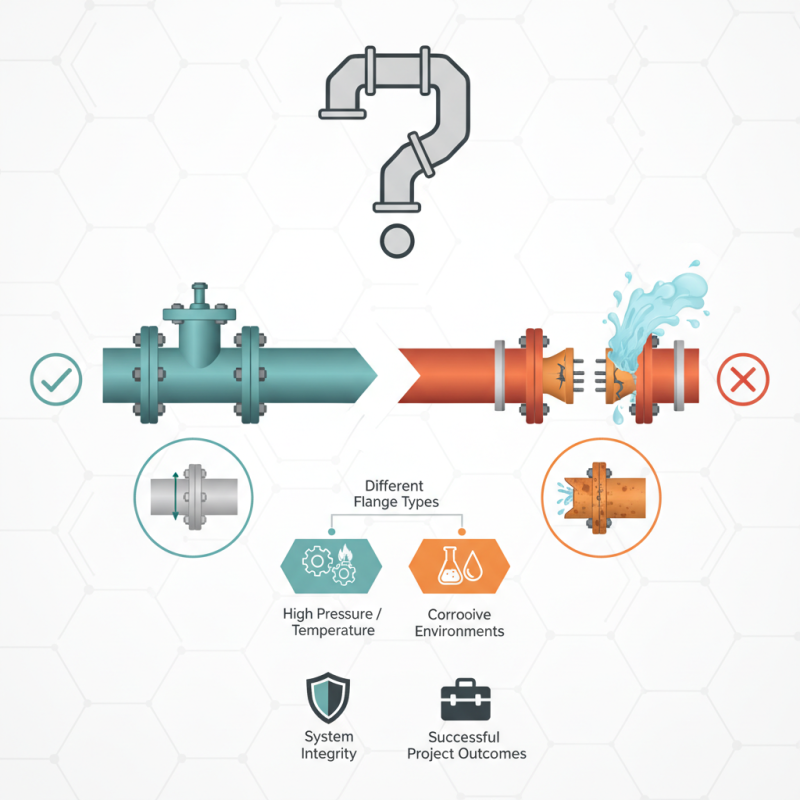
Different flange types have different properties and applications. Some are better suited for high-pressure situations, while others excel in corrosive environments. Understanding these differences is vital. Selecting the wrong flange type can lead to failures, leaks, or costly repairs.
Users often overlook flange types, mistaking them for mere connectors. However, each type serves a specific purpose. Experience shows that informed choices enhance system integrity. Therefore, knowing the appropriate flange type is essential for successful project outcomes.
Understanding the Importance of Flange Types in Engineering Projects
Choosing the right flange type can greatly influence the success of engineering projects. Flanges play a crucial role in connecting pipes, valves, and equipment. The correct choice ensures safety, reliability, and longevity of the installation. Different projects have unique requirements. A proper understanding of flange types helps engineers avoid costly mistakes.
Projects often encounter issues when flanges are mismatched. Some might overlook pressure ratings or material compatibility. This can lead to leaks or failures. Attention to these details is vital. Inspect your project’s demands closely before making a choice.
**Tips:** Always consult with a knowledgeable engineer. Consider the environment where the flange will operate. Each material reacts differently to temperature and pressure. Regularly revisit your designs as projects evolve. Don’t underestimate the importance of quality verification during installation. This can save time and resources in the long run.
Types of Flanges Used in Engineering Projects
Key Factors to Consider When Selecting Flange Types
Selecting the right flange type is crucial for any engineering project. Various factors influence this decision. One key consideration is the operating environment. Flanges must withstand specific pressures and temperatures. For instance, high-temperature applications often require materials that can handle thermal expansion.
Another important factor is material compatibility. Different materials interact differently in various environments. For instance, a stainless steel flange may corrode in certain chemical settings. It's essential to analyze the surrounding materials carefully. Additionally, installation requirements can vary. Some flanges need specific torque values or alignment precision.
Cost is also a relevant factor but shouldn’t be the only focus. Cheaper flanges might save money initially but could lead to failures. These failures can result in costly downtime or safety risks. Balancing cost with quality and reliability is crucial. Each project has unique needs that should guide the selection process. Reflecting on past projects can provide valuable insights for future decisions.
Why Choose the Right Flange Type for Your Projects? - Key Factors to Consider When Selecting Flange Types
Flange Type
Material
Pressure Rating
Temperature Range
Common Applications
Weld Neck Flange
Carbon Steel
150-2500 psi
-20°C to 400°C
Pipelines, Pressure Vessels
Blind Flange
Stainless Steel
150-600 psi
-50°C to 200°C
Sealing Ends of Pipelines
Slip-On Flange
Alloy Steel
150-900 psi
-10°C to 300°C
Low-Pressure Applications
Socket Weld Flange
Stainless Steel
150-1500 psi
-40°C to 200°C
Structural and Piping Systems
RF Flange (Raised Face)
Carbon Steel
150-2500 psi
-29°C to 400°C
Oil & Gas, Petrochemical
Common Types of Flanges and Their Applications in Industries
Choosing the right flange type is crucial in various industries. Flanges are essential for connecting pipes, valves, and pumps. The most common types include slip-on, weld neck, blind, and threaded flanges. Each type has specific applications based on pressure ratings and materials.
For instance, slip-on flanges are often used in low-pressure systems. They are easier to install and provide a tight seal. However, they may not be suitable for high-pressure environments. A 2021 industry report highlighted that 62% of pipeline failures could be attributed to improper flange selection. This statistic emphasizes the importance of making informed decisions.
Tips: Always assess the operating conditions before selecting a flange type. Analyze factors like pressure, temperature, and the fluid being transported.
weld neck flanges are preferred for high-stress applications. Their tapered neck allows for smooth flow and reduced turbulence. On the other hand, blind flanges are used to seal off the end of a piping system. They are essential during maintenance and testing operations. A manufacturer’s guide suggests that 28% of pipeline leaks result from using inappropriate flanges.
Tips: Regularly inspect your flanges to prevent leaks. Pay attention to visible wear or corrosion signs.
How Flange Selection Affects Project Safety and Efficiency
Flange selection is critical for project safety and efficiency. The right flange type ensures that the system operates without leaks or failures. According to a report by the American Society of Mechanical Engineers (ASME), improper flange choice can lead to mechanical failures, resulting in downtime and increased costs. For example, a single failure in a piping system can result in losses of up to 30% of a project's budget.
Using the wrong material or design may compromise safety standards. The International Society for Fluids Engineering emphasizes that approximately 25% of pipeline incidents are due to flange-related issues. These incidents can cause not just monetary losses but also environmental hazards. Clear assessment of pressures, temperatures, and fluid characteristics is essential when selecting flanges.
A cautious approach must be prioritized. Engineers should perform detailed analyses to ensure that the chosen flanges meet the required specifications. Yet, systems can often function with inadequate flange types but at a hidden cost. This practice can lead to long-term inefficiencies and safety risks that are not immediately apparent. Investing time in proper flange selection can drastically improve overall project outcomes.
Best Practices for Installing and Maintaining Flanges in Projects
When installing flanges, attention to detail is crucial. Ensure that the flanges are compatible with the pipes and the pressure requirements of your project. Use proper tools for installation. Misalignment can lead to significant leaks and costly repairs. Always inspect the flange surfaces for damage before installation. A small crack can compromise the entire system.
Maintenance is just as vital as installation. Regularly check the flanges for signs of wear or corrosion. If any issues arise, address them immediately. Preventive measures can save time and expenses in the long run. Cleaning the flanges and ensuring they are free of debris can contribute to their longevity.
In addition, consider the environmental conditions where the flanges are installed. Flanges in corrosive environments require special materials and coatings. Understanding these factors allows for better decision-making. While these tasks may seem straightforward, neglecting them can lead to serious consequences. Regular training and updates on best practices can help maintain a knowledgeable team. Consider implementing checklists for each project stage to enhance reliability.
Cepex is the brand for the fluid handling market belonging to the Fluidra group. One of the leading european manufacturer of valves and fittings in thermoplastic materials.
Dedicated to the swimming pool, irrigation and industrial markets, we distribute our products worldwide with the Fluidra commercial network and presence in 46 countries with 136 sales branches.
Your data will be processed by CEPEX S.A., with address at C. Lluís Companys, 51-53, 08400, Granollers (Barcelona), and C.I.F. nº A-08928707, to send you communications about our products based on your interests. You can consult more information about the processing of your data and how to exercise your rights as described in the Privacy Policy.
Technical cookies are strictly necessary for our website to work and you can navigate through it. These types of cookies are those that, for example, allow us to identify you, give you access to certain restricted parts of the page if necessary, or remember different options or services already selected by you, such as your privacy preferences. Therefore, they are activated by default, your authorization not being necessary in this regard. Through the configuration of your browser, you can block or alert the presence of this type of cookies, although such blocking will affect the proper functioning of the different functionalities of our website.
The analysis cookies allow us to study the navigation of the users of our website in general (for example, which sections of the page are the most visited, which services are used most and if they work correctly, etc.). From the statistical information on navigation on our website, we can improve both the operation of the page itself and the different services it offers. Therefore, these cookies do not have an advertising purpose, but only serve to make our website work better, adapting to our users in general. By activating them you will contribute to this continuous improvement. You can enable or disable these cookies by checking the corresponding box, being disabled by default.
Functionality cookies allow us to remember your preferences, to personalize certain characteristics and general options of our website, every time you access it (for example, the language in which the information is presented to you, the sections marked as favorites, your browser type, etc.) Therefore, this type of cookies does not have an advertising purpose, but by activating them you will improve the functionality of the website (for example, adapting to your type of browser) and the customization of it based on your preferences (for example, by presenting the information in the language that you have chosen in previous occasions), which will contribute to the ease, usability and comfort of our page during your navigation. You can enable or disable these cookies by checking the corresponding box, being disabled by default.
Advertising cookies allow us to manage the advertising spaces included in our website based on criteria such as the content shown or the frequency in which the ads are displayed. For example, if you have been shown the same ad several times on our website, and you have not shown a personal interest by clicking on it, it will not appear again. In summary, by activating this type of cookies, the advertising shown on our website will be more useful and diverse, and less repetitive. You can enable or disable these cookies by checking the corresponding box, being disabled by default.
Behavioral advertising cookies allow us to obtain information based on the observation of your browsing habits and behaviors on the web, in order to show you advertising content that best suits your personal tastes and interests. To understand it in a very simple way, we will give you a fictitious example: if your last searches on the web were related to suspense literature, we would show you advertising about suspense books. Therefore, activating this type of cookies, the advertising that we show you on our website will not be generic, but will be oriented to your searches, tastes and interests, therefore adjusting exclusively to you. You can enable or disable these cookies by checking the corresponding box, being disabled by default. To understand it in a very simple way, we will give you a fictitious example: if your last searches on the web were related to suspense literature, we would show you advertising about suspense books. Therefore, activating this type of cookies, the advertising that we show you on our website will not be generic, but will be oriented to your searches, tastes and interests, therefore adjusting exclusively to you. You can enable or disable these cookies by checking the corresponding box, being disabled by default.
We use our own and third-party cookies to ensure the proper functioning of the website and to analyse our services, improve your experience on our website and show you advertisements related to your interests according to profiling based on your browsing habits (e.g. websites visited). You can accept all cookies by clicking "ACCEPT" or set or reject them by clicking here. If you would like to know more about the use of cookies, please see our COOKIE POLICY.