
How to Choose the Right Compression Spring for Your Needs?
FLUID HANDLING EXPERTS

Blog, all our news

How to Choose the Right Compression Spring for Your Needs?

Choosing the right compression spring is crucial for many engineering applications. The global compression spring market was valued at approximately $3.5 billion in 2022 and is projected to grow steadily. This growth speaks volumes about their importance in industries like automotive, aerospace, and machinery.

Experts emphasize the need for precision in selecting these springs. John Smith, a leading figure in spring manufacturing, stated, “Selecting the right compression spring can make or break your project.” His insight underlines the fact that many engineers may overlook critical specifications, leading to performance failures.

It's essential to consider factors like material, load capacity, and spring rate. A poor choice not only affects efficiency but can also lead to costly repairs or delays. Many users have faced issues due to inadequate research. Understanding your application deeply is as vital as knowing your options.
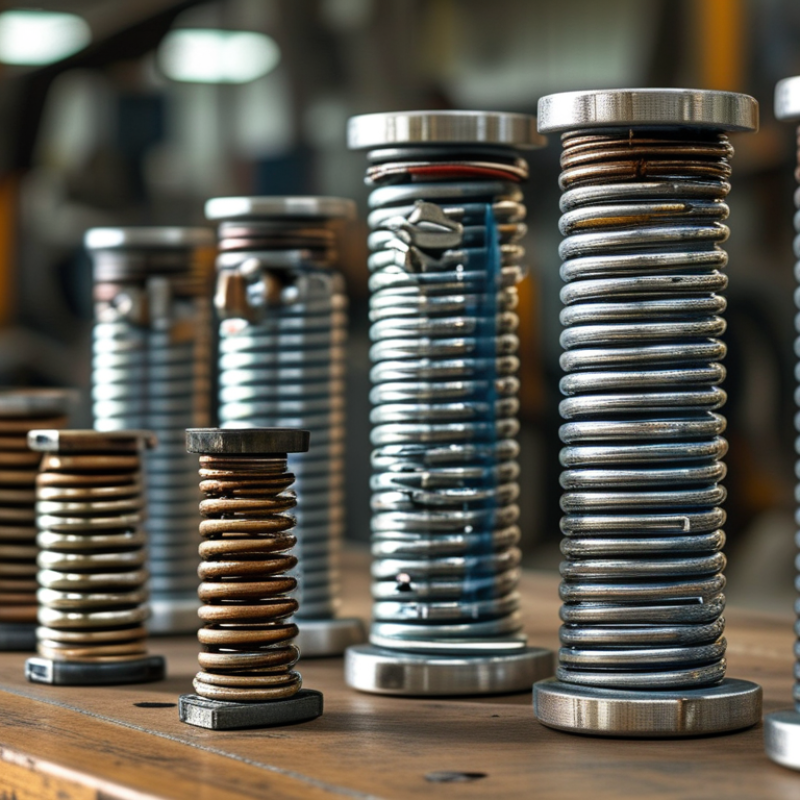
How to Choose the Right Compression Spring for Your Needs?

Understanding Compression Springs: Basics and Functionality

Compression springs play a crucial role in various applications, from automotive to electronics. Their primary function is to store and release energy. They push back against applied forces, aiding in the movement and stabilization of components. Understanding their basics is essential for effective selection.

Key factors include wire diameter, spring diameter, and overall height. Each element affects the spring's performance. For instance, a thicker wire often leads to a stiffer spring. A smaller diameter typically results in a more compact spring, which can be advantageous in limited spaces. However, the challenge lies in balancing these characteristics for optimal use.

Choosing the right compression spring isn't always straightforward. Mistakes can lead to system failure. It's crucial to analyze the specific requirements of your application. Sometimes, the right spring may seem an obvious choice but can fall short under certain conditions. Testing different designs might reveal unexpected insights and improve reliability. Understanding these complexities can guide you toward a more informed decision.

Key Factors to Consider When Selecting Compression Springs

When selecting compression springs, several key factors need attention. First, understand the application’s requirements. The spring’s load capacity must match the force it will encounter. Consider the specific environment as well. High temperatures or corrosive conditions can affect spring performance. Choosing materials wisely is essential. Stainless steel or oil-tempered carbon steel offers durability.

Next, evaluate the spring’s dimensions. Wire diameter, coil diameter, and overall height are critical. A small change in these measurements can significantly alter the spring’s behavior. Also, review the required spring rate, which dictates how much force the spring exerts when compressed. Accurate calculations help ensure optimal performance.

Don’t overlook the importance of quality. Cheaper springs might seem attractive, but they could lead to failure. A failed spring can cause significant issues, including machinery breakdown. Consider sourcing from reputable manufacturers. Reviews and expert recommendations can provide valuable insights. Using these factors can help ensure you select the right compression spring.

Compression Spring Selection: Key Factors Impacting Load Capacity

Material Choices for Compression Springs and Their Implications

When selecting the right compression spring, material choice is crucial. Different materials offer varying strength, flexibility, and resistance. Common options include stainless steel, carbon steel, and plastic composites. Each material has unique properties that impact performance. Stainless steel, for example, is resistant to corrosion, making it ideal for outdoor or humid environments. Carbon steel, on the other hand, is often stronger but may rust without proper treatment.

Consider the application before choosing a material. A spring used in a high-temperature environment may require special alloys. Using the wrong material can lead to premature failure. A plastic composite could be lightweight yet may not provide the durability needed for heavy loads. Reflecting on past choices may reveal mistakes that help refine future decisions. Always assess the environment and load requirements to ensure the best selection. Balancing performance and cost is often a challenge.

Measuring and Sizing Compression Springs for Specific Applications

When selecting compression springs, measuring and sizing are critical. Proper measurements ensure the spring fits your specific applications. The spring diameter, wire diameter, and overall length are essential factors to consider. Using calipers can yield accurate measurements. A spring that’s too tight can cause binding. Conversely, a loose spring may not provide adequate tension.

Understanding load requirements is equally necessary. Determine the force needed at the maximum compression. This involves understanding the spring's material and its stress limits. Be aware that materials can vary in strength. A stronger material may not always be the correct choice if weight is a concern. Additionally, consider the environment: will the spring face corrosion or extreme temperatures?

Consideration of these details can help prevent unforeseen issues. A poor fit or inappropriate material choice can lead to failure. It’s also vital to reflect on long-term performance. Springs undergo fatigue over time, so initial choices impact longevity. Collaboration with experienced professionals can provide insights. Testing prototypes can provide data that measurements alone cannot reveal.

How to Choose the Right Compression Spring for Your Needs?

Spring Type Wire Diameter (mm) Outer Diameter (mm) Free Length (mm) Load Capacity (N) Application
Standard Compression Spring 1.5 20 100 250 General Machinery
Heavy-Duty Compression Spring 3.0 30 150 600 Industrial Equipment
Lightweight Compression Spring 0.8 15 75 150 Consumer Products
Oilfield Compression Spring 2.5 25 120 500 Oil & Gas Industry
High-Temperature Compression Spring 2.0 22 90 400 Aerospace Applications

Evaluating Performance: Load Capacity and Deflection in Compression Springs

When evaluating compression springs, load capacity and deflection are critical factors. Load capacity refers to the maximum force a spring can withstand without permanent deformation. This measurement is vital for any application that requires dependable performance. If a spring is overloaded, it might lose its effectiveness or even break. Understanding the specific requirements of your project is essential before making a choice.

Deflection is another key aspect. It describes how much a spring compresses under load. Each spring has a specific deflection range that aligns with its load capacity. Picking a spring with the wrong deflection can lead to mechanical failures. A spring that is too stiff may not compress enough, while one that is too soft may compress excessively. Balancing these factors requires careful consideration and sometimes experimentation.

Keep in mind that all springs have limits. Testing prototypes can reveal unexpected issues. It’s essential to gather real-world feedback for optimal performance. Overlooking minor details can lead to major setbacks. Therefore, ensure each spring meets the explicit demands of your application.

Copyright 2025 Fluidra S.A. | Created by BCM Marketing Agencia Privacy Policy Legal note | Cookie policy |

Technical cookies are strictly necessary for our website to work and you can navigate through it. These types of cookies are those that, for example, allow us to identify you, give you access to certain restricted parts of the page if necessary, or remember different options or services already selected by you, such as your privacy preferences. Therefore, they are activated by default, your authorization not being necessary in this regard. Through the configuration of your browser, you can block or alert the presence of this type of cookies, although such blocking will affect the proper functioning of the different functionalities of our website.


The analysis cookies allow us to study the navigation of the users of our website in general (for example, which sections of the page are the most visited, which services are used most and if they work correctly, etc.). From the statistical information on navigation on our website, we can improve both the operation of the page itself and the different services it offers. Therefore, these cookies do not have an advertising purpose, but only serve to make our website work better, adapting to our users in general. By activating them you will contribute to this continuous improvement. You can enable or disable these cookies by checking the corresponding box, being disabled by default.


Functionality cookies allow us to remember your preferences, to personalize certain characteristics and general options of our website, every time you access it (for example, the language in which the information is presented to you, the sections marked as favorites, your browser type, etc.) Therefore, this type of cookies does not have an advertising purpose, but by activating them you will improve the functionality of the website (for example, adapting to your type of browser) and the customization of it based on your preferences (for example, by presenting the information in the language that you have chosen in previous occasions), which will contribute to the ease, usability and comfort of our page during your navigation. You can enable or disable these cookies by checking the corresponding box, being disabled by default.


Advertising cookies allow us to manage the advertising spaces included in our website based on criteria such as the content shown or the frequency in which the ads are displayed. For example, if you have been shown the same ad several times on our website, and you have not shown a personal interest by clicking on it, it will not appear again. In summary, by activating this type of cookies, the advertising shown on our website will be more useful and diverse, and less repetitive. You can enable or disable these cookies by checking the corresponding box, being disabled by default.


Behavioral advertising cookies allow us to obtain information based on the observation of your browsing habits and behaviors on the web, in order to show you advertising content that best suits your personal tastes and interests. To understand it in a very simple way, we will give you a fictitious example: if your last searches on the web were related to suspense literature, we would show you advertising about suspense books. Therefore, activating this type of cookies, the advertising that we show you on our website will not be generic, but will be oriented to your searches, tastes and interests, therefore adjusting exclusively to you. You can enable or disable these cookies by checking the corresponding box, being disabled by default.
To understand it in a very simple way, we will give you a fictitious example: if your last searches on the web were related to suspense literature, we would show you advertising about suspense books. Therefore, activating this type of cookies, the advertising that we show you on our website will not be generic, but will be oriented to your searches, tastes and interests, therefore adjusting exclusively to you. You can enable or disable these cookies by checking the corresponding box, being disabled by default.

SAVE

We use our own and third-party cookies to ensure the proper functioning of the website and to analyse our services, improve your experience on our website and show you advertisements related to your interests according to profiling based on your browsing habits (e.g. websites visited). You can accept all cookies by clicking "ACCEPT" or set or reject them by clicking here. If you would like to know more about the use of cookies, please see our COOKIE POLICY.


ACCEPT ALL
Reject no essentials


