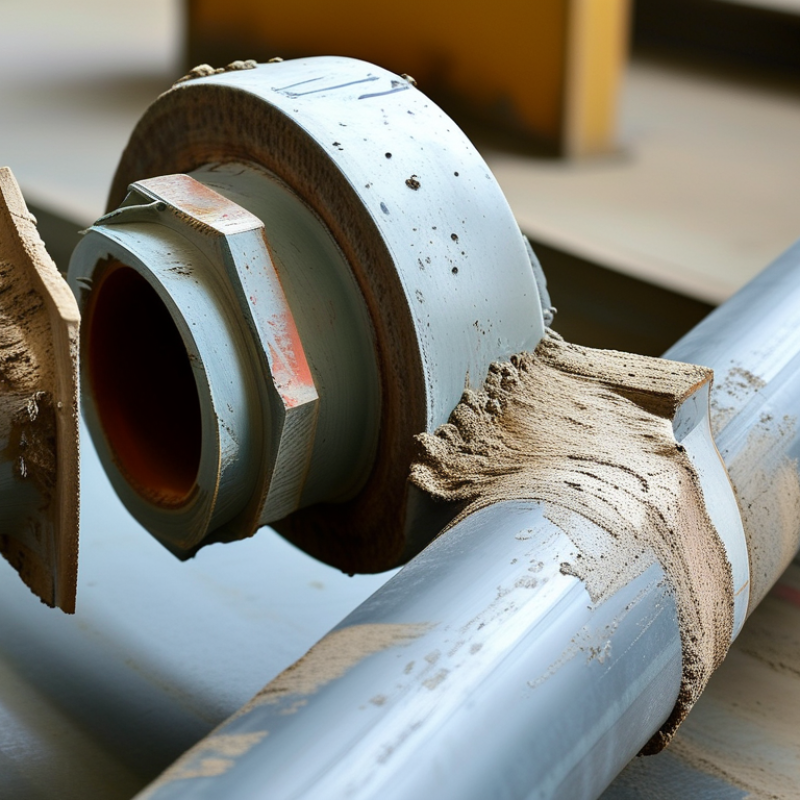
Choosing the right Ceramic Lined Rubber Hose is a practical engineering decision, not a simple catalogue purchase. The correct hose must match the slurry, pressure, temperature, flow speed, and installation layout. A hose that survives dry powder may fail quickly when sharp ceramic particles move through wet slurry. Small details matter. A tight bend can create uneven wear. A poorly supported flange can add stress to the rubber tube.
Professor Ian Hutchings, a respected tribology specialist, describes wear as “the progressive loss of substance from the operating surface of a body.” This principle fits ceramic hose selection closely. Ceramic protects against severe abrasion, while rubber absorbs vibration and tolerates movement. However, neither material solves every problem. The lining thickness, ceramic shape, bonding quality, and rubber compound must work together. Experience at the plant often reveals weaknesses that a laboratory datasheet does not show.
Look closely at the operating conditions before comparing prices. Identify particle size, mineral hardness, concentration, pressure surges, and minimum bending radius. Check whether the hose will drag, hang, or remain fixed. Ask for test data and traceable manufacturing information. Also inspect the connection design, because many failures begin at the ends rather than in the ceramic lining.
There is no perfect hose.
Some decisions remain uncertain. Actual service records may be incomplete, and operating conditions can change seasonally. A careful buyer should review previous failures, inspect worn sections, and allow a reasonable safety margin. The best Ceramic Lined Rubber Hose is not always the thickest or most expensive option. It is the one selected from measured conditions, verified evidence, and honest reflection.
Define the Operating Conditions for the Ceramic Lined Rubber Hose
How to Choose the Right Ceramic Lined Rubber Hose
Define the Operating Conditions for the Ceramic Lined Rubber Hose
Start with the material moving through the hose. Record its solids content, particle size, density, and chemical makeup. Sharp quartz particles behave differently from soft limestone. That difference affects ceramic wear.
Measure the real operating temperature, not only the process design temperature. Note pressure peaks, vacuum periods, flow speed, and cleaning cycles. A hose carrying abrasive slurry at 70°C needs different protection than one handling cool water. Include the minimum and maximum temperatures. Rubber stiffness can change noticeably between them.
Check the installation carefully. Measure the bend radius, connection angles, and available movement. A hose forced against a sharp frame may fail before its lining wears. Pulsing pumps also create pressure spikes that basic calculations can miss. Allow a practical safety margin, but avoid guessing. Ask for test data covering abrasion, chemical resistance, and pressure performance.
I have seen specifications fail because they described the process generally. “Abrasive slurry” is not enough. Provide particle size, concentration, speed, and operating hours. Consider startup, shutdown, and accidental dry running. These conditions are often overlooked. They should not be. Inspect the hose after installation, then record lining wear during scheduled maintenance. Field evidence may challenge the original selection, and that is useful information. A revised specification is better than defending a weak assumption.
Match Ceramic Lining Properties to the Conveyed Material
How to Choose the Right Ceramic Lined Rubber Hose
Match the ceramic lining to the conveyed material, not only to its name. Iron ore slurry can contain sharp, dense particles that rapidly cut exposed rubber. The USGS Mineral Commodity Summaries 2024 reported about 2.5 billion metric tons of global iron ore production in 2023. That volume explains the severe duty found in mining pipelines. Alumina ceramic, rated near 9 on the Mohs hardness scale, suits highly abrasive particles. However, hardness alone is not enough.
Particle size, impact angle, slurry density, and flow speed must guide the selection. Fine cement slurry behaves differently from coarse gravel. The Global Cement and Concrete Association reports global cement production at roughly 4.1 billion tonnes annually. Cement particles may scour bends, reducers, and discharge points continuously. A rubber-backed ceramic design can absorb vibration and minor impact, while ceramic tiles resist sliding abrasion. It is a useful balance.
Do not ignore chemistry. Acidic process water can weaken unsuitable rubber compounds, even when the ceramic remains intact. Check operating temperature, pH, solids concentration, and minimum bending radius with measured site data. Field inspections often reveal a missed detail: wear concentrates near elbows, clamps, and poorly aligned joints. I have seen specifications overemphasize ceramic hardness and underestimate rubber fatigue. That approach needs reconsideration. Select the lining pattern after reviewing particle size distribution and actual pressure fluctuations, not catalogue averages.
Select the Proper Hose Size, Pressure Rating, and Flexibility
Choosing the right ceramic lined rubber hose starts with accurate sizing. Measure the connection diameter, not only the pipe opening. A hose that is too small increases flow resistance and may accelerate wear. An oversized hose can become heavy, unstable, and difficult to support. I have seen poorly supported hoses sag near flanges, creating stress at the joints. Keep the material velocity within the hose supplier’s recommended range. Check the actual flow rate, particle size, and solids concentration before selecting the bore.
Pressure rating requires more than reading the pump’s normal pressure. Include startup surges, pulsation, vacuum conditions, and temperature changes. The hose rating should exceed the highest expected working pressure with a practical safety margin. Ceramic lining helps resist abrasion, but it does not remove the need for correct pressure selection. Inspect the cover, reinforcement, and flange area carefully. Small cracks matter. They can worsen under repeated movement.
Flexibility must match the installation. Confirm the minimum bend radius under operating conditions, not just during storage. A tight bend can damage the ceramic lining or restrict flow. Allow enough length for vibration, thermal expansion, and equipment movement. Avoid twisting the hose. That mistake is common. A slightly longer hose may perform better than a shorter one forced into position. Still, excessive length can create unsupported loops and extra load. Review the layout with maintenance staff, because installation drawings rarely show every movement or handling problem.
How to Choose the Right Ceramic Lined Rubber Hose - Select the Proper Hose Size, Pressure Rating, and Flexibility
Nominal Hose Size
Approximate Inside Diameter
Typical Conveying Capacity
Typical Working Pressure Range
Minimum Bend Radius
Recommended Flexibility
Typical Application
Selection Guidance
1 in / DN25
25 mm / 1.0 in
Low-volume transfer and narrow access points
Up to approximately 150 psi / 10 bar
About 250–300 mm
High flexibility; avoid sharp bends
Small abrasive slurry lines, sampling, and short connections
Use when flow demand is limited and installation space is restricted.
2 in / DN50
50 mm / 2.0 in
General-purpose abrasive material transfer
Up to approximately 150 psi / 10 bar
About 500–600 mm
High flexibility for equipment connections
Mineral slurry, sand, ash, and ceramic-process materials
A common size for compact transfer systems and movable equipment.
3 in / DN75
75 mm / 3.0 in
Medium-flow slurry and solids handling
Approximately 125–150 psi / 8.6–10 bar
About 750–900 mm
Moderate to high flexibility
Process lines, pump discharge, and abrasive discharge service
Confirm that the hose ID matches the required flow velocity and solids size.
4 in / DN100
100 mm / 4.0 in
Medium- to high-flow abrasive slurry
Approximately 100–150 psi / 6.9–10 bar
About 1,000–1,200 mm
Moderate flexibility; provide adequate support
Mining, mineral processing, dredging, and bulk solids systems
Allow clearance for the larger bend radius and account for hose weight when full.
6 in / DN150
150 mm / 6.0 in
High-flow slurry and coarse abrasive solids
Approximately 75–125 psi / 5.2–8.6 bar
About 1,500–1,800 mm
Lower flexibility; use long-radius routing
Large pump discharge, dredging, and heavy-duty transfer lines
Check structural support, flange loading, vacuum resistance, and installation access.
8 in / DN200
200 mm / 8.0 in
Very high flow and large-particle transport
Approximately 50–100 psi / 3.4–6.9 bar
About 2,000–2,400 mm
Limited flexibility; use fixed supports where possible
Dredging, tailings, and large-volume mineral slurry transfer
Select only when the system requires the flow capacity and can accommodate the bend radius.
Important selection notes:
The pressure figures are typical selection ranges for ceramic lined rubber hose assemblies, not universal ratings. The actual working pressure depends on hose construction, reinforcement, temperature, coupling design, and safety factor.
Never exceed the lowest rated component in the assembly, including the hose, ceramic lining, cover, flanges, clamps, and fittings.
Select the inside diameter based on required flow rate, solids size, allowable pressure drop, and erosion-control requirements. Oversized hoses may reduce conveying velocity and increase settling risk.
Use the manufacturer’s published minimum bend radius. Do not bend the hose near couplings, twist it during installation, or use it to correct pipe misalignment.
Verify operating temperature, vacuum or suction conditions, chemical compatibility, abrasion characteristics, and electrical grounding requirements before final approval.
Evaluate Construction, Connection Methods, and Installation Requirements
How to Choose the Right Ceramic Lined Rubber Hose
Evaluate the hose construction before comparing prices. A reliable design combines an abrasion-resistant rubber tube with tightly bonded ceramic tiles. The rubber must absorb vibration, while the ceramic protects high-wear areas from slurry and sharp particles. Check the ceramic thickness, tile shape, bonding quality, and rubber flexibility. Ask for temperature, pressure, and abrasion test data. Do not rely on appearance alone. I have seen attractive linings fail because the rubber became stiff near a heat source.
Connection methods deserve equal attention. Flanged ends suit fixed pipelines and allow controlled bolt tightening. Clamped connections can simplify maintenance, but they require accurate sizing and even sealing pressure. Confirm the flange material, bolt pattern, gasket type, and hose bore before ordering. A small mismatch can create turbulence or expose the rubber edge. Sometimes, a stronger connection is not the better connection.
Installation conditions often decide service life. Measure the actual route, including movement, bend radius, and nearby supports. Never force a hose into alignment with bolts. That practice can stress the ceramic lining and weaken the joints. Support heavy sections without restricting natural flexing. Keep the hose away from sharp brackets, hot surfaces, and standing water. Inspect the bore after installation, especially around the ends. Leave enough access for inspection and replacement. This step is easy to underestimate. Temperature changes may also alter length, so the design should allow controlled movement.
Compare Service Life, Maintenance Needs, and Total Cost
How to Choose the Right Ceramic Lined Rubber Hose
Choosing a ceramic lined rubber hose starts with the material being conveyed. Abrasive slurry, sharp aggregate, and frequent pressure changes create different wear patterns. Ceramic tiles resist cutting, while the rubber body absorbs vibration and movement. In field inspections, service life often depends on flow speed, bend radius, and solids concentration. A hose that lasts two years in a straight run may fail within months near a tight elbow. That difference matters.
Service life is only one part of cost. A longer-lasting hose can reduce shutdowns, labor hours, and emergency freight. However, ceramic lining may increase purchase price and weight. Measure the full replacement cycle, not the invoice alone. Record installation date, operating hours, pressure, and failure location. These simple records support a more reliable comparison. A maintenance team should inspect exposed rubber, flanges, clamps, and signs of leakage. Keep it practical. Small surface cracks deserve attention before they become serious failures.
Maintenance needs are usually modest, but they are not zero. Avoid dragging the hose across concrete, forcing sharp bends, or storing it under heat and sunlight. Check alignment after pump movement or equipment changes. I have seen cost estimates fail because cleaning time was ignored. That is an easy mistake. Total cost should include labor, lost production, disposal, inspections, and spare inventory. Ceramic lining is not automatically the cheapest option. It is often better value where abrasion is severe and access is difficult, but operating evidence should decide.
Cepex is the brand for the fluid handling market belonging to the Fluidra group. One of the leading european manufacturer of valves and fittings in thermoplastic materials.
Dedicated to the swimming pool, irrigation and industrial markets, we distribute our products worldwide with the Fluidra commercial network and presence in 46 countries with 136 sales branches.
Your data will be processed by CEPEX S.A., with address at C. Lluís Companys, 51-53, 08400, Granollers (Barcelona), and C.I.F. nº A-08928707, to send you communications about our products based on your interests. You can consult more information about the processing of your data and how to exercise your rights as described in the Privacy Policy.
Technical cookies are strictly necessary for our website to work and you can navigate through it. These types of cookies are those that, for example, allow us to identify you, give you access to certain restricted parts of the page if necessary, or remember different options or services already selected by you, such as your privacy preferences. Therefore, they are activated by default, your authorization not being necessary in this regard. Through the configuration of your browser, you can block or alert the presence of this type of cookies, although such blocking will affect the proper functioning of the different functionalities of our website.
The analysis cookies allow us to study the navigation of the users of our website in general (for example, which sections of the page are the most visited, which services are used most and if they work correctly, etc.). From the statistical information on navigation on our website, we can improve both the operation of the page itself and the different services it offers. Therefore, these cookies do not have an advertising purpose, but only serve to make our website work better, adapting to our users in general. By activating them you will contribute to this continuous improvement. You can enable or disable these cookies by checking the corresponding box, being disabled by default.
Functionality cookies allow us to remember your preferences, to personalize certain characteristics and general options of our website, every time you access it (for example, the language in which the information is presented to you, the sections marked as favorites, your browser type, etc.) Therefore, this type of cookies does not have an advertising purpose, but by activating them you will improve the functionality of the website (for example, adapting to your type of browser) and the customization of it based on your preferences (for example, by presenting the information in the language that you have chosen in previous occasions), which will contribute to the ease, usability and comfort of our page during your navigation. You can enable or disable these cookies by checking the corresponding box, being disabled by default.
Advertising cookies allow us to manage the advertising spaces included in our website based on criteria such as the content shown or the frequency in which the ads are displayed. For example, if you have been shown the same ad several times on our website, and you have not shown a personal interest by clicking on it, it will not appear again. In summary, by activating this type of cookies, the advertising shown on our website will be more useful and diverse, and less repetitive. You can enable or disable these cookies by checking the corresponding box, being disabled by default.
Behavioral advertising cookies allow us to obtain information based on the observation of your browsing habits and behaviors on the web, in order to show you advertising content that best suits your personal tastes and interests. To understand it in a very simple way, we will give you a fictitious example: if your last searches on the web were related to suspense literature, we would show you advertising about suspense books. Therefore, activating this type of cookies, the advertising that we show you on our website will not be generic, but will be oriented to your searches, tastes and interests, therefore adjusting exclusively to you. You can enable or disable these cookies by checking the corresponding box, being disabled by default. To understand it in a very simple way, we will give you a fictitious example: if your last searches on the web were related to suspense literature, we would show you advertising about suspense books. Therefore, activating this type of cookies, the advertising that we show you on our website will not be generic, but will be oriented to your searches, tastes and interests, therefore adjusting exclusively to you. You can enable or disable these cookies by checking the corresponding box, being disabled by default.
We use our own and third-party cookies to ensure the proper functioning of the website and to analyse our services, improve your experience on our website and show you advertisements related to your interests according to profiling based on your browsing habits (e.g. websites visited). You can accept all cookies by clicking "ACCEPT" or set or reject them by clicking here. If you would like to know more about the use of cookies, please see our COOKIE POLICY.